Edward Willis
-
Posts
1,141 -
Joined
-
Last visited
Content Type
News
Video & Audio
Men of the 2/2
Forums
Store
Gallery
Everything posted by Edward Willis
-
 WWII in East Timor – A Site and Travel Guide LIQUIÇÁ MUNICIPALITY MAUBARA 8° 36' 42.98" S 125° 12' 22.00" E Maubara is 26 miles (42 km.) from Dili at a bearing of 262°. This small posto and market town is situated on the north coast and at the terminus of the coast road. The posto itself is constructed on a knoll with its usual administrative and auxiliary buildings. Several buildings were destroyed by floods during 1939. Other buildings are church, school, and residences, most of which are built of stone with galvanized iron roofing. There is an anchorage on the open beach of Maubara. [1] Map of Maubara The town of Maubara is situated by the sea on a narrow frontage, with the core of the town extending inland towards the hills behind, bounded on the eastern side by the Rio Bahonu and a smaller stream on the west. Callinan was not as impressed with Maubara as he was with Liquiçá: "We did not remain long in Liquissa, but drove on to Maubara, located at the end of the road-and indeed it looked like it! The buildings were dilapidated, and the inhabitants were few. A couple of us walked into the only open building we could see and found it to be a Chinese shop. The occupants were distressed to see such martial figures and insisted on producing coffee and cakes whilst an old man told me how very old and ill he was, and that the only other occupants were women and children, flocks of whom were produced for our inspection. Feeling very embarrassed, we beat a retreat as soon as courtesy permitted after the refreshments". [2] In February 1942 the Dutch contingent stored rations and ammunition at the posto and school in the town as a transition base for their withdrawal by sea to Dutch Timor in anticipation of the arrival of the Portuguese reinforcements. [3] Escola do Padre Medeiros (Father Medeiros’ School) where the Dutch stored rations and ammunition – photo taken 18 April 2014 Despite Callinan’s reservations about the attractiveness of the town it features affectionately in one of the longest anecdotes in his book related to Bols gin, one of the rations stored at the posto: "One of our patrols which was around to the north of Ermera heard of a supply of Dutch stores at Maubara on the north coast. These had been placed there prior to the Japanese landing with the intention of moving them by barges into Dutch Timor. Our interest in the stores was increased when it was learnt that amongst them was some Bols gin, which was normally an issue with the R.N.E.I.A. After the Japanese landing the Chefe de Posto had moved the stores to his posto and sent an inventory to the Governor. The Japanese had visited the town but once, and had not searched the posto, so that the stores were still intact, but the Chefe de Posto, a most conscientious and good man, would not part with the stores without the authority of the Governor. Earlier there had been a misunderstanding between the Chefe de Posto and one of our troops, but this was smoothed over very well by Sousa Santos. Shortly afterwards, through Sousa Santos, I received a letter from the Governor stating that the stores were available and that I could collect them provided I gave a receipt for all the goods received. I was only too willing to supply a receipt, and the next day 200 natives left Bobonaro to skirt around the enemy and collect the stores from Maubara. Within a week they were back with sixty-seven cases of Bols gin-twelve bottles to the case. There were some other stores, but they were of little importance compared with the gin. We sent a case of gin back to the Chefe de Posto at Maubara, expressing our appreciation of his probity and courtesy, and another case went to the Governor. These gifts were entirely unofficial and, of course, were not acknowledged, but were probably enjoyed none the less. One case went to the Dutch headquarters, and gifts were sent to various good friends amongst the Portuguese. The remainder was distributed to the platoons. I do not think any of us really drank much gin in normal times, but I thoroughly enjoyed neat Bols gin out of pannikins of all shapes, sizes and materials. It provided a very welcome break for the whole company, and we lived in the memories and stories of that issue for a long time”. [4] Maubara Posto The posto at Maubara referred to by Callinan is one of the classics of its type. Sited south of the town it overlooks, in a dominant hillside position on the eastern bank of the Rio Bahonu it provides expansive views along the coast to the east and west and inland to the hills behind. Built in the late 1890s at the direction of Governor Celestino da Silva it was one of the network of military posts intended to provide for the effective colonial occupation of Portuguese Timor. The Maubara stronghold represented a particular case, as it was a Dutch heritage, consisting of a solid stone and lime construction with a circular shape, with a European-style “good house” for the commander, a barracks for an inferior officer and another, in Timorese style, for 30 soldiers. [5] "Naturally, the effectiveness of a military network depends on the interconnection of the units that comprise it. In view of the difficulties in establishing an effective road network, Celestino da Silva bet on a telephone network connecting the main towns, whose assembly would be in charge of the postal and telegraph service section of the public works division. In 1900, the first town to be linked to the capital was Maubara, later connecting to Batugadé, and branching to Boibau, Bobonaro, Aileu, Maubisse, Same, Lacló, Manatuto, Laclubar and Viqueque, arriving in Lautém in the last year of Celestino's government". [6] Casa e dependências do posto civil – Maubara, Timor 1925 [7] The posto underwent extensive renovation during 2012-2015 financed by Portuguese government under the Mós Bele Program to transform it into boutique hotel for tourists. It then lay unoccupied for several years, but in December 2020 the keys to the rehabilitated building were ‘handed over to the Ministry of Tourism, Commerce and Industry of Timor-Leste, the competent authority for the steps leading to the future concession of the building for the purpose of tourist exploitation’. [8] Maubara Fort The grey-walled fort that dominates the seafront here is of Dutch rather than Portuguese origin and dates from the mid-18th century. The Dutch had an active interest in Maubara at this time as a prime site for coffee cultivation and introduced it to the island here and at Liquiçá from whence it gradually spread elsewhere to become the important cash crop it is today. Dutch interest in the enclave waned over time and it was ceded to Portugal as part-payment part for a larger territorial deal finally concluded in 1861. [9] Several large shady trees shelter the expansive rectangular interior of the fort that is leaf-littered and weedy bare earth apart from a single centrally located modern building. Two old cannons are aimed seawards from bastions at either end of the northern wall. Rustic and neglected wooden gates provide access to the fort from the north and south; they are installed in arches that stand taller than the walls. [10] MAUBARA, PORTUGUESE TIMOR. 1946-01-29. THE OLD STONE … FORT. AUSTRALIANS OF SPARROW FORCE PASSED THROUGH THIS AREA ON SEVERAL OCCASIONS DURING 1942. (PHOTOGRAPHER SGT K. B. DAVIS). [11] Maubara Fort – photo taken 26 April 2014 Portuguese Internment Zone at Maubara In late October 1942, the Portuguese Governor reluctantly accepted the Japanese edict regarding ‘protective concentration’ and encouraged all Portuguese residents to move to ‘internment’ areas at Liquiçá, Maubara and the nearby hill village of Bazar Tete – this was deemed necessary for protection against the ‘rebeliões de indígenas (rebellious Timorese)’. Initially, the protection zone comprised the entire part of the coast stretching from Liquiçá to the mouth of the Lois River with people encouraged to gather in the towns of Liquiçá and Maubara. However, earlier on, several families stayed in the immediate vicinity where they were better able to cultivate subsistence crops. That situation changed quickly, with constant intimidation and confrontations with the ‘colunas negros’ (black columns). In May 1943, members of the Portuguese military detachment in Maubara were disarmed and demobilised. In the town, some internees still managed to maintain small vegetable gardens. Gradually, through more or less indirect pressure, the Japanese were also urging Timorese to stop selling their produce in weekly markets. Anxieties were further increased by sporadic Allied bombing and strafing attacks that sometimes caused Portuguese and Timorese casualties. In September 1944, without warning, the Japanese ordered the transfer of the approximately 200 people based in Maubara to Liquiçá, further undermining living conditions for the internees. [12] Monument to José Nunes, the Loyal Regulo of Maubara Departing the southern gate of the fort, in front of the grounds of the primary school there is a significant Portuguese monument; the plaque on this monument bears the inscription: ‘Homenagem do Governo de Timor au seu mui fiel regulo de Maubara José Nunes (1874-1952)’. In mid-November 1943, Maubara was defended from attacks by rebellious warriors from Balibó, Cailaco and Atabai by local men led by the loyal liurai José Nunes and his son Gaspar, who supported a small Portuguese detachment of indigenous soldiers. [13] Rui Brito da Fonseca has provided this description of the monument: "D. Jose was always faithful to the Portuguese, so his camp deserved the confidence of carrying out guard of honour to the Governor. I still remember in memory the impressive parade of the Cavalry of Maubara, commanded by the imposing D. Gaspar, son of Jose Nunes, accompanied by his principals, when Governor Alves Aldeia arrived in Portugal on the 20th of March April 1974. He was considered a hero in the Manufahi War in 1913. He helped the Portuguese in such a way when, from the end of 1942, they were confined to the Protection Zone of Maubara and Liquiçá, that many, undoubtedly, owed him for their survival". Monumento fúnebre do liurai José Nunes – photograph taken 26 April 2018 "At the end of the conflict and the Japanese expelled, the governor wanted to publicly show his recognition by granting the honour of being himself the first liurai to fly the Portuguese flag outside Dili, thus beginning the reception of the term by the Portuguese administrative authorities. It is said that, on a certain occasion during the Japanese occupation, some Japanese officials, on the birthday of the Emperor, invited D. Jose Nunes to propose a toast to the Great Japanese Empire, to which he acceded. Soon after, he asked for the floor and, tell the storytellers, that the assembly trembled in fear of what the liurai might say, such was his unbelievable spirit. Then, Jose Nunes, raised his glass, getting cold silence and in his gentle authority he said: - I toast Portugal, which is even greater! As an old man, he expressed to the Government that his greatest desire was to be buried under the shadow of the national flag that he knew. Years later, his will was done, and he was buried in a monument whose shade shadows his grave and the representation of the flag he served. This monument inspired a whole series of funerary monuments in the centre of the neighbouring villages with the rolled-up cover, symbolising the flag in which he believed in life". [14] MAUBARA, PORTUGUESE TIMOR. 1946-01-29. KING NUNIS OF MAUBARA WHO ORGANISED AN ANTI 5TH COLUMN CAMPAIGN AMONG HIS NATIVES. THE AUSTRALIANS OF SPARROW FORCE FOUGHT SEVERAL ACTIONS AGAINST JAPANESE SYMPATHISERS AND WERE AIDED BY LOCAL LEADERS LIKE KING NUNIS WHO REMAINED LOYAL TO THE PORTUGUESE. (PHOTOGRAPHER SGT K. B. DAVIS) [?] REFERENCES [1] Area study of Portuguese Timor: 27-28. [2] Callinan, Bernard. - Independent Company : the Australian Army in Portuguese Timor 1941-43. - Richmond, Vic.: Heinemann, 1984.: 23. [3] J.J. Nortier ‘De bezetting van Dilly, Portugees Timor: geallieerd initiatief in de eerste weken van de oorlog tegen Japan [The occupation of Dilly, Portuguese Timor: Allied initiative in the first weeks of the war against Japan]’ Ons Leger 63 September 1979: 49-60. [4] Callinan, Bernard. - Independent Company : the Australian Army in Portuguese Timor 1941-43. - Richmond, Vic. : Heinemann, 1984: 119-120. [5] Isabel Boavida ‘Celestino da Silva, a rede de postos militares e a ocupação colonial efetiva de Timor português (1895–1905): Um processo (des)construtivo’ [Celestino da Silva, the network of military posts and the effective colonial occupation of Portuguese Timor (1895–1905): A (de) constructive process] Journal of Asian History, Vol. 48, No. 2 (2014): 249. [6] Boavida: 255. [7] https://www.archives.gov.mo/webas/ArchiveDetail2016.aspx?id=58081 [8] Timor-Leste: Delivery of Pousada de Maubara (https://www.instituto-camoes.pt/sobre/comunicacao/noticias/timor-leste-entrega-da-pousada-de-maubara) [9] W.G. Clarence-Smith “Planters and smallholders in Portuguese Timor: the nineteenth and twentieth centuries” Indonesia Circle no. 57, 1992: 15-30. [10] See also Steve Farram ‘The Maubara fort, a relic of eighteenth-century local autonomy and Dutch-Portuguese rivalry on Timor’ Journal of Southeast Asian Studies 50 (2) May 2019: 263–287. [11] AWM 125217 [12] See Manuel de Abreu Ferreira de Carvalho. - Relatório dos acontecimentos de Timor (1942-45) [Report of Timorese events (194245)]. - Lisboa: Edições Cosmos, 2003: 406-412, Antonio de Oliveira Liberato. - Os japoneses estiveram em Timor [The Japanese were in Timor]. - Lisboa: Empresa Nacional da Publicade, 1951: ‘A Zona De Concentração’, 153-208, and Jose Duarte Santa. - Australianos e japoneses em Timor na II Guerra Mundial, 1941-1945 [Australians and Japanese in Timor in the Second World War, 1941-1945]. - Lisboa: Noticias, 1997 for the most detailed account. [13] Rocha, Carlos Vieira da. - Timor: ocupação japonesa durante a Segunda Guerra Mundial (2a. ed. rev. e ampliada). Sociedade Histórica da Independência de Portugal, Lisboa, 1996: 107. [14] Rui Brito da Fonseca. - Monumentos portugueses em Timor-Leste. - Dili, Timor Leste : [Crocodilo Azul?], 2005: 52-53. [15] AWM 12516.
-
Acknowledgement letter received from TLV.
-
Acknowledgement letter received from Palms Australia
-
‘The RAAF boys who fell out of the sky’. Sgt John Jones with (mounted) RAAF Sgt Webb and Flying Officer Gabb. [1] Introduction No. 31 Squadron was formed on the 14th August 1942. It was to be a long range fighter squadron equipped with Beaufighter aircraft, the first of which was received on the 23rd August 1942. The arrival of the squadron at Batchelor in the Northern Territory on the 27th October improved the RAAF’s fighting potentialities in North Western Area. After a few weeks of intensive training and familiarisation flights, No. 31 Squadron moved to its operational base at Coomalie Creek on the 12th November. Beaufighters, later to be known to the Japanese as “whispering death”, joined the offensive for the first time during the early hours of the 17th November, when two flights of three aircraft each strafed Maubisse and Bobonaro in Portuguese Timor. At this time the RAAF were implementing a policy of bombing and strafing hostile Timorese concentrations in Timor and encouraging resistance to the Japanese authorities. This policy was translated into action by the combination of Hudson and Beaufighter attacks daily stepping up the number of sorties in Portuguese Timor, culminating on the 26th November in the biggest RAAF operation in this theatre to date, when, ten Hudsons and six Beaufighters from No. 31 Squadron bombed and strafed Hatolia and Beco districts, starting a number of fires in the villages of Nova Lusa and Beco. In the first two weeks of operations, the Squadron had recorded 53 sorties into enemy territory, the majority of which were strafing attacks. The targets for all these operations were identified and ‘called in’ by Lancer Force HQ on the ground in Timor. Line up of Beaufighters, Coomalie Creek, 1942 Callinan, by then commanding officer of Lancer Force, previewed the circumstances relevant to the topic of this story: Meanwhile, the Japanese had driven down and occupied Same in strength and had established a camp at Betano with approximately 300 troops. This was most disconcerting, as from there they were pushing eastward, and had already established daily patrols past the Quelan River area which had been used for the evacuation of the 2/2 Company and the Dutch". [2] The No. 31 Squadron attack on the Japanese camp at Betano that was initiated in response to the threat just described by Callinan. Shot Down at Betano Operation Coomalie 43 of December 29th, 1942 was a strafing attack directed at huts in the vicinity of the near coastal village of Betano, on the south coast of Portuguese Timor, just to the east of the mouth of the Sue River, by four Beaufighters of Number 31 Squadron, Coomalie Creek. Of the four planes that made up Coomalie 43 – one (COO 434) turned back around an hour after take-off due to failure of that aircraft’s intercom and WT equipment; the remaining three planes continued on to the target, through at times very poor weather. After eventually locating the target at 2:20 pm, COO 431 commenced their first pass followed by COO 433 and then COO 432 crewed by Pilot Officer Glen Gabb, (21) and Observer/Navigator Sergeant David Webb (22). COO 432 followed COO 433 in the first run over the target, flying in northerly course at 100 feet height, fired three bursts of cannon and machine gun at some native huts. COO 432 finished this run by turning to the west and is was then that Webb observed the tail fin smashed by fire either from a mortar or Oerlikon gun (he saw a red ball go through tail of aircraft) – the aircraft was also holed in several places in the tail and the port motor cut out. Remnant of an Oerlikon gun from the wreck of HMAS Voyager. [3] No. 4 Independent Company veteran Rex Lipman states that the Japanese had salvaged the anti-aircraft guns from the Voyager and used them against the Beaufighters involved in the action described here [4] Gabb then turned the aircraft in an easterly course, and Webb threw out propaganda pamphlets as instructed. The Pilot was unable to maintain height or speed, and after crossing the Quelan River headed the aircraft out to sea. At this time the speed had decreased to 100 knots and the temperature of the starboard engine had increased to 280° and the controls were acting erratically. Gabb then crashed landed on the sea about a quarter of a mile out to sea off Cape Mati Boot. The tail of the aircraft hit the water first and then the engines – the crew had braced themselves for this crash, Gabb also had moved the gun sight out of the way, and the men quickly escaped through the two top hatches. They climbed onto the wings which were then waist deep, and then swam to the shore. The Beaufighter sank in about 20 seconds, the front going down first followed by the tail – it is estimated that the aircraft sank in 15 metres of water, at low tide about a 200 metres off the shore near Cape Mati Boot. [5] Gabb and Webb Become Temporary Commandos The story is taken up again by Callinan: Then, from company headquarters, came the message that two Australian airmen were with the section posted above Alas. This was rather surprising, as we had not been informed that a plane was missing. Eventually the two men reached us, Pilot Officer Gabb and Flight Sergeant Webb; they had been the crew of a Beaufighter that had strafed the Japanese company at Betano. As they-swept over at tree top height, the Japanese had opened up with everything, and as far as one could judge their tail had been blown off by a mortar bomb. The pilot had managed to get the plane down in the sea a little to the east of Betano. Then, making slow progress they managed to cross unwittingly and without being observed an area subject to regular Japanese patrols. Then by good observation of scraps of evidence carelessly left by the evacuated (Australian) troops they got on to a track that led them towards Alas. They were fortunate enough to meet a native who willingly gave them some food and directed them towards the Australian position. These were great fellows and we were pleased to have them at headquarters. They were new faces with new ideas, and we learned from them not a little about the air side of the picture. Also from then on Australia received improved meteorological reports because we gave that duty to Webb who had attended a RMF school in the subject. We were also pleased to get these airmen as they augmented our guard list. Such was our lack of manpower that everybody on HQ staff from myself and Baldwin down did our turn on guard. And now with two additional men it meant that every third or fourth night a couple of us could get a full night's rest. They entered into the spirit of the show very quickly and were most adaptable. [6] Evacuated To Australia With Lancer Force Gabb and Webb’s sojourn with commandos was short lived as their arrival coincided with the decision to evacuate Lancer Force to Australia. The Force’s position had become untenable in the face of increasing Japanese territorial pressure in conjunction with their Timorese allies. The formerly used landing and evacuation sites at Betano and the mouth of the Quelan River could not be used, so an even less desirable location further east at Quicras was selected. The two men staged with Force HQ over three days from Belulic to Fatu Berliu (Nova Anadia) then Cledec to the coastal village of Quicras (Clacoc). Map of the Gabb and Webb's travels on Timor On the morning of the 9th January 1943 Lancer Force (now concentrated except for a detachment at Ainaro from whom there was still no word) set out with 50 Portuguese (all they could take of over 100 who had asked to go with them) on the last stage of their journey—over open grass country. It was raining heavily. The rivers between them and Quicras might flood and block them. They had to hurry. Soon after they started a Zero fighter suddenly appeared about 1,000 feet above them. They were afraid it would pick them up, but the pilot apparently noticed nothing. The afternoon march led through swamps, often up to a man's chest. The going beneath the surface was slippery with mud and twisted mangrove roots. But by 5 p.m. the whole party was in the bush which fringed the beach. Exactly at midnight recognition lights from the sea answered the signal fires. The surf was heavy. Boats sent inshore from a destroyer—the HMAS Arunta —were swamped. Time was running out. A few strong swimmers swam out beyond the broken water but reported this manifestly too difficult for most. At last, however, through great efforts, the whole group was ferried on board. The sailors were very kind to them. Most of the soldiers were so tired they slept almost all the way to Darwin where they landed on 10 January 1943. Both Gabb and Webb had caught malaria and were hospitalised for several weeks before being fit enough to rejoin their comrades at 31 Squadron. References [1] Rex J. Lipman. - Luck's been a lady. – Adelaide: [The Author], 2000: 87. [2] Bernard Callinan. - Independent Company : the Australian Army in Portuguese Timor 1941-43 / introduction by Nevil Shute. - Richmond, Vic. : Heinemann, 1984: 206. [3] Photographed in Same side street, 1 May 2018. [4] Rex J. Lipman. - Luck's been a lady. – Adelaide: [The Author], 2000: 87. [5] Given the fairly precise description of the location of the crash site, the wreck of this Beaufighter should be able to be located. The narrative of the attack and crash landing has been adapted from Garry Shepherdson ‘The losses of Coomalie 43: it could have been a lot worse’ ADF Serials Telegraph News 7 (2) Autumn 2017: 28-33. (http://www.adf-gallery.com.au/newsletter/ADF%20Telegraph%202017%20Autumn.pdf) [6] Callinan: 209-210.
-
INTRODUCTION It is the 79th anniversary of the Japanese assault on Dili (February 19-20 1942) that began the almost year long Australian commando campaign against the occupying enemy in, then, Portuguese Timor. The earliest account of the history of the campaign was written by Bernard Callinan and titled Independent Company and published in October 1953. The book was reprinted in 1984 and is widely regarded as one of the best of the personal WWII campaign histories genre. Back in 1966 he gave an insightful address to engineering undergraduates at the University of Melbourne (his alma mater) in which he explained how the book came to be written. Callinan developed several ‘threads’ in his explanation with the primary one being ‘therapy’ in reaction to ‘the strain of waging a war against an always greatly superior enemy, and of being dependent for our existence upon a large all-pervading population’. He states that ‘We learnt to live with the strain, but there was a pronounced reaction when we were brought back to Australia’. He goes on to say: ‘Another strand for the thread lies in our success. We had been successful. MacArthur and others had told us so, but much more we knew it; and we knew we had been successful where others had failed - in fact where all others had failed. No other allied troops between the Philippines, Burma, Malaya and Java had met the enemy and survived. We had killed some fifteen hundred enemy for our own loss of less than fifty but, very much more importantly, throughout it all we had remained a cohesive, aggressive fighting force’. ‘Another strand was the desire to get accuracy to the story. I think I am not unusual because I find the part truth difficult to deal with and trying to the patience. This story was front page news when it was released from censorship, many versions sprang up and the emphases were sometimes on the wrong aspects. I wanted to record my version of the true story’. And finally this tribute: ‘After the Japanese landed there were a few weeks of doubt, but from then on, the Timorese became our supporters and loyal friends. They looked after our wounded, they buried our dead, they fed and housed us’. Over the months I moved, often unaccompanied, along our 60 mile front and I never hesitated to walk into a strange village, ask them to feed me and then lie down and sleep amongst them in a hut. They could have cut my throat without hindrance if they had wished’. Bernard Callinan was a Captain and second in command of the No. 2 Independent Company on their arrival in Timor and subsequently took over as Officer Commanding in May 1942 with the rank of Major. In November 1942 he was given command of Sparrow Force at the time it was renamed Lancer Force after being reinforced by the No. 4 Independent Company. Callinan was a peripatetic commander and travelled frequently and extensively visiting the dispersed locations occupied by the Australians. The book reveals that he was an acute observer of the people, terrain and localities over which the campaign was conducted and recorded what he saw with considerable insight and self-deprecating humour. Given Timor’s underdevelopment, especially away from Dili, many of the scenes he describes in his book are still recognisable today. Talk To Fourth Year Electrical And Chemical Engineering Under-Graduates WHY I WROTE ‘INDEPENDENT COMPANY’ Bernard Callinan UNIVERSITY OF MELBOURNE, FRIDAY, 1st APRIL 1966 Introduced by professor C.E. Moorhouse, D.Eng. and E.D. Howells, M.E.E. Dust jacket of the 1st edition of 'Independent Company' [Thank you to Craig Westerndorf for sending this to me - EW] As I grew up, I heard many ‘old sayings’ from the only one of my grandparents to survive my birth. A very strong charactered old lady who had been widowed early in life, but not lost either her spirit or kindly nature; she had many such sayings which were produced just as often to protect me from just punishments as to point a lesson to me. The saying that comes to mind is ‘A task begun if half done’; it is particularly applicable when the task is a difficult one. I have such a task today and I had one in the writing of Independent Company as you will learn. But now I have to talk to you on a subject in which you probably have little interest and, more probably, will never know much about. Professor Moorhouse has been mentioning such a talk to me for years; for so long that I was afraid it might lead us to having to avoid each other to reduce embarrassment to reasonable proportions. There was a time when he said he would prescribe it to be read. I agreed with this proposal ostensibly because of the suggestion that it would be good for the readers, but actually because it might encourage the publishers to bring out another edition, which would enable me to direct potential borrowers away from my bookshelves to the book stores. Professor Moorhouse has said that a primary reason in asking me to give this talk was to get, from someone who happened to have passed through this school, an answer to the recurring question ‘why do people write books?’. I think also he may have had in mind showing you someone who once flogged his way through the school and to encourage you with the thought that ‘if he could do it anyone of you can’. He may be more kind in his phraseology, but whether this be Professor Moorhouse's reason or not I shall be happier about the strain he has put upon me. If just one of you does get the little extra encouragement needed to produce a book - and I specifically exclude text books from my hope. Text books are only an occupational hazard these days. Whatever may have been his reason, time has gone by until the original and sundry other publishers have all said the matter is dead; and all I have is the self-flattery which comes from buying second-hand, at more than the original price, whatever copies I can get hold of to replace the copies borrowed, always of course with the most earnest promises to return. Recently one second-hand book seller telephone to say that he has a rather battered copy which would cost me thirty shillings, about fifty per centum more than the original price. When I expostulated at such extortion, he said he was sorry, but he had had to pay a lot for it because it was autographed by the author. Time having removed all taint of sordid finance from anything I may say to you I can address myself objectively to the subject given me, ‘Why I Wrote Independent Company’? - as bald and brash a title for a talk as ever there was. Even the title of the book Independent Company does not help me; it was not a good one at the time and now with ‘take overs’ and company conspiracies many would expect a financial treatise. I selected it as a second choice, the first having appeared on another book a month or two earlier: there is some consolation in the realisation that the first choice would have been worse. Independent Company was selected because when we went to Timor, we were Number Two Independent Company, but when it came back the unit became the 2/2 Australian Commando Squadron. We thought that the word ‘commando’ had a boastful ring about it, and we preferred the subtle anonymity of ‘Independent Company’ and, in its original conception, the title had been intended to be anonymous. The first two ‘Independent Companies’ were formed and trained in great secrecy under 104 British Military Mission on Wilson's Promontory, which was given the title of Number 7 Australian Infantry Training Centre. When questioned on the selection of this title for such a Special training project, one of the leaders of the mission replied that he understood there were at the time, only five infantry training centres in Australia so he thought that the enemy would spend so much time looking for Number Six that they might never find Number Seven. It is interesting that, a little later, Radio Berlin did make an announcement about the special troops Australia was training on Wilson's Promontory, and went on to comment upon how ineffective they were likely to be if they ever did see any action. The Companies were formed and trained to be independent, they had their own medical officer and section, their own signals and engineer sections, and a much higher than normal proportion of officers and non-commissioned officers. The total strength of a company was something less than three hundred. Every man was expected to be thoroughly trained in his own arm of the service and to be a volunteer for special service before entering on the special training. It was expected that the companies would have to act without the close support of normal army services and were organised, trained and equipped accordingly. As it turned out, we had thrust upon us an independence beyond anything envisaged. So, having been trained for independence and having fought quite independently of Australia and of the rest of the allies for some months, we had a fondness for the word ‘independent’. But I was wrong to select ‘Independent Company’ for the title, I presumed too much, I should have based the title on ‘Timor’ not on ‘Independent’. As I attempt to deal with the subject given me, I shall have to gather strands together and if you are patient - and understanding - there may be a thread to be recognised at the end. I do not think I can avoid spending a lot of time in the first person singular in this talk, and all I can do is to repeat another old saying ‘it hurts me more than it hurts you’; but you may accord this the same doubt as I used to. I recall a remark of another Bernard with the surname Shaw, who replied when the actress Ellen Terry asked if he would agree to the publication of their exchange of love letters, ‘if you don't mind undressing in public, I do’. I had this awful feeling of revealing myself for all to see just as Independent Company appeared in the book stores, and I have a similar feeling today. However, having braved the earlier exposure I shall have to hope for similar good treatment this time. I wrote the story of the Australians in Portuguese Timor as I interpreted it because I had to. It was only recently when 20th Century Fox were wondering whether they could do something with the story that a word was applied to its writing which surprised me, but I think it was apt, the word was ‘therapy’. If one word could describe the main reason for its writing this would be it. In 1943 I came back from twelve months of continuous warfare with its quiet times and its times of intense excitement; but there had been no boredom, because there had always been the strain of waging a war against an always greatly superior enemy, and of being dependent for our existence upon a large all-pervading population. I have said ‘waging a war against’ because this had been a dominant characteristic of the whole campaign, a small inadequate force protecting itself by attacking the much stronger enemy. The strain of such a campaign was with us continually; even in what might be called rear areas there was little real relaxation. I might give you an idea of how life passed for us if I tell you that I put nights into three classes: The usual ones - when you slept fully clothed with your weapon right alongside you. The good ones - when you took your boots of. The heavenly ones - when you took off everything with a reasonable hope that there would be no disturbance. For months on end we all ‘stood-to’ for an hour before dawn. As the bush or tree that you had seen moving and signalling to the unseen enemy became immobilised by the early shafts of light, and the jagged silhouette on the skyline turned into mountains again, you got that reaction which just sapped a little more of your reserves. We learnt to live with the strain, but there was a pronounced reaction when we were brought back to Australia. One very fine young officer who had done magnificent work there went completely off his head and was taken south in a straight-jacket. [?] My trouble was to get clear of the continuous circus of events which kept running around my mind. I shall come back to this strand again a little later. [?] Lieutenant John Rose, Signals Section Other strands are to be found in the factors which dominated the campaign, and I shall endeavour to put these succinctly to you. This island stretching east and west for about three hundred miles has a north-south width of only about thirty or forty miles and yet it rises to ten thousand feet in a confused tangle of spurs and ridges. The near presence of the large Australian land mass effects the climate so there is little jungle, but there were areas of friendly eucalyptus to help us in our struggle. The eastern half of the island - as well as a small enclave in the west - has been Portuguese for more than 400 years. We passed through and occupied small towns which have known Europeans for more than twice as long as this city. There is a heavy population of about half a million Timorese in the Portuguese part, a bright happy mixed Melanesian-Polynesian race of medium height who, in their agricultural pursuits, had cleared large parts of the mountains; so we could stand on a ridge and see friends or foes across the valley and yet know that there was a separation of ten or more hours of intense physical effort. After the Japanese landed there were a few weeks of doubt, but from then on, the Timorese became our supporters and loyal friends. They looked after our wounded, they buried our dead, they fed and housed us. Over the months I moved, often unaccompanied, along our 60 mile front and I never hesitated to walk into a strange village, ask them to feed me and then lie down and sleep amongst them in a hut. They could have cut my throat without hindrance if they had wished. Bernard Callinan on Timor - photograph by Damien Parer They fed us with whatever they had to spare from their own food, maize, rice, bananas, pigs, goats and occasionally water buffalo. After our stomachs had shrunk to match the quantity we could get, we did not feel that we were faring badly for food. But in fact, we were not far above subsistence level, and certainly not at what would normally be considered adequate or balanced enough for continuous fighting. We learnt to drive ourselves continually to meet the physical demands; I considered myself fit and well at eight stone. The young Timorese lads vied amongst themselves to become criados to the Australians; that was to go wherever his soldier friend went, accept whatever the war might send, to carry the personal belongings leaving the soldier free to concentrate upon the use of his weapons. As soon as the action started the criado disappeared to re-appear almost mysteriously alongside his soldier as soon as the engagement was over. Between the Timorese and us grew up a respect and liking that has become deeper with us as the years go by and, I am told, has become legendary with them. Portugal did not enter into World War II, so we and the Japanese fought in what was ‘neutral territory’. We exchanged notes with the enemy through the Portuguese administration; the Japanese Commander sent his compliments at the same time as he sent an invitation to a rather unequal contest. We exchanged courtesies with the Portuguese, and we learnt to respect and to admire them; not one of us has anything but undiluted gratitude to them and respect for their high standards of honour. Most of the Portuguese were government officials and had onerous responsibilities under these conditions to their post and to their fellow country people; they carried these responsibilities nobly and we would not have survived if they had not helped us. Many of the Portuguese risked death and some died horribly for us. Here is not the place to elaborate on what I am sure is surprising to you about the Portuguese as it was surprising to us when we met and had dealings with them. I shall say only that, of all those who have carried European civilisation to the east, the Portuguese have by far the most successful record. The Portuguese and Timorese strands in the thread are attractive and strong. Then there was the steady courage of the Australians - mainly from Western Australia - which changed our role from one of survival to that of the hunter. Our patrols were always probing the enemy and attacking whenever possible. We had a rough rule, if the enemy is only three times your strength attack immediately, if he is stronger attack if you possibly can. There was one over-riding consideration in our tactical decisions too many wounded men would render us immobile - we could have only the fighting and the dead. The Japanese had this problem to, and they dealt with it logically - they shot their own wounded. We had three badly wounded men whom we guarded and carried over the mountains for three months before we could evacuate them to Australia. We had sufficient ammunition because we had gone well supplied, and we had supplemented our own with some that we removed from the dump of the surrendered force in Dutch Timor before the enemy could get to it. When we did establish communications with Australia, we asked for some supplies to be dropped to us from the air; and what we asked for was significant - boots to permit us to remain mobile over those rocky mountains; quinine to alleviate the chronic malaria that afflicted us; and money to pay our Timorese friends for all that they had given us and for what we would need to maintain the fight. Another strand for the thread lies in our success. We had been successful. MacArthur and others had told us so, but much more we knew it; and we knew we had been successful where others had failed - in fact where all others had failed. No other allied troops between the Philippines, Burma, Malaya and Java had met the enemy and survived. We had killed some fifteen hundred enemy for our own loss of less than fifty but, very much more importantly, throughout it all we had remained a cohesive, aggressive fighting force. Not even then did we think that we would have done better than those who fought in those other areas, and I do not suggest it now. But we were proud of the Japanese statement in one of their demands for our surrender ‘you alone do not surrender’; and when I returned to Australia I was told by responsible men that the knowledge, in a time of surrender after surrender, that there was a small force still fighting in Timor had given national morale in Australia a significant uplift. Leaving this as a simple statement without the many qualifications it would require it did strengthen my desire to set the story down. It is easier to tell of success particularly if you are part of it; but this aspect also increased the risks which could come from exposing oneself to the public. Another strand was the desire to get accuracy to the story. I think I am not unusual because I find the part truth difficult to deal with and trying to the patience. This story was front page news when it was released from censorship, many versions sprang up and the emphases were sometimes on the wrong aspects. I wanted to record my version of the true story. I should confess also that there was some personal interest in the pursuit of accuracy. I had been in positions which called for decisions, I had helped with some and made others. Some - not all had been good; some, I still think, were original in their concept and I wanted to record the decisions and the circumstances in which they were made. As in many other parts of life - the initial piece of insight is often forgotten in talking of the acts which flow from it. You can place your own evaluation on this strand. I would add that following some visits in recent years to Vietnam I have taken, after twenty years, a renewed interest in guerrilla warfare. I have read Mau Tse Tung, Che Guevarra of Cuba and Giap of North Vietnam. Each has assembled thoughts on guerrilla warfare in a more orderly fashion than we ever did. Except for their overriding aim of eventual political action they have nothing we did not know and practice; and looking back, if we had not been withdrawn, we would probably have had to depart from our pure militarist approach; the Japanese had already done so. There was one significant difference between us, and the guerrilla forces these masters write about; they rely greatly upon the guerrilla being personally indistinguishable from the surrounding population; we were always distinguishable and proudly so. I have given you the main strands which went to form the thread, but there are a few more and these will be revealed if I tell you how the story became a book. Towards the end of 1943 I was commanding an infantry battalion in what was then Dutch New Guinea and is now West Irian. We were at Merauke on the south coast in what is one of the largest swamps in the world, rivalling that of the Amazon. There was some fighting, but it was mainly in the air or between patrols which bumped into each other as they struggled through hundreds of miles of swamp. Apart from occasional visits of inspection to out-lying posts, my tasks were mainly administrative, and so the story of Timor could still go round and round in my mind like circus ponies. Then I started to write the story in pencil on sheets supplied for letter writing purposes. These I sent to my wife for typing - the task had been begun. It has always seemed significant to me that I did not start to write at the beginning of the story; I started in the middle because this was the part which was always foremost in my mind. If I had not started there, I would never have written the story at all - once I had this out of my mind the other parts grew around it and I gradually wrote both ways from this central part - the beginning had indeed been half the task. What was it I wrote about first - and why? It was the ‘August Show’. In August 1942 the Japanese determined to remove this enemy which had annoyed them for six months, killed about a thousand and had rallied behind them the population both Portuguese and natives. They collected the necessary forces and drove at us with five lines of attack, two from the north, two from the west and one landed from the sea, came from the south behind us and overall was their air force. This we held off - but only just - we survived and followed the Japanese back to their bases. There was much courage and fateful decisions were made in those ten days and it would take too long to deal with them now, but those days were coursing through my mind then and for years after: they are often not far below the surface even now. This, first of all, I must get off my mind. Over the months the story grew into a typescript and I gave it the title ‘False Crests’ because as we crossed and re-crossed the tangled mountains which reach ten thousand feet, we were led on to heartbreak by the ‘false crests’. With near exhaustion as a constant companion it was a test of mind and character to struggle on time after time reaching what ‘must be the top’. This crossing and re-crossing of tangled mountain spurs was a physical strain, but an even greater mental strain. The typescript was read by Major Stuart Love about whom I must tell you a little. A one time under-graduate of this University he went to England about the turn of the century to study mining engineering. In addition to following his profession in sundry parts of the world, he had led an expedition through Arnhem Land in 1910, served with the Royal Engineers in France in World War 1 and had been decorated with the Distinguished Service Order and Bar, Croix de Guerre avec palme, and was three times mentioned in despatches. He had also Studied Renaissance art in Florence and could lecture interestingly and informatively on it; he was a recognised Chaucer authority and had written poetry in English, French and Spanish. Stuart Love had helped to train us at Wilson’s Promontory and, strange as it may seem, his contribution had been not so much towards toughening us mentally or physically as in showing us a fine understanding approach to men and particularly to natives. His contribution to our training played quite a significant part in building up and maintaining the loyalty of the Timorese to us - without this we would have perished. Stuart Love had followed the Timor story with deep insight and interest; he saw applied successfully the principles inculcated whilst we were training under him. He wanted to know the story as fully as it could be told, and my version was the only one there was. Now, we move on almost ten years to 1952, and in those intervening years, Stuart Love had pressed me from time to time to ‘do something about that story’, but the pressures of re-establishing a professional practice, of coping with an increasing family and, what I did not realise at the time, of recovering from six years of war, did not give me many opportunities. Then one day Stuart told me that he had arranged through a friend to get a copy of the typescript for himself if I would agree to it being re-typed. I agreed without hesitation; possibly with the hope that the requests ‘to do something’ would now cease. I did not take note of who the friend was; I was told, but it did not register with me. Later that year Stuart told me that his friend had returned from his long trip back to England, but the re-typing had not been completed as they had hoped; however, his friend had read parts of it that were lying about, and he thought that it should be published. I then realised that the friend was Nevil Norway, an aeronautical engineer, who has left a partial autobiography with the title Slide rule. Norway wrote books under his two first names of Nevil Shute, of these you have probably heard. The rest of my path to publication could be described briefly by saying that Nevil Norway was at that time Heinemann's best selling author, and Heinemann's published Independent Company with an introductory chapter by Nevil Shute. Before Heinemann's made their decision to publish, the typescript had to be recommended by their ‘reader in Australia’ - the author Paul McGuire - and subsequently be further assessed in England. The arrangements for these were made in Australia by an old English gentleman named Bartholomew, who had spent a lifetime with Oxford University Press; and I think, beneath his inexhaustible courtesy, he hid a difficulty he had in not viewing is out here as brash colonials. Bartholomew telephoned me to say that Mr. McGuire had approved of False Crests for publication and that the typescript would now be sent to England for a final decision. By then I was becoming alarmed at the additional work that might be thrust upon me, so I asked how long this would take - the longer the better for me. Bartholomew explained with every courtesy, that if it had been Mr. Norway's manuscript, it would go as quickly as possible by air mail; but, of course, mine would go sea mail. I think he was surprised when I laughed; however, he telephoned a few days later to say that although the cost had been enormous, they had sent the typescript by air mail; and he did not quite hide his disappointment when I was not elated. In England the decision to publish was made promptly and so I took Stuart Love and Nevil Norway to lunch to talk over what would happen from then on. I can still remember vividly sitting on a club sofa between these two charmingly pleasant, but very literary persons, while they discussed the need to polish up the English in the typescript. I had written as the need drove me and as opportunity permitted without any thought of literary polish; and I had drifted into this matter of publication with a vague belief that publishers and some sort of fairy amanuensis who turned rough typescript into smooth flowing impeccable English. As Nevil talked my belief was shattered and Stuart confirmed that the English was undeniably rough. I saw myself being drawn into a complete re-editing and I sank into silent despair until, almost doubting my ears, I heard from Nevil the comment that after all it had a certain ‘freshness’ and possibly it would be better to leave it as it was - and that is how it is. It had been agreed that the story needed to be set into its place in the World War II panorama and Nevil Norway agreed to do this. He wrote a long introductory chapter and he took considerable care to be accurate. He circulated drafts to people such as the official war historian, Gavin Long, our initial commander in Timor, now Sir William Leggatt, Stuart Love and myself; by the time I had received his fourth draft I was thoroughly depressed by the knowledge of my own single draft - comparably I should have been into double figures. This introductory chapter of Nevil's raised for him possible difficult problems of publishing rights, fees and copyright; so he placed the whole matter before his agents in London and when he had their reply, he sent me a copy. The crucial part of the agent's letter was the opinion that, as Colonel Callinan could not possibly afford to pay for the chapter at Norway's usual per line rate he, Norway, might as well donate the whole thing; which was what he had intended. One or two more strands are worth gathering. I kept no dairy in Timor. Conditions were not conducive and the possibility of the enemy getting it by capture or death made it foolish to have tried. But in 1943-44 my memory for places and dates was clear; however, I became filled with fear as the publication date came nearer. I was greatly relieved by the comments from my comrades in arms which had the theme ‘how did you manage to keep all the records you must have had to write that?’ There was none at all, and this is not a facility that I have had at other times in my life. You may see some significance in this. I purposely avoided comments on personalities in what I wrote, and the absence of this enlivening strand is a serious omission from any book. I would think the chief characters go through the pages like disembodied spirits with labels upon them. Where did they come from, where did they go, what were their personalities? I doubt whether I had the high literary ability necessary to give them the bodies and the personalities they carried so clearly for all to see in Timor; and I still do not think that, even if I had been so endowed, it would have been right for me to have attempted it. They were my comrades, some my very close friends; we were all, and as the years go by become more so, bound together by a common unforgettable experience. It would have been misleading to have given only strong points and would have been wrong for me to have attempted to portray a times of weakness and of indecision; it was sufficient to say, ‘they were there’. Timor was a time of trial for all of us and the intensity of the trial built up in each of us a clarity of thought and perception; we all knew our own weaknesses and we had no desire to parade any strengths if we had any. I had been one of those there and I wrote as such. The thread made from these strands appears to me to be more utilitarian than decorative as might be expected from an engineer. There are not many bright colours; mainly browns for the khaki we wore; greens for the courage of soldiers, Portuguese and natives; some red for the he of sacrifice again of soldiers, Portuguese and natives, and one bright steel strand for the shining loyalty of all. The national colours of Portugal are green and red, and they are well represented amongst my strands. What happened to this book? The first printing of 6,000 - four for Australia and two for England - appeared in October 1953 and was substantially sold out before Christmas. A further printing of 2,000 was released in February 1954 and sold fairly promptly; the next printing came out four months later to end the effort. It was widely reviewed and very few adverse criticisms were made; the best review was a long one on the editorial page of what was then one of the best London dailies. It formed the basis for the official war history of the Timor campaign being quoted at length by Wigmore and McCarthy in two volumes of the history. I have wondered sometimes this reliance upon it was too great and whether other views might not have been canvassed more thoroughly. It has been translated into Portuguese and is compulsory reading for the Portuguese army. I would like in later life to attempt another book. I have no idea of the subject - but if this does not eventuate, as is probable, I shall remain forever grateful and humble because I was given a part in the story, the opportunity to write about it, and the good fortune to have friends who took it to publication. It is not a great book; others might have made it one - I could not, but it is ‘mine own’. When I exposed myself to the public my friends clothed me with their charity. Posted by Ed Willis 20 February 2021
-
Dear Ed, Thank you for your suggestion to submit a funding proposal for 2/2nd to contribute to the Veterans Training Centre, Daisua, Same. I have completed the submission as below. Our successful implementation of this will be our partnership with Veterans Care Association, AHHA Education and the Timorese Veteran Foundation in TL/Same. As a result I have copied in CD Singh from AHHA, Gary Stone and Colin Ahern from VCA and Ambassador Ines Almeida from the TL Embassy. I have also copied in MP for Stirling, MP Vince Connelly, who has been highly supportive of our cooperation in Timor-Leste. This will be a remarkable project. The more funding, the better the outcome, better tools, better safety - please push for as much as feasible - Govt spending doesn't look like it is coming any time soon. This budget would buy a few pieces of large machinery in an Australian Mens Shed. With our incredible partners in TL, the money will have maximum effect on the ground as has been demonstrated by all that has been executed so far in the wider VTC project. I was thinking we could paint this building red and paint the double diamonds on the side. Please let me know if there is further that I can provide. I have updated the website that has detailed reporting of the project over the past two years. We can get this done pretty fast. Warm regards, Michael Stone Michael Stone Program Director, Timor Awakening, Veterans Care Association Inc. Honorary Consul of Timor-Leste, Queensland - Australia T: +61 421 013 740 (Australia) T: +670 7771 9597 (Timor-Leste) e: michael.stone@tlembassy.net e: michael@veteranscare.com.au w: www.timorawakening.com 2:2 CDO Association Grant Proposal Trade Skills Workshop - Veterans Training Centre Same.pdf Veterans Training Centre Same VCA Report No 1 Jan 2021.pdf
-
INTRODUCTION Dutch airmen who escaped to Australia after the Japanese invasion of the Netherlands East Indies (NEI) were brought together to form Dutch squadrons under RAAF command. First among these special squadrons was 18 (NEI) Squadron, formed at Canberra on 4 April 1942. Although nominally made up of Dutch nationals, the RAAF supplied many co-pilots, air gunners, bombardiers, photographers, and ground staff. The US provided supplies and equipment. In December the unit moved to MacDonald airstrip in the Northern Territory and began transforming the undeveloped site into a workable airbase. From January the squadron commenced offensive operation missions over East Timor and the Tanimbar and Kai Islands. During a raid on Dili on 18 February 1943 a Mitchell aircraft was forced down at sea. The crew, later rescued by HMAS Vendetta, explained that the pilot and bombardier had been killed in the attack. This terrific story of courage under fire and persistence was told by WWII aviation historian Robert Kendall Piper in an article published in the January 1984 issue of RAAF News and is republished here. ESCAPE AND EVASION They didn't dally over Dili [1] By Robert Kendall Piper [2] Little Willy of Dili was a Japanese pilot famous for his daring attacks on the B-25 Mitchells of No 18 (NEI) Squadron during World War II. In fact, the mixed Dutch and Australian crews had encountered him on their very first mission when they bombed Dili with nine aircraft on January 18 1943. Beside him all other Zero pilots were second rate and Little Willy always pressed home his passes with enthusiasm and vigour. The Americans in long range B-24 Liberators had also met him when overflying the area. History does not record who dubbed Willy with his title but Allied intelligence sources at the time thought he was the commanding officer of the enemy fighters at Fuiloro 'drome, on the eastern tip of Timor. The No 18 Netherlands East Indies squadron was formed at Canberra in April 1942 within the framework of the RAAF and under their operational control. Initially, there were 242 Dutch and Javanese members as well as 206 Australians. Some of the former were ex-KLM and KNILM crews. Captains of the aircraft were always Dutch with the RAAF often acting as co-pilots, air gunners, navigators, bombardiers, photographers and ground crew. The cost of operating the unit was met by the Netherlands Government in exile, which also supplied the aircraft. But the squadron was largely equipped and maintained by the RAAF. Sometimes known as the unit with two commanding officers, the RAAF men were responsible and disciplined under their rules and senior officer, while the Dutch answered to theirs. Official notices were posted in both languages even though all the Dutchmen spoke English with varying degrees of fluency. It was an unique establishment, but it worked! The squadron operated throughout the former Netherlands East Indies (now Indonesia) flying unescorted missions both day and night. Stationed first at MacDonald and later Batchelor, in the Northern Territory, medium-level attacks were launched against enemy-held towns, ports and air bases with occasional low level sweeps for shipping. Supply drops to guerrillas in occupied territory were also made. Their unofficial badge, ‘The Dutch Cleanser’, featured a Dutch housewife in traditional dress sweeping up with a large broom. Numbering on the aircraft consisted of three digit serials with the prefix ‘N5’, painted in white. Throughout the war the popular and robust North American B-25 Mitchell was the only aircraft used by No 18. Eventually, 150 served with this and No 2 Squadron (RAAF) during the conflict. On February 18, 1943, two flights, each of three aircraft, had been ordered to attack shipping, the aerodrome and general Dili area. Designated MacDonald Operation 15, it was marred by one of the squadron's Mitchells being shot down into the sea by a persistent Zero, thought to be none other than Little Willy. The six aircraft left MacDonald 'drome at 7.25 am local time and climbed to the planned cruise altitude of 10,000 feet. Each B-25 carried three 500 lb bombs as well as 34 small incendiaries. Weather was fine and warm with 20-30 miles visibility, except above the mountains of Timor and over the target, where half the sky was covered by stratus cloud. Unfortunately, there was not to be enough of the latter for evasive action by the allied planes. Two Zeros were sighted as the Mitchells made landfall on the inward run. Both were at the same height as the bombers and passed west to east without attempting to intercept. The enemy fighters apparently were content merely to shadow the B-25s. Four more Zeros were sighted again, to the rear and above, on the final approach to the target. Diving over Dili to pick up speed, the Mitchells pattern-bombed a heavily camouflaged 6,000-ton ship moored opposite the former Customs House. It was surrounded by power launches, which scattered in all directions on the bombers' approach. Nil results were observed despite the entire bomb loads of the six Mitchells being dropped. Intense Bofors and heavy anti-aircraft fire was encountered from the land defences and entire length of the ship. A pair of drab-green Zeros closed in behind the B-25s at the end of their bombing run, as they swung south for the trip back home. At this stage Two Flight was leading One Flight by about four miles. All Two Flight's top-turret gunners fired on the leading fighter as it began to attack. It seemed the Japanese pilot was hit, and the tail of his plane shot off. The Zero was last seen falling into the hills at the back of Dili, near the former Governor's residence. Both flights now descended into cloud cover and closed up for improved defence. The remaining fighter tagged along at a safe distance, above and between them. Obviously, he was relaying their progress and position back to base. Three more Zeros joined the one following, near the south coast of Timor. Splitting into pairs they re-commenced attacks on each B-25 flight. Approaches were made above and to the rear from the four to eight o'clock positions. As the island passed behind them the bombers, now at 2,000 feet, raced for home over the sea. Forty miles out from shore, One Flight's gunners also scored a Zero. The Mitchell crews saw it break off and head back smoking heavily. There seemed little chance of it reaching the coast safely. The B-25 pilots now adopted the evasive tactic of weaving each time they were approached. At the same time their gunners began firing at ranges out to 1,200 yards to keep the fighters further at bay. It seemed to have the desired effect as the incoming Zeros were now breaking off at 600 yards. But one determined Zero pilot, when the battle was 100 miles out to sea, closed to 60 yards and shot out the port engine of aircraft N5-144 with his cannons. Return fire from the Mitchell gunners' tracers appeared to strike the attacker but he flew off apparently undamaged. Undoubtedly this was the audacious Little Willy. The same Zero now made five more attacks from directly above and out of the clouds. FSGT W. S. Horridge (RAAF), mid-upper turret, discovered to his horror that his guns had jammed. Pilot of N5-144, Lieutenant B.J. Grummels (NEI), as well as the RAAF bombardier/nose gunner SGT R. J. Tyler, were killed by machine-gun fire in the first overhead pass. Dutch co-pilot Ensign C. M. Fisscher, although wounded, immediately took over the controls and called for help from the other five Mitchells. The next three vertical attacks were thwarted by Fisscher. Each time the fighter came in the co-pilot swung the nose guns of his staggering B-25 towards him. At the same time SGT Horridge followed around with his weapons, making a pretence of firing. The Zero pilot broke off. But in the final pass the fighter had pressed close home, hit the starboard engine, aileron and a rudder, which tore off. By now the rest of the Mitchells had seen and heard what was happening, returned to help and drove off the Zero, which headed back to Timor. Although N5-144 lumbered on for another 20 miles as its remaining engine steadily lost oil pressure and power, it was by now practically uncontrollable. Wind howled through the bullet holes in the front Perspex, making it almost impossible for Fisscher without goggles, to see. At 10.50 am the bomber skidded into the sea tail first and lower turret stilt down. Fisscher and the engineer. SGT W.L. van Hoek (NEI) escaped by sliding side windows near the pilots' seats. Although both wounded, they managed to launch a rubber dinghy. The aircraft sank in two minutes. This gave Fisscher just time to smash in the top turret Perspex with his hands and drag out, aided by van Hoek, the top and bottom gunners. These airmen were also wounded, the former seriously, but to make things worse they had also been knocked about in the crash landing, were dazed, resisted rescue and had to be forcibly extracted. As the last man was hoisted clear and hauled into the dinghy the Mitchell slid below the surface. In the rubber boat Horridge and Van de Weert (NEI), the lower gunner, were laid in the bottom while Fisscher and Hoek sat on opposite sides. The B-25s overhead, low on fuel, only had time to circle quickly and take a bearing before heading off home. Within ten minutes a shark broke the surface, rose across the edge of the dinghy and snapped at the co-pilot's back. He and the engineer beat the water to frighten it off and then also retreated to the bottom of the boat. By six that evening three RAAF Hudsons of No 13 Squadron found the downed airmen and dropped supplies. Their attention had been attracted by the men in the dinghy igniting five of the six flares on board. The RAN destroyer Vendetta hove into sight at 1 am the next morning, guided by the survivors' last flare. All aboard the dinghy were safely retrieved and subsequently recovered from their ordeal and wounds back at Darwin. History is vague about what eventually happened to Little Willy of Dili. Rumour has it though that a RAAF air gunner, on his first engagement, eventually sealed the Zero pilot's fate. Since that day nobody saw or heard of Willy again, which seems to prove that perhaps the claim was true. Anyway, that's the way the story goes …. The Dutch engineer, van Hoek, was awarded the Dutch Flying Cross and Ensign Fisscher received the RAAF's Air Force Cross, both as a result of the action on that fateful day. Sergeant ‘Tim’ Tyler, the RAAF nose gunner/bombardier who was killed, was posthumously honoured by having an airstrip officially named after him. It is just north of Daly Waters in the Northern Territory. Japanese historian and writer Professor Ikuhiko Hata recently advised that the unit which attacked the Mitchells was the 59th Sentai (Army) flying Oscars (Nakajima fighters), not Zeros. Two pilots participating in the attack were Lieutenant Kuwata and Sergeant Shinichi Kubo. The latter, an ace, was credited with the downing of N5-144 and later went missing over Wewak the same year. JAPAN. 1945. JAPANESE AIRCRAFT, NAKAJIMA Ki-43 "OSCAR" FIGHTER IN FLIGHT. SINGLE ENGINE, SINGLE SEATER, LOW WING MONOPLANE. (DONOR: MR PETER SELINGER) REFERENCES [1] ‘ESCAPE AND EVASION’ (1984, January 1). RAAF News (National : 1960 - 1997), p. 16. Retrieved January 28, 2021, from http://nla.gov.au/nla.news-article259010183 [2] Robert Kendall Piper was a researcher and author of many articles and several books on World War II aviation and topics related to the Pacific War. As a young man he lived in Port Moresby and learned to fly in Papua New Guinea (PNG). He later became the official Royal Australian Air Force (RAAF) historian for 15 years then worked with Veterans Affairs for another 12 years before retirement. He was also involved with studies of aircraft crash sites and erecting memorials. Since the 1980s he wrote for Australian newspapers and Flightpath Magazine and conducted research as ‘Military Aviation Research Services – Canberra’. He was the author of two books: Great Air Escapes (1991) and The Hidden Chapters (1995). See https://pacificwrecks.com/people/authors/piper/index.html
-
REQUEST FOR ACCESS TO MATERIALS RELATED TO WWII IN EAST TIMOR -- Can you help?
Edward Willis posted a news post in News
Further to our earlier post reporting that Ed Willis, President of the 2/2 Commando Association of Australia, in partnership with ex-SAS officer, Jim Truscott, OAM, has been awarded an Army History Unit Research Grant of $10,556 for the 2020/2021 financial year. The grant has been awarded for the preparation of a ‘WWII in East Timor – an Australian Army site and travel guide’ with the following objective: ‘Australian Defence personnel and others travelling to East Timor and wishing to learn more about and visit sites connected with the commando campaign conducted by the No. 2 and No. 4 Independent Company’s and the clandestine operations of the Services Reconnaissance Department (SRD) during WWII would benefit from better documentation and identification the sites associated with those events and how to locate them. The site and travel guide (STG) is intended to meet that need’. We are still in the information gathering phase of this project and would appreciate it if association members, supporters and followers have any of the following types of materials that they would be willing to make available: · print or hand written documents (especially diaries, letters, personal recollections or contemporary reports); and/or · photographs or art work (painting and drawings); and · contemporary maps (hand drawn or printed). We are happy to receive scanned images or photocopies of such items but can arrange for them to be scanned or copied off site if the owner is willing to make them available for this purpose. In the latter situation, the loaned items will be returned safely after being scanned or copied and the digital images made available to the owner. We are interested in obtaining materials related to all the national groups who participated in or were affected by the campaign – Australian, Dutch, American, Portuguese, Japanese, Chinese and especially Timorese – and all service arms (Army, Navy and Air Force). If you think you can assist in any way as just described, please contact in the first instance, Ed Willis, President, 2/2 Commando Association of Australia by e-mail: president@doublereds.org.au All material digitised as part of this project will be added to the association’s website (doublereds.org.au) either in the East Timor part of the ‘Gallery’ or linked with the record of the appropriate individual soldier in the ‘Men of the 2/2’ pages. Contributing items in this way will not only provide valuable new information and images for use in the preparation of the ‘WWII in East Timor – an Australian Army site and travel guide’ and the association website, it will help preserve and make more widely accessible material that might otherwise be lost. In addition, your contribution will assist with two association objectives: to promote education about the achievements of the men who were, at any time between 1941 and 1946, enlisted in the No. 2 Australian Independent Company of the Australian Infantry Forces, also known as the 2/2 Commando Squadron (“the unit”); and to honour the memory of the unit and its members and to help people to recognise and appreciate those achievements. Thank you and kind regards. Ed Willis President, 2/2 Commando Association of Australia -
News item from Andrew Hastie, MHR regarding Ben Lindsay from Austin Cove Baptist College, the latest very worthy recipient of the Double Reds Resilience Award that he has introduced in the electorate of Canning. In the news item, Mr Hastie highlights the connection between the recent award of the posthumous Victoria Cross to Ordinary Seaman Edward (Teddy) Sheean of HMAS ‘Armidale’ and the 2/2. The corvette was sunk by Japanese aircraft on 1 December 1942 while approaching Timor to embark the 2/2 men who were to be evacuated from the island. Last Tuesday, on the anniversary of that event, the Governor General announced the award of a posthumous Victoria Cross to Ordinary Seaman Edward (Teddy) Sheean. The approval followed a rigorous campaign over some 30+ years for Teddy Sheean to be properly recognised for his courage and bravery under fire during the attack on HMAS ‘Armidale’ by Japanese aircraft. https://www.andrewhastie.com.au/doubleredsandteddysheean?utm_campaign=localupdate41&utm_medium=email&utm_source=andrewhastie
-
WWII in East Timor – A Site and Travel Guide Commando Campaign Sites ERMERA MUNICIPALITY ATSABE 8°55′28″S 125°23′54″E Atsabe’s location in relation to other sites mentioned in the text [1] Atsabe (Nova Ourem - See Map No.7) is 9 miles (14 km.) at a bearing of 28° from Bobonaro. Atsabe is one of the larger postos and market centres and its buildings number about 20 in all. These stone buildings, most of which have galvanized iron roofing, comprise posto and administrative block, church, school and about 15 Chinese shops. About one mile (11/2 km.) along the Lete-Foho road six bamboo huts with thatched roofs are the native soldiers' barracks. These huts are about 10 feet x 10 feet (3 m. x 3 m.) and are evenly spaced. The posto is well covered from air observation and is well timbered on the southwest side. There is a large market square north of the posto, and many trees have been planted around the trading area. There is a motor road to Bobonaro which for one mile, has good air cover. Atsabe was the Australian H.Q. of a platoon from May to August, 1942. [2] SIGNIFICANCE Atsabe sits at an elevation of approximately 1,500 metres on the western slopes of Mount Ramelau. During WWII it was in a key ‘crossroads’ position overlooking important roads and tracks heading in all directions of the compass. 1. NORTH through Rotai and Lete Foho to Ermera. 29d. Track Atsabe (Nova Ourem) to Lete-Foho (Nova Óbidos Distance, 11 miles (17 1/2 km.). Time taken, 6 hours. With roads out of commission this is a very important track. An excellently graded track, suitable MT, though subject to landslides and with little cover from the air, leads down to the Bandeira River. From the river there is a steep climb to Rotai, situated on the rugged saddle between Mts. Daralau and Catrai. Again, the track descends with little cover to the Garrai River, after which there is a very steep climb to Lete-Foho. There was a wooden bridge across the Bandeira River. The track is a good one for ponies. [3] Ken Piesse of the 2/4 described this segment in notes he prepared for that unit association's visit in 1973: "Leaving Ermera, the road leaves the Ermera-Dili road after about 2 miles and goes up a 1-in-10 grade following a crest of a ridge before turning southwards along a valley before winding up to Lete Foho about half way between Ermera and Atsabe. It possesses the usual posto, Chinese shops etc. and was burnt out following bombing in August 1942. The road goes on past Rotai, where there is said to be an impressive cave. Rotai was shelled and burnt by the Japanese, but the Chefe Rotai kept A Platoon HQ high above Rotai at the village of Alsai near the summit of Mt Catrai (7,100 ft.) supplied with food up until late November 1942. Tourist pamphlets suggest an investigation of the Bandeira waterfall from the road between Lete-Foho and Atsabe. Atsabe ‘a pretty town and well cared for’ (page 83 ‘Independent Company’) whose Chefe de Poste, Senhor Alexandrino was a good friend of the 2/2nd and C platoon 2/4th, an excellent handler of the Timorese and incidentally, an excellent armourer, the reason he was known to the Australians as ‘Krupps’. Atsabe is one of the larger postos and market centres and late in 1942 was the centre of the 2/4ths 7 section operations". [4] 2. NORTH WEST to Hatu-Lia A road at one time connected Atsabe with Hatu-Lia. Owing to washaways and lack of maintenance, this road is untrafficable to MT [Motor Transport]. It could possibly be put into repair with suitable labour and equipment in a short time. From Bobonaro to the south coast the only means of transport is by pack animals along made tracks. There are no MT roads. Natives reported that the Japanese were using M.T. from Bobonaro to Dili in December 1942. [5] Callinan described utilising this track with Don Turton: "TURTON and I arrived at Atsabe in the afternoon, and the Doctor [Dunkley] made us comfortable. We stayed that night and the next day. Boyland was there and I got from him the details of his dispositions. On the following morning we set out for Hatu-Lia. There was a road from Atsabe to Hatu-Lia that was closed to wheeled traffic by numerous washaways, but it made travelling on horseback quite easy. The road was very well graded and wound in and out of the gullies and around the spurs so that the actual distance travelled was much longer than the distance between the towns. We had horses, but I was quite pleased to arrive at our destination". [6] Shortly afterwards, Dr Dunkley and Don Turton traversed the same route in more testing circumstances: "While here we heard of Signaller Gerry Maley, who had been wounded above Hatu-Lia when the Japanese had first entered that town. He had remained at the telephone there until the enemy were very close to the town; he had then established an observation post overlooking the town, from which he had seen some troops approaching and, thinking they were Australians, had signalled them. Not receiving a reply, he had become suspicious and took cover behind a tree, but a burst from a machine gun shattered his thigh. The other two with him had been unable to move him further than to a native village, and now the Japanese had heard of his hiding place and were searching for him. At this time there was a small post overlooking Hatu-Lia, but the Japanese were between the post and Maley's hiding place, and while a patrol was being arranged to go in to get him, Dunkley and Turton set off from Atsabe, and after a really marvellous piece of work in dodging Japanese patrols succeeded in rescuing the wounded man and bringing him back to Atsabe". [7] 3. SOUTH to the regional southern provincial capital of Bobonaro ATSABE TO BOBONARO: This comparatively short section of road crosses and recrosses broken ground with many creeks and re-entrants for 8 to 10 miles (13 to 16 km.). There are many hairpin bends and sharp turns along this stretch of road. Until it turns west and traverses a ridge crest it would present difficulty to any MT of 30 cwt. or over, and other reports state that certain repair work would be necessary before use. Along the ridge crest, to Bobonaro, a distance of about 7 miles (11 km.), it is fairly easy going; the steepest grade would be about 1-5 or 1-6. There is practically no air cover. [8] Heading further south from Bobonaro, a track traversed via Mape, Lolotoi and Maucatar to the vital south coast anchorage at Suai. 4. EAST through Tata Mailau (Ramelau) to Hatu-Builico and then on to Maubisse Looking eastward, a high track traversed the peak of Tata Mailau and linked Atsabe with Hatu-Builico then onward to Maubisse. 29a. Track Atsabe to Hatu-Builico to Tumela: Time taken, 8 hours. The track, which is approximately 15 miles (24 km.) in length, crosses Ramelau Range, after a long climb at nearly 10,000 feet (3,000 m.). The track to Mt. Tata-Mailau is very steep in places. Good air cover. Once the range has been crossed there is a 6 ft. (2 m.) track, constructed, but very steep in places, for the whole distance down to Hatu-Builico. The track then climbs a gentle slope to Mt. Tumela at the junction of the Lete-Foho-Hatu-Builico (29) and Maubisse-Hatu-Builico (29a.) tracks. This track crosses the greatest mountain barrier on the island. The going is very exhausting for both ponies and porters, but the track is reasonably graded. [9] Callinan described the terrain along this track: "… the cool precipitous alpine country between Hatu-Builico and Atsabe in the Ramelau Ranges, where the timber was very similar to the woolly butts of the Australian Alps". [10] 5. SOUTH EAST to Ainaro 29b. Track Ainaro to Atsabe: Distance, 12 miles (19 km.). Time taken, 7 hours. The track leaves Ainaro in a north westerly direction and crosses rice fields and riverbeds with very little cover. Leaving the flats, the track climbs tortuously up the Ramelau Range until it joins the Bobonaro-Atsabe road at the saddle. The track is very difficult to climb, and cover is poor. [11] 6. WEST to Cailaco Atsabe could also be approached on tracks from the west: 23d. Track Cailaco to Atsabe, Marobo to Atsabe: There are several native tracks between Cailaco and Atsabe and Marobo and Atsabe. All are very difficult to cross as they pass through the large Atsabe rice fields. All portions of the tracks join the old roads and then depart from them cross-country again. There is practically no cover from the air. [12] MUREMA, PORTUGUESE TIMOR. 1946-01-25. THE MILITARY HISTORY SECTION FIELD TEAM HALTED ON THE ROAD TO ATSABE BY A LANDSLIDE. SERGEANT G. MILSOM IS STANDING BY THE JEEP AND LIEUTENANT C. BUSH, OFFICIAL ARTIST, IS STANDING ON A TEMPORARY BYPASS (RIGHT). (PHOTOGRAPHER SGT K. B. DAVIS) [13] EVENTS IN ATSABE Japanese First Probes South "[In mid-April 1942] It became clear that the Japanese were interested in moving up the roads which led to Ermera and Hatu-Lia. During the days following, the swift-moving Australians clashed sharply with the advancing Japanese and claimed 30 or 40 killed, without casualties to themselves, before the invaders occupied Ermera. Outflanked, the guerrillas then withdrew and later, from Villa Maria, watched the Japanese feeling out along the road towards them. By 9th April, however, these feelers had coalesced into a movement by about 500 men towards Hatu-Lia and the most forward commandos fell back to Lete-Foho. But the Japanese pressed farther on and, on 13th April, after shelling the little town they occupied it and once again the Australians fell back. What really worried them, however, was uncertainty as to whether the invaders would stop at Lete-Foho or would press on to Atsabe or still farther to Ainaro — and menace the Australian bases. In the event, however, the forward movement not only ceased at Lete-Foho but, by the end of April, the Japanese had all withdrawn to Ermera and Dili, having suffered annoying losses to the harassing tactics of the guerrillas". [14] Atsabe as key objective during the campaign [15] Patrolling From Atsabe “Meanwhile [by mid-April] we had developed a system of patrols which came up through Lete-Foho, moved across to Boyland by night, and then around through the Hatu-Lia area on the lookout for stray lone Japanese patrols, and finally back to Atsabe; the complete circuit took approximately a week. There were a large number of Japanese troops milling round in this area, and often one of their patrols would be allowed to walk through an ambush position because our position was itself covered by another patrol higher up. Portuguese reports placed the number of Japanese troops based on Ermera as not less than twelve hundred”. [16] D Platoon Based on Atsabe “…. by the end of April, an extensive Australian redeployment had been almost completed. Laidlaw's platoon was carrying out a wide and difficult movement to establish themselves at Remexio, fairly close in to Dili; Boyland's platoon was settling in the Maubisse area; a new platoon (‘D’), which had been formed from the Independent Company's sappers and from the fittest of the survivors from Dutch Timor, had been gathered at Mape and given a short intensive course of guerrilla training, and by early May, would be based on Atsabe under the command of Turton, who, though gentle by nature, was already proving himself an outstanding soldier and guerrilla engineer; Baldwin's platoon (which had been scattered widely to fill gaps as they developed) was to have the left flank positions in the general area of Cailaco”. [17] Callinan Appointed to Command the Company “I was in Atsabe when I received the message of my appointment to command the company and I was, of course, pleased. I had been given plenty of freedom and opportunities to move around, and to put forward suggestions which had always been given consideration, but I entered into my own command with considerable enthusiasm. It was the twentieth of May. I was very fortunate to take over when everything was in good condition. Turton and his platoon were now in position, and Rose was having a well-earned spell. I proposed setting up my headquarters at Atsabe, where I was well placed to watch the danger area around Ermera. Ainaro would have suited me even better, as it was more centrally located on our sixty-mile line, but it did not have the telephone connections that Atsabe had. The centre of the area for the telephone system, as for everything else, was Bobonaro, but it was half a day's journey further to the south, and away from the centre of activities”. [18] Reserve Arms and Ammunition Transported to Atsabe “The ammunition left near Hatu-Lia was still within striking distance of the enemy, and had not been safely hidden, so Callinan told a small party of men to pay the Timorese to help move the stores to a safer place. One of the men whom Callinan relied on to carry out this crucial task was not a senior officer or even an NCO; it was a lowly ranked sapper, or private, in the engineers corps, Vincent Wilby, 20, from Bendigo, Victoria, had met Callinan years before when he worked for a short time as an assistant in Callinan’s drafting office, and Wilby had joined Callinan on his journey into Dutch Timor. While returning to Portuguese Timor, Wilby had acquired a team of Timor ponies that he had stolen along the way. Callinan later admonished Wilby for taking the ponies, insisting that he should pay or at least promise to pay for any property that he acquired. These first few ponies proved to be very useful, forming the nucleus of the transport corps used by the 2/2 Company”. [19] “Wilby personally took part in six return trips to Atsabe, each leg taking about a day, traversing the rugged terrain on narrow walking tracks, until they reached a hiding place just outside Bere Mau’s [Wilby’s creado] home village. Some of the journeys started early in the morning and took until late in the evening; others went through the night. The hiding place was located about 200 metres from the town in a cave. The cave could only be entered by going through a ravine, and then up a steep slope. Over the course of six weeks, the pony train hauled a steady stream of ammunition—over 100,000 rounds of .303 bullets for rifles and Bren guns, 45,000 .45 inch bullets for the Tommy guns, and 2,000 grenades”. [20] Atsabe in the ‘August Push’ “Mobilising the ‘Black Columns’ was a particularly effective innovation. The Japanese used them like human shields, driving large numbers ahead of their soldiers and into the Australian and Dutch positions. The militias drove a wedge between the Australians and the Timorese population, and as the Dutch and Portuguese Timorese were ethnically the same, it became impossible to tell friend from foe. The Japanese thrust targeted the Dutch force near the south coast centre of Maucatar, forcing them to completely abandon their positions and flee towards the east". "Dexter’s A Platoon, based in the Fronteira Province, responded to the Japanese drive from Dutch Timor by blowing bridges and roads to slow the advance. As the Japanese and Timorese surged over the border, A Platoon fought a series of running battles as part of a staged retreat into the mountains around Fronteira. The attack from the west threatened the cornerstone of the Australian operation in Timor, the province of Fronteira which was run by the avidly-partisan administrator Sousa Santos. The Japanese assault made Sousa Santos fear for his life, and he abandoned his post and fled to the eastern provinces with his wife and young daughter”. …… A Platoons Fighting Withdrawal to Atsabe “Dexter realised that he risked being encircled. A Japanese drive from the south was also coming his way, so he ordered his less mobile men—the sick, the signallers, a medical orderly, and men with supplies—to withdraw to the east to Atsabe, where they would link up with Don Turton’s D Platoon, which had established a defensive stronghold. Atsabe, at the foot of 3,000 metre high Mount Ramelau, was the place where much of the 2/2’s store of ammunition had been stashed after being hauled up the mountain by Wilby’s pony train in March. As Dexter made preparations to stage another ambush on a narrow pass linking the road from Bobonaro to Atsabe, a local elder, Chief Martinho, approached him with a surrender note distributed by the Japanese. Martinho told Dexter that the Japanese were advancing towards him with big guns. Dexter’s party of 28 men contacted the approaching enemy briefly before they withdrew and joined the flight to Atsabe”. Turton’s ‘Hideout’ “Upon reaching the town, Dexter and his group learned that the Japanese were already there, so they climbed further up into the mountains, departing within minutes of the Japanese opening up on the town with mortars and artillery. Eventually Dexter regrouped at Turton’s ‘hideout’—a group of huts perched on a very steep hilltop—where the hungry men dined on a meal of grilled buffalo as the Japanese continued shelling the deserted nearby town. Joining the exodus to the cold and hungry high country was Callinan’s headquarters, which set up a new base on the western slope of the Ramelau range on the night of 13 August”. "The Australians faced an increasingly brazen militia force of Black Columns from West Timor who were prepared to throw themselves at positions. The Black Columns seemed well trained as they swarmed upon the defensive positions of A Platoon, sometimes under the cover of fire from Japanese mountain guns, other times without. One of Dexter’s Bren gunners was forced to shoot three attackers with his hand-gun in self-defence. The use of the militia forces by the Japanese completely changed the nature of the conflict; it now meant that in order to survive these engagements the Australians would have to shoot and kill indigenous people who might only be armed with spears". [21] End of the ‘August Push’ “As the push continued into the middle of August, the Timorese population took to the hills, taking with them most of their food and farm animals. The four platoons were now constantly on the run and they were getting hungrier as each day went by. By 15 August, after six days of relentless fighting, the Australians had been driven by troops and artillery into a ‘pocket’ formed by the highest peaks in the centre of the country— Maubisse, Hatu-Bulico, Ainaro, and Samé. In order to deal with this threat, Callinan created a ‘striking force’ by combining C and D platoons to deliver a ‘strong blow to the enemy column advancing through Aileu’. A Platoon, which had been engaged in the most intensive fighting, was to remain in the rear of these platoons in order to prevent an enemy encirclement via Ainaro. The commanders put observers along the Atsabe–Ainaro track so that they would be alert to any enemy movement from the rear". "Three days later, on the evening of 18 August, a green flare went up over the central mountains around Ramelau, where the Australians had been driven … . After seeing this flare, the Australians believed this signalled the start of the final phase of the Japanese drive. Many of the men, sensing that they would have to stand and fight against overwhelming odds, had a deep sense of foreboding about the following day, believing that it might be their last”. [22] No. 4 Independent Company Takes Over “In early October, C Platoon [of the No. 4 Independent Company] was spreading out over the south-western sector of the Company's operational area in Portuguese Timor. Platoon HQ moved from Hatu Udo to Ainaro on 15 October. Detachments located at Maubisse, Hatu Builico, Nunamogue, Atsabe, Beco, Cassa (native name Lias) and Cablak, performed the roles of monitoring all movements of Japanese troops and hostile natives in the sector. They harassed them whenever possible and kept open the lines of communication of ‘A’ Platoon in the north western sector”. [23] Through October-November 1942, the Japanese continued to increase their force strength in Timor, deploying four or five battalions in the drive towards the eastern part of the island. Faced with loss of food supplies and suffering from malaria, 357 members of the No. 2 Independent Company were evacuated successfully in three trips between 11 and 19 December along with 192 RNEIA and 69 Portuguese evacuees by the Dutch destroyer Tjerk Hiddes. Meanwhile the No. 4 Independent Company were left to bear the full brunt of actions mounted by the Japanese-led Black Columns. By December, however, the over position of Lancer force was extremely vulnerable especially owing to loss of access to vital food supplies as the Japanese pushed further east. By this stage, the Japanese had mobilised some 12,000 men and had successfully occupied all anchorages the north and south coasts east of and including Beaco. Ian Hampel’s Recollections [24] “But the Japs were giving a little bit of trouble gradually creeping back from Dili towards Atsabe which was our only base. So, we had to try to hunt them out. Just below Atsabe though, where the road goes down fairly steeply, there’s a pretty big cliff and at the bottom of that cliff a gully there filled with jungle. We had the job of trying to hunt the pro Japanese natives out of that area. Well, we should never have tried it because that was their territory and they knew how to handle it very well indeed. Well, we tried to creep through there and of course they were shooting at us from the cover of the foliage down below while we were at the top shooting down at them”. ……. “Anyway, also, too, though during that Sid Bell [25] …. was creeping forward, crouched down as we always were when we were trying to advance, and he collected a bullet down, directly from the front, and it went down, beside in his neck, straight beside his windpipe. And as he was crouched over of course the bullet went down almost parallel with his spine. It came out his back between his shoulder blades, but it missed all the bones. And all of us are a heap of plumbing in there, we’ve got all sorts of arteries and veins and all the rest of it. It missed all of that stuff”. [25] “In some miraculous way, it made a hole in his back about the size of your fist and he bled a lot of course. And he wasn’t feeling too good after that, but we got him out of it, carted him back to our little, little shack, our uma, but he was gurgling a bit and he was coughing up a bit of blood. And this sort of disturbed us we didn’t quite know what it was. But he was breathing all right. And then, during the night he gradually got worse and worse and he was gurgling a lot more and the next day he died. We had no idea what it was, but we had a bloke called Jo Boothman [26], who had been in the Queensland Bush Nursing Service, and Jo was very, very practical and clever so he did a very rough autopsy and he found out that when the bullet went in Sid’s neck it actually just nicked the wind pipe and so it cut the inside of the windpipe and it just dripped, dripped, dripped blood all the time so he actually drowned in his own blood”. “These were the sorts of things you just had to contend with”. [Question] Once again, did this make a fair amount of impact on you? “Yes, because we thought Sid would survive it and he was a pretty good sort of bloke. He was a curly-headed, you know, I suppose the women would say he was a good-looking bloke, I don’t know but he was pretty good as far as we were concerned. And, we had quite a few little adventures from that era. It was quite odd. So, we had to bury Sid, we just dug a rough old grave for him and put a little cross made out of a bit of kerosene tin and put, you know, wounded on such and such a date and died on the 13th. [?] It was the 11th he was wounded, the 11th of December”. [27] PORTUGUESE HERO - SERGEANT JOSÉ ALEXANDRINO OF ATSABE (‘KRUPPS’) Sergeant José Alexandrino, who had served in the colony for 20 years and was well known to Callinan and the other men who had used Atsabe as a base. The Australians had fled to Alexandrino’s redoubt in the foothills of Mount Ramelau during the August offensive. Callinan described meeting Alexandrino around this critical time: “The next day I had a long talk with Senhor Alexandrino of Atsabe. He had remained at his post throughout and had exerted a considerable influence on the natives. I had great respect for his opinions on the handling of the natives. He had been in Timor for over twenty years, coming there as a young man from Macau. During those early years his one hope had been to get back to Portugal to his family and friends, but as the years went by, and his applications for leave were refused for one reason or another, he had resigned himself to living and dying there. He had a native woman and three beautiful little children, who were kept in spotless condition. His rank in the army was sergeant, but when he retired, he would be given the honorary rank of lieutenant. He was a short, dark man, quiet and quietly spoken, and not easily aroused, also he was a very competent mechanic. To him we had given the one piece of transport which we had saved from destruction in February - a Lee Enfield motor cycle. He had very carefully dismantled and thoroughly overhauled it and manufactured any new parts that were necessary. We knew him as ‘Krupps’ because of his activities in altering rifle's to suit his requirements. While Turton had been staying with him their experiments with captured Japanese ammunition and their attempts to make explosive bullets had caused some alarms. After one such experiment there was a frantic telephone call from Bobonaro ten miles away wanting to know if Atsabe had been bombed!” “This morning when he came up to platoon headquarters, he looked a little careworn, but he was prepared to grapple with the problems before us. He did not consider it wise to arm the natives as he thought that it would lead to general chaos in which the Australians, being more dependent upon the natives than the Japanese, would be the more affected. Also he said the Australians had fought so far, a clean fight against the Japanese, and he hoped they would continue to do so. A touch of idealism which was perhaps out of place in a ‘total war’, but very pleasant to meet. He thought that with a Bren gun, some ammunition, and another Portuguese, and provided the Japanese did not enter his area, he could maintain law and order, and even win back some of the surrounding areas from the Japanese by talking to the natives and assisted by the bad behaviour of the Japanese". "The Japanese were already settling down to the work of organizing the areas along the frontier, and all natives had been ordered to hand in their weapons and return to work. Taxes were being enforced. Where villages appeared difficult to handle the occupants were herded together and taken down to Dutch Timor and replaced by ‘co-prosperity’ natives from Dutch Timor. Work on the roads was being forced, and the natives were beginning to realise that the old life had not been too bad after all". "We supplied the Bren gun, and Senhor Alexandrino kept his word. The last I heard of him, some months later, was that he was still fighting in the Ramelau Range between Atsabe and Ainaro, supported by some few natives whose loyalty stood up to a losing fight. He is one of the many quiet, efficient men who do the task before them, sometimes reaching heroic heights, but seldom noticed. As a sergeant or an officer he was a man of whom any army might well be proud". [28] "A concerted Japanese attack on Alexandrino’s base was led by Lieutenant Hoshino Tetsuichi, who had been brought to Timor from Java in September 1942 to work with the Tomi Kikan intelligence unit and train local militia. Hoshino attacked with an infantry company, a machine-gun company, an infantry gun unit, and 70 militia. Alexandrino and his men were eventually captured and later died in captivity". [29] ‘DIED IN THE SERVICE OF PORTUGAL’ - DOM CIPRIANO GONÇALVES (1912-1943) OF ATSABE In his war diary entry of 24 August 1942, Callinan wrote of the Timorese in Atsabe: "… the natives there being in general friendly but bewildered, they did NOT appreciate the JAPANESE taking food without paying for it". [30] The Australians distinguished themselves from the Japanese approach in the war diary: "A plentiful supply of small denomination Australian currency which has lately been received by the Unit and distributed to the platoons is making the purchase of food much easier. The natives here are very keen on silver coins and are quite willing to accept them as payment for all commodities". [31] Dom Cipriano Gonçalves was the ruler of Atsabe at this time. “According to accounts of the Atsabe people's historical experiences during the Japanese occupation, the population engaged in passive resistance through non-compliance of demands for labour and material submissions of livestock and field products. Therefore, the Japanese, in order to curb this resistance and prevent its escalation to armed rebellion, incarcerated the Atsabe ruler and six other relatives of his house who were all in the line of succession. They were tied to a tree in the village square and, if a subject of the Atsabe kingdom did not comply with Japanese demands, one member of the ruling house was executed. All seven lost their lives, including Dom Siprianu, and open opposition was curbed. More subtle forms, such as the hiding and aiding of Australian soldiers, however, continued. Dom Siprianu was buried with much pomp, befitting his status as ruler with enormous sacred power and as the recognized direct descendant of the founding ancestor. The grave was located facing the residence of the chiefly family. The customary secondary burial had to be postponed however, with economic reasons cited. Exorbitant expenses are involved in such an undertaking, not just for the hosting family and village, but also for all groups under the authority of the former kingdom. Atsabe people explained that economic recovery was slow after World War Two with severe shortages being the norm, and by the time they would have been able to perform it during the early 1970s they faced civil war followed by the Indonesian invasion and occupation. It was finally in 2000 that financial assistance became available through a generous donation from Portugal. This made it possible to perform the most important traditional ritual of the Kemak, the secondary burial that required the sacrifice of many animals. The secondary burial ritual resulted in the expensive white-tiled Catholic grave, bearing the inscription in Portuguese: 'Died in the service of Portugal'. In some ways the inscription contrasts with views and attitudes expressed by the majority of the Atsabe people during discussions about local history and social organization of the former kingdom. On the one hand, this was clearly a new grave in an area where only old graves of the historical period bear Portuguese inscriptions, a language very few Atsabe know. Even the surviving sons of Siprianu expressed vehement anti-Portuguese views, in spite of having served as administrators during Portuguese times. The lack of pride in Portuguese ancestry, heritage or links among the members of the Atsabe ruling kin group is contrary to views expressed in older ethnographies on East Timor cultures. Given these attitudes, the size and boldness of the inscription compared with the tiny script of the name of Siprianu, declaring 'died in the service of Portugal' appears contradictory”. [32] The tomb of Dom Cipriano at Atsabe [33] REFERENCES [1] Area study of Portuguese Timor / Allied Geographical Section, South West Pacific Area. - [Brisbane] : The Section, 1943. – (Terrain study (Allied Forces. South West Pacific Area. Allied Geographical Section) ; no. 50.): Map 1 – Portuguese Timor. [2] Area study of Portuguese Timor: 25. [3] Area study of Portuguese Timor: 48. [4] Ken Piesse Notes on some places and points of interest – 2/4th Aust. Commando Squadron Association - Return to Timor 1973 – copy held in 2/2 Commando Association of Australia archives. [5] Area study of Portuguese Timor: 37. [6] Bernard Callinan. - Independent Company : the Australian Army in Portuguese Timor 1941-43 / introduction by Nevil Shute. - Richmond, Vic. : Heinemann, 1984: 34. [7] Callinan, Independent Company: 94. [8] Area study of Portuguese Timor: 37. [9] Area study of Portuguese Timor: 48. [10] Callinan, Independent Company: 34. [11] Area study of Portuguese Timor: 48. [12] Area study of Portuguese Timor: 44. [13] https://www.awm.gov.au/collection/C221229. [14] Dudley McCarthy. - Appendix 2 ‘Timor’ in South-west Pacific area - first year : Kokoda to Wau / by Dudley McCarthy. - Canberra : Australian War Memorial, 1959. - (Australia in the war of 1939-1945. Series 1, Army ; v. 5) : 601. [15] John Coates. - An atlas of Australia's wars. - 2nd ed. - South Melbourne, Vic.: Oxford University Press, 2006: 225 [Map 82] [16] Callinan, Independent Company: 95. [17] McCarthy, South-west Pacific area - first year: 604. [18] Callinan, Independent Company: 113. [19] Paul Cleary. - The men who came out of the ground: a gripping account of Australia's first commando campaign : Timor 1942. - Sydney: Hachette Australia, 2010: 116. https://www.hachette.com.au/paul-cleary/the-men-who-came-out-of-the-ground-a-gripping-account-of-australias-first-commando-campaign-timor-1942 [20] Cleary, The men who came out of the ground: 118-119. [21] Cleary, The men who came out of the ground: 174-175. [22] Cleary, The men who came out of the ground: 178-179. [23] G.E. Lambert - Commando, from Tidal River to Tarakan : the story of the No. 4 Australian Independent Company AIF later known as 2/4th Australian Commando Squadron AIF, 1941-45. - Loftus, N.S.W. : Australian Military History Publications, 1997: 139. [24] Alexander Ian Hampel VX62541, C Platoon, No. 4 Independent Company - Archive number: 677 - Preferred name: Ian - Date interviewed: 19 August 2003 - 2/4th Independent Company http://australiansatwarfilmarchive.unsw.edu.au/archive/677-alexander-hampel [25] Pte Sidney (Sid) William Bell VX68291, C Platoon, No. 4 Independent Company [26] Cpl Joseph (Jo) Leo Boothman QX19574, AAMC, No. 4 Independent Company [27] Sid Bell’s remains were subsequently recovered, and are now buried in Ambon War Cemetery - https://www.cwgc.org/find-records/find-war-dead/casualty-details/4006885/SIDNEY WILLIAM BELL/ [28] Callinan, Independent Company: 179-180. [29] Cleary, The men who came out of the ground: 298. [30] No. 2 Independent Company war diary entry 24 August 1942. [31] No. 2 Independent Company war diary entry 11 September 1942. [32] Andrea K. Molnar ‘Died in the service of Portugal': legitimacy of authority and dynamics of group identity among the Atsabe Kemak in East Timor’ Journal of Southeast Asian Studies 37 (2) June 2006: 335-355. [33] Rui Brito da Fonseca. - Monumentos portugueses em Timor-Leste. - Dili, Timor Leste : [Crocodilo Azul?], 2005: 56-57. Prepared by Ed Willis Revised: 10 November 2020
-
Thanks Louis for this and the Facebook post. Regards Ed
-
SUCCESSFUL APPLICATION FOR ARMY HISTORY UNIT RESEARCH GRANT
Edward Willis posted a news post in News
Ed Willis, President of the 2/2 Commando Association of Australia, in partnership with ex-SAS officer, Jim Truscott, OAM, has been awarded an Army History Unit Research Grant of $10,556 for the 2020/2021 financial year. The grant has been awarded for the preparation of a ‘WWII in East Timor – an Australian Army site and travel guide’ with the following objective: ‘Australian Defence personnel and others travelling to East Timor and wishing to learn more about and visit sites connected with the commando campaign conducted by the No. 2 and No. 4 Independent Company’s and the clandestine operations of the Services Reconnaissance Department (SRD) during WWII would benefit from better documentation and identification the sites associated with those events and how to locate them. The site and travel guide (STG) is intended to meet that need’. The grant money will be used to cover costs associated with additional site survey work in East Timor, particularly in the central and eastern areas of the country, and further library and archival research in Darwin, Brisbane, Canberra and Melbourne. Thankfully, the conditions of the grant allow for an extension of time to complete the travel associated with the project because of current COVID-19 travel restrictions. The award grant along with donations made to the Association will allow the completion of the ‘Commando Campaign Site Survey Project’ that the Association has been working on since 2018 (see https://doublereds.org.au/forums/topic/231-commando-campaign-site-survey-project-completing-the-remaining-survey-work/). Previous research and survey activity has enabled the preparation of articles on commando campaign sites that have been published on the 2/2 Commando Association of Australia website; e.g. https://doublereds.org.au/forums/topic/258-wwii-in-east-timor-–-a-site-and-travel-guide-commando-campaign-sites-viqueque-municipality-lacluta/. All these articles will be revised and adapted to provide content for the STG. Progress reports on the project will be posted on Doublereds. -
Association President, Ed Willis met with Andrew Hastie, MHR for Canning, on August 20. Ed lives in his electorate and was invited to meet Mr Hastie after he had read a paper Ed had prepared on the ‘Future of the Dare Memorial and a possible WWII Memorial In Dili’. Progress on the outcome of that discussion will be the topic of a future Facebook post and Doublereds news item. Finally, Mr Hastie said would like to use the 2/2 Timor story as the basis of a new award he wished to introduce for schools in the Canning electorate (those that are presented at assemblies and the like). He asked for one or two words that would sum up the 2/2’s Timor campaign and off the top of his head Ed said ‘resilience’ and it was agreed that the award would go ahead as the ‘Double Reds Resilience Award’. Ed undertook to supply additional background material to Mr Hastie’s office staff that would help them to proceed with preparations to commence making the Award. In a Parliamentary speech made on 21 October, Mr Hastie announced: “This week the first awards will be presented to students in Canning. Unfortunately, we're all here so I won't be able to award them myself, but I do want to pass on my congratulations. First, congratulations to Micaela Paterson, a grade 12 student from Byford Secondary College who received the award last night. Micaela has displayed a high degree of support and care for her family whilst working hard at her academic studies. She hasn't allowed hardship or adversity to define her, even under the most difficult circumstances. Second, congratulations to Dylan Harris, a grade 12 student from Mandurah Baptist College. Dylan will receive the award tonight for his perseverance and tenacity over the past two years, despite dealing with significant health challenges. His efforts have enabled him to attain an early offer of entry into university in his chosen field. Finally, I'm very proud to say that the award has received the endorsement of the 2/2 Commando Association of Australia. I'm confident that the next generation of Australians can continue their legacy of toughness resilience in the face of adversity”. Mr Hastie’s Parliamentary remarks about the award can be seen at: https://www.aph.gov.au/Parliamentary_Business/Hansard/Hansard_Display?bid=chamber/hansardr/9e0d09c5-3d23-44af-b6af-d28a2aeef43f/&sid=0102 The revised version of the award brief is attached.
-
RE-DEDICATION OF COMMANDO MEMORIAL, MARTIN PLACE, SYDNEY – November 11, 2020
Edward Willis posted a news post in News
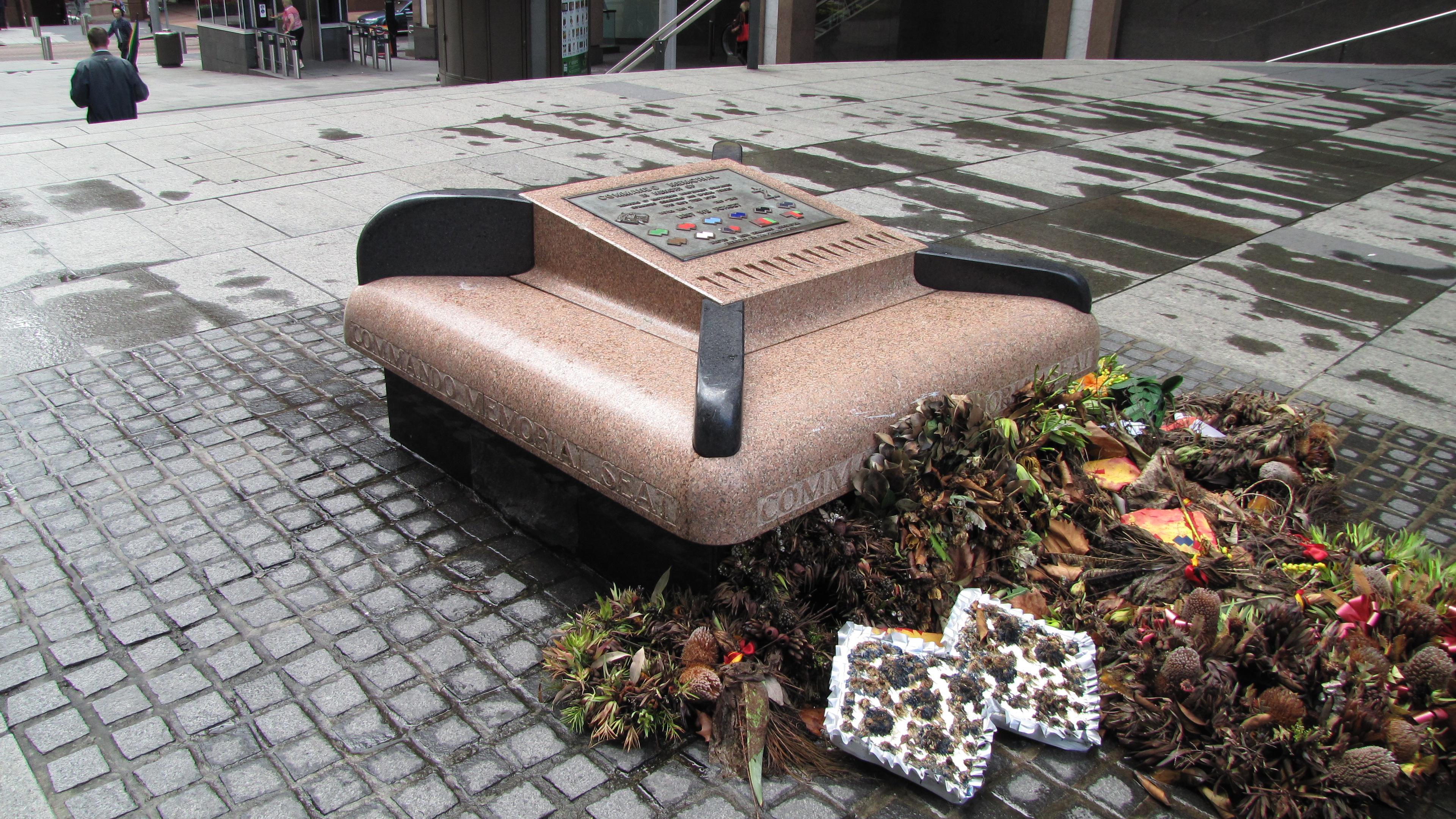 Wayne Havenaar, President of the NSW Commando Association, has advised that the Commando Memorial in Martin Place, Sydney, will be re-dedicated in a ceremony to held at 10:30 am on Wednesday, November 11, 2020 (Remembrance Day). Wayne advises: ‘[The re-dedicated memorial] has a new plaque with all units and deployments since WWII added. If you have anyone over this way, please let them know they are invited to attend however there are limited places due to Covid 19 restrictions, so booking is essential. Please see our website www.commando.asn.au on the notices page’. For information about the memorial, see: https://monumentaustralia.org.au/display/23156-commando-memorial Ed Willis President, 2/2 Commando Association of Australia
 -
Anyone Who Was In Bobonaro or Atsabe, East Timor During Wwii
Edward Willis replied to Mina Lay's topic in Men of the 2/2
Dear Mina: Thank you for your enquiry. Bobonaro and Atsabe were both important towns during WWII in Timor-Leste with Australian troops based in them for lengthy periods, especially between March – September 1942. After that time the towns were occupied and garrisoned by the Japanese. Both towns were heavily bombed by both the Japanese and Allied air forces at different times. The following description and map of the town was published in the ‘Area study of Portuguese Timor’ (1943). The location of the Chinese shops is indicated on the map: Bobonaro … is 35 miles (56 km.) at a bearing of 205° from Dili. It is at an elevation of about 2,600 feet (790 m.) on the southern slopes of the Ramelau Range and looks south over the valley of the Lone-Mea River. Bobonaro is a posto town and capital of Fronteira Province. The regular posto buildings are stone and are enclosed by a high wall. On the west side is a row of about 10 Chinese shops and on the north 3 long buildings used as cavalry barracks and large enough for 60 soldiers. There is a small Catholic church to the northwest. There are in addition to many stone houses of the native officials about 100 native huts widely dispersed around the town and along the road leading north to Atsabe. The town has a water supply piped from nearby hills to a small concrete reservoir. Bobonaro can be easily recognised from the air because two large Maltese Crosses in a background of white stone are set in a large garden plot in front of the posto. These crosses are easily visible and identifiable from the air. The Chinese quarter of the town is on the northwest of the central square; beneath the trees here a number of slit trenches have been dug. Bobonaro has a cemetery, which is north of the town and west of the road leading to Atsabe and Dili. A similar description and map of Atsabe was also included in the same publication: Atsabe (Nova Ourem) is 9 miles (14 km.) at a bearing of 28° from Bobonaro. Atsabe is one of the larger postos and market centres and its buildings number about 20 in all. These stone buildings, most of which have galvanized iron roofing, comprise posto and administrative block, church, school and about 15 Chinese shops. About one mile (11/2 km.) along the Lete-Foho road six bamboo huts with thatched roofs are the native soldiers' barracks. These huts are about 10 feet x 10 feet (3 m. x 3 m.) and are evenly spaced. The posto is well covered from air observation and is well timbered on the southwest side. There is a large market square north of the posto, and many trees have been planted around the trading area. There is a motor road to Bobonaro which for one mile, has good air cover. Atsabe was the Australian H.Q. of a platoon from May to August, 1942. Many Australian men passed through Bobonaro and Atsabe at different times, and it is difficult for me to accurately identify the ‘older soldier’ referred to in your message, however the following anecdote, written by Corporal Harry Wray, will be of interest: "Soon after Dex [Lieutenant David Dexter] took over, he sent Do-Dah [nick-name of an unidentified signaller] off to Ainaro to the Doctor [Dunkley], as he was constantly ill with malaria. A day or so after he left I too was sent to Ainaro, as I had suffered with severe tooth ache for days, and the only way I could get any ease was by taking large numbers of Aspirins. I passed through Marobo the first day of my journey, and arrived at Bobonaro that night. The Saint [Captain Bernard Callinan] was living at Bobonaro at that time. I also found Do-Dah there, and our Signals Sergeant [Sergeant Frank Press]. Do-Dah and I had a good rest in a nice little house, with about twenty native cavalrymen guarding the house. Bobonaro was the seat of the Administrator [Sousa Santos], and a few troops of Portuguese native cavalry were stationed in barracks there". …… "We had breakfast at a Chinese shop, boiled rice, fried eggs and soya bean sauce. Another man, who was a Sapper from Koepang, was with us and had plain boiled rice without salt or any flavouring as his meal. This Sapper was a huge fellow, a one-time wrestling champion, but was now very thin. He had suffered from some kidney disease after malaria, and had arrived at Bobonaro in a very bad state. The local Portuguese dispenser cum doctor took him in hand, and for six weeks had him living on the boiled rice without salt or flavouring. The doctor told him that if he did not stick to the diet he would die. When I arrived in Bobonaro the Sapper was well enough to travel to Mape and then on to our Doctor at Ainaro". The man Harry Wray referred to was identified by unit historian Col Doig as: "‘Tiny’ [Archie] Bowman [who] was a tremendous figure of a man and was a blacksmith with the 2/11th Engineers. He was a top grade amateur heavyweight wrestler who had beaten such personalities as Scarf and Knight who had represented Australia in the Olympic Games at Amsterdam and Los Angeles". Both Harry Wray and Tiny Bowman were ‘older men’, being in their early to mid-thirties at the time so either could be the soldier remembered by your grandma. Regards Ed Willis President, 2/2 Commando Association of Australia
-
Thanks Rob
-
NO. 4 INDEPENDENT COMPANY WAR DIARY TRANSCRIPT TIMOR CAMPAIGN COVERING THE PERIOD 10TH SEPTEMBER 1942 TO 31ST JANUARY 1943 This is a transcription of the text of the No. 4 Independent Company’s (2/4) War Diary covering the period from the unit’s embarkation in Darwin to be transported to Betano in Portuguese Timor to its return to the same port at the end of its five month long campaign (10 September 1942 - 31 January 1943). The 2/4’s war diary complements the 2/2’s Timor campaign war diary that was the topic of the previous post on Doublereds - both provide unique day by day accounts of events. The original transcript of the 2/4 war diary was prepared by the recently deceased James Morey (Jim) Walker, son of Major Edward McDonald (Mac) Walker (VX53941), the Commanding Officer of the unit during the Timor campaign. Jim was a dedicated custodian of the 2/4’s proud wartime history and provided me with copies of a number of useful documents and other records, including this war diary transcript. He will be sadly missed by his family and friends – this post is dedicated to his memory. [1] A digital copy of the original War Diary can be accessed and downloaded from the Australian War Memorial’s (AWM) website. [2] However, the digital version (like that of the 2/2’s) is difficult to read with some sections being handwritten and the typed sections often faint and hard to discern. This transcription overcomes these difficulties. In addition, the text of the transcription can be searched; for example by personal and place names. This War Diary provides an invaluable CHRONOLOGY of the No. 4 Independent Company’s campaign on Portuguese Timor and the availability of the transcript should prove of interest and useful to Doublereds members and supporters (there are frequent references to the No. 2 AIC), researchers and others with a more general interest in the history of East Timor during WWII. The drawings with the post were prepared by Francis John (Curly) Papworth who was a Sapper with the Engineers Section of the 2/4 on Timor. [3] NOTE: The following Sparrow Force Headquarters War Diary entry explains the map references that occur frequently in the No. 4 Independent Company’s War Diary: 2. MAP REFERENCE The following system of map reference will be used by Force HQ and by Units to this HQ when necessary. Ref map Dutch or Port Timor 1 : 250000. Eight figure references will be made. First four figures latitude in degs and mins and second four longitude. The one hundred of the true longitude reading is omitted. Thus map ref ERMERA lat 8 degs 46 mins S long 125 degs 24 mins E will be indicated as 08462523. [4] REFERENCES [1] Jim Walker passed away on August 23 2020 aged 84 years – e-mail received from the Australian Commando Association, . [2] https://www.awm.gov.au/collection/C1363608 [3] G.E. Lambert - Commando, from Tidal River to Tarakan : the story of the No. 4 Australian Independent Company AIF later known as 2/4th Australian Commando Squadron AIF, 1941-45. - Loftus, N.S.W. : Australian Military History Publications, 1997: 86, 93, 151, 189 and 195. [4] Sparrow Force war diary March-December 1942: 32 (https://www.awm.gov.au/collection/C1365575) Prepared by Ed Willis Revised 8 September 2020 2-4 war diary September 1942-January 1943.pdf
-
NO. 2 INDEPENDENT COMPANY WAR DIARY TRANSCRIPT 8 December 1941 - 16 December 1942 This is a transcription of the text of the No.2 Independent Company’s (2/2) War Diary covering the period from the unit’s embarkation in Darwin to be transported to Koepang in Dutch Timor to its return to the same port at the end of its year-long campaign on Portuguese Timor (8 December 1941 - 16 December 1942). A digital copy of the original War Diary can be accessed and downloaded from the Australian War Memorial’s (AWM) website. [1] However, the digital version is difficult to read with many sections being handwritten in sometimes not very legible scripts. The typed sections are often faint and hard to discern. This transcription overcomes these difficulties. In addition, the text of the transcription can be searched; for example by personal and place names. Much of the war diary was written retrospectively some-time after the campaign; this is evident from many of the entries. The hectic exigencies of soldiering after the Japanese landed precluded the maintenance of normal record keeping procedures at Company headquarters though some sort of informal daily record of events was probably kept. Nonetheless, the person or persons responsible for compiling the war diary were unit members who had served on Timor and had access to this informal record and the paper reports and signal copies that accumulated over the duration of the campaign. [2] Note if anyone has specific information about the circumstances under which this War Diary was compiled and who was responsible, can they please reply to this post with the details. This War Diary provides an invaluable CHRONOLOGY of the No. 2 Independent Company’s campaign on Portuguese Timor and the availability of the transcript should prove of interest and useful to Doublereds members and supporters, researchers and others with a more general interest in the history of East Timor during WWII. Please download the War Diary transcript using the link below. NOTE: The following Sparrow Force Headquarters War Diary entry explains the map references that occur frequently in the No. 2 Independent Company’s War Diary: 2. MAP REFERENCE The following system of map reference will be used by Force HQ and by Units to this HQ when necessary. Ref map Dutch or Port Timor 1 : 250000. Eight figure references will be made. First four figures latitude in degs and mins and second four longitude. The one hundred of the true longitude reading is omitted. Thus map ref ERMERA lat 8 degs 46 mins S long 125 degs 24 mins E will be indicated as 08462523. [3] REFERENCES [1] https://www.awm.gov.au/collection/C1367389 [2] These reports and signal copies can also be accessed on the AWM website: https://www.awm.gov.au/collection/C1367375 [3] Sparrow Force war diary March-December 1942: 32 (https://www.awm.gov.au/collection/C1365575) Prepared by Ed Willis Revised 31 August 2020 Unit War Diary December 1941-December 1942.pdf
-
Dear Kevyn: Thank you for contacting us for information about Gordon Chiswell. The only item that of the nature you are looking for I could locate was a moving article written by Archie Campbell, his Section officer, in the April 1991 'Courier' that I have attached - it includes a photo of Gordon. Kind regards Ed Willis, Vice-President
-
WWII in East Timor – A Site and Travel Guide Commando Campaign Sites VIQUEQUE MUNICIPALITY LACLUTA 8°47'10"S, 126°08'14"E Timorese woven pouch on display Army Museum of WA, Fremantle Lacluta is 21 1/2 miles (34 1/2 km.) at a bearing of 155° from Manatuto. It is a small posto town of 3 stone buildings and numerous native huts. It is situated in the southern foothills and overlooks the Luca Valley. The surrounding district is fairly hilly and fertile and there are many small villages of two or three huts. There is a fair growth of forest and patches of open grassland in the district. [1] Lacluta location map [2] SIGNIFICANCE EXTRACTS FROM NO. 2 INDEPENDENT COMPANY WAR DIARY 15 September 1942 In view of the Japanese activity in the EASTERN end of the island, No VI Sec today arrived at LACLUTA (08482609) having come from TURISCAI (08502543). 15 November 1942 Force HQ desire "B" Pl to move to the LACLUTA (05472605 ) area and from there maintain OPs on the roads MANATUTO-BAUCAU and BAUCAU-VIQUEQUE also to harass any Jap movement in the EASTERN end of the island. 16 November 1942 Conforming with yesterday's instructions from Force HQ "B" Pl were instructed to commence to move to the LACLUTA area as soon as possible. During the move they will contact Coy HQ by W/T daily and one Signalman will be sent through Coy HQ to pick up extra W/T equipment. Lieut NISBET advises his movement will be as follows: on 17 Nov No IV Sec at present at CRIBAS (08412600) will commence to move to LACLUTA and from there will recce FATUCHILI (08362609) and MUNDO PERDIDO (08432620) as likely section areas. HQ will move to LACLUTA via BARIQUE and will maintain contact with No IV Sec. No V Sec will move one day after HQ and No VI Sec two days after HQ. It is anticipated section areas will have been located in time for these two sections to move there directly. Immediately section areas were fixed Coy H. will be notified. All this information was passed to Force HQ. [3] [4] [5] JAPANESE MASSACRE AT LACLUTA In an interview with the former headman, and a member of the royal lineage, we learned that nineteen members of the royal (liurai) lineage from the Lacluta and Uma Tolu line were massacred by the Japanese on August 4, 1945. This former headman who is also related by family to Luca was a young boy at the time. The story was that when the Japanese were in pursuit of Australian and Portuguese troops hiding in the forest in the Viqueque area, they asked the Luca people whose land they were hiding on. Not wanting to be implicated, the Luca people claimed it was the Lacluta kingdom’s (Uma Tolu’s) land. The Luca people disavowed ownership of the land and their disavowal resulted in the massacre of the royal Lacluta family. So, the former headman argues that Luca cannot be very vocal about wanting Uma Tolu to go back to its ancestral land, because they have the responsibility of the massacre hanging on their heads. The Luca people apparently indicated an area that is far closer than the area that Uma Tolu now occupies. [6] [7] MONUMENT TO THE LACLUTA HEROES The tragic consequences for the Portuguese and Timorese residents of Viqueque of their support for getting their fellow nationals evacuated to safety in Australia is vividly portrayed in the Monument to the Lacluta Heroes. The memorial is located at the old Portuguese posto, situated on high ground on the left bank of the River de Rade Uma some distance from the existing township of Lacluta and is difficult to access by vehicle. The main inscription on the monument (translated from the Portuguese) states: HISTORICAL MONUMENT OF WORLD WAR 2 PERIOD 1942-1945 IN LACLUTA HERE LIE THE REMAINS OF: Nomes Observações 01. LUIS DA FONSECA SOARES CHEFE DE SUCO DE DILOR 02. CASIMIRO FERNANDES DE CARVALHO CHEFE DE SUCO DE UMA-TOLU 03. ESTEVAO DE CARVALHO CHEFE DE SUCO DE LALINE 04. ALEXANDRE DE CARVALHO CHEFE DE SUCO DE DILOR 05. AFONSO FONSECA SOARES CHEFE DE SUCO DE DILOR 06. MATEUS DE CARVALHO CHEF DE SUCO DE UMA – TOLU 07. FRANCISCO SOARES CHEFE DE SUCO DE AHIC 08. TAI-BERE CHEFE DE POVOACAO FATUCADO 09. GILBERTO SOARES CHEFE DE POVOACAO DE FAHI-LAIN 10. MIRANDA XIMENES AJUDANTE DE CHEFE POSTO DILOR 11. MARIANO CARVALHO CATEOUISTA 12. JOSE LINO FERREIRA CATEQUISTA 13. VITAL DE NORONHA PRINCIPAL DE DILOR 14. FELICIANO SOARES AGRICULTOR 15. FRANCISCO SOARES CABO DE MORADORES 16. TOMAS SOARES AGRICULTOR 17. CAI-MODO AGRICULTOR 18. FUNO-UAI AGRICULTOR 19. ESPERANCA FONSECA SOARES PRINCIPAL DE DILOR The secondary inscription on the monument states: KILLED BY THE INVADER 1942 - 1945 IN THEIR MEMORY PORTUGAL RECOGNIZED Narration: 1. They were savagely massacred for having hidden a group of Portuguese on the plains of Aitara and Bua-Daran; 2. They were massacred in three different locations: a) We-Lamilo; b) Cai-Cobi-Lari; c) the last one was in Ossu on August 14, 1945, their remains were collected and buried in the Historical Monument of Lacluta, built under the direction of Pinto Crisostomo, Administrator of the circunscriçõe of Viqueque, Teofilo de Deus Maia, Chefe de Posto de Lacluta and Miguel, Cabo Verdano, in the Economic Year of 1963-1964. [8] Restoration work on the ‘Monument to the Lacluta Heroes’, November 2000 REFERENCES [1] Area study of Portuguese Timor / Allied Geographical Section, South West Pacific Area. - [Brisbane] : The Section, 1943. – (Terrain study (Allied Forces. South West Pacific Area. Allied Geographical Section) ; no. 50.): 31. [2] Area study of Portuguese Timor: 163. [3] War diary No. 2 Independent Company, August to November 1942 (https://www.awm.gov.au/collection/C1363504) [4] Area study of Portuguese Timor: Drawing 49. [5] Area study of Portuguese Timor: Drawing 50. [6] Claudia D’Andrea ‘The Customary Use of Natural Resources in Timor Leste: a discussion paper prepared for a regional workshop on Land Policy Administration for pro-Poor Rural Growth, Dili, December 2003: 35. [7] Area study of Portuguese Timor: Drawing 51. [8] Rui Brito da Fonseca. - Monumentos portugueses em Timor-Leste. - Dili, Timor Leste : [Crocodilo Azul?], 2005: 22-25. Prepared by Ed Willis Revised 16 August 2020
-
Commando Campaign Sites – East Timor Bobonaro District - Marobo
Edward Willis replied to Edward Willis's topic in History
Thanks for the feedback Rob -
Members, supporters and those who participated in either the 2018 or 2019 'Timor 1942 Commando Campaign Tours' will be interested to see the following story related to the 20th Anniversary of the death, killed in action, of New Zealand peacekeeper Private Leonard Manning. A few of us on the 2018 tour visited Private Manning's memorial at Tilomar, while most participants in the 2019 tour had the pleasure of meeting Lieutenant-Colonel Martin Dransfield who was the commander of the New Zealand 2nd/1st Battalion at the time of the soldier’s death and is now posted as a strategic advisor to the Timor-Leste Defence Force. Martin was Master of Ceremonies at last year's Anzac Day ceremony in Dili. https://medium.com/@nzdefenceforce/events-new-training-centres-to-mark-20-year-anniversary-of-new-zealand-soldiers-death-in-e110e8400b2

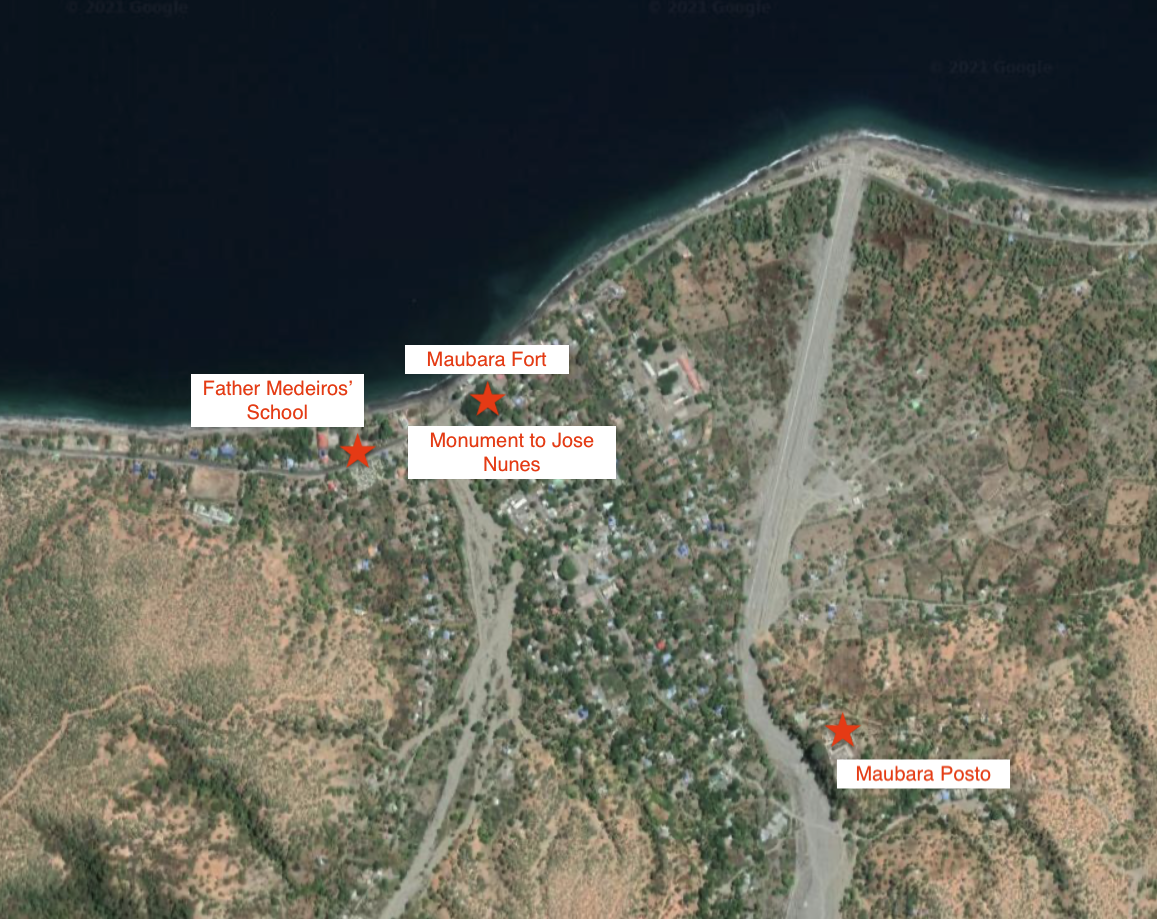
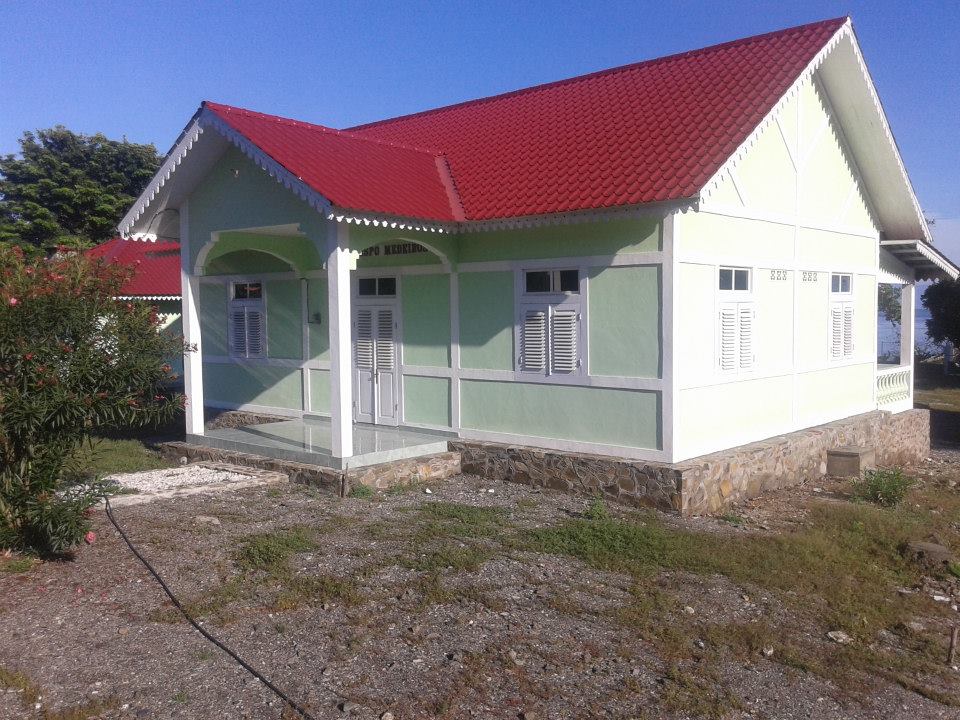
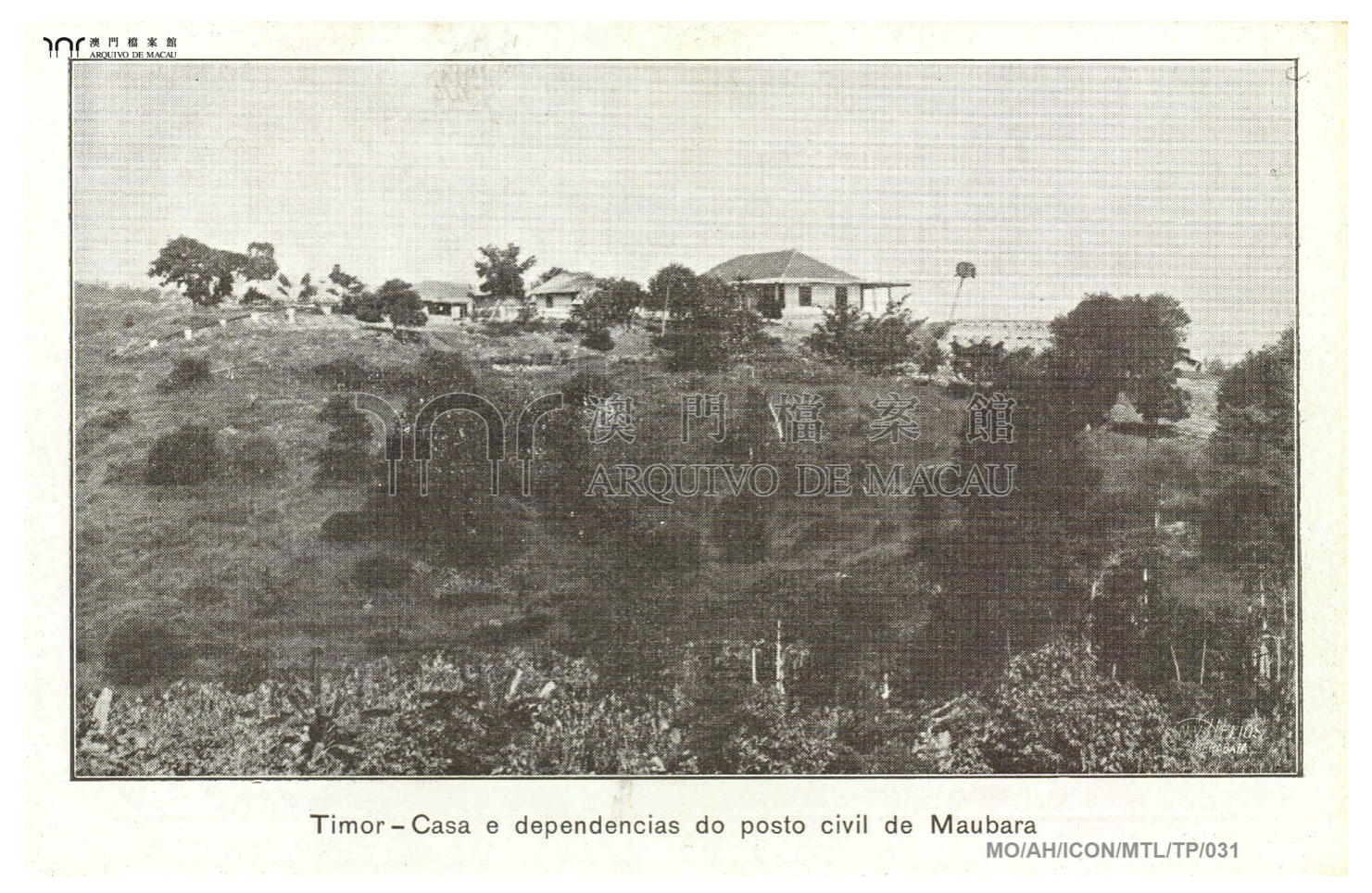

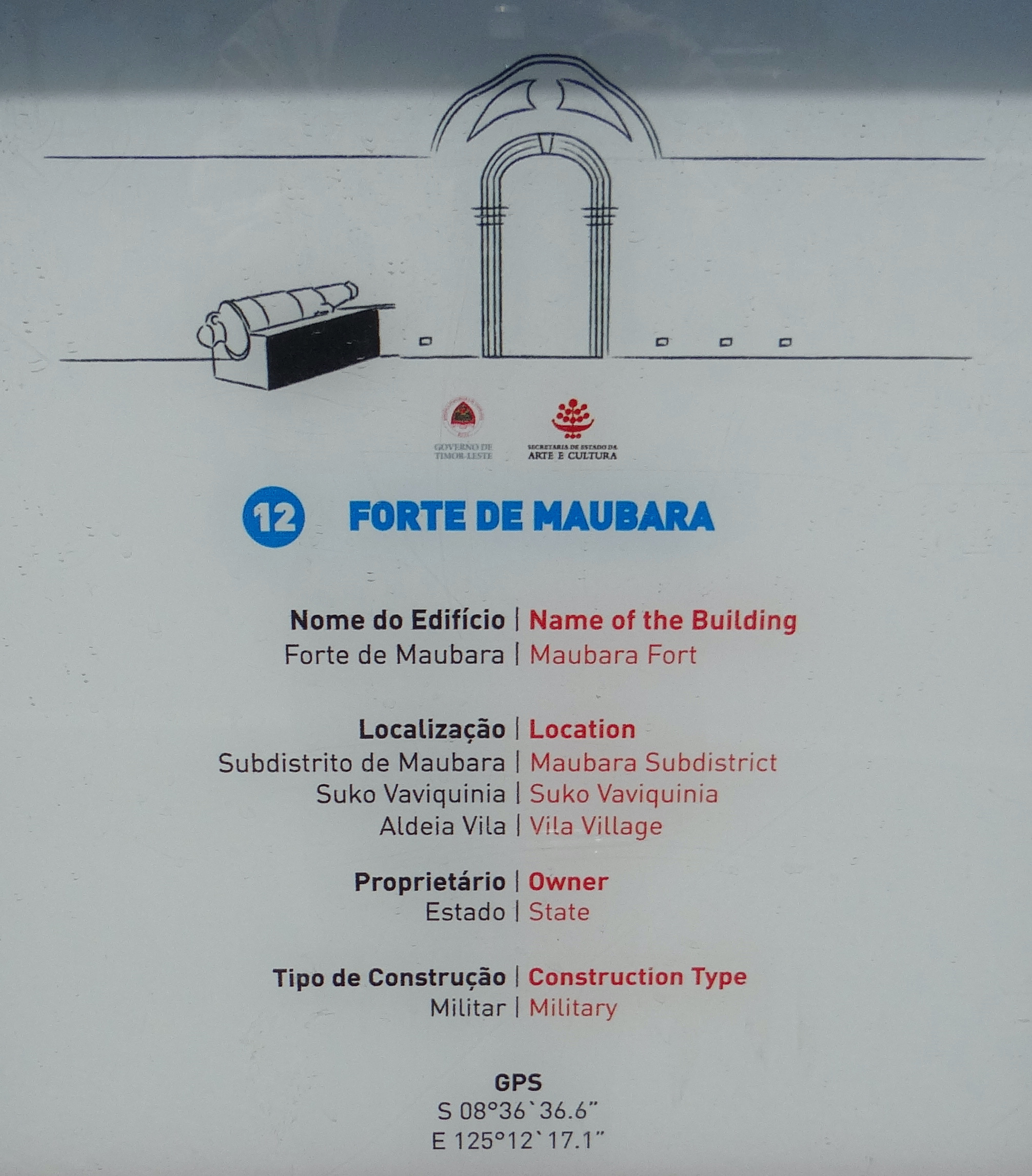
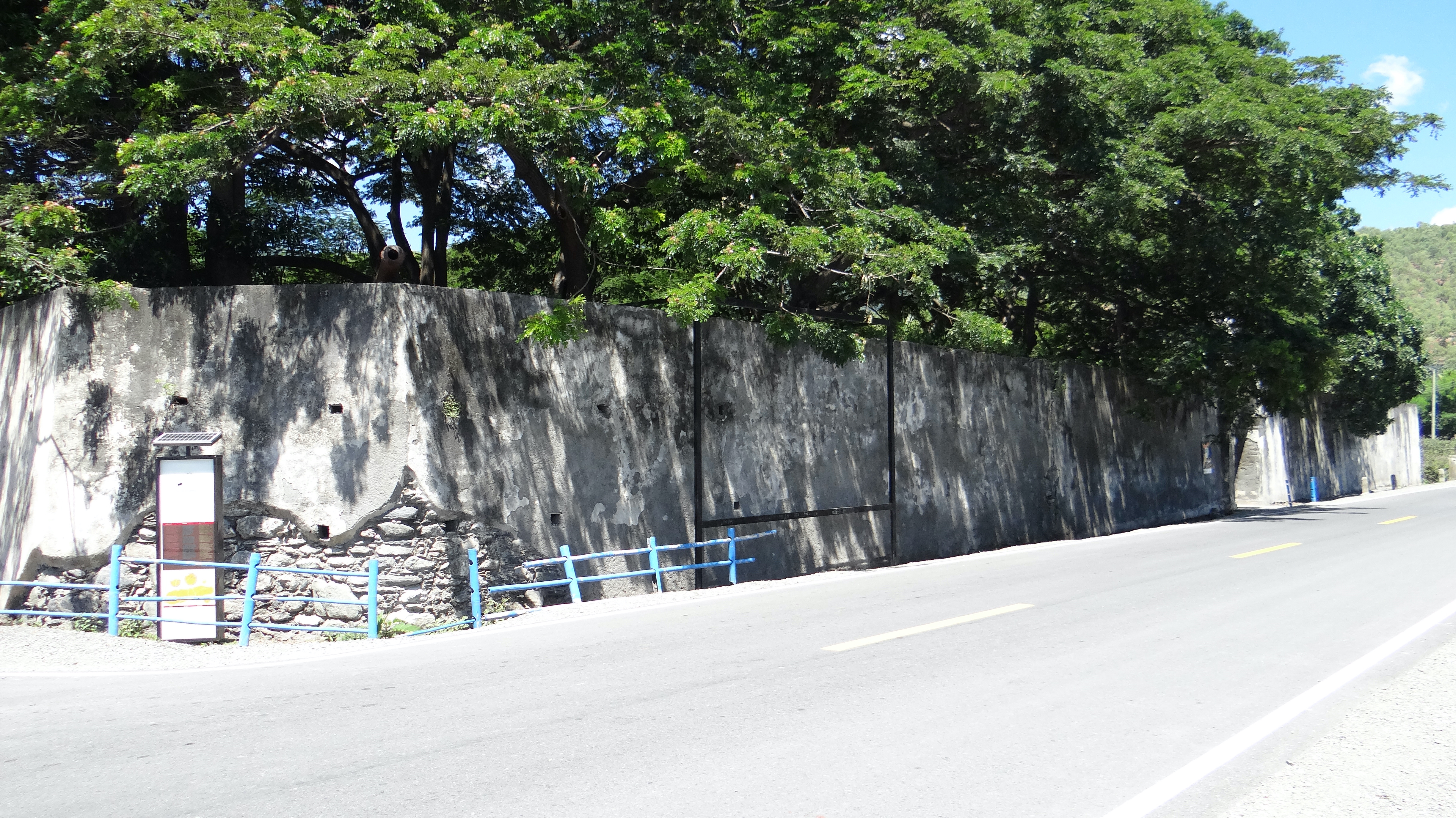


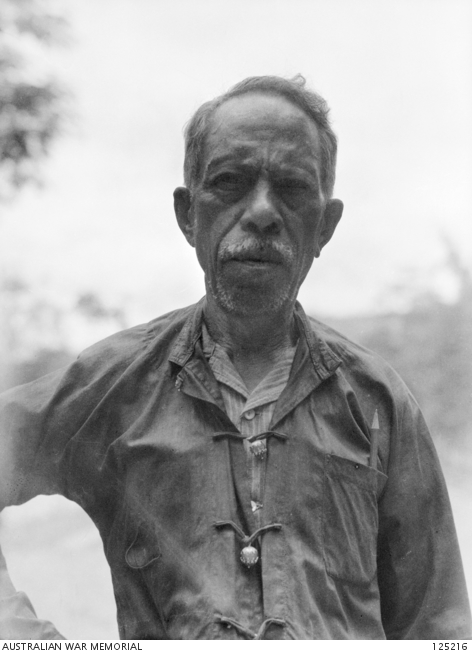

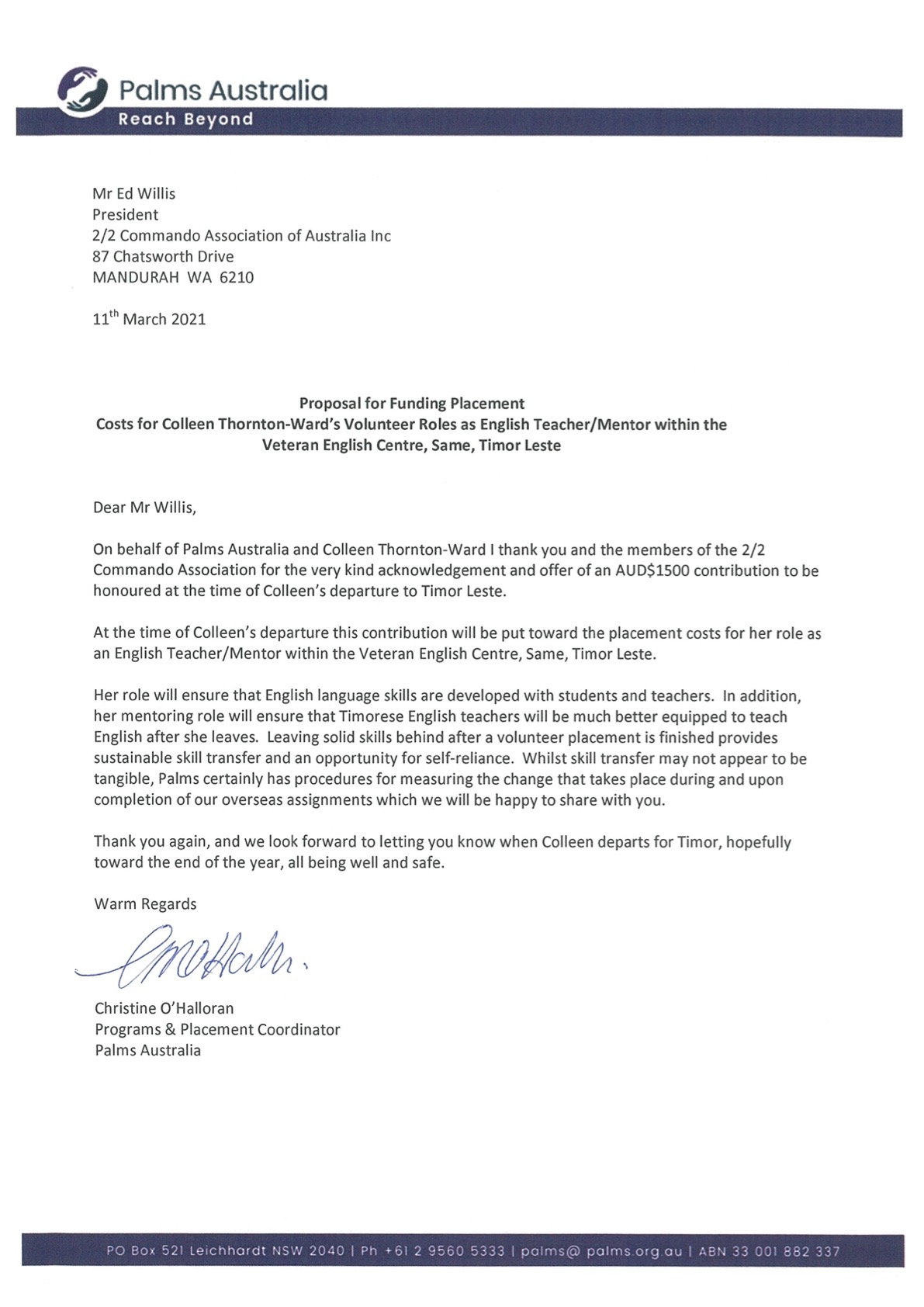
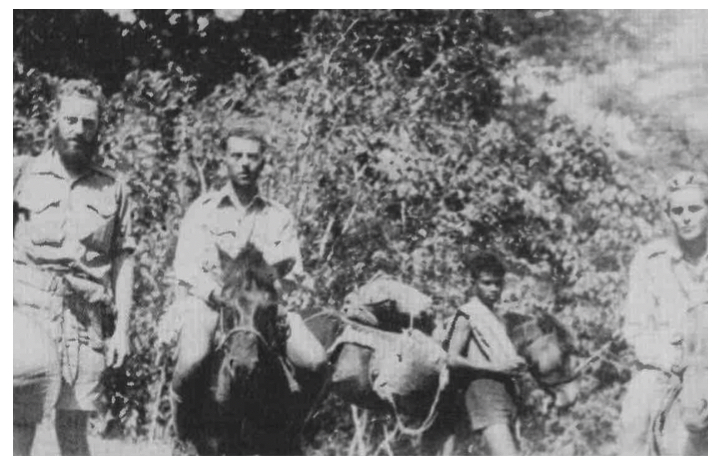
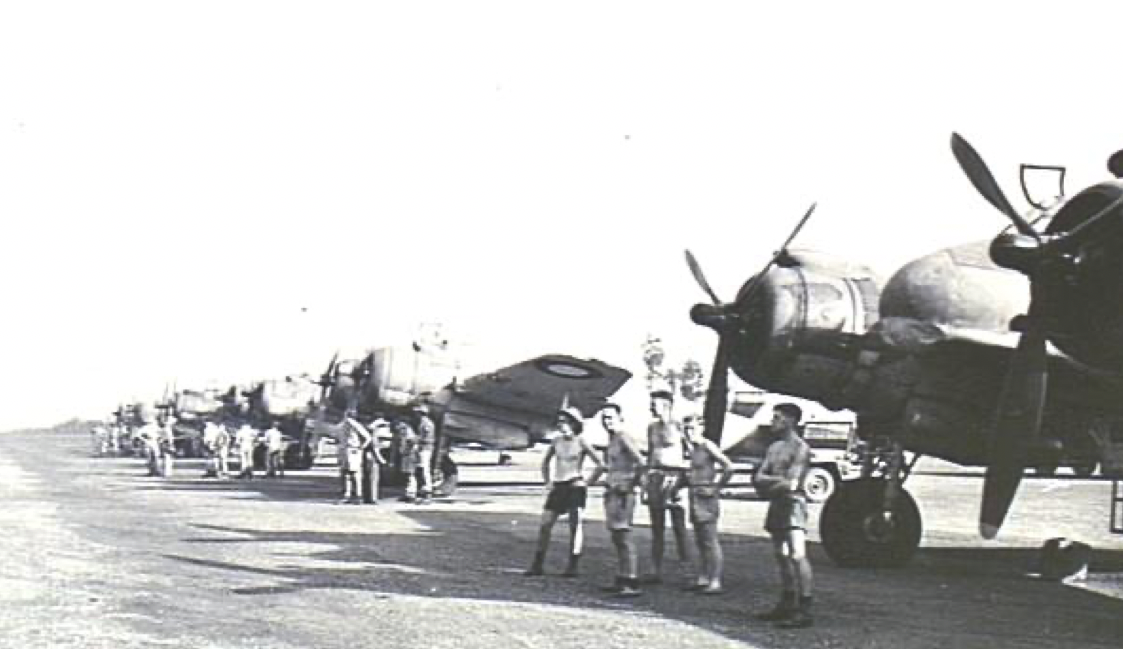
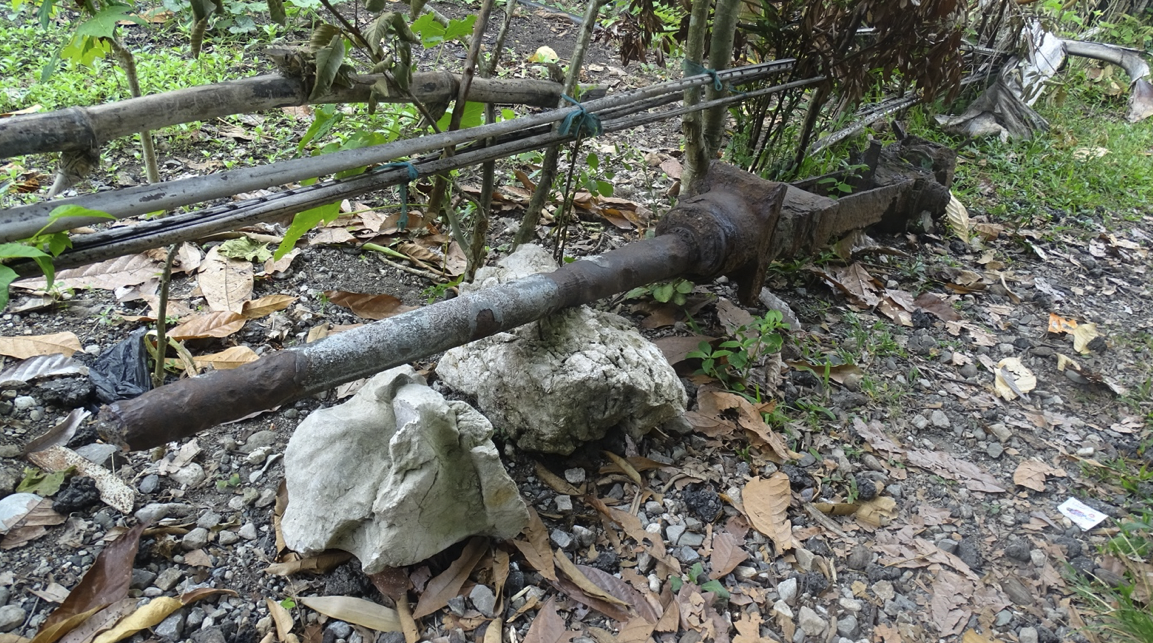

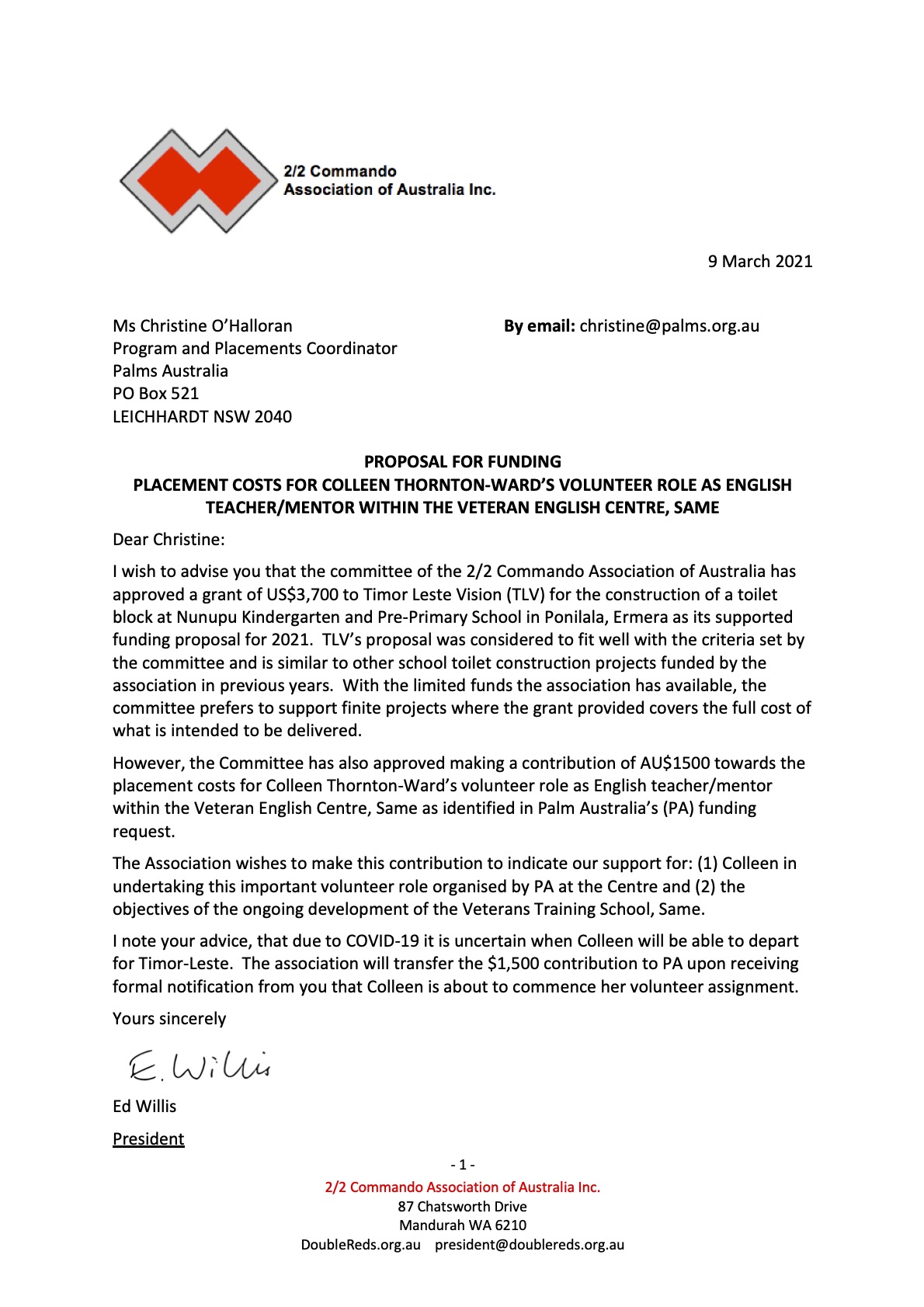
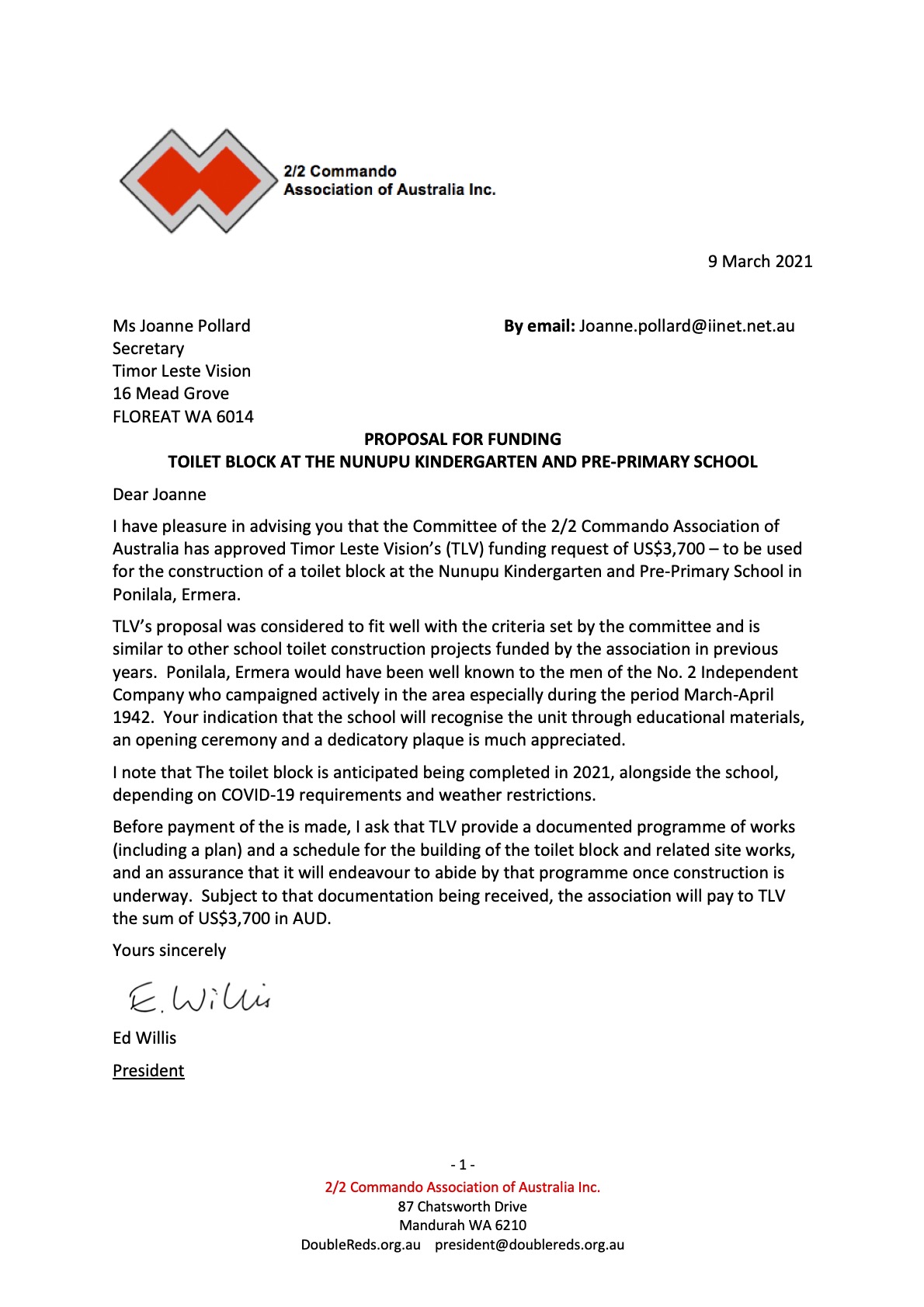

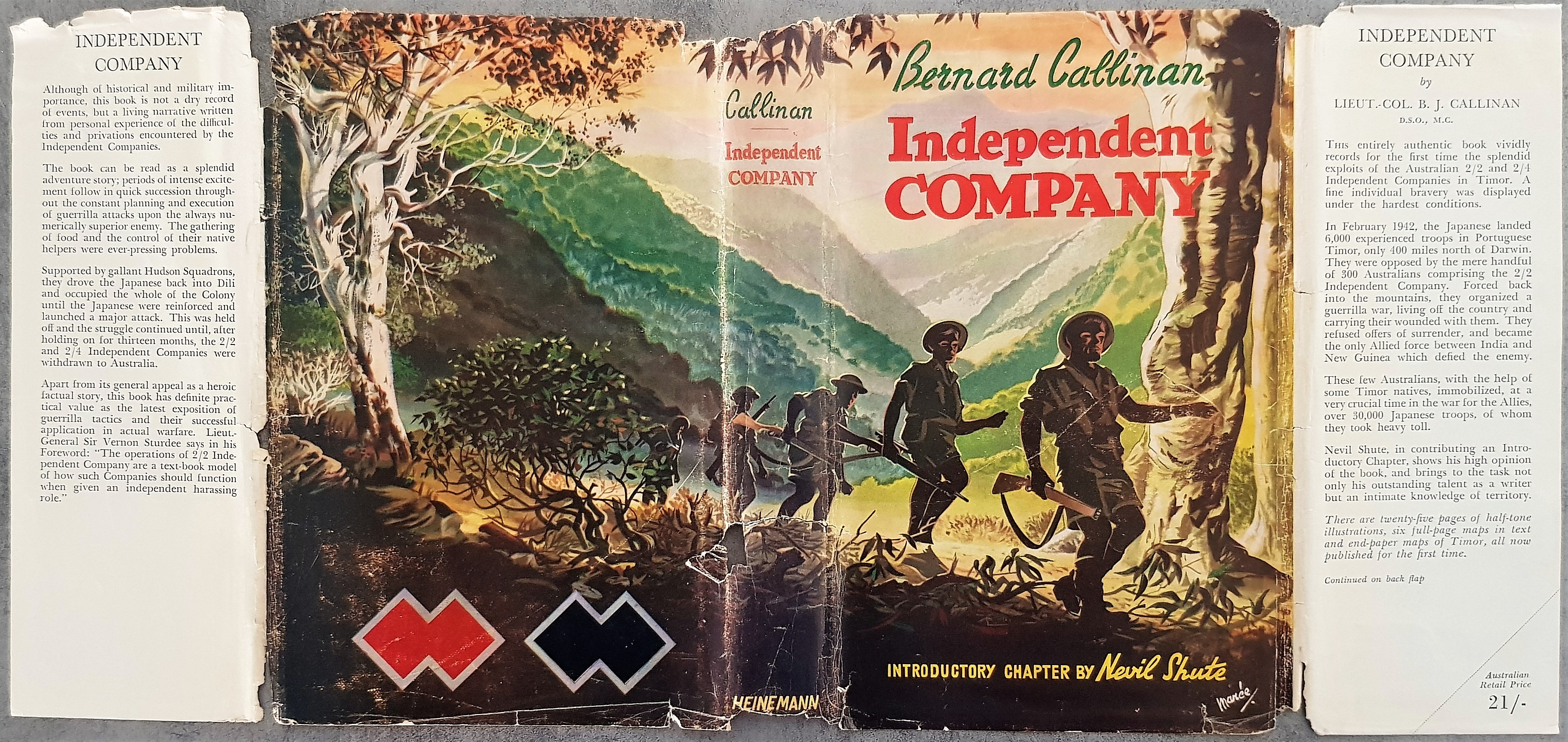
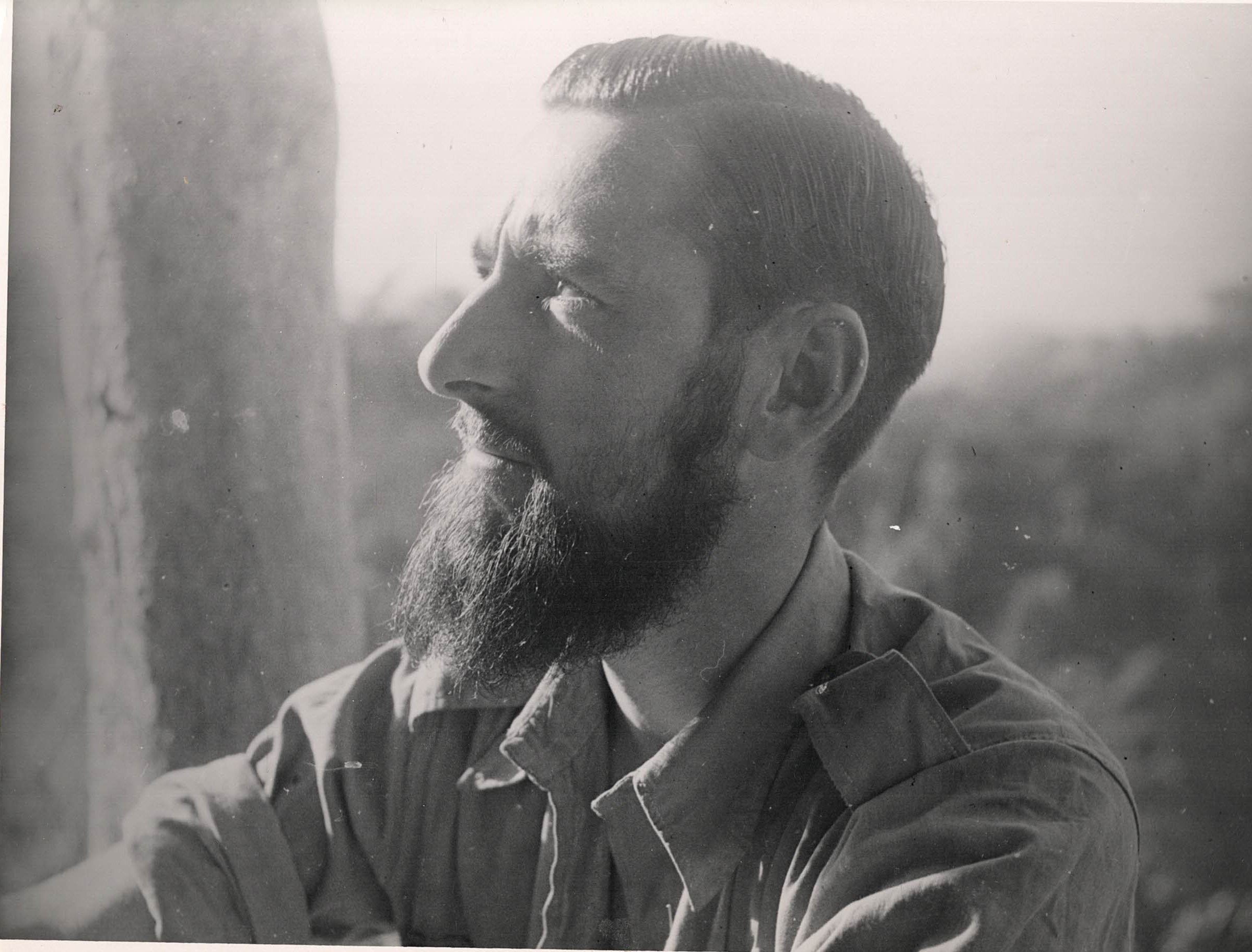
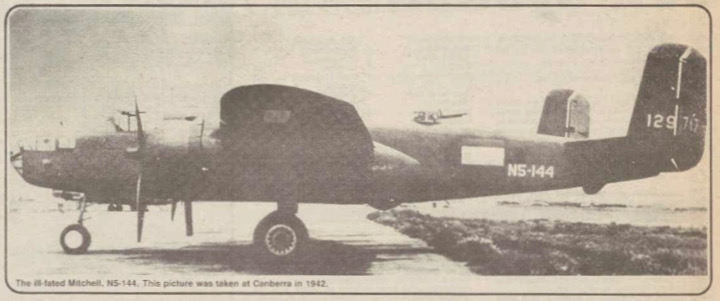
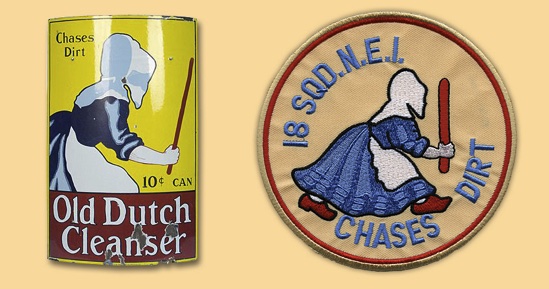

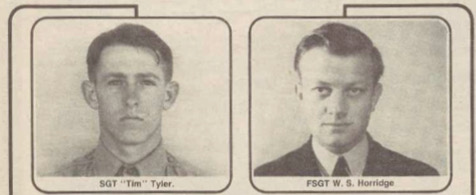
-AWM.jpg.6236811afd68270dd34997de65b9f4eb.jpg)