Edward Willis
-
Posts
1,141 -
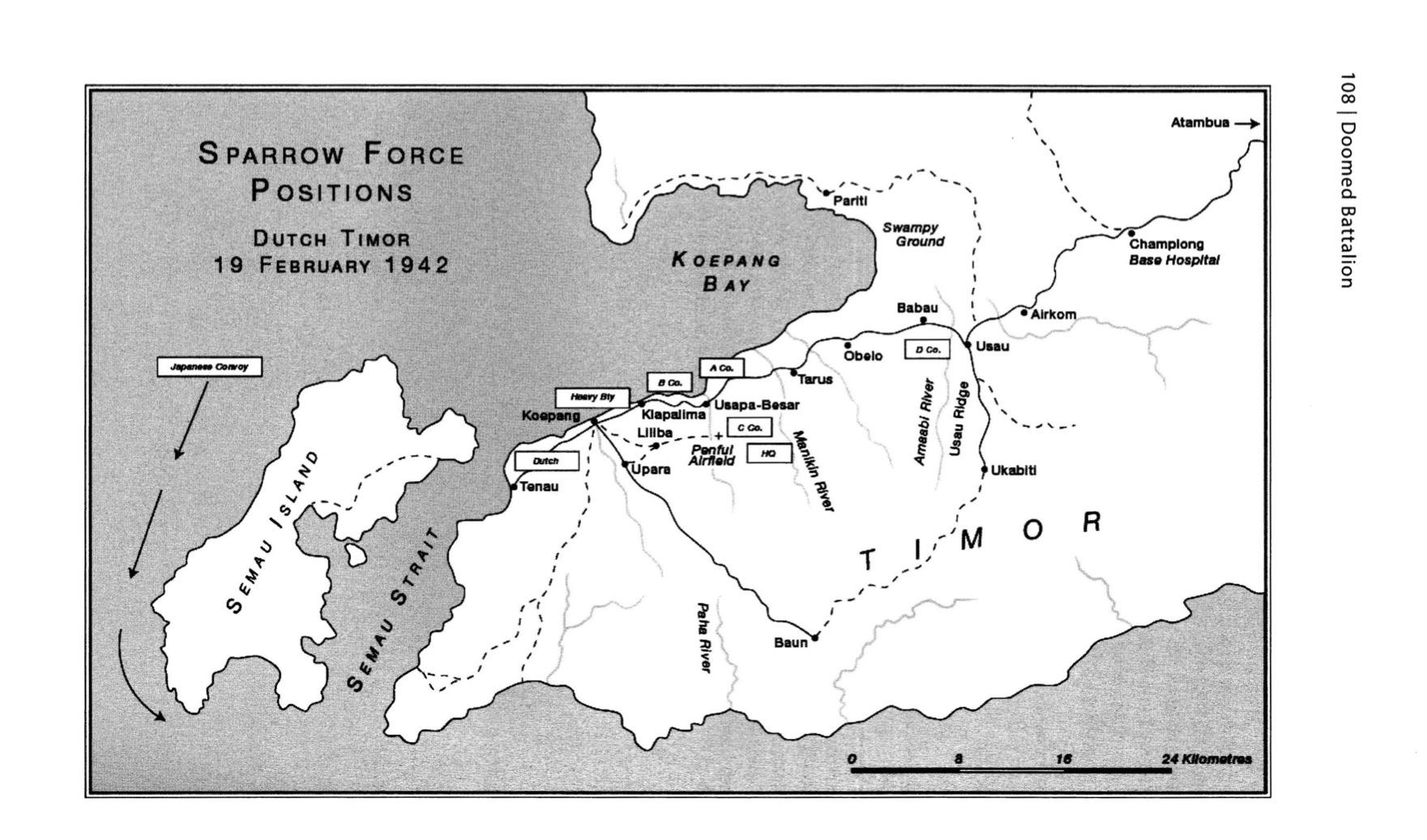
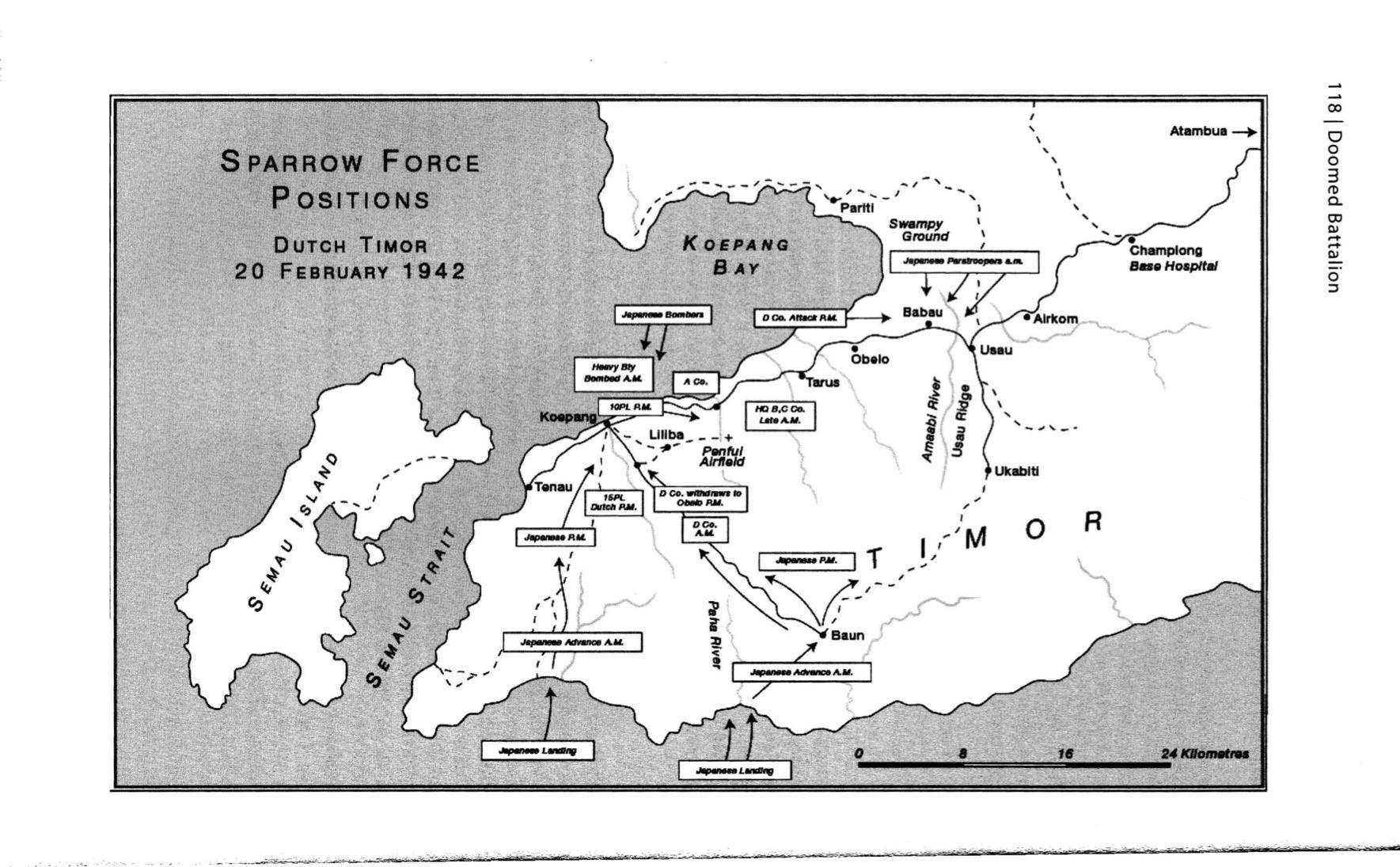
Joined
-
Last visited
Content Type
News
Video & Audio
Men of the 2/2
Forums
Store
Gallery
Everything posted by Edward Willis
-
-
-
-
-
-
-
-
-
-
-
-
-
-
-
-
-
-
-
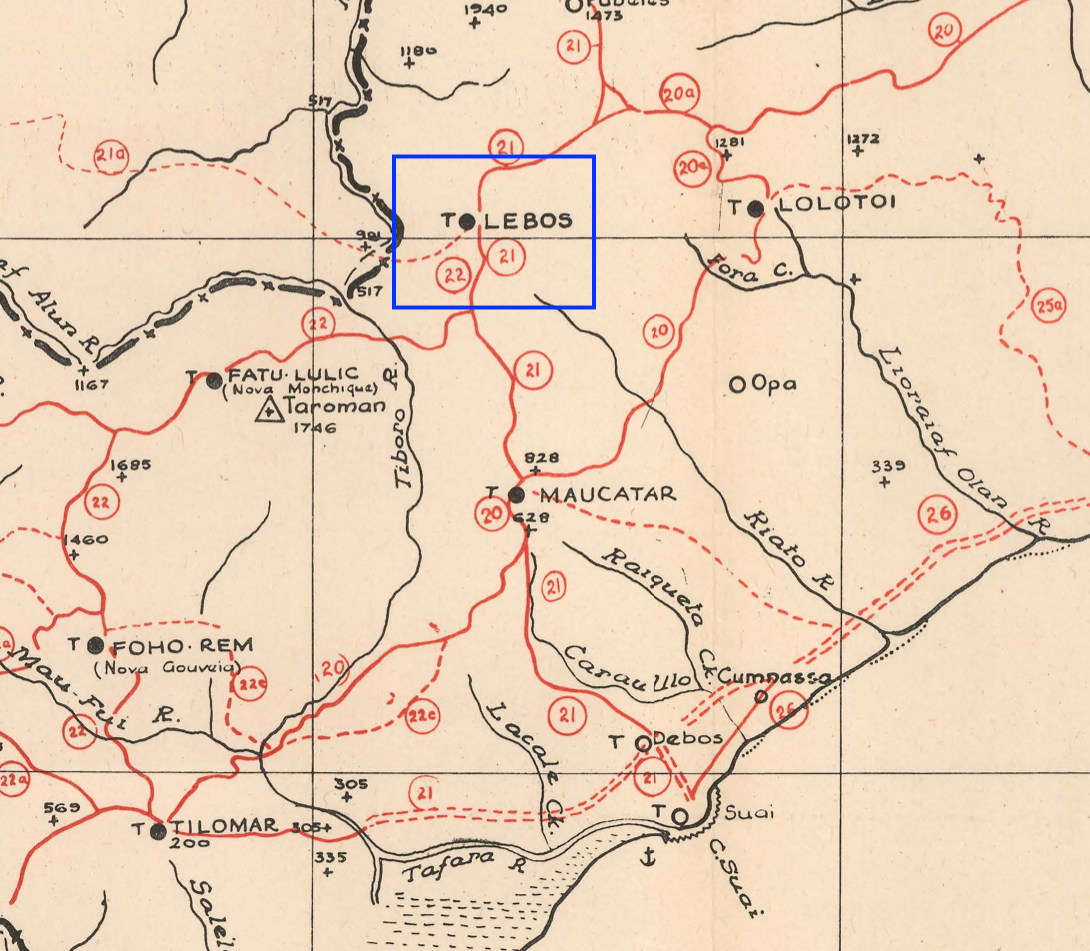

 There is a Portuguese monument commemorating the people who lost their lives in the Zone of Concentration during WWII outside what is now the Fretilin headquarters in Liquiça. The inscription, dated 1970 refers to “Aos mártires da ocupação estrangeira” (martyrs of foreign occupation) and provides tangible evidence of another tragic aspect of the Japanese occupation years that has been largely forgotten. Monument to the Martyrs of Foreign Occupation In late October 1942, the Portuguese Governor reluctantly accepted the Japanese edict regarding ‘protective concentration’ and encouraged all Portuguese residents to move to ‘internment’ areas at Liquiçá, Maubara and the nearby hill village of Bazar Tete – this was deemed necessary for protection against the ‘rebeliões de indígenas (rebellious Timorese)’. Many Portuguese (and a few Timorese) took the opportunity to be evacuated to Australia at this time and were settled at Bob’s Farm Evacuation Camp that was the topic of our previous post. For those that remained, initially, the protection zone comprised the entire part of the coast stretching from Liquiçá to the mouth of the Lois River with people encouraged to gather in the towns of Liquiçá and Maubara. However, earlier on, several families stayed in the immediate vicinity where they were better able to cultivate subsistence crops. That situation changed quickly, with constant intimidation and confrontations with the ‘colunas negros’ (black columns). In May 1943, members of the Portuguese military detachment in Maubara were disarmed and demobilised. In the town, some internees still managed to maintain small vegetable gardens. Internees were permitted to access the fish farms at the Granja Eduardo Marques (at Boibau) and at the properties of the Sociedade Agrícola Pátria e Trabalho near Fatu-Bessi. Gradually, through more or less indirect pressure, the Japanese were also urging Timorese to stop selling their produce in weekly markets. Anxieties were further increased by sporadic Allied bombing and strafing attacks that sometimes caused Portuguese and Timorese casualties. In September 1944, without warning, the Japanese ordered the transfer of the approximately 200 people based in Maubara to Liquiçá, further undermining living conditions for the internees. Very late in WWII (early July 1945) for the internees were transferred to one of the properties of the Sociedade Agrícola Pátria e Trabalho in the Lebo-Men area, near Fatu-Bessi. Portuguese historian Jorge Silva Rocha recently published an authoritative account of the Zone of Concentration in the Liquiça-Maubara area that has been translated into English and made available to read here – very little has been published in English on this topic to date. PORTUGUESE PRISONERS IN TIMOR DURING THE SECOND WORLD WAR Jorge Silva Rocha SOURCE: Jorge Silva Rocha ‘Prisioneiros Portugueses em Timor durante a Segunda Guerra Mundial’ [‘Portuguese prisoners in Timor during the Second World War’] in Prisioneiros de guerras: experiências de cativeiro no século XX / coordenação: Pedro Aires Oliveira. – Lisboa: Edições tinta‐da‐china, 2019: 223-245. As in other theatres of World War II, the war in Asia and the Pacific, more than a military confrontation between enemy armies, was above all a violent confrontation between different cultures and races. [1] A struggle between “white men” and “yellow men”, different in their physiognomy but also with different values and understandings about the respect deserved by the opposing forces imprisoned during combat, about mercy and also about restraint in actions. Bushido, the ancestral samurai code of conduct proudly followed over generations, continued to guide the action of Japanese combatants during World War II towards the correct execution of military tasks, irreproachable conduct in everyday life and, the pursuit of a dignified death in combat. However, the precepts of bushido that established that the combatant should always act with justice and compassion towards his enemy, defeated or weakened, were permanently ignored when dealing with his prisoners of war and civilian internees. In his understanding, the non-Japanese who allowed their capture in combat did not deserve any contemplation and should be hated, despised and killed. With total disregard for the Geneva Convention which established, from 1929, the right and obligation of prisoners of war to be treated humanely and without subjection to torture and any acts of physical or psychological pressure, guaranteeing them health aid and food, as well as respect for their religion, in the concentration and internment camps for prisoners of war established by the Japanese military forces during the war in the Pacific, violent and deadly beatings, refusal to provide medical aid, the insufficient supply of food and even medical experimentation on prisoners. In Japanese concentration and internment camps, thousands of prisoners died every day from diseases caused by malnutrition, such as beriberi and scurvy, or from tropical epidemic diseases such as malaria, dengue fever, dysentery, tropical ulcers, and so on. the cholera. Furthermore, any attempt to escape “white” prisoners was doomed to failure from the outset. His skin colour worked like a prisoner's uniform that it was not possible to take off. [2] Captive experiences in Japanese-occupied Asia varied enormously from region to region. While some prisoners of war, mostly Western soldiers, were sent to Japan and used as manual labour in forced labour, others were forced to work until exhaustion in the construction of the so-called «Death Railway» between Burma and Thailand. Civilian internees were, as a rule, gathered locally in often improvised camps, but this did not mean that they had an easier life than that of expatriate prisoners. They, too, ended up seeing their health irremediably undermined, their property expropriated or destroyed, and their means of subsistence stripped away. It is estimated that one in three “white” prisoners died at the hands of the Japanese. If in some concentration camps built by the Japanese military forces the mortality rates were below ten percent, there were others where the same rates reached values above 30 percent. In the internment camps, mortality rates will have reached values between three and 13 percent. [3] The occupation operations of vast territories in Southeast Asia carried out by Japanese military forces during World War II reached their maximum geographical limit further south with the invasion of Portuguese Timor on February 20, 1942. Officially ordered in response to the presence of Australian and Dutch military forces in neutral Portuguese territory, the Japanese military occupation lasted for about three years, until September 1945, during which harsh living conditions were imposed on the populations. Throughout this period, Japanese forces stationed in Timor they maintained a conduct of deliberate submission of their prisoners and civilian detainees to violence, torture and public humiliation. Without resorting to direct confrontation, they skilfully led and armed violent bands of natives who sowed terror among the hundreds of Europeans and Timorese who had sought the deemed safe refuge of the mountains, leading them to ask the invader to establish zones concentration under its protection. Over time, these places of voluntary concentration ended up being transformed, despite the lack of walls or fences, into veritable concentration camps where hunger raged and violence prevailed. This text has as main objective to describe, with the detail allowed by the available sources, the main events that led to the creation in Timor of zones of concentration of Europeans; its geographical dispersion and evolution over the three years of Japanese domination; the living conditions and methods used by the invading forces to subjugate the European and Timorese concentrates. Timor in the Second World War: the “invasion” by Australians and Dutch [4] In the midst of World War II, in December 1941, and despite protests from the Portuguese authorities, an allied contingent made up of Australian and Dutch forces landed in Timor on the pretext of strengthening the defense capacity of the Portuguese colony. The Australian Government, following talks with the Dutch Government, had undertaken to provide military aid if the territory of Dutch Timor was invaded by Japanese forces. This support would become effective on December 12, 1941 when a detachment of the Australian Army, with the designation «Sparrow Force» [5] and with a force of around 1400 men, landed in Kupang, in the Dutch part of the island of Timor. Until then, Portugal had refused the military support for the defense of the territory of Timor insistently offered by the Dutch and Australians, confident that it was in its neutrality. [6] The military activity of the Portuguese colony was then far from being effective since most of the European graduates sent to the territory was “deviated” to functions in the local administration due to the lack of capable civil servants. By the time of the Second World War, the tiny garrison existing there was reduced to a company of indigenous infantry (Companhia de Caçadores de Timor) and a platoon of cavalry, also indigenous (da Fronteira), a military device that, officially established at the end of the 1930s, could be considered sufficient for maintaining internal order, but totally insufficient and inadequate to sustain any external attack. The Companhia de Caçadores de Timor was headquartered in Taibessi, three kilometers from Dili; in Maubisse there was a school for recruits and in Oecussi a detachment of that company was stationed. The Border Police Cavalry Platoon had its forces distributed along the border with Dutch Timor and its command was based in Bobonaro. In addition to this 1st-line military device, a significant number of 2nd-line indigenous voluntary forces, called moradores, were also organized in the various Regulados [7] of the territory, which in the past had helped to put down internal insurrections. The colony's military garrison had a total strength of three officers; seven sergeants and about 30 European, mestizo and indigenous corporals; four European and mestizo soldiers; and about 300 indigenous soldiers. [8] Since June 1941, 12 independent companies (commandos) were being secretly prepared by the Australian Army to act behind enemy lines. Confronted with the rapid Japanese expansion in the Pacific, the Australian military leaders decided to take advantage of these units to defend the cordon of islands located to the north and northeast of Australia in order to function as outposts where they hoped to sustain a first onslaught of the enemy. In this context, an independent Australian company would initially land in Dutch Timor, but would end up, together with Dutch military forces, being deployed to Portuguese Timor, where it would later be reinforced by another independent Australian company. On December 17, 1941, around one o'clock in the afternoon, contrary to the wishes of the Portuguese authorities, and under the pretext of the imminent Japanese invasion of the Portuguese colony, the Australian and Dutch forces disembarked in the vicinity of Dili. [9] The Portuguese governor, Manuel Ferreira de Carvalho, upon learning of the entry in the territory of those forces, made it known that it had not requested any external help for the defense of the territory and, therefore, could not agree with the ongoing action, considering it a hostile occupation action. Once the Allied invasion was completed, considered by Portugal as unjustified, since the assumption of the invasion of the territory by Japanese forces had not been verified, the Portuguese authorities protested to the Dutch and Australian governments and the governor of the colony declared himself prisoner of the invading forces. Five days later, a note was delivered to the British ambassador urging the Australian and Dutch troops to leave the territory as soon as the Portuguese military contingent arrived in Timor, which, meanwhile, was being prepared in Mozambique and which would have a number manpower equivalent to that of the occupying Allied forces. On January 26, 1942, after negotiations with the British and Japanese, an expeditionary contingent destined for Timor finally left Lourenço Marques (Mozambique). The force consisted of a chasseur company, an engineering company and an artillery battery. [10] On February 2, 1942, the first Japanese attacks on Kupang, in the Dutch part of the island, were reported. The war was getting closer and closer to Portuguese Timor. On February 17, the Portuguese ship João Belo was off Dili and had already established radio contact with land, where all the preparations for receiving the Portuguese expeditionary force had been completed, when the unforeseen event occurred. The Japanese authorities, who had previously agreed with the sending of the Portuguese military force, informed that they would not allow its disembarkation and, given this development, the Portuguese force withdrew to Colombo, in Sri Lanka, and later, to India, where it was until February 1945 and from where he would finally return to Mozambique. The invasion and occupation by the Japanese imperial forces At the same time that the Portuguese authorities sought to assemble in Mozambique the personnel necessary to replace the Dutch and Australian forces stationed in Timor, the Portuguese Government he also sought by all means to maintain a constructive diplomatic dialogue with the Japanese authorities, which would allow controlling any Japanese retaliation arising from the presence of those forces on Timorese soil. On 19 February, the secretary general of the Portuguese Ministry of Foreign Affairs, Teixeira de Sampaio, received in private audience the Minister of Japan in Lisbon, who was the bearer of an urgent official message. The latter, after the usual greetings, informed the Portuguese ruler that, for reasons of self-defence, the Japanese Imperial Government had decided to expel the Dutch and Australian forces from the Portuguese colony of Timor. He further requested that the Japanese occupation of Timor be considered neither an act of war against Portugal nor a form of attack on Portuguese neutrality. Japanese forces would withdraw as soon as the need for self-defence ceased to exist. Three months after the attack on Pearl Harbor, the occupation of Southeast Asia carried out by Japan reached its southernmost limit with the invasion of Portuguese Timor, officially in response to the presence of Australian and Dutch military forces in a «neutral country». On the night of February 20, 1942, Japanese forces landed in various parts of the Portuguese colony, beginning an occupation that would last until the end of WWII. Gradually, Japanese military forces occupied a significant part of the territory and came to dominate almost all of its coastline. From May 31, 1942, Governor Ferreira de Carvalho and the few administrative employees who had remained in Dili saw their movements restricted to their official residence and contacts with the metropolis were no longer possible. Dili was then practically deserted. Most of its inhabitants abandoned the city and sought refuge in the interior of the territory. The reduced Portuguese military forces were, however, instructed by the governor not to offer resistance and were moved to Aileu, where the bulk of the civilian population was taking refuge. Here, one of the biggest massacres perpetrated by Japanese forces would take place with the collaboration of the infamous «black columns» [11], organized by the Japanese using inhabitants of the locality of Atamboea (Dutch Timor) who, initially, had been enlisted as porters. Timorese, Australians and Dutch were thus forced to seek refuge in the mountains, where they carried out resistance and guerrilla actions against the invader, greatly favoured by the difficult characteristics of the relief and by the unconditional support of the local populations. Many Timorese were eventually executed by the occupying forces, accused of collaborating with resistance elements. The most famous case of Timorese resistance to the invader is that of D. Aleixo Corte Real, ruler [12] of Ainaro, and his subjects, who were surrounded by Japanese forces and by elements of the «black columns» in the mountains of Suro-Lau, where they resisted for a few weeks. The lack of food and ammunition led D. Aleixo to surrender along with his warriors. Imprisoned and summarily judged, they ended up dying at the hands of the Japanese invaders. Throughout the first five months of occupation, guerrilla actions managed to inflict serious damage on the occupying military forces; however, starting in August 1942, Japanese forces launched a counteroffensive that led to the interruption of most cooperation circuits between local populations and resistance forces. Unable to respond militarily, Portugal tried at all costs to negotiate with the Japanese authorities adequate conditions of coexistence, but after exhausting all possibilities of understanding, there was no other solution than to request the support of its international allies with towards the liberation of Timor. Impossible To Resist The definitive breaking point with regard to the security of the populations of the colony of Timor took place at dawn on 1 October 1942. That dawn, and the day that followed, the village of Aileu, the town in the mountains where a large part of the European and native inhabitants loyal to the Portuguese authorities had taken refuge, was swept by a wave of destruction and death, the most serious hitherto experienced since the invasion. With the cover and support, less and less disguised, of Japanese forces, a large «black column» coming from Dili assaulted the military barracks there. [13] The military unit that was stationed there (Companhia de Caçadores de Timor) was a one of the few still in operation in the whole territory, and it had gathered the bulk of the troops left over from the Portuguese armed force that had played an active role in the actions carried out to quell the indigenous revolts that since the Japanese invasion had arisen in various parts of the colony. [14] This assault on Aileu had, as the governor of Timor Manuel Abreu de Carvalho would later write in his report on the events of those days, a single objective «previously and thoroughly prepared» and that involved dismantling the residual capacity of Portuguese military response still existing in the territory. [15] In addition to the commander of the military unit, Captain Ferreira da Costa, several European and indigenous soldiers were killed, as well as some European civilians who had taken refuge in that officer's house. In possession of the reports of events made by the few survivors who ended up managing to reach Dili, the Portuguese governor found that he no longer had the capacity, with the means at his disposal, to face an «extermination program» [16] that would certainly have continuity until the complete subjugation of the Timorese, Europeans and indigenous peoples. Especially targeted in the violent actions perpetrated by the «black columns», the non-indigenous population that was dispersed throughout the territory had exhausted all its capacity for resistance and was at serious risk of annihilation, therefore requiring rapid action by the governor. Having assessed the general security conditions, Governor Abreu de Carvalho concluded that the only means of effectively protecting this population would be to submit to the authorities in Lisbon and the Japanese consul in Timor a request for the Portuguese population to leave the territory. In Lisbon, the request was not favourably received as it was considered an action contrary to the maintenance of Portuguese sovereignty over the territory. The Japanese consul, recognizing the need to find an urgent solution to the situation, proposed, as an alternative, placing the Portuguese population under the protection of Japanese military forces. Reluctant to accept the protection proposed by the Japanese, only after two tense negotiation sessions with the Japanese military command, during which he tried to obtain the best guarantees of protection and security, as well as the clear definition of the concentration zones, he agreed Governor Ferreira de Carvalho to sign an official request to protect the lives of the Portuguese. As concentration zones, in addition to Dili, the locations of Liquiçá and Maubara were defined, an area that would come to be dubbed the «butcher shop of the Portuguese». The Concentration In Liquiça And Maubara On November 25, 1942, the Portuguese governor ordered the beginning of the concentration of the Portuguese who were dispersed throughout the territory, starting with the residents of the Baucau region, located 122 kilometers east of the capital, Dili and where, by order of the governor, the alternative headquarters of the government of the colony had been established in July of that year. [18] With clear and well-defined instructions for those responsible for the various administrative districts, the evacuation plan from the interior of the territory to Liquiçá and Maubara established that all movements had to be carried out with special care so as not to affect either the lives of the native inhabitants or the «prestige» that the European Portuguese had among them. The administrative authorities should be the last to leave, ensuring the choice of an indigenous chief who, due to his prestige and trust, would be responsible for looking out for the interests of the populations and for guarding the assets of the Portuguese State that could not be moved. From the posts [19] and from the various administrative districts, archives and all equipment that could be of some future use should be protected and evacuated. With regard to the foodstuffs intended to feed the displaced people, the instructions were also clear: buy locally everything possible (corn, wheat, rice, beans, oil, potatoes, fats, etc.). Likewise, fuels such as petroleum, gasoline and alcohol had to be purchased. [20] In the weeks that followed, without the attacks by elements of the «black columns» taking place in various parts of the territory, and despite the hardening of the Japanese forces' action in relation to the European Portuguese, the governor continued with the actions foreseen in the plan of evacuation and concentration outlined, and determined the appointment of two new «heads of post», two sergeants, for the localities of Liquiçá and Maubara, where the concentration of inhabitants from Baucau and other points would take place from inside the territory. There would then be three concentration nuclei: Dili, where about three dozen Portuguese, including the governor, his family and the administrator of the municipality of Dili, were kept by imposition of the occupying forces since the day of the invasion; Liquiçá and Maubara, which would receive around 400 people and where the Treasury Services (Finance) and the Services of the Military Division would be installed. In Dili, and despite the reduced number of employees there, the Governor's Office Division, the Civil Administration Services continued to operate; the Health Department, the Municipal Services and Public Works, the Treasury Fund (in charge of the Nacional Ultramarino bank) and the hospital. [22] Medical assistance to the population was provided by three Portuguese doctors (in Dili; one in Liquiçá and one in Maubara) and by four European nurses and 14 indigenous nurses distributed across the three locations and Oecussi. Religious assistance in the three concentration centres was provided by four missionaries. Later, in view of the difficulties experienced in obtaining food for the concentrates, the Transport Services (land and sea) and the Supply Service were created, whose mission was to acquire, by whatever means possible, the foodstuffs necessary to feed the concentrated Portuguese, subsequently promoting their equitable distribution or their free sale in case of excess stocks. [23] Fig. 1 — Areas of concentration and localities of origin of the concentrated population [20] The public mail and telegraph services did not work, as did the justice services. There were national flags hoisted daily at the governor's residence, hospital building in Dili, Liquiçá, Maubara, Oecussi and at border posts, in affirmation of Portuguese sovereignty over the territory. As Ferreira de Carvalho would later mention: «The concern at the end of 1942 was to organise things, especially with regard to supplies, in order to make the existence of the Portuguese in the area as less precarious as possible.» [24] At the beginning of 1943, around 150 European Portuguese, public and civil servants, and their families remained in Timor. The rest had, with the help of Australian naval forces, left the territory. Gradually, these Portuguese arrived in the concentration areas of Liquiçá and Maubara, where they settled, the first to arrive, in the available housing, the rest, as they could. There, the action of the “black columns” continued to be felt not only in the vicinity of those areas, but also, and with some frequency, within them. In the neighbourhood, there were also some Australian forces who, with the help of faithful natives, were looking for the best opportunity to attack the small Japanese military detachment stationed there. The difficulties inside the concentration zones grew over time. Alongside the progressive scarcity of foodstuffs, the difficulties related to obtaining medicines also grew. Medicines that the governor proposed several times to buy from the Japanese. However, of the approximately 70 products requested from the Japanese consul, only 17 would be supplied and even then, 11 months later. [25] About 700 people lived in the areas of Liquiçá and Maubara in mid-1943, including European and indigenous Portuguese. They lived in a state of extreme physical and psychological vulnerability, insecurity and fear, which created an environment of general demoralisation, impotence and tension among the inmates. In a short time, the occurrence of petty theft became regular among the concentrated; slaps and attacks from the camp guards, a constant; prison, arbitrary; the beatings and torture, a certainty. With difficulty, and within the possibilities of the moment, he tried to normalize the life of the concentrates and provide for their most urgent needs. Within the concentration zones, and despite the restrictions imposed by the Japanese, European and Timorese Portuguese began to develop a certain autonomy and routine in community life. In view of the high number of children in Liquiçá and Maubara, in mid-July 1943, a school was opened in each of the two locations, where teachers continued to ensure the elementary education of children. Without any school material, 138 students started to attend the school, a number that grew in the following two years. At the end of 1943, and in the following two years, the «normal» exams for the 3rd and 4th grades were held. [26] In September of the same year, a nursing course would also begin in Dili and Liquiçá directed by two Portuguese doctors (Dr. Santos Carvalho [Díli] and Dr. Rodrigues [Liquiçá]), frequented by Europeans and indigenous people who have completed the primary education exam. Students on this course were only able to complete the first year of training as there were no resources to allow them to teach the practical classes planned for the 2nd year. [27] At the end of July 1943, the command of the Japanese military forces ordered the collection of all radio equipment existing in Dili, as well as all the equipment used for its installation and operation. Thus, until the end of the war, any possibility of official communication with the outside of the colony was prohibited. The Japanese military police, Kempetai, insistently inspected all places where such equipment could be hidden. His deepest fear was subversion, sabotage and revolts fomented by information that secretly circulated through the most diverse means. [28] Radio equipment constituted an effective and fast means for the dissemination of information and instructions over short and long distances and they were therefore considered a central element in the planning and execution of any conspiracy. Whenever they suspected the existence of radio equipment operating for subversive purposes, elements of the Japanese military police did not hesitate to interrogate, torture and even execute the individuals believed to be in possession of that type of equipment. With all the financial reserves of the government of the colony exhausted, and with no possibility of funds being sent from Lisbon to meet the needs, the governor developed the necessary contacts with the Japanese authorities in order to obtain a loan of 400 thousand yen or gulden from the Japanese Army. The terms of the loan having been established between the parties, it was granted and signed on November 8, 1943, and on the 20th of the same month the legislative diploma was published in which the Colony Government authorized the circulation of the new currency in equal value with the pataca. In October 1944, a new loan was taken out from the Japanese authorities in the amount of 200,000 gulden and in March 1945, another 400,000. Only with recourse to these three loans was it possible to continue to acquire the goods necessary for the survival of the concentrates. However, the difficulties in obtaining foodstuffs and the high prices charged mainly by the Japanese, but also by the indigenous people who had them, made their purchase unaffordable for most Portuguese with a lot of family. In Maubara, the concentrated Portuguese still managed to cultivate some land with reasonable results, although very insufficient to supply the needs. In Liquiçá, the poor quality of the soil and the scarcity of water doomed all attempts at cultivation to failure. Between 9 and 16 March 1944, with monitoring and strict control of movements by the Japanese authorities, Captain Silva Costa, special envoy of the Lisbon authorities, traveled to Timor from Macao in order to investigate the living conditions of the Portuguese in that colony. Having reserved two days to visit the concentration zones of Liquiçá and Maubara, in the report that he later presented to the Minister of Colonies Silva e Costa very telegraphically reports what he witnessed there, limiting himself to mentioning that «[...] saw no one with the appearance of hunger or serious illness, regular physical appearance” and “there are old people between 60 and 70 years old [...]”. Concerned with obtaining answers to the questions raised in the extensive inquiry that had been sent to him by Lisbon, questions that largely focused on the governor's actions since the beginning of the occupation, and despite, as he mentions in his report, having held a conference ‐ either with the governor or with concentrated Portuguese, he flagrantly failed to correctly assess his living conditions. [29] From April 1944, the health status of the concentrates in Liquiçá began to deteriorate significantly, to the point of being classified as very bad by the Portuguese health delegate during the months of June and July. Malaria; scabies; tuberculosis; serious dental diseases caused by the lack of foods rich in vitamin A, C and D, but also by the lack of toothbrushes and toothpaste for oral hygiene; intestinal poisoning resulting from the ingestion of plant species unfit for human consumption; beriberi; difficult-to-heal ulcers and general weakening of the population contributed to that classification. [30] As if the existing difficulties were not enough, the areas of Liquiçá and Maubara began, at the beginning of the year, to be periodically machine-gunned, presumably by Allied planes that were trying to reach the small Japanese military detachment stationed near those locations. As a result of these actions, several adults and children, European and indigenous Portuguese, were seriously injured, pierced by projectiles. [31] The cycle of degradation would continue in 1945. In the month of May, the state of health of the Portuguese in Liquiçá was so serious that the Japanese themselves sent a doctor to observe them. Assisted by a nurse, he examined and treated around 80 patients; they even made dressings for wounds and ulcers. «The treatments carried out consisted of injections of vitamin b1, and distribution of roles of this vitamin in solid concentrate, cod liver oil and aspirin tablets.» [32] When, in September 1945, the occupation of Timor was declared to have ended due to the surrender of Japan, the general state of health of the Portuguese who still remained in the concentration zones was one of extreme weakness due to lack of food. They were «skeletal, almost unrecognizable at first sight», they were «[...] walking skeletons, true ghosts of themselves [...]». Later, in 1972, José dos Santos Carvalho, a doctor and health delegate, wrote about the evaluation he had carried out at the end of the war of the health status of the concentrated Portuguese: In almost all of them, I observed the following symptoms: extreme emaciation, transparent skin glued to the bones, extremely pale complexion, sunken and dull eyes, uncertain gait, stooped torso, lack of physical vigour, depression of the will, erased memory, atrophied muscles, caries or falls. teeth, malleolar [lower limbs] or facial oedema, heart palpitations at the slightest exertion. How to explain them? By hunger. Nutrition deficiencies [...] led us to organic misery and would end up giving them natural death [...]. About the number of deaths that occurred during the period of concentration, the cited report does not give any indication; however, José Duarte Santa, the Liquiçá post chief, would later report the deaths of 14 of the 521 Portuguese who had been interned in the Maubara and Liquiçá concentration zones (287 males and 234 females). In the remaining Timorese territory, 164 Portuguese and around two thousand indigenous people died. [34] Prisoners Of War In addition to the Portuguese concentrated in the conditions just described, in Timor, there were also European and Timorese Portuguese, military and civilian, imprisoned and tortured for reasons directly related to the war. On July 10, 1944, a Portuguese soldier, Lieutenant António Oliveira Liberato, and three prominent Portuguese civil servants [35], were, after being detained and interrogated by the Japanese military police, the feared Kempetai, transferred by sea to a place of captivity located on the island of Alor, called Kalabai, where they were detained in a rudimentary house, surrounded by barbed wire, guarded by armed indigenous people commanded by a Japanese soldier. The displacement of thousands of prisoners of war by sea was put into practice by the Japanese in the first months of the war. Due to the need for manpower, ships full of prisoners circulated daily between Java, Sumatra, Borneo, Timor. [36] In an intense war zone, these prisoners were transported, in conditions similar to those of transporting animals, in old freighters without any external identification, which is why they were frequently torpedoed, bombed and sunk by Allied aviation. Other POWs, subjected to endless long-distance voyages on overcrowded and slow-moving ships, eventually died of asphyxiation, starvation, or disease. [37] Accused of collaborating with Australian and Dutch forces, Lieutenant Liberato, like other inhabitants, had been detained two months before, and during his captivity in Dili he was subjected to tight interrogation which included torture sessions, «tortures of unspeakable inhumanity». [38] According to various reports, the prisoners were tied by the wrists with a rope, then hung from the prison bars and hoisted so that their feet did not touch the ground. Endless sessions of interrogations and beatings followed, only interrupted for brief periods to rotate the interrogator or else, following some program of psychological action on the prisoner who, after being beaten, sat him down at the table, talk friendly to him, give him some food and cigarettes, and then hang him on the bars again. The so-called «water torture» was also applied to Timorese prisoners, which consisted of laying the prisoner «[...] on his back, on a platform, tied hand and foot, with a funnel inserted into his mouth, by force, between teeth, filled the patient's stomach with water. After the first dose was expelled through the mouth, through the nostrils and through the ears, another was repeated [...].” [39] They would remain in Kalabai until January 1945, isolated, poorly fed [40] and frequently bombed by Allied planes, whose actions would result in the injury of one of the Portuguese. Similar to what happened in Maubara and Liquiçá, the health status of these prisoners gradually deteriorated and led to the appearance of beriberi among the Portuguese. «[...] everything had already disappeared, even the wedding rings, and they had nothing with which to find anything to eat other than what was provided for them and the organism refused.» [41] On February 23, 1945, he died the first Portuguese, engineer Canto Resende. Observed by a doctor on March 20, the remaining three Portuguese were diagnosed with beriberi and malaria without, however, being provided with any type of treatment. On the 25th of that month, another Portuguese (BNU manager João Duarte) died, swollen and with serious mobility difficulties. Barefoot for not being able to put on shoes, on March 28, 1945, they started a march that would last two days and during which they would cover about 12 kilometers, ten on the first day, two on the second in very poor health and unable to walk, Lieutenant Liberato was transported on a stretcher supported by four men. They stayed in the village of Railaco until April 18 of that year and from there they continued on to Kelass, subject to the same difficulties in terms of accommodation and food. There they remained for five days, Lieutenant Liberato, very weak due to malaria and beriberi, without any medical assistance and with only six quinine pills, grudgingly supplied by the Japanese. On the 26th of June, they begin a new trek to Makoada. They would leave the island of Alor on the 23rd of August, arriving in Dili on the 28th of the same month. Only the following day, and after intervention by the governor with the Japanese consul, would they be definitively released. [42] Fig. 2 — Itinerary of Portuguese prisoners [43] On September 5, 1945, the Japanese military commander officially informed the governor of the Portuguese colony of the cessation of hostilities at the request of Japan and the return of the territory of the colony of Timor “to the fullness of Portuguese administration”. [44] Four days later, the command of the Japanese military forces ordered the transfer of the Portuguese who remained in Maubara (about 200) to Liquiçá, which would take place on the 14th and 15th of that month. In a context of overpopulation concentrated in Liquiçá, the food problem worsened significantly, reaching in October the lowest level ever: an average of 471 grams of foodstuffs, around 1050 calories a day. The reoccupation of the Portuguese colony began at the Liquiçá and Maubara posts, and only ended on November 21, 1945. It was carried out without weapons, by a group of 163 European Portuguese, 19 indigenous administration officials and 14 salaried workers. The Australian military authorities, who traveled to Dili on September 23 to deal with the governor about the surrender and withdrawal of Japanese forces from Timor, immediately proposed carrying out an inquiry into war crimes committed by the Japanese during the occupation of the territory. Alleging a lack of instructions on the subject, the governor rejected the proposal to create a joint commission of inquiry, noting that «with regard to the Portuguese and the indigenous populations of the colony, the Portuguese authorities would carry out the inquiry». [45] In a telegram dated September 26, the Minister for Colonies instructed Governor Ferreira de Carvalho to provide all the necessary support to an Australian mission that would travel to Dili to carry out the aforementioned inquiry, passports having already been issued on that date. and seen by some senior Australian entities in charge of carrying out the said investigations. [46] The governor would later mention in the report he wrote on the events in Timor that, until his departure from the colony on December 8, 1945, he had not No Australian authority had appeared to carry out the inquiry and neither had the central government given any further statement on the matter or ordered any action. We know today that on June 21, 1946, two members of the Australian War Crimes Commission arrived in Dili to investigate war crimes committed by the Japanese in Timor. The contacts established with the local Portuguese authorities resulted in the creation of a joint investigation commission composed of Australian elements, a member of the Portuguese administration and an officer of the Dutch Army. In the reports that these elements wrote a posteriori, they clearly expressed not only the reduced cooperation received from the Portuguese authorities, but also their obstructive action to the investigations carried out. [47] In 1946 and 1947, the new governor of Timor, Óscar Ruas, dedicated special attention to the punishment of Timorese who had collaborated with the Japanese forces and had committed violent war crimes in their service. More than a thousand individuals were accused throughout the Timorese territory, who were arrested and later sent to the island of Ataúro where, once judged, many ended up being convicted. Final Considerations The experiences lived in captivity in the various Asian territories occupied by the Japanese during WWII varied enormously, despite the existence of certain standards of action by the Japanese imperial military forces with regard to the implementation and control of prisoner camps of war or the internment of civilians. In the four years that the conflict lasted, and especially during the operations of the Pacific War, there was no uniform “Japanese model” for establishing that type of camp or for treating prisoners of war or civilian internees. Differences, many of them significant, are noticeable from field to field and are due not only to the combatant/non-combatant status of the imprisoned individuals and their nationality, but also to the geography of the events and, above all, to the nature of the events, camp commanders and military garrisons responsible for their security. In the Japanese military, the appointment of an officer to command a prison camp was not looked upon favourably. Thus, and although there were conscientious ones, the possibility of prisoners and internees being subject to the free will of a mediocre, incompetent or sadistic field commander was very high. In the Portuguese colony of Timor, no concentration camp was built for prisoners of war following the invasion, and subsequent occupation, of that territory by the Japanese imperial forces in February 1942. Yes, there was, at the request of the local Portuguese authorities, and for security reasons, the establishment of concentration zones where mainly European Portuguese and some Timorese ended up being subject to the same type of hardship and humiliation characteristic of aspects of the Japanese military's treatment of prisoners of war in most of the territories they occupied. But there were also prisoners of war in the true sense of the words. Prisoners who, initially detained in ordinary prison facilities for minor matters, ended up being subjected to the most violent acts of torture, forced expatriation and a life in miserable conditions. It was on these largely forgotten aspects of the Japanese invasion of Timor that we sought to shed light from the scarce sources available, mostly memorialistic. Unexplored, despite some established international contacts, are the possible archival sources in the Japanese language, due to the fact that they were not obtained in a timely manner, but also, and above all, due to the language barrier that is expected to be broken in the future by some scholar in favour of a more plural reading and a more complete understanding of the matter in question. The Japanese occupation of Timor brought starvation and violent death to an already impoverished local community, with a violence that led to the destruction of the most basic social practices and the collapse of Portuguese administration in the colony. It should be recalled that the Japanese forces invaded Timor on the pretext of self-defence arising from the presence of Australian and Dutch forces on that island. However, using and manipulating the «black columns» skilfully, over time they created a permanent state of terror. A state to which they were deliberately giving contours of fratricidal war intended to conceal a real open war and to create conditions for the Japanese authorities to disclaim responsibility for the violent acts that, under cover of that, were practiced by their military. The governor of Timor, Manuel de Abreu Ferreira de Carvalho, wrote about this period: It was a period without history, or rather, in which history is reduced to a few words: it was necessary for the Japanese not to defeat us in this relentless struggle in order to annihilate us physically and morally; whatever happened, they would not defeat us because we had to resist. [48] Notes [1] Gavan Daws, Prisoners of the Japanese: POWs of World War II in the Pacific (New York: Harper Perennial, 1994), 17 et seqs. [2] Idem, ibidem, 100. [3] Kevin Blackburn and Karl Hack (ed.), Forgotten Captives in Japanese Occupied Asia (London: Routledge, 2008), 2‐5. [4] For the excellent context it offers of the events that took place in Timor during WWII, see António Monteiro Cardoso, Timor na 2.a Guerra Mundial - o diário do Tenente Pires (Lisboa: Centro de Estudos de História Contemporânea, ISCTE, 2007). [5] On the actions of this Australian military force, see Bernard Callinan, Independent Company: the Australian Army in Portuguese Timor 1941-43 (London: William Heinemann, 1953). [6] See, among other authors and works, Carlos Teixeira da Motta, O Caso de Timor na II Guerra Mundial. Documentos britânicos (Lisboa: Instituto Diplomático, 1997). [7] Reinos. [8] Arménio Ramires de Oliveira, História do Exército português, 1910‐1945, volume III (Lisboa: Estado‐maior do Exército, 1994), 497 et seqs. [9] For a description of the first actions of these military forces after the disembarkation see, among others, the one carried out in Carlos Cal Brandão, Funo: Guerra em Timor (Porto: Edições A.O.U., 1946), 43‐48. [10] Carlos da Rocha Vieira, Timor - Ocupação Japonesa Durante a Segunda Guerra Mundial (Lisboa: SHIP, 1994), 38. [11] Atamboea natives armed with spears and machetes and framed by elements of the Japanese secret police. Vieira, Timor - Ocupação Japonesa Durante a Segunda Guerra Mundial, 76. [12] King; tribal chief. [13] José Duarte Santa, Australianos e Japoneses em Timor na II Guerra Mundial, 1941‐1945 (Lisboa: Notícias, 1997), 60. See also Brandão, Funo: Guerra em Timor, 78‐83. [14] On the indigenous revolts see Cardoso, Timor na 2.a Guerra Mundial, 62‐66. [15] Manuel de Abreu Ferreira de Carvalho, Relatório dos Acontecimentos de Timor (1942‐45) (Lisboa: Cosmos, 2003), 397. [16] Idem, ibidem, 397‐399. [17] António de Oliveira Liberato, o Caso de Timor (Lisboa: Portugália, 1945), 233. [18] On the Japanese military occupation of Timor during World War II, and in particular with regard to the living conditions of the European Portuguese in the Liquiçá concentration zone, see Rosas de Ermera, by Luís Filipe Rocha (2016; Fado Filmes). The documentary, based on the autobiographical work of João Afonso, o Último dos Colonos - Entre um e outro mar (Lisboa: Sextante, 2015), describes the separation of the Afonso dos Santos family in 1939 in Mozambique, the trip to Coimbra of the two brothers, João and José (Zeca Afonso) and the departure of the parents and the youngest daughter, Maria das Dores, to Timor. In the second part of the documentary, Maria describes in detail various aspects of her daily life during the occupation of the territory by the Japanese military forces and, in particular, her internment for three years in the Liquiçá concentration zone. [19] Administrative post. [20] Ferreira de Carvalho, Relatório dos Acontecimentos de Timor, 431. [21] Map adapted from António de Oliveira Liberato, Os Japoneses Estiveram em Timor (Lisboa: Empresa Nacional de Publicidade, 1951). [22] Ferreira de Carvalho, Relatório dos Acontecimentos de Timor, 472. [23] On the difficulties experienced in obtaining food, see Brandão, Funo: Guerra em Timor, 178‐179. [24] Ferreira de Carvalho, Relatório dos Acontecimentos de Timor, 467. [25] Idem, ibidem, 487. [26] In the second part of the documentary (min. 37) Rosas de Ermera, Maria das Dores fala do seu exame da 4.a Classe realizado em Liquiça. (disponível em http://media.rtp.pt/extra/estreias/rosas‐de‐ermera/). [27] Ferreira de Carvalho, Relatório dos Acontecimentos de Timor, 498. [28] Gavan Daws, Prisoners of the Japanese, 131. [29] See existing documentation at the Arquivo Nacional Torre do Tombo under the reference PT/TT/AOS/A/8/8/00003. [30] José dos Santos Carvalho, Vida e Morte em Timor Durante a Segunda Guerra Mundial (Lisboa: LivrePortugal, 1972), 176‐178. [31] Idem, ibidem, 166. [32] Idem, ibidem,171. [33] Idem, ibidem, 176-177. [34] Santa, Australianos e Japoneses em Timor na II Guerra Mundial, 164‐165. [35] Artur do Canto Resende (geographer engineer), João Jorge Duarte (manager of Banco Nacional Ultramarino) and José Duarte Santa (administrative aspirant, head of post in Liquiçá). Ferreira de Carvalho, Relatório dos Acontecimentos de Timor, 598 et seqs. [36] See Janet Gunter, “The restless dead and the stripped empire: World War II and its aftermath in Timor‐Leste”, in Timor‐Leste: Colonialismo, Descolonização, Lusotopie, ed. Rui Feijó, 115‐137 (Porto: Afrontamento, 2016). [37] Gavan Daws, Prisoners of the Japanese, 283‐287. [38] «[...] according to good Japanese habits, accompanied by several aggressions, on the 11th [April 1944] this officer was hung by his wrists from the bars of the prison window, and thus interrogated, removing him from under his feet a bench he relied on whenever his answers didn't satisfy them. This ordeal, accompanied by the torture of thirst, [...] lasted until Lieutenant Liberato, already exhausted and unable to bear it any longer, lost consciousness. [...] In the interrogations of April 24 and 25, they resorted to moral torture, telling him on some occasions that they had arrested his wife [...] and on others that Lisbon had been bombed and destroyed by German aviation.». Ferreira de Carvalho, Relatório dos Acontecimentos de Timor, 573‐579. [39] Liberato, Os Japoneses Estiveram em Timor, 173. On other torture methods, see Cardoso, Timor na 2.a Guerra Mundial, 117. [40] «[...] a few spoonfuls of cooked rice, sometimes accompanied by a decilitre of broth, at each meal Ferreira de Carvalho, Relatório dos Acontecimentos de Timor, 602. [41] Liberato, Os Japoneses Estiveram em Timor. [42] For a more detailed description of the facts, see Santa, Australianos e Japoneses em Timor na II Guerra Mundial, 183‐280. [43] Map adapted from Liberato, Os Japoneses Estiveram em Timor. [44] Ferreira de Carvalho, Relatório dos Acontecimentos de Timor, 662. [45] Cardoso, Timor na 2.a Guerra Mundial, 116. [46] Ferreira de Carvalho, Relatório dos Acontecimentos de Timor, 702‐710. [47] On the practical results relating to the punishment of perpetrators of war crimes identified in investigations carried out by the Australian authorities in Timor, see Cardoso, Timor na 2.a Guerra Mundial, 116 ‐118. See also William Bradley Horton, «Through the eyes of Australians: the Timor area in the early postwar period», Journal of Asia Pacific Studies (Waseda University), N.o 12 (2009): 251‐277. [48] Ferreira de Carvalho, Relatório dos Acontecimentos de Timor, 475.
-
Introduction The tiny nation of Timor-Leste, lying in the Indonesian archipelago, one hour’s flight northwest of Darwin, holds a special spot in the heart of many Australians who watched their epic struggle for freedom from occupation by Indonesia and their vote for independence in a United Nations referendum in August 1999. So it is a surprise to most people to learn that in World War II, when Timor-Leste was still a Portuguese colony, links were forged between Portuguese Timor and Newcastle and the Hunter Region. There were Novocastrians among the Australian commandos who, together with Dutch troops, invaded the colony and fought daringly in the mountainous country against the Japanese who had followed the Allied troops into the country. After a year of guerrilla warfare, the Australian commandos were evacuated, accompanied by hundreds of locals. For 15 months 540 of the evacuees from Portuguese Timor were accommodated at a camp at Bob’s Farm in the Port Stephens Shire, only 50 km NE of Newcastle. The camp was to play a role in diplomatic relations between Australia and Portugal, between the evacuees and Hunter Region communities, and between Newcastle and Portuguese Communists. This article covers the reasons for and consequences of Allied troops entering Timor before the Japanese, a brief examination of the Australian commandos exploits in Portuguese Timor, including Novocastrian commando Geoff Laidlaw, considers why Portuguese and Timorese were evacuated with the Australian soldiers, and why Bob’s Farm was chosen for an evacuation camp. These considerations are followed by a detailed account of the experiences of the evacuees in the Hunter region, embedded in the political, racial and class beliefs of the 1940s and new millennium postscript. I have a personal interest in the topic. I became an activist for Timorese self-determination after the Dili massacre in November 1991, I was present at the 1999 vote for independence and from late 1999 I lived in Timor-Leste for three years running an organisation for women, and still retain a connection. Portuguese Timor In 1941 Portuguese Timor had a population of 460,000 Timorese, 2,000 Chinese, and 400 Portuguese. 300 were administrators and soldiers and 100 were deportados who had been exiled to Timor by Antonio Salazar the fascist dictator of Portugal, for anarchist and Communist agitation, like bomb throwing. [2] Although Portugal was ruled by a fascist and might have been expected to align with the Axis powers of Germany and Italy in the war, Portugal announced that the 550-year-old Anglo-Portuguese Alliance ‘remained intact’. Britain did not ask for its assistance and so Portugal adopted a stance of neutrality. [3] Even before the Japanese entered the war, Australia and the Netherlands East Indies (which included West Timor), were concerned that Japan might take ‘protective custody’ of the strategic, oil-rich Portuguese colony on the eastern end of the island of Timor. [4] Australia was especially nervous that Japan could use Timor as a base to invade Australia. [5] When Japan bombed Pearl Harbour on December 7, 1941, and aligned with the Axis powers, it had no plans of alienating Portuguese neutrality. [6] However two days later it was proposed in the Australian War Cabinet that 2/2 Independent Company be sent to Timor. [7] 2/2 was a commando company of specially selected rugged sportsman types who were trained in guerrilla warfare. [8] On 11 December, Britain’s Secretary of State for Dominion Affairs secretly ordered Australia ‘to stand by for joint action with Dutch forces to invade and take control of Portuguese Timor.’ [9] The next day 1400 Australians troops landed in Dutch Timor. The Australian and Dutch commanders sailed on to Dili, the capital of Portuguese Timor, to tell the Governor Manuel de Carvalho that as Japanese ships were in the vicinity, it was urgent that Allied troops land. After communicating with Lisbon, the governor replied, ‘Unless Portuguese Timor is attacked, my forces must resist such a landing’. [10] Diplomatic courtesy was short lived and the Allied commanders said they were going to land troops anyway and that the Portuguese force wastoo small to stop them. So, in what historian Henry P. Frei called ‘Australia’s blundering overreach’, on 17 December 1941, 155 Australian commandos and 260 Dutch (mainly Ambonese) troops, landed unopposed on a beach just west of Dili, and by doing so, brought the war to neutral Portuguese Timor. [11] The 2/2 commandos divided into three platoons which were based outside of Dili to try and escape the malaria rife in the low-lying capital. B Platoon was led by Captain Geoff Laidlaw. Before enlisting Laidlaw lived in the Newcastle suburb of Maryville and worked for Ampol Petrol. [12] He had been a New South Wales junior swimming and surfing champion and Country Rugby League representative. [13] His nickname ‘Bull’ described his ‘powerful build and demeanour’. [14] The Portuguese and Timorese were soon calling him Captain Karabau meaning Captain Buffalo. [15] It was in Germany’s interests that Portugal did not enter the war on the side of the Allies, but in 1942 the oil-rich Portuguese colony began to figure in Japanese strategy. Hitler coalesced and on 14 February ordered his navy ‘not to obstruct Japanese navy plans for as long as the Australians are sitting on Timor’. [16] On the night of 19 February a Japanese Task Force landed in Dutch Timor, while a subsidiary force secured Dili and its airport on the 20th. The Allied troops in the west of the island surrendered on the 23rd. [17] In Portuguese Timor the Australian commandos relocated deeper into the mountainous territory, an began to conduct guerrilla warfare against the undefeated Japanese troops. [18] The Australians were, in general, popular with the Timorese and Portuguese because of their friendliness, sense of humour, bravery, and payment for services rendered. [19] In contrast the Japanese began requisitioning food without payment and abusing the Timorese women. [20] Geoff “Bull” Laidlaw on the right, in Portuguese Timor, 1943 (Damien Parer) https://museum.wa.gov.au/debt-of-honour/the-criados (originally from the Australian War Memorial) Governor Carvalho had forbidden Portuguese officials to assist the Allied forces but many Portuguese did, as did many Timorese. [21] They variously acted as interpreters, guides, intelligence and food gatherers, provided Timorese ponies for transport and use of the administration telephone system between districts, cared for the wounded and hid the commandos from the Japanese. [22] The Timorese boys who looked after individual soldiers, and formed close relationships with them, were known as criados. [23] Geoff Laidlaw soon had Portuguese offering to fight alongside his platoon. These partisans were nicknamed ‘the International Brigade’ and were mainly deportados. [24] One of them, Arsénio Filipe, joined after his house was burnt down by the Japanese, tragically while his Timorese wife was still inside. [25] Another deportado, Alfredo dos Santos, suffered terrible leg wounds in combat with the Japanese. [26] The commandos avoided pitched battles but were relentless in staging skirmishes and ambushes. [27] B Platoon had observation posts overlooking Dili so, in May 1942, Laidlaw decided to stage a night-time raid on the capital. [28] They darkened their faces with charcoal and grease and armed with tommy guns, grenades and rifles tracked along a dry riverbed and a road till they reached what they thought were Japanese barracks. After shooting up the buildings they escaped without loss, claiming 20-30 Japanese casualties. They found out later that one of the huts they had shot up was the garrison’s brothel. [29] Laidlaw won a DSO for this action. [30] The Japanese began landing thousands more troops to deal with these uppity Australian commandos. [31] Newcastle Morning Herald & Miners’ Advocate (NMH), 1 January 1943, 3 Having been colonised by Catholic Portugal, Portuguese Timor had a strong Catholic presence and the priests also helped the Australians. When a RAAF plane crashed into the mountains after bombing Japanese barracks in Maubisse in August 1942, the pilot parachuted into tall grass. He survived but was badly burnt. [32] To avoid his capture by the Japanese, Monsignor Jaime Goulart, the Roman Catholic Apostolic administrator of the diocese of Dili, loaned his car for the pilot to be taken to a hospital where Portuguese doctor Elvira Teles treated him before he was hidden away. For her own safety, she and her daughter then joined the commandos in the bush. [33] In September 1942 250 commandos from 2/4 company were shipped to the island to reinforce the Australians. [34] After this new influx, it became more and more obvious to the Japanese that the Australians were being supported by a large proportion of the Portuguese as well as Timorese villagers so the Japanese began offering payment to the Timorese to kill all the ‘whites’. [35] The Australian force commander Major Callinan asked the Portuguese officials to help deal with the ramifications. They agreed, but only if their women and children were moved to safety. [36] Callinan radioed an appeal to Army headquarters in Australia to allow the evacuation of Portuguese families because he said, the commandos ‘owe their … existence to the … assistance given by these Portuguese.’ Permission was granted. [37] The Japanese had flooded the south coast with troops to prevent supplies and reinforcements being brought to the Aussies and so mass evacuations had to be carefully planned. [38] The first was staged on 30 November 1942 at Betano. At 10pm signals were exchanged with the 75-foot Kuru captained by Novocastrian John A. Grant, an experienced sailor - born on his father’s sailing vessel. Laidlaw was on the beach to ask Grant to evacuate wounded Portuguese fighters and women and children. By 2am Grant had crammed 70 onto his overloaded boat. All hands vacated their bunks for women with babies, the youngest two weeks old. On the morning of 2 December, the evacuees were transferred at sea to a corvette and taken to the safety of Darwin. [39] With even more Japanese battalions arriving and their scorched earth policy to make it difficult for the commandos to get food, the exhausted Australians were given permission to withdraw. [40] Monsignor Goulart who had been beaten by the Japanese for lending his car for the pilot, was worried about the threat to kill ‘all whites’, as two priests had already been slaughtered. He tracked down Callinan’s mountain hideout and requested evacuation for what came to total 10 Portuguese priests and one mestizo, 20 Italian and Filipino Canossian nuns, and two Dutch priests who had escaped from West Timor. [41] 1942 National Archives of Australia (NAA) SP857/6 PH/1862 In December 1942 the Dutch destroyer Tjerk Hiddes carried out three evacuations from beaches on the south coast, virtually under the noses of the Japanese. After marching for days through mountainous territory to reach the rendezvous point, sick and wounded troops, Dutch and Australians soldiers, deportados like the portly anarchist José Gordinho; the priests and nuns - the oldest an eighty year old - and extended families of Portuguese, and of Timorese who had been recruited to report on Japanese movements, they were all whisked away. Laidlaw and his platoon were the last to be embarked on the destroyer’s second trip. On the third visit the destroyer found no troops on the beach but evacuated 45 Portuguese and mixed-race, known as mestizos. [42] For a further evacuation on 9 January 1943, there were too many locals wanting to flee with the Australians so Major Callinan, in the spirit of the White Australia policy, ordered that only 50 ‘pure-blooded’ Portuguese could go. On the hour of midnight HMAS Arunta snuck into the beach. Women and children were embarked first, followed by wounded partisans, like Arsénio Filipe (with his two daughters Natalina and Nomeia), and the last of the soldiers. Only about 20 Portuguese could be fitted in. Two Portuguese men left behind suicided on the beach rather than be captured. [43] It caused great anguish to the Australian soldiers that none of the Timorese criados were evacuated and many of them were believed to be later killed by the Japanese. [44] What was the significance of the Australian commandos fighting in Portuguese Timor? Vitally important for propaganda purposes - they were the only Allied troops undefeated by the Japanese who had overran the regions north of Australia. They tied up Japanese troops for nearly a year - an entire Japanese division for six months - preventing them from being deployed elsewhere. [45] How the Allied presence and the Japanese occupation affected the Timorese will be discussed later. The White Australia policy which restricted residence to people of European descent was forced into hiatus during the war as thousands of ‘coloured’ people gained temporary residence. Asian seamen stranded in Australian ports; Indonesians evacuated alongside Dutch from the Netherlands East Indies; and Chinese from New Guinea. [46] Despite Callinan’s preference for pure-blood Portuguese, many mestizos and Timorese were brought to Australia. The army had evacuated them, so the army had to find a place to house them. [47] Bob’s Farm Evacuation Camp The Australian Army chose a nearly completed commando training camp in sandy scrub at Bob’s Farm, on the Nelson Bay Road in Port Stephens shire for the evacuees. The training camp was not yet occupied and therefore available, and the isolation was considered an advantage as evacuees with knowledge of Allied operations in Timor were to be kept away from public scrutiny if possible. [48] Australian army nurses with some of the evacuees at the camp, 1943 (photo by army nurse Dorothy Turner, held by the Port Stephens Family History Society (PSFHS)) On, or about, Saturday 9 January 1943, having travelled by boat, train and truck, the first evacuees arrived, more than one hundred, half clothed, hungry and invariably without belongings. [49] There were wooden huts with electric lighting, tables and chairs and beds and mattresses, which were allocated to the priests and nuns and what were called the ‘better class’ Portuguese by the camp commandant. The Army Staff Office at Raymond Terrace had provided army tents and personnel including a hygiene sergeant, butcher, and cook. [50] The remainder of the evacuees were housed in the tents which were equipped with a bucket, a basin and a kerosene lamp and slept on hessian ‘bags filled with straw’. Army rations were generous but not to the taste of people used to a rice diet. [51] Newcastle organisations, mainly women’s, rose to the occasion. The Civilian Aid Services speedily organised clothing and footwear, toys and playing equipment, and ‘comforts’ like soap. The Red Cross sent crockery and cutlery, fruit juice and condensed milk. By the Sunday afternoon a 16-bed hospital had been set-up and a living room furnished for the Portuguese doctor Elvira Teles who had helped save the pilot in Timor. She was now a widow because her husband, also a doctor, is believed to have committed suicide in the colony. [52] Dr Elvira Teles with Australian nurses and a doctor, 1943 (Dorothy Turner, PSFHS) The Bomb Victims Auxiliaries turned up with 5,000 garments, shoes and three sewing machines. With lessons from the nuns and local volunteers, 70 women became competent dressmakers. The RAAF Comforts Fund provided rolls of material, as well as sweets and fruit for the children, who it was discovered did not like chocolate although they were keen on cordial. St Vincent de Paul supplied comforts to the nuns, and the Catholic United Services Auxiliary donated necessities so a school could be opened. The priests and nuns gave lessons and the children quickly grasped some English. For the spiritual side, a makeshift church was soon operational. [53] By 19 January, 502 evacuees, of whom the army categorised 400 as ‘natives or half-castes’, had been moved into the hot, spartan camp. [54] The official desire to delineate gradations of race was obvious and they had to be registered as ‘Aliens’. [55] Police from Raymond Terrace attended to take details, signatures if they were literate, and not just fingerprints, also handprints. [56] Each day a medico from a nearby field ambulance unit visited the camp. Private doctors dentists and eye specialists came as required, many voluntarily. Births and operations took place at the Mater Misericordiae Hospital in Waratah. And some of the deaths. Four year-old Fernando Neves died from heart failure while under anaesthetic for a surgical operation at the Mater. He was buried, as were others who died while at the camp, in the Catholic section of Stockton cemetery. The officiating minister for Neves’ funeral was Father Edward Jordan from the Stockton Catholic church. [57] Because the camp was so heavily camouflaged it was extremely difficult to find the track in, so the new commandant, Bill Crothers, seconded from the Newcastle Milk Board, propped a white painted tin in the fork of a tree to mark the track for the flow of volunteers, suppliers, and medical personnel driving the gravel road to Bob’s Farm to help. [58] Antonia Soares’ alien registration form (NAA: SP11/2, Portuguese/Soares A; copied at PSFHS) In February 1943, another 32 evacuated Portuguese were sent to the Bob’s Farm camp wearing various items of Australian military uniform. [59] They caused a big stir by visiting Newcastle hotels with these items on display. In a time of war this was strictly not allowed but on being questioned, a few of the men explained that Captain Laidlaw has asked them to join the Australian commandos in Timor and they had been supplied with rifles, steel helmets and military paraphernalia. [60] Following an inquiry, five of the men received back-payment for having been ‘armed, equipped and treated as Australian soldiers …’. [61] At the camp, an Australian army report described what it labelled the Bob’s Farm Caste system. ‘The Europeans eat and live apart and do not mix with the natives. Priests and nuns eat and live in their own quarters, but mix more freely with the native population. Natives, Half Castes, and Whites married to natives live and mess together.’ ‘Class feuds’ were ‘the order of the day’ the report said. ‘One set refused to cook for themselves, another refused to cook for them’. No one would dispose of the kitchen waste. [62] The commandant and hygiene sergeant cleaned the quarters after dark a few times to preserve ‘what little white prestige still remained.’ [63] Australians did not like disparities of race, the Portuguese added class concerns to the mix. One camp resident, Custodio Noronha, the judge advocate and chief of all prisons in Portuguese Timor, was in a difficult position as he had previously sentenced some of the deportados, like Arsénio Filipe, to secondary exile on Ataúro island off Dili. [64] In Timor if the deportados passed an official in the street they had to bow their head. [65] At Bob’s Farm they began asserting that they now lived ‘under democratic Government and each and every person must be considered equal.’ The army report determined that ‘whilst Government officials, deportees and natives are congregated in one community, there will be continual unpleasantness and bitterness.’ [66] The pressure cooker atmosphere was not just between Portuguese officials and deportados. Vasco Marçal was a Chinese-Portuguese mestizo who had killed his girlfriend in Shanghai, been tried for the murder in the Portuguese colony of Macau and imprisoned in Portuguese Timor. After the Japanese invasion he had escaped and joined the Australian commandos, interpreting and cooking for them. [67] Dili, Portuguese Timor. 1946-01-11. Sergeant G. Milsom (Left) talking to Vasco Maria De Marcal (Right), a Portuguese who had been of great assistance to the Australians of Sparrow Force During 1942. He embarked for Australia with the 2/2nd Independent Company at Betano on 1942-12-12 and later worked in a war factory. (Photographer Sgt K.B. Davis) Marçal was now in charge of the Bob’s farm canteen. A Portuguese bureaucrat complained that Marçal gave too much bread to his friends. The deportados objected to eating in a canteen controlled by a convict and other mestizos. A fight erupted and the ‘portly’ José Gordinho shouted to the other deportados to arm themselves with knives. One of them yelled out ‘someday I am going to kill some of these mestizos.’ [68] Hot-blooded Latin temperament was on display and Australian military personnel had to step in to defuse the situation. Alongside these tensions, affection developed between many Australians and camp inmates. Army Nurse Dorothy Turner née Mills had travelled by train from Townsville with one group and recalled ‘It didn’t take long before we got to know and understand each other and we learned quite a bit of their language. … They told us haltingly of their persecution and hatred of the Japanese … For the most part, they were farming … folk,’ she wrote, ‘dusky, dark-eyed smallish people with happy, gentle personalities. Children were very dear to them and were everywhere.’ [69] There were 200 at the camp. [70] Many of the campers used to walk down the hill to the Bob’s Farm Post Office shop run by the Upton family. The Uptons would invite them in for afternoon tea, and a singalong around the piano. They called Mrs Upton ‘Mother’. [72] One of the Portuguese priests would bring some of the boys there to train them in wrestling. [73] The Uptons also had a market garden and let the Timorese take apron loads of pumpkin runners and Princes Feather which the locals labelled a weed. [74] Cheap cooking ingredients to add to the army rations. 1943 photo by Dorothy Turner, PSFHS Photo by NMH photographer Milton Merrilees, Greg and Sylvia Ray’s collection. [71] A deputation of deportados found their way to the Newcastle Trades Hall in Union Street Newcastle in order to send their greetings to the Soviet Red Army for their official birthday on 23 February, and to ask for help in finding paid employment. [75] The son of one of the Newcastle trade union organisers had been a commando in Timor and while he was at home on leave, told the secretary of the Newcastle Federated Ironworkers Association about the camp, saying that if it had not been for the people there, the commandos’ position would have been hopeless. Because of what the commando said and because the men had been ‘deported from Portugal because of their trade union or political activities’ the Trades Hall was keen to help. The president and secretary took two of them and an interpreter to see the Federal Labor Member of Parliament for the Hunter, Rowley James who in turn wrote to Prime Minister John Curtin (Australian Labor Party) that ‘the government should be able to provide employment for Portuguese’ who had ‘assisted the Australian guerrillas in the fight against the Japanese’. [76] The Prime Minister presumably contacted the Man Power Directorate, in charge of filling labour shortages during the war because the NSW deputy director general Chas Bellemore found a few jobs for the men in a pulp-wood plant in Victoria but complained that it was a difficult task because of their lack of English skills. [77] This was before the post-war immigration of non-English speaking European refugees and the Australian government became more prepared to find work for virtual non-English speakers. That year 1943 twenty deportados joined 2,500 others who marched in the biggest ever Newcastle May Day procession in the city, with 50,000 spectators lining Hunter Street. [78] After they returned to the camp from an exhilarating day, the men were rudely brought back down to earth when they were accused of joining the Communist Party by commandant Bill Crothers, as though belonging to the party was a crime. [79] The Communist Party of Australia had been banned in June 1940 by Liberal Party Prime Minister Robert Menzies but the succeeding Prime Minister John Curtin had lifted the ban in December 1942. [80] The men who marched in the May Day parade would continue to be looked on with suspicion by conservative elements in positions of authority. Portuguese Timorese and Australians in front of the Upton’s shop, 1943 (Lucy Upton photograph album, held by PSFHS) In September 1943 one last batch of evacuees arrived at Bob’s Farm, including more deportados. [81] Two security staff were embedded in the camp to keep an eye on the deportados’ conduct, and to suspiciously log all visitors and car registration numbers. One of the new arrivals teamed up with two others to record pro-fascist Portuguese activities in Timor. Some of the pro-fascists were at the camp, like Francisco Mousinho. [82] However, the three deportados could not generate any interest in their information and Mousinho and his wife were having a disastrous year anyway, with a stillborn baby, and their nine year old daughter Ivelise dying from epileptic convulsions on the way to the Mater hospital. [83] Following threats of violence at the camp, Crothers requested the removal of the most troublesome deportados, and Arsénio Filipe, Amadeu Neves and the portly José Gordinho were sent to live at the Salvation Army People’s Palace and found jobs at Lysaght’s, which made galvanised iron sheeting, (where my mother was coincidentally working at the time making Owen machine guns). But these moves were deemed insufficient. The Army decided that 15 deportados should be interned because they knew a great deal about Australia’s commando operations in Timor, and could use that knowledge to put their own interests before Australia’s national security. [84] Their own interests does appear to be a euphemism for their Communist and Soviet Union sympathies and connections with Newcastle Trades Hall. The three men only worked at Lysaght’s for 3 hours before they were arrested, along with the 12 others, on 23 September 1943 and unjustly imprisoned in Liverpool Internment Camp. [85] They were understandably distressed to be categorised as prisoners-of-war and to have to wear the same red clothing as the fascist Italian prisoners. [86] In marked contrast, 18 young Timorese men staying at the Bob’s Farm camp were chosen for Special Operations training at Fraser Island Commando School. [87] A number of them were returned secretly to Portuguese Timor with two Australian soldiers to gather information on Japanese troop movements. [88] Arsénio Filipe believed that the new Portuguese Consul, Álvaro Laborinho, who the deportados labelled a ‘lackey of the fascist Salazar’ was responsible for their imprisonment. [89] Because of the number of Portuguese now in Australia, Laborinho had arrived that month as the first ever official Portuguese Consul in Australia, and he did choose to pay his first visit to the Bob’s Farm camp on the same day the men were relocated to Liverpool. [90] Newcastle Sun 3 May 1943, 3 The camp had the dubious honour of being mentioned in a Japanese propaganda broadcast: ‘Portuguese refugees … are housed in canvas tents with no flooring in a concentration camp near Newcastle.’ Although the tents did have floors, the Consul was also critical of the conditions and wrote to the Australian authorities that owing to the lack of decent accommodation, poor sanitary conditions and isolation, there were growing signs of despondency and sickness in the camp. He thought the evacuees should be relocated. [91] To brighten up their stay, a Christmas party organised by the Evacuees Welfare Committee was held in December 1943. Secretary Mrs R. Tomlinson had gathered bags of marbles; rag dolls and toy animals made by Home Science High School Ladies Auxiliary; and wooden toys made by men from Stockton and Carrington. [92] Unaffected by the racism of the White Australia policy, many people in the community were embracing the camp members, especially the children. Human kindness was manifest. The Department of Interior, which managed the camp, had the racist belief that the Portuguese could be housed elsewhere and found employment, but the ‘native’ and mestizo Timorese would have to stay at Bob’s Farm because they could not be integrated into the community. [93] However the Consul managed to re-accommodate all the evacuees in private hotels and rental houses in Armidale, Narrabri, Glen Innes and find paid employment for some of them. [94] The religious personnel were dispersed into monasteries and convents. [95] On 22 March 1944 the last evacuees departed. [96] An Upton family member recalled ‘all of a sudden everyone disappeared’. [97] Twenty-two evacuees were still living in private accommodation in the region because the men had employment. [98] Custodio Noronha was working as a clerk at the Dairy Farmers Co-operative, presumably organised by Crothers, who was on secondment from the Milk Board. Stephen Yeow, a Singaporean-born mechanic who spoke English well, was employed by Sandeman’s bus service at Salt Ash; and a few men, including the convict Vasco Marçal, had jobs at the Masonite Factory in Raymond Terrace. [99] The deportados in Liverpool internment camp, who of course had been originally exiled to Timor because of their involvement in radical politics, did not stay there quietly. They wrote letters of complaint, requested a visit by the International Red Cross and, more dramatically, went on hunger strikes. The Newcastle branch of the Boilermakers’ Society wrote to the Minister for the Army protesting the internment of ‘anti-fascists’ who had assisted the Australian army fight the Japanese. [100] NSW Supreme Court Judge Mr Justice Davidson was tasked with visiting the Liverpool camp and checking on the situation. He saw proof of the partisanship of at least five Portuguese who had recently healed battle wounds, with one man’s leg having ‘been riddled with machine gun bullets’. [101] (Probably Alfredo dos Santos). Finally in March 1944 the Director General of Security decided to release most of the Portuguese internees. [102] Meanwhile, to accommodate the deportados and their families after the closure of the Bob’s Farm camp, the Portuguese Consul had rented Minimbah, a 13-acre fenced property with a two-story stone building about 9 kilometres from Singleton. The men were not allowed to leave the property but some of their wives were allowed to visit Singleton to shop. A member of the security services visited once a week, their mail was censored, and the local police and shopkeepers were directed to keep a close eye on the residents. The last of the interned deportados were released and relocated to Minimbah in August 1944, bringing Francisco Horta and Arsénio Filipe’s young daughter, Natalina Filipe, into close proximity. [103] After Japan unconditionally surrendered in August 1945, news filtered out that the Timorese had suffered greatly under the Japanese occupation. There had been torture and killings, burning of villages and crops, and the massive relocation of villagers had prevented new crops being sown with the resultant widespread famine. Many towns had been devastated by Australian and American bombing. In late October 1945 Monsignor Jaime Goulart, living at a monastery in Pennant Hills, had been appointed the first Bishop of Dili by the Pope. When interviewed he expressed ‘appreciation of the hospitality and assistance he and his people have received from Australia. But’, he added, ‘remembering Timor, it has only been hospitality repaid.’ [104] Bishop Goulart had no grand cathedral to return to in Dili. It had been bombed by the Japanese. [105] The Australian and Dutch invasion of this tiny country may have been advantageous to the Allies, as mentioned earlier, but as James Dunn, Australian consul to Portuguese Timor in the 1960s, wrote, the invasion and Japanese occupation ‘was one of the great catastrophes of World War Two in terms of relative loss of life’. At least 40,000 Timorese were estimated to have died out of 460,000. [106] Also, because Portugal was neutral in the war, its colony was not eligible for the reconstruction aid that USA gave to Germany and Japan. The Australian government never offered any compensation. [107] At home, our government reinstated the White Australia policy and the evacuees had to be repatriated. [108] Many of the Portuguese deportados applied for permanent residence. Although they were all nominally ‘white,’ only Alfredo dos Santos of the injured leg was allowed to stay. For the others, not only their politics but also their ‘moral habits’ were considered not to be ‘conducive to good citizenship’. The latter accusation can probably be traced back to a Bob’s Farm camp administration report that Portuguese living with ‘native women’ was a sore point with local ‘decent living people’. [109] A few other evacuees managed to remain in Australia, like the Singaporean Yeow family because the father had a British passport. [110] Senora Angelina da Costa is farewelled by Mrs R Tomlinson NMH, 28 November 1945, 5 They built up a market garden at Fullerton Cove and stayed in the area. [111] Because he spoke fluent English Deolindo de Encarnação had become the secretary to first Crothers, then to Laborinho in Sydney, and in the latter role he and his family were allowed to stay in Australia after the war. [112] On 27 November 1945 a special train brought the evacuees back to Newcastle. The Upton family, Mrs Tomlinson from the Evacuees Welfare Committee, Father Edward Jordan from Stockton Catholic church and the Portuguese Consul, were among the crowd to farewell them. The children, including 70 born during the stay in Australia, had stuffed koalas bears and teddy bears and dolls to take back and the bigger ones had bottles of Newcastle cordial tucked under each arm. Passports were issued by the Newcastle Customs House. 562 evacuees, at the time ‘the largest number of passengers ever to board a ship’ in Newcastle, departed from Lee Wharf on the SS Angola. [113] On board the Angola were Arsénio Filipe and his daughters, the portly José Gordinho and Francisco Horta. Some of the deportados including Horta were returning to Portugal because their exile had been repealed. [114] Horta later returned to Dili where he married Natalina Filipe. In December 1949 they gave birth to José Ramos-Horta, a prime mover in the struggle for Timorese independence. [115] Undoubtedly the radicalism of his deportado father and grandfather influenced his outspoken advocacy for the cause. Geoff Laidlaw returned to Newcastle and was appointed head salesman of Ampol. He took up golf and became captain of Merewether Golf Club from 1950-52. His name can still be seen on the honour board. He later became head of Ampol in Western Australia. [116] Captain Grant returned to Newcastle to work for the Maritime Board before relocating to Yamba. [117] The SS Angola at the Lee Wharf, Newcastle, 1945 (Lucy Upton photograph album, PSFHS) Did the presence of Portuguese-Timorese in the Hunter Region have any significance? While the Australian authorities retained their suspicion of Communists, the Newcastle Trades Hall displayed their internationalism by giving solidarity and support to the deportados. The Newcastle Morning Herald regarded the social service work at the Bob’s Farm camp as ‘one of the outstanding wartime achievements’ of local women's organisations. [118] And despite the racism of the White Australia policy, those who had regular contact with the Portuguese and Timorese forged bonds of affection and never forgot them. So perhaps these cross-cultural experiences in the region led to changed mindsets about the need for a White Australia policy and was one of a myriad of cracks leading to its eventual dismantling. What happened to the camp? The camp commandant Bill Crothers nostalgically went back to Bob’s Farm years later and was sad to find all traces of human habitation had been removed, there was not even a white-painted tin in the fork of a tree. [119] Local Stewart Upton learnt that the Worimi Land Council were granted the land but eventually sold it. There is now a fig and olive plantation there. [120] So it seemed that all that remained were the memories of a few Hunter residents and eight graves in Stockton cemetery. [121] But reminders kept popping up. Retired army nurse Dorothy Turner’s inquiry about the camp in the early 2000s was the catalyst for the Port Stephens Family History Society publication. [122] Because of my interest in Timor-Leste and reference to the camp in Michele Turner’s Telling East Timor, I had started my own research and in that process contacted former Herald journalist Greg Ray who sent me photos he had obtained that were originally from the Newcastle Morning Herald. So when Timorese student Grazela Albino came to the University to study and told me her grandfather had been at the camp, we discovered that Antonio Albino, in his 90s and living in Timor-Leste was in one of the photos. When I took Grazela and another Timorese student to visit the camp site and to Stockton cemetery to show them the graves, Grazela was not happy that seven of the graves were unmarked. So with the permission of Newcastle City Council and the help of a group I belong to, the Hunter East Timor Sisters, and the Newcastle Men’s Shed, all the graves of the young and old people who died while living at the Bob’s Farm camp now have wooden crosses with plaques featuring their name and date of death, and that they had lived at the camp. Francisco Horta and Natalina Filipe 1950c (José Ramos-Horta’s Facebook page, 2019) So although the World War II links between the brave nation of Timor-Leste, and Newcastle and the Hunter Region, are not widely known, besides the relatives of those who died while at the Bob’s Farm camp, there are a number of other people who are determined that the connection is not forgotten, and is in fact held in high regard. 18 February 2024 judithaconway@gmail.com EDITOR'S NOTE: Thank you to Jude Conway for giving permission to reprint this article. REFERENCES [1] This article is based on a joint talk I gave with Denise Gaudion from the Port Stephens Family History Society (PSFHS) at the “Newcastle and the Hunter at War” Symposium, 9 November 2017 and talks I gave to the University of Newcastle’s “War Experience” series on 9 October 2019 and to the Newcastle Family History Society on 5 October 2021. If not directly referenced, the original Australian, Portuguese, Japanese or German sources can be traced through my footnotes. [2] Ernest Chamberlain, Forgotten Men: Timorese in Special Operations in World War II, 2010, http://www.scribd.com/doc/29688334/Forgotten-Men-Timorese-in-Special-Operations-during-World-War-II (accessed 2 May 2023), Annex A 15, 41; Paul Cleary, The Men who Came Out of the Ground: A Gripping Account Of Australia’s First Commando Campaign: Timor 1942, Hachette, 2010, 30; “Who blundered?: Allies Rebuffed—Not Allowed to Aid War Effort,” Tribune (Sydney), 3 March 1943, 2. [3] Joaquim da Costa Leite, ‘Neutrality by Agreement: Portugal and the British Alliance in World War II,’ American University International Law Review, 1998, 14 (1): 185–199, 189. 1998. [4] Australian War Cabinet Secret Agendum, Supplement No. 3 to Agendum No, 270/1941, “Occupation of Portuguese Timor” in A5954 564/1 “Relations with Portuguese Timor,” Shedden Collection, National Archives of Australia, Canberra. [5] Axis History Forum: “Port. Army in Macau and East Timor”, https://forum.axishistory.com/viewtopic.php?t=131249 (accessed 8 September 2017). [6] Henry P. Frei, “Japan’s reluctant decision to occupy Portuguese Timor, 1 January 1942 ‐ 20 February 1942,” Australian Historical Studies, October 1996, 27 (107), 281-302, 281. [7] Christopher C. H. Wray, Timor 1942: Australian Commandos at War with the Japanese, Melbourne: Hutchinson Australia, 1987, 24. [8] B.J. Callinan, Independent Company, Melbourne: William Heinemann Ltd, 1953, xiv. [9] Frei, “Japan’s reluctant decision”, 284. [10] Frei, “Japan’s reluctant decision”, 286. [11] Frei, “Japan's reluctant decision”, 302; Cleary, The Men who Came Out of the Ground, 27. [12] “DSO for Major Laidlaw,” Newcastle Sun 29 May 1943, 3; Tom Nisbett, “Vale Geoffrey Laidlaw DSO”, 2/2 Commando Courier, July 1978; 2. Cleary, The Men who Came Out of the Ground, 16. [13] The Onlooker, “Geoff Laidlaw Great When ‘Going Was Tough’”, Newcastle Morning Herald & Miners Advocate (NMH), 6 January 1943, 2. [14] Christopher Wray, Timor 1942: Australian Commandos at War with the Japanese, Hutchinson Aust, Melbourne, 1987, 31. [15] José Ramos-Horta to author, Facebook Messenger, 26 September 2019. [16] Frei, “Japan's reluctant decision”, 296. [17] Frei, “Japan's reluctant decision”, 298-299. [18] Frei, “Japan’s reluctant decision”, 299. [19] Wray, Timor 1942, 88, 178. [20] Wray, Timor 1942, 101. [21] Callinan, Independent Company, 9. [22] Wray, Timor 1942, 88; Yvonne Fraser, Bob’s Farm Cadre Camp: Refugees from Timor in Port Stephens During World War II, PSFHS, Tanilba Bay, 2014, 3. This book can be purchased at https://portstephensfamilyhistory.com.au/shop/bobs-farm-cadre-camp-refugees-from-timor-in-port-stephens-during-world-war-11/. [23] Cleary, The Men who Came Out of the Ground, 110. [24] Ramos-Horta to author, 2019; Wray, Timor 1942, 97. [25] Chamberlain, Forgotten Men, Annex A 16. [26] Chamberlain, Forgotten Men, Annex A 6. [27] “Astonishing Exploits By A.I.F. On Timor,” NMH, 1 January 1943, 3. [28] Wray, Timor 1942, 101; Cleary, The Men who Came Out of the Ground, 130. [29] Cleary, The Men who Came Out of the Ground, 131-133. [30] “DSO for Major Laidlaw,” Newcastle Sun, 29 May 1943, 4, Cleary, The Men who Came Out of the Ground, 278. [31] George Rottman, World War II Pacific Island Guide: A Geo-Military Study. Westport: Greenwood Press, 2002, 211. [32] Wray, Timor 1942, 128; Cleary, The Men who Came Out of the Ground, 179. [33] Callinan, Independent Company, 197; Michele Turner, Telling East Timor: personal testimonies 1942-1992, Sydney: University of New South Wales Press 1992, 39. [34] Cleary, The Men who Came Out of the Ground, 204. [35] Callinan, Independent Company, 197, Wray, Timor 1942, 145. [36] Callinan, Independent Company, 177. [37] Callinan, Independent Company, 188; Chamberlain, Forgotten Men, 18. [38] Callinan, Independent Company, 200; L. Klemen, “The fighting on Portuguese East Timor, 1942,” 2000, https://warfare.gq/dutcheastindies/timor_port.html (accessed 24 April 2022). [39] Wray, Timor 1942, 156; “Modern Sea Dog On The Beach”, Daily Examiner (Grafton), 4 February 1948, 2; E. Samuels, “HMAS Kuru Beat The Japs: How a Gallant Little Ship Rescued Evacuees from Timor”, Australasian, 10 November 1945, 21. [40] “Japanese ‘Scorched Earth’ Policy and the August Push”, https://museum.wa.gov.au/debt-of-honour/japanese-scorched-earth-policy-and-august-push (accessed 24 April 2022); Chamberlain, Forgotten Men, 19; Cleary, The Men who Came Out of the Ground, 262. [41] Callinan 197; “Dramatic Timor Rescues: Nuns, Priests Brought Here by Destroyer,” Catholic Weekly, 5 August 1943, 1; “Evacuees From Timor In Northern Camp,” Newcastle Sun, 30 July 1943, 4. [42] Wray, Timor 1942, 159, 162; Chamberlain, Forgotten Men, Annex A 40; “Life Story: Bishop Goulart of Dili,” Catholic Weekly, 25 October 1945, 2; Cleary, The Men who Came Out of the Ground, 273, 276-77. [43] Callinan, Independent Company, 216; Wray, Timor 1942, 172; Chamberlain, Forgotten Men, Annex A 16; Cleary, The Men who Came Out of the Ground, 291. [44] Cleary, The Men who Came Out of the Ground, 290, 334; “Criados— A special bond of friendship and mutual respect,” Across the Timor Sea, https://acrossthetimorsea.com/criados/ (accessed 2 May 2023). [45] James Dunn, Timor: A People Betrayed, Sydney: ABC Books 1996, 20; Peter Stanley, “Remembering Darwin … and Timor, February 1942,” Pearls and Irritations, 17 February 2022, https://johnmenadue.com/remembering-darwin-and-timor-february-1942/ (accessed 4 April 2022). [46] “Most Refugees Leaving Aust.,” Telegraph (Brisbane) 7 December 1945, 4; Kevin Blackburn, “Disguised Anti-Colonialism”, Australian Journal of International Affairs, April 2001, 55 (1), 101-117, 103; Margaret J. Kartomi, The Gamelan Digul and the Prison Musician who Built It: An Australian Link with the Indonesian Revolution, Rochester (NY): University of Rochester Press, 2002, 63; “Chinese immigrants and Chinese-Australians in New South Wales”, National Archives of Australia, https://www.naa.gov.au/sites/default/files/2020-06/research-guide-chinese-immigrants-chinese-australians-in-nsw_0.pdf, (accessed 24 April 2022). [47] Fraser, Bob’s Farm Cadre Camp, 17, 18. [48] Fraser, Bob’s Farm Cadre Camp, 18. [49] “Timor Refugees Tested C.A.S.,” NMH, 29 November 1945, 2, reports that 100 evacuees arrived on the Saturday. Fraser, who examined the Australian army archives, wrote that 155 arrived on the Sunday (Bob’s Farm Cadre Camp, 19). [50] Fraser, Bob’s Farm Cadre Camp, 20. [51] Fraser, Bob’s Farm Cadre Camp, 20, 21. [52] Fraser, Bob’s Farm Cadre Camp, 22; “Newcastle Help For Bob's Farm Evacuees,” NMH, 30 July 1943, 6; “Timor Refugees Tested C.A.S.”. [53] “Newcastle Help For Bob's Farm Evacuees”; Oliver Hogue, “Escape from Timor: priests meet man they thought dead,” NMH, 30 July 1943, 3; “Native Children Won’t Eat Chocolates”, Newcastle Sun, 30 July1943, 4; James Cunningham, “From Timor To Bob's Farm,” Sydney Morning Herald, 16 September 1978, 8. [54] Chamberlain, Forgotten Men, 38. [55] Fraser, Bob’s Farm Cadre Camp, 26. [56] I viewed copies of Alien registration forms at the PSFHS. [57] Fraser, Bob’s Farm Cadre Camp, 24; NSW Death Certificate for Fernando Neves, copy held by PSFHS. [58] Cunningham, “From Timor To Bob’s Farm”. [59] Chamberlain, Forgotten Men, 40. [60] Fraser, Bob’s Farm Cadre Camp, 21-22; Chamberlain, Forgotten Men, Annex A 6, 16, 33. [61] Chamberlain, Forgotten Men, 40. [62] Chamberlain, Forgotten Men, 38-39. [63] Fraser, Bob’s Farm Cadre Camp, 22. [64] Chamberlain, Forgotten Men, 39, Annex A 15. [65] “Timor Vital Point In Australia's Defence,” Townsville Daily Bulletin, 26 September 1945, 3. [66] Chamberlain, Forgotten Men, 39. [67] Chamberlain, Forgotten Men, Annex A 57; Cleary, The Men who Came Out of the Ground, 277. [68] Fraser, Bob’s Farm Cadre Camp, 28-29. [69] Fraser, Bob’s Farm Cadre Camp, 62-64. [70] Cunningham, “From Timor to Bob's Farm”. [71] For information about this collection see https://www.phototimetunnel.com/ (accessed 18/2/24.) [72] Port Stephens Historical Society interviews with Bob’s Farm locals Norm Blanch, Dorothy Blanch and Gordon Holliday, Rex Coombes and Eric Holliday, 11 May 1999 (copy in author’s possession). [73] Stewart Upton interview for “Sealed with all my love … stories of Love & Migration” exhibition, Newcastle Region Maritime Museum, 2002 (copy in author’s possession). [74] Port Stephens Historical Society interviews, 1999. [75] “Refugees Fought With Aussie Commandoes,” Tribune, 10 March 1943, 2; “February 23 is Defender of the Fatherland Day”, https://pacsto.org/events/23-fevralya-den-zaschitnika-otechestva, (accessed 2 May 2023). [76] Fraser, Bob’s Farm Cadre Camp, 33 [77] Fraser, Bob’s Farm Cadre Camp, 33; Deputy Director General of Man Power to Rowley James (MP), 10 June 1943, Newcastle Trades Hall archives, A5062, University of Newcastle Special Collections. [78] “Work Found For Timor Refugees,” NMH, 13 August 1943; “Newcastle's Biggest May Day March,” Newcastle Sun, 3 May 1943, 3. [79] Fraser, Bob’s Farm Cadre Camp, 29. [80] “Banning of the Communist Party in World War II,” John Curtin Prime Ministerial Library, 1998, https://john.curtin.edu.au/letters/activities/communism.html (accessed 7 May 2023). [81] Fraser, Bob’s Farm Cadre Camp, 20. [82] Fraser, Bob’s Farm Cadre Camp, 26-27 [83] Newcastle Family History Society (NFHS), Stockton Cemetery Burials, NSW 1890-2005, NFHS, 2005; NSW Death Certificate for Ivelise Mousinho, copy held by PSFHS. [84] Fraser, Bob’s Farm Cadre Camp, 37-38; Chamberlain, Forgotten Men, Annex A 8, 40. [85] Chamberlain, Forgotten Men, 71. [86] Chamberlain, Forgotten Men, 72-73; Fraser, Bob’s Farm Cadre Camp, 37. [87] Chamberlain, Forgotten Men, 60. [88] Chamberlain, Forgotten Men, 27, 28. [89] Fraser, Bob’s Farm Cadre Camp, 26; Chamberlain, Forgotten Men, Annex A, 17, footnote 45. [90] “Portuguese Consul In Armidale,” Armidale Express and New England General Advertiser, 24 September 1943, 5; Chamberlain, Forgotten Men, 44, 71. [91] Chamberlain, Forgotten Men, 44. [92] “Christmas Party Plans For Timor Evacuees,” NMH, 16 December 1943, 4. [93] Fraser, Bob’s Farm Cadre Camp, 30. [94] Fraser, Bob’s Farm Cadre Camp, 43. [95] “Life Story: Bishop Goulart of Dili”. [96] Fraser, Bob’s Farm Cadre Camp, 43. [97] Port Stephens Historical Society interviews, 1999. [98] Chamberlain, Forgotten Men, 46. [99] Fraser, Bob’s Farm Cadre Camp, 33-34. [100] Chamberlain, Forgotten Men, 72-73. [101] Fraser, Bob’s Farm Cadre Camp, 39. [102] Chamberlain, Forgotten Men, 74. [103] Chamberlain, Forgotten Men, 45; Fraser, Bob’s Farm Cadre Camp, 41-42. [104] “Life Story: Bishop Goulart of Dili”. [105] “Dili Cathedral Opened For Use on Feast of Immaculate Conception,” Union of Catholic Asian News, 27 December 1989, https://www.ucanews.com/story-archive/?post_name=/1989/12/28/dili-cathedral-opened-for-use-on-feast-of-immaculate-conception&post_id=39142 (accessed 7 May 2023). [106] Wray, Timor 1942, 179; “Impact on the Timorese: We brought nothing but misery on those poor people,” Western Australian Museum, https://museum.wa.gov.au/debt-of-honour/impact-on-timorese-we-brought-nothing-misery-on-those-poor-people (accessed 7 May 2023); Dunn, Timor, 22-3. [107] Cleary, The Men who Came Out of the Ground, 318. [108] Kevin Blackburn, 'Disguised Anti-Colonialism', Australian Journal of International Affairs, Apr2001, Vol. 55 Issue 1, 101-117, 103. [109] 16 November 1945, H. S. D. Hay, A/g Inquiry Officer, to the Inspector Commonwealth Investigation Branch Sydney, in “Portuguese Evacuees from Timor – Permanent Admission,” Shedden Collection: A367, C63656. [110] Fraser, Bob’s Farm Cadre Camp, 33-34. [111] Ellie-Marie Watts, “Bobs Farm refugee camp’s story in print”, Port Stephens Examiner, 2 December 2014. [112] Fraser, Bob’s Farm Cadre Camp, 33, 47. [113] “Angola Sails With 587 Evacuees,” NMH, 28 November 1945, 2; “Escaped Japanese On Timor,” 28 November 1945, 5; Denise Gaudion, Port Stephens Historical Society, email to author 7 October 2017; Fraser, Bob’s Farm Cadre Camp, 45. [114] "Passenger list of Portuguese-Timor evacuees per SS Angola ex Newcastle, 27 November 1945,” Shedden Collection, A367; Chamberlain, Forgotten Men, 33. [115] “José Ramos-Horta Facts: The Nobel Prize, https://www.nobelprize.org/prizes/peace/1996/ramos-horta/facts/ (accessed 2 May 2023). [116] “Personal,” Cessnock Eagle and South Maitland Recorder, 24 January 1950, page 3; “Golf Gossip” Newcastle Sun, 29 August 1951 p12; personal observation; Tom Nisbett, “Vale Geoffrey Laidlaw DSO”, 2/2 Commando Courier July 1978. [117] “Modern Sea Dog On The Beach,” Daily Examiner, 4 February 1948, 2. [118] “Newcastle Help For Bob's Farm Evacuees,” NMH, 30 July 1943, 6. [119] Cunningham, “From Timor to Bob's Farm”. [120] Stewart Upton interview; personal observation. [121] NFHS, Stockton Cemetery Burials. [122] Fraser, Bob’s Farm Cadre Camp, Foreword.
-
Thanks for your reply Chantal and the photos. I agree with your identification of Ron Trengove in the 75 LAD group photo. Regards Ed
-
Ron Trengrove was a member of the Citizens Military Force (Reserves) with Service No N107496 and serving in the Australian Army Ordnance Corps in Darwin, when he enlisted into the A.I.F. on 20 August 1941 and was posted to 75th Light Aid Detachment. (https://doublereds.org.au/history/men-of-the-22/nx/ronald-claude-trengove-r686/) He joined the 2/2nd on Timor as a Lance Corporal from 75th Light Aid Detachment, after the fall of Koepang, approx. March 1942. He was one of the former Koepang men, who moved to the village of Mape for intensive commando training and on 8 May 1942, they were formed into a new Platoon, “D” Platoon under the command of Lieutenant Turton and later under Lt Doig. After the campaign on Timor, he embarked with the unit, for Australia aboard the Royal Dutch destroyer “Tjerk Hiddes” on 16 Dec 1942. Ron transferred to 2nd M.T.T.D. (believed to be Motor Transport Training Depot) and became an Instructor. He was promoted to Acting Corporal on 17 Aug 1943 and was discharged on 24 Oct 1945. Post-war Ron was a long term member of the N.S.W. branch of the 2/2 Commando Association of Australia until his death in July 2000. He sent the following series of articles to the Courier that recount his experiences in Dutch Timor prior to his joining the 2/2. They provide an interesting personal insight into the experiences of the group that escaped from the western end of the island after the Japanese invasion on February 19 1942. Just prior to that, he was a member of a group that recovered weapons, ammunition and other equipment and components from eight American Kittyhawk fighters that crash landed near Atamboea – another forgotten incident in the campaign. 1. "My early days on Timor" by NX42322, R. Trengrove, 75 L.A.D., later 2/2nd Ind. Coy. 2/2 Commando Courier v.21 no. 200 May 1967: 7-11. 2. "My early days on Timor" by NX42322, R. Trengrove, 75 L.A.D., later 2/2nd Ind. Coy. 2/2 Commando Courier v.22 no. 201 July 1967: 7-12. 3. "My early days on Timor" by NX42322, R. Trengrove, 75 L.A.D., later 2/2nd Ind. Coy. 2/2 Commando Courier v.22 no. 202 August 1967: 5-7. 4. "My early days on Timor" by NX42322, R. Trengrove, 75 L.A.D., later 2/2nd Ind. Coy. 2/2 Commando Courier v.22 no. 203 September 1967: 3-7. 5. "My early days on Timor" by NX42322, R. Trengrove, 75 L.A.D., later 2/2nd Ind. Coy. 2/2 Commando Courier v.22 no. 204 October 1967: 15-16. 6. "My early days on Timor" by NX42322, R. Trengrove, 75 L.A.D., later 2/2nd Ind. Coy. 2/2 Commando Courier v.22 no. 205 November 1967: 6-10. Ron Trengrove has sent to me a couple of exercise books full of his early experiences in Timor. These are far from complete but they do tell a story and I think a story well worth repeating so the time has arrived to include these in our old feature "Historically, Yours!" I hope the readers will have as much enjoyment reading them as I did. __________ HOME LEAVE CANCELLED I am going to try and write down as much as I can remember of my 12 months on Timor as accurately as I can remember it and dates and months as near as I can remember. If I say weeks where it was only days it is only because at times we lost track of days and weeks as Sunday was a patrol day as was Monday and every other day. And when things got hot, and we were on the run, every day was like a week, and nights twice as long. As everyone knows the Japs struck Pearl Harbour on the 7th December 1941 and we of the 75 L.A.D. who were expecting to go on leave from Darwin were attached to the 2/40th Btn. who were also all packed up ready to go to Tasmania on leave. The ship which was to take them was in Darwin. It was the old Zealandia which was sunk in Port Darwin in February, 1942, the day of Darwin's first raid Sunday night, 7th December, 1941. We had gone to bed about nine o'clock and for some reason, I had been lying awake for an hour or more. Everyone had seemed to be expecting something that day. All were kind of excited. It may seem as if I am, or have, imagined it, but I thought of it after the first excitement had subsided that night and often since. 75 Light Aid Detachment AEME – late 1941-early 1942 – location and individuals unidentified [1] Our tents were nearest the "C" Company huts and my tent closer that the other two belonging to our outfit. It was a hot night with the moon well up. It had been like that for a few weeks as we were in the middle of the wet season. All was quiet when I saw lights switched on in "C" Company's orderly room and about five minutes later uproar and confusion was on in "C" Company's lines. Those of us who were not awake in the L.A.D. soon were awake and wondering. I got out of bed and put my boots on (incidentally all that I did put on or had on) and, ran over to the first hut which was No. 13 Platoon's, and enquired as to what all the row was about, to be informed that they were ordered to get out of bed and have everything ready for a move immediately. The boys were convinced it was leave, but I reckoned not as the Japs had everyone guessing for the past few months and we all knew that the Jap Minister was going to see Roosevelt. However, that's all they knew so I went back to our tent and was told that our W.O.2· Willersdorf had gone over to Battalion Headquarters to find the reason for the commotion and would be back in a few minutes. I immediately set to and lit a fire and started to boil the water in the dixie for tea. By the time we had had tea and a biscuit we were waiting on the return of Willersdorf. He seemed to have been away hours and most of us were considering going back to bed when he turned up and called us all together in the tent and told us that the Japs were in the war and that we were to start packing up the L.A.D. immediately. The time then was still before midnight and we knew we would not get any sleep that night. Luckily we had had all our crates for the gear made months before so all we had to do was pack the tools and spare parts which doesn't sound much but when one considers we had two store vans of three ton capacity full of these necessary parts and they had to be packed securely and in their correct crates, and then all the tools of the trailer and the tool kits of our fitters. We had an all-night job in front of us. HMAS Westralia, 1940 [2] We worked right through until four, in the morning by which time everything but our own personal gear had been packed. I had made some hot Bourn Vita about this time so we all had time off for a smoke and the drink and something to eat, after which we packed our own gear and then went down to breakfast and were sitting waiting for the order to move by five o'clock. After a lot of palavering from Ordnance heads and signing various papers, Willersdorf gave us the order to get out on the road and take our place at the end of "C" Company, who had already moved out. Sufficient to say that after one of the slowest rides I have ever had in a truck we arrived at the wharf in Darwin. We had come 27 miles already and some of, us were wondering if we would ever see that road again. TO KOEPANG, DUTCH TIMOR, ON THE WESTRALIA We were lucky in the fact that all attached units to the 2/40th Btn. were to travel on the merchant cruiser Westralia. About 300 of us were put aboard her. She was laying out in the stream and us chaps were among the first half a dozen boat loads to get aboard and so we had a good chance of picking a good spot for ourselves. Everyone thought that we would be pulling out that night but we were mistaken as we did not pull out until Wednesday, 10th December. I am not too sure now whether the sloop Koala went first and the Zealandia then Westralia, or vice versa, however sufficient to say we were on the move at daylight and we were just clearing the boom when the sun began to rise in front of us and it was one of those usual glorious sunrises that one so often sees at Darwin, like the sunsets which were always worth watching and which I very seldom missed seeing when I was stationed at Larrakeyah Barracks. We had to go very slowly to keep up with the Zealandia who was at her top speed of about eight or nine knots. The sloop was nearly always well to the fore and for our protection well in the fore and round on all sides was the pride, and I think, the full strength of the Royal Australian Air Force consisting of three Lockheed Hudsons. By the full strength I mean the strength of the Darwin Squadron and no doubt they did a good job then and later. Koepang landing place [3] We didn't have much to do other than look over the rails of the ship, and it was in doing this that I saw my first sea snake, a yellow, black spotted one - about three feet long, floating on top of the water. After we had been at sea and out of sight of Darwin, or I should say Vesteys and Larrakeyah, we had our first idea of how the Navy worked. A ship was seen on the horizon and on getting nearer to us she made off a little to the east and on our first signal refused to stop but on the second order which was given in typical Navy style: "Heave to or we fire," which she did promptly, and our commander, a big bearded giant, by the way not so much in height but in width, went over to the ship he had ordered to heave to in a naval cutter or pinnace. She turned out to be a Dutch ship and her skipper thought that we were Japs. We continued on our way and on Friday morning of the 12th December, we sighted land and in no time we seemed to be between two islands, one on our left was named Lemoa and the one on the right was Timor - Dutch Timor. ARRIVAL AT KOEPANG Well, we pulled up past a town which we were told was Koepang, and then on to the bay where huge boats, bigger than life boats, came out to us and in no time now it seemed we were piling down the gangway with our gear around us, each man looking like a moving mountain and piled into these cumbersome looking boats. If I remember correctly we were towed about four in line by a motor launch. We couldn't get right up to the jetty as the tide was out, so they took us in as far as they could. We were told to have nothing to do with the natives, but not me. I gave my kit bag to one and my pack, and then clambered on to the shoulders of another who took me to the jetty. A lot of the boys carried out the officers' orders and waded in, but Eric, Cam and I and numerous others, did the same as I mentioned above and even some of the officers lowered themselves for once and took a ride. It was so stupid not to have done it as the Dutch officials had specially mobilised this large force of natives to do just that, and the natives were quite put out about those who, refused to be helped. The order about having nothing to do with natives was so ridiculous as we proved later on and had we been freer with them than we were we might have had a much better understanding with them and they with us later on when we needed it. Well, we got ashore O.K. and then we had to stand about and wait for trucks, but not for very long, as everything was fairly well organised, thanks to the Dutch, I imagine. Australian trucks had been there waiting for us for six months, but the Dutch would not allow us to come over until the Japs came into the war. We were taken to the barracks that had been made for us alongside of, Penfoei Aerodrome, which in peace time was a civilian drome, but now the R.A.A.F. was in charge with the Royal Netherlands Air, Force and the N.E.I. Army. The Dutch had gone to a lot of trouble for us and on their advice we had been supplied with beds which were very heavy and well-made and comfortable. We were debussed at the entrance to the camp and it was here that we met the Javanese soldiers who later on proved such gallant and game fighters, who lost so much by the enemy in Java. A Javanese soldier, a Sergeant, who was in charge of the guard was very friendly and wanted all of us to come and see him and his wife and child in Koepang. His name was Van Nuisenberg who later on up in the Portuguese Timor was such an able and competent spy for Capt. Van Sweetman, a Dutch Captain who I met a month or so later. Koepang – plan of military barracks [4] After a lot of preliminary chopping and changing we were eventually settled in a small hut made of bamboo and grass thatched roof with a concrete floor. They were exceedingly well made and all done by native labour. A number of natives were under the command of a senior native who had had training in carpentry. We had a lot of amusing hours asking the Malayan name for the tools they were using and although I can't remember them now. I still recall "pencil" was pronounced "penceel". All the heavy carting was done by native women who carried the coral rock and concrete in small baskets either on their heads or shoulders. Each basket would not hold as much as the average household bucket. They worked in gangs of' 20 to 30, and either had a native man over them or a woman chief who seemed to favour some and harangue others severely for apparently nothing at all. They all either chewed tobacco or sang, laughed and chattered in some way and occasional fights broke the monotony. When this latter happened a stick or some smart kicks were brought into play by the chief of the respective gang. SETTLING IN – DOWN TO WORK Things began to straighten out after a few days and we of the L.A.D. started work on the trucks in earnest. Our meals, of course, came out of tins, and after a week or so bread was issued which, although very sour was a change from dog biscuits. Troops were not allowed leave to Koepang for at least a week, but me being the driver of our ute. I was in after a few days of Ianding having driven Willersdorf who wasn't such a bad egg if he had only known his job and could have seen his lack of knowledge and let well enough done. Well, things began to settle down to the same lazy, dassie, humdrum life ,we had been living in Darwin and was now in the office cataloguing all our spare parts which were beginning to arrive. Laurie Ross, who was one of the nicest chaps I had the pleasure to meet in the army and who smoothed over a lot of upsets in the L.A.D., was then a L/Corporal but was very soon made a Staff Sgt. which I for one was very pleased to see him get as he managed everything and would have been an ideal officer which he became on his return to Australia in August, 1943. Eric Herd, my pal, who was the second recent addition to our small Unit, had a terrific row with W.O. Willersdorf and in my opinion was justified in his argument and it was the first time that Willersdorf had been spoken to in such a manner. However Laurie smoothed that over but only because he said that he never heard what Eric said and I can't write here what he said as the words are not exactly the words one uses in terms of endearment. Harry Leviston, who was also a champion chap, heard everything that went on and he gave us a running (and running it was) description of what happened and Harry being never any other way but laughing, gave a very vivid description which proved most amusing. Willersdorf was struck dumb and then came to life running after Eric shouting out: "Halt. Stop. Halt that man." Eric turned round and repeated what he had said inside, which inflamed Willersdorf to fresh hues in the face and temper, but to no avail. Harry was asked had he heard what had been said but denied same although as he said he was almost in agony refraining from laughing. However, after a lot of palaver the whole thing was forgotten, and Christmas was on us. CHRISTMAS AND INTO THE NEW YEAR - 1942 We were to have had pork for Christmas dinner but finished up with tinned salmon, tinned fruit and dog biscuits and raspberry jam. Pigs were abundant on the island and although they belonged to the natives and a large number were bought for Christmas. The C.O. Lt-Colonel Leggatt, who was an excellent soldier and was taken prisoner, said that he didn't think they would be fit to eat, which also was later, proved to be wrong as I had in the 12 months hence, than I had ever seen before. Christmas passed and we were getting well into January 1942 when I got a dose of dysentery which was followed by a bout of dengue fever followed by malaria, but all were not very serious and only kept me inactive for about a fortnight. By this time we were well organised and were going to move to Babaoe, half way between Penfoei and Tjamplong, the latter being headquarters and hospital situated on a mountain top. We had lots of leave and plenty of laughs. I mentioned before that we were not allowed in Koepang for a week but it was notable on each occasion that I was in there in that week that a large proportion of officers and senior N.C.O's., W.O's. and Sergeants, were to be seen in the shops and consequently got the pick of everything before the old private had a chance to get any of the good things. I suppose that is known as good old Australian Army fellowship between officers and men that, we hear so much about, but very seldom see. Depicts a portrait of Lieutenant Colonel William Watt Leggatt (VX44907), MC, Commanding 2/40th Australian Infantry Battalion, 'Sparrow Force'. Taken prisoner by the Japanese [5] At the time we left Darwin our C.O., Capt. R.C. Neave, was on leave, also one of our fitters, Col Mackenzie, and they arrived back with a lot of 40th Btn. chaps who had gone on leave and some odds and sods of reos in the beginning of February. Penfoei by this time was protected by one company of 2/40th Btn., "C" Company, the other Companies being spread over about a 30 mile front from Babaoe to Tenau, pronounced, if I remember correctly, “ten hour”. The latter was where all equipment and heavy loads of any description were unshipped and it was situated a few miles south or should I say south west of Koepang. Between Penfoei and Babaoe was our Coastal Artillery, the 2/1st Heavy Battery, consisting of two six-inch naval guns standing out plain on top of the coral rocks overlooking the entrance to the bay and to the west or south Koepang. Singapore style I imagine. Good for practice shooting at nothing or if the enemy were silly enough, at them if they came in that way, which they did not. JAPANESE AIR RAIDS BEGIN I am not sure now whether they the Japs, started their first raids in January or in February. Sufficient to say one afternoon a plane was spotted very high up in the sky almost invisible so high was it up, and circled for a few minutes and then made off. It was the same procedure they had used everywhere. Spotter today, Zeros or bombers tomorrow. In this case if memory again serves me right, no planes came the next day, but they came with a vengeance the next three. Beautiful Zeros, but from photos I had seen of Messerschmitts they were more like German planes than Zeros. However I guess they were Japs. Everyone was that excited afterwards that they didn't appear to know exactly what they were. They scored reasonably well that day. One Dutchman being hit in the knee and one Kittyhawk in for repairs made unrepairable. Needless to say no Japs lost, and could those sons of Tojo fly? They were no mugs. They came in over Tjamplong in a long powerful glide down on to Penfoei drome. The alarm had been given in Babaoe but apparently not at Penfoei as the Dutchman who was shot saw the planes coming and started to shout that the Americans had arrived, and was jumping up and down with excitement at the prospect of Yank fighter planes coming. His jubilant outburst was cut down very smartly when the plane got close and a burst of machine gun fire raced away from the first plane and chopped the ground up near him. He broke into a smart gallop but was brought down much faster than he could have done voluntarily. A good pal of mine, Tom Thick, of the 2/ 11th Engineers, also was whacked on the rump in this raid, and I only wish Tom was here to give the details more clearly than I can remember them. However I will try and write them down as best I can and as Tom told me afterward. It appears that Tom was in the hangar at the time, what for I don't know. Sufficient to say he was there with a couple of Javanese boys who were then looking after the petrol. The nose of the Kittyhawk was there just outside the door of the hangar, and on the first burst from that fast flying Jap Tom and the Javanese tried to drag the Kitty inside, but the next Jap had spotted the Kitty and started firing at it and needless to say Tom and his boys didn't waste time diving for cover under a huge log of wood. For some reason Tom was a bit slow and his rudder was still out in the open when a piece of shrapnel from the Jap's cannon zipped across his stern and sure made him move. He decided that was a bit too hot in there and got up and made for the back door which, to Tom's consternation, was jammed full of Javanese and one or two Aussies all trying to go through in a body like a serum. Just as he got there they broke through with Tom a split second later. He had also been nipped on the arm with some hot lead and some other portion of his anatomy but nothing serious enough to impede his speed. He made a bee-line for a trench and when he jumped in there was another chap there, Aussie or Javanese I don't know which. Tom said he hadn't been there more than a few seconds when he noticed a peculiar smell and he looked at the other chap and decided. that he had either got into the wrong slit trench or the chap had forgotten where he was, and as Tom said, Zeros or no Zeros his nose couldn't put up with the aroma, and he immediately made for another trench where he waited until the Zeros had finished their exhibition and he then noticed that the Javanese Shell Petrol boy was going up on the roof of the hangar to put a fire out which had been started by incendiaries, so Tom went over and up after him and was helping to beat the fire out when back came the Zeros again. The Javanese boy had the best idea, he just sat down and slid off the roof. Tom went down the ladder and was on the ground a matter of seconds after the Java boy, and ·he again went for his trench. When Tom got excited he stuttered a bit and in the telling he got excited and it sounded much more amusing than I have been able to tell it here. But it was not amusing for Tom, believe you' me. There was also one of the Anti-Tank trucks on the drome and another ute and the driver of the truck made for the ute for some reason and dived underneath same. His truck was riddled with bullets and had he stopped in the seat he would have been killed. The Japs must have decided to give the ute the go by. Things now had brightened up. We were evidently going to see a lot more of these raids. Singapore had gone, of course, and we realised that we would have a very poor show as we numbered only about 1,500 strong with the addition in the last week before the Japs visited us in earnest, by an Ac Ac Battery of Tommies from Java, all veterans of Dunkirk and London, Coventry, Liverpool blitzes, and although I had the pleasure of only meeting one of them the 40th boys who later got through, said: "Let us hear anyone say the Tommies haven't got what it takes and God help them if we are around." The Tommies only had Bofors and when the Japs did come they nearly cried because the Japs would not come low enough – but more about that when I come to it. Dutch Timor – road & track index map [6] AT TJAMPLONG I, at this time of the first raid, was having a good time driving the ute between Tjamplong and Koepang and Tenau and Penfoei, and very seldom saw Babaoe except late in the evenings and mornings, either driving Laurie or Capt. Neave about. We had moved half our outfit up to Tjamplong, consisting of the trailer and one ute and Cpl. Norm Hullick, Ron Mears, and Col McKenzie. They were stationed up in the scrub about a mile and a half above Tjamplong. Laurie Ross, Capt. Neave, Harry Leriston and myself at Tjamplong in the shop and house Capt. Neave had commandeered for our use as a store room for our tyres and spare parts. We lived on the verandah. I suppose I was one of the first Privates, if not the first on the island, to have a personal servant. By first I mean Australians to have a batman who used to clean and wash the mud off my boots before I got up and take my clothes down to be washed every day and do my ironing for which he received the colossal sum of one Gulden or Guilder Dutch paper money. He was so good that Capt. Neave wanted him but, I said no as he had no idea how to treat his own batman, but I put forward a scheme whereby we four could have him but at the same time I retained full control and they were to pay him one guilder each pay. I don't remember his name and now as I write I re- member that I was not the first to have a personal boy, but mine seemed more likely to stick than the others had done for their other masters. I felt mighty important having someone working for me and giving the orders, but I had to check on all my things now and again. He wouldn't steal but seemed to believe that what was good for me was just as useful to him and he had a habit of always using my comb and soap and towel but after several threats he stopped all that and I took him wherever I could in the ute. On Feb. 14, Capt. Neave told me that we would probably be going on a salvage expedition with the Air Force up near Atamboea to salvage some eight Kitty Hawks that had overshot the drome in a rainstorm and had force landed near the coast some 26-odd miles from Atamboea. I will go back a bit here. Raids, after the first, were, becoming quite common although no bombers had yet put in an appearance and there had been a huge naval battle in the Macassar Straits or so the wireless said, and the Japs had taken Ambon where the 2/21st Bn. had put up such a magnificent show against terrific odds. The Dutch forces also made a good show there. Kittyhawk’s and Douglas Dive Bombers also were landing at Penfoei and going on to Java and all ports north as the saying goes, but none were left for us. We only had Lockheed Hudson bombers that were so helpless against a pack of Zeroes, but we lost more by accidents than we did by enemy fire. They needed replacements bad but were unprocurable. I was driving a lot between Babaoe and Tjamplong and it was one evening not dark yet, when I got a surprise. I had taken Col down from Tjamplong to Babaoe for the night and was racing back. I always raced on that trip as it was good fun and imagined I was some crack race driver. I was cracked alright, but no track driver. I had a couple of, natives acting as lookouts and was tearing, along about 45 or so when they thumped heavily on the roof of the cabin and pointed up and yelling. I immediately shot of under the trees and jammed my brakes on and got out to see in the sky some 20 odd planes and thought, "Well, Ron me boy, she's on," but after waiting some 10 minutes concluded they were more Kittys or Yanks in some planes making for ports north and so it was. I continued merrily on my way. Eric, who was driving the breakdown with Joe Dean as his partner, was being worked night and day as the A.S.C. and trucks belonging to the Battalion were carting stores and bombs day and night and not a few were having accidents and breakdowns. Things were definitely getting more and more hectic. Lorries, 30-cwt. G.S. (Australian) Ford. Three-quarter front view, right side [7] CONCEALING THE TRUCK I remember one time Capt. Neave and I were just rolling out of Penfoei over the new concrete bridge when some Aussies were running towards us and pointing upwards. I jammed the brake on but did not throw the clutch in as I reckoned this would stall the engine. It did and acted as a brake. Reggie piled out his side and I tumbled out mine and jumped over the side of the low concrete parapet into the mud of the creek. Luckily I jumped where it was hard. Not so our Reggie Neave - mud up over his ankles. He swore. I laughed. Unfortunately there was no cover for the truck and at the time we had had no inclination where or how close the planes were and in any case we didn't stop to think of the truck. I thought of Mrs. Trengove's youngest son first. At this moment up came the Battalion Provost Sgt. who didn't like our ute because we were always exceeding the speed limit, exceedingly so may I add, and he had never been able to catch us red handed. He said: "Who's the driver of this truck?" I said: "I am." He said: "Well take it away under cover." I said: "If you think so much of the so and .so truck, you shift it." He said: "Get it out of here!" "Not me," I said, although I thought the planes were rather long in appearing. Anyway after an argument with Capt. Neave our gallant Sgt. Provost succeeded in getting me to shift it, which I did about 50 yards away underneath a solitary tree that was about as thick as my arm and all its branches on top at about 15 feet. I came back and laughed but by then we had decided it was a false alarm so I raced back, got the ute and picked Reggie up and we scooted along the road that ran around the edge of the drome at about 70 mile per hour because a truck on that road stood out like a mountain on a mole hill. Reggie was acting spotter, a job which we took in turns. I could go on telling about such things and lots of other times we had some scares and laughs but that is not my purpose in writing this diary. To get back to Feb. 14. We packed our gear, Norm, Capt Neave and I, and in the morning, Sunday, 15th, we set off with the Air Force 30 cwt. truck, the ute belonging to the Fortress Sigs, with a Lt. and two Sigs. THE QANTAS FLYING BOAT I'm afraid I must go back again to tell about the time Capt. Neave and I went to the Pashen Grande (hotel) in Koepang for lunch and while having lunch which in those places consists of rice and more rice with a large flat dish some two feet in diameter with small dishes which fit inside the large dish like small squares, and in these small dishes there are delicacies of all descriptions. Little fish about the size of sardines very highly flavoured and salty, and other dishes containing things that I know nothing about. Some looked good and some didn't. However I tried most of them including the chicken, goat, and deer meat, then we had coffee such as one never has had before in Australia. Thick, strong and one makes it very sweet. While there three chaps came to lunch who belonged or were employed by the Qantas or Imperial Airways. They were Co-Pilot, Engineer I think, and one passenger off the flying boat that was shot down off the south coast of Timor by seven Jap Zeroes. It appears that they were flying along at a reasonable altitude when they sighted these seven Japs who were diving or about to dive on the Qantas plane, the pilot of which immediately put the big ship into a dive but of course he was not in the hunt getting her to water level before they got close enough to shoot. Well, the Japs opened up on them wounding and probably killing some of the passengers. The pilot of the Qantas boat managed to get the big ship onto the water where she fell in halves cut by machine gun bullets. The co-pilot was thrown clean through the glass above him out into the water. One of the passengers who had been hit in the knee was lucky enough to grab a mail bag which kept him afloat for a long time and enabled him to eventually get to shore. He incidentally could not swim. The co-pilot had never swum more than 200 yards in his life and the other passenger who was a manager of a plantation in Borneo had not been much further than a quarter of a mile in his life, and a rough estimate was that they were not more than a mile and a half from land, in shark infested waters. Also when they got closer to land there was a good chance of them meeting up with crocodiles or alligators. Personally the difference between the two latter animals are not worth worrying about. I think they both have a taste for human beings. Well they reached shore by devious means, and now I am not too certain whether four or three men escaped from the ship. Unfortunately they landed on a strip of land that was divided from the mainland by a river and although the plantation manager who was English, by the way, could speak Malay, he could not entice the natives to come over with food because of the crocs that were in the river, so he had to swim over himself and get it. He sent a note by natives to Koepang and after about two days a launch came round and picked them up. The Dutch doctor who attended the chap with a wound in the knee, said that the immersion in salt water had saved his leg from infection and amputation. The reason, I guess, why the Japs shot the flying boat down was because they had evidently found out that small arms and other supplies were being flown to Singapore in Imperial Airways ships. Unfortunately the one they attacked had only passengers aboard, all plantation managers from Borneo and a few other British possessions up that way, who had been on a visit to Sydney for a conference. I forget the name of the flying boat. Qantas flying boat Corio – shot down by Japanese fighters off Dutch Timor, 30 January 1942 [8] A SPECIAL JOB Now I will try and continue on with the trip to salvage the planes. We went through Soe some two hours after setting out from Headquarters. By the by I had my breakfast that morning in the Officers' Mess - some contrast to our meals and mess - hotel fashion A La De Luxe - waited on too. Must be marvellous to be one of the chosen few. Soe was a beautiful town situated on a high mountain. The scenery we had already viewed was comparable to any I have seen in Australia. The view from Soe was a superb panoramic sight. One could see part of the Mena River which we had crossed at the base of the mountain by means of a long bridge some three quarters of a mile in length and known as the Mena River Bridge. Also we could see some lovely valleys and away out to sea and part of the coast. We didn't stop long there. This was my second time there. I was to see it twice more but I didn't know about the second time then. We passed on through various small native villages one not far from Soe the name of it I can't recall was later to become a prison camp for our boys. After we had gone down the mountain the other side of Soe, if I remember correctly, some 50 miles of descent, we came to a new concrete bridge over a gorge with sheer rock sides and from one side to the other about 100 feet across. This bridge was also later blown up and stopped the Japs for a month. We stopped after we had crossed and the Air Force chappies took some snaps of this fine bridge which had only been completed some two months or so. We moved off .again with us taking the lead and racing ahead to arrange for lunch for 11 at Kefamenanoe, about 50 mile from Soe. Capt. Neave was at the wheel and when he was at the wheel one needed all one's nerves together and under control to stand the strain. He nearly put us over an embankment. In fact the front wheels had dropped over but that's, all. We managed to get her back on the road between the three of us. Norm got into a very bad temper and said some things about some drivers and their habits and where they should be. However, we arrived at Kefamenanoe in good time and had lunch ready by the time the others arrived. We had a nice meal and it was here that. I had my second glass of stout, or it was like stout. It was called Anker Denker. I first had some in Koepang with a Dutch Captain of an oil tanker who was very soon after blown up by Jap bombers up near Singapore. This Anker Denker was an excellent drink, and I liked it. After lunch we had a walk around the town. It was a pretty town in a valley. The Chinese owned all the shops and there were some very nice Dutch houses there. It was only a small population with a Dutch Administrator in charge, but the town houses and other buildings were spread well out. There were nice gardens on most properties with flowers as one sees in Australia. We left there and went on our way to Atamboea which we reached about seven that night. We had a clean-up at the Dutch Army Barracks and walked back up to the Pashea Grande for dinner which also was another excellent meal. CAPTAIN NEAVE AND THE TIMOR PONY We met Capt. Van Sweetman and he said that everything was ready for us in the morning. Norm and I slept together in one of the Dutch Sgts. rooms and we arose early in the morning with another meal at the Pashea Grande we set out with 11 saddle ponies and some pack horses with our tools and other gear aboard them and some 60 odd native porters who seemed to carry almost as much as the horses. Atamboea area map [9] Capt Van Sweetman led the party on a beautiful pure white Timor pony which he had named Pooti. We had two Javanese soldiers with us,-one bringing up the rear of us who were riding and the other one who took charge of the bearers. It was raining and we followed the road for a few miles then branched off into the bush. We didn't actually get on to the horses till we reached this point as we were taken to this point by truck where we each selected a horse. Mine proved to be a very spirited blighter. I succeeded in losing my hat going down the first mountain from the road and had the devil's own job turning him round to get it. However I did manage and we eventually all got down to the foot of the mountain and across a creek and then we - were going along some boggy and flat country. I have seen some funny things happen on horseback but I have never seen anything so funny as Capt. Neave. He had a tin hat on and was hunched up on the saddle like some crack jockey, but he didn't ride like one. Tom Thick at some future date gave the exact description. Unfortunately this has to be kept clean. His horse was very stubborn and I guess objected to the rider. He tried to belt it along with a stick and then with heels which from my position in the rear, one of· the Air Force chappies poked the horse in the rump with his rifle and away went the pony. Reggie's arms, head, legs and body went to work. I was absolutely convulsed with laughter. The tin hat bobbed up and down like a cork in rough water. His arms flapped up and down as if he was about to take off and his legs were flying out and back like as if he was trying to go sideways and forwards at the same time. His body was see-sawing like as if he was doing some violent exercise. Altogether a very amusing sight. Then the horse stopped and refused to go any further except when led by one of the Javanese boys, and an occasional crack on its rear from behind by another Javanese boy. The country we were now passing through was very jungly and wet now but after riding for some three hours we eventually arrived at a native village for lunch but not before one of the Air Force boys had gone over his horse's head when it went down to its belly in a bog. It was very funny and I wish that I had kept a diary of that trip. I might add that when we stopped for lunch Ronald Claude was very sore and had the skin worn away from his seat (the latter being me) and some ointment was applied to the sore spot. We made good time and arrived at Batapoeti before dark where we were to make camp and work from there. The natives immediately were put to work to make lean-tos for all, themselves included. These rough shelters were composed of sticks in the sand with cross bars and palm boughs laid and tied down and appeared like a gable roof with one side taken away. We were camped some 200 yards from the beach amongst the coconut plantation. SALVAGING THE KITTYHAWKS One plane was here on its nose with the tail up in a tree with the cockpit facing the ground. The pilot had made a perfect landing in the bad light on this strip and had only hit or seen the only tree in the strip too late to miss it. He was unhurt other than a gash on the nose. The other seven planes were some two or three miles further on and a bit inland in a big swamp. I went to them next day on my own. We had tea out of tins and then had a smoke. We got very little sleep that night as the mosquitoes had no trouble in getting inside the nets we had and swatting, cursing and groaning were heard all night. We arose early and after breakfast started work on the plane. This was Tuesday by the way. We were stripping the Kitty pretty fast. We of the L.A.D. were after parts to fit up our Caterpillar Diesel Motor that Col Mackenzie and I had set up on concrete blocks at Tjamplong to supply electricity for the hospital there and electric power for our own use. The Fortress Sigs were after the wireless sets in the Kittyhawk’s and the R.A.A.F. were after spare parts to fix up the Kitty the Japs had shot up and future planes (if any). They needn't have bothered and likewise us and the Sigs but as one can't see into the future ahead we went. It was while stripping the guns that Capt Van Sweetman had a narrow escape from being shot and having his head blown completely off. He showed less agitation about it than anyone. I was sitting under the wing on a piece of engine cowling. A mechanic was standing up with his head and shoulders in the cockpit stripping the instrument panel and the stick with the gun controls on it. Capt. Neave and Flying Officer Cole were sitting on the bottom side of the wing which of course was facing the deep blue sky taking out the hydraulic gadget that worked the guns. Capt. Van Sweetman was standing watching a fitter working on the motor a little in front of the two officers on the upturned wing and in direct line of the 3.5 machine guns. P-40E-1-CU Kittyhawk fighter aircraft A29-133 'Polly' : RAAF [10] The chappie in the cockpit sung out to the pseudo mechanics on the wing not to touch anything as he was taking the firing mechanism out. Whether our would be mechanics caused the gun to go off I don't know and neither do I, but I do know that they were fiddling about when it went pop. Of course it made a noise much louder than that. Anyway I know that I cleared the ground by at least four feet and was in danger of hitting my head on the wing of the plane which the tallest man in the outfit could walk under without stooping. The mechanic on the engine nearly dived into the engine booster and our two bright lads on the wing looked as if they had been struck by lightning. The bullet from the gun could not have missed parting Capt. Van Sweetman's hair by more than the thickness of a cigarette paper. He calmly turned round and made some casual remark about it being close and then smiled. Oh, boy, what nerves. He never even changed colour. There were a lot of words thought but not spoken. Our two potential engineers both disclaimed responsibility. It was here that I had my first drink of tuaca, pronounced too ark uh. It's a sap from a sort of a large palm tree and is gathered over night by cutting a limb off the tree and a bamboo bottle being hung underneath to catch the drips of sap. It tastes like strong ginger ale when fresh, but when allowed to ferment, boy, has it some kick, as Arch MacRury can tell. Tuesday afternoon I made my way out to the other planes and I come to a shameful part of my career. I salvaged the clocks out of four of the Kittyhawk’s. I also got a sheath knife out of a parachute. The three other planes were some distance up in the hills from the swamp. I did not bother to go up to them. The planes in the swamp had been landed various ways but none successfully. They were all piled up. Some with under carriage down, some up. Two pilots had parachuted down. One landed in a tree and had his neck broken. The other one landed O.K. One of these planes that came to earth on its own caught fire. I did not see any of these three planes. I returned to camp and we had, tea and then went to bed, not before I had given Capt. Neave, Norm Hulick and one of the Air Force chappies one each of these clocks. Next day we all went out to the wrecks at the swamp and it was here that F.O. Cole made the tragic discovery that all the luminous clocks had disappeared. Of course I knew entirely nothing about it and after the officers going into a huddle the matter was left until we returned to camp that evening. The Sigs officer was walking round one of the planes when he let out a yell and brought his leg out of the mud and slush which by the way was knee deep in most places, to find that his foot was badly cut and streaming blood. It had been opened up by a piece of metal that had sunk down in the mud from the plane. It was then the Sigs last day as they were already overdue back at Klapalima, the fort. Well, we worked here on the instrument panels and guns and got the ammo and trays holding the ammo out. We didn't get all the guns and it was Capt. Neave's brilliant idea to set these guns up at Penfoei to be used as Ac-Ac. How they were going to be set up was as yet a vague idea in Reggy's mind. I'm not certain now whether it was Wednesday or Tuesday that we saw a large formation of Jap bombers coming back from Koepang but we sure did set them and we had seen some two or three times on Monday going to and returning from Koepang. We afterwards learnt that they had unsuccessfully bombed some ships between Tenau and the island of Semoa, and also the guns at Klapalima. We returned to camp that night and Capt. Neave said to me after tea that some of the clocks had to be returned. He didn't want to part with his and I didn't with mine, and I had no intention of doing so unless he did, so the upshot was he handed his over to me, likewise Norm and the Air Force chappie. I returned them all after a lot of deliberation and put them amongst the panels underneath the lean-to hut where we had put everything that we had stripped from the planes. RETURN TO BASE AT TJAMPLONG The Sigs Officer and his two men returned in the small boat that arrived early next morning to Atapoepoe, some 15 miles up the coast, and just after they left a note arrived by a Javanese soldier. It contained an order for the Air force personnel to return immediately and be back not later than midnight Thursday. Capt. Neave immediately decided he would go and take Norm with him and leave me to pack up the gear. The Air Force chaps had to pack so they and I left some two hours after Capt. Neave arrived. F.O. Cole took the clocks with him. We arrived back on the road at about 3 o'clock in the afternoon. Again I was left to see that all the gear turned up as there was a large portion of the gear being brought out by the native porters. Capt. Neave came back in the ute about an hour later and he said that I should have taken no notice of Cole and come up to Atamboea, but now be had decided to go to Atapoepoe and pick up some of the Kitty's guns and ammunition that had been sent there in the boat. Kefannanoe map [11] We got there about 5 o'clock where I had my first meal since about 6 a.m. that day, some rice and small salted fish with hot chilli sauce and I mean hot and some good hot coffee, but no sugar. It was here I met Sgt. Slickter, a young Dutch Sergeant who was also later taken prisoner. We left there after getting a phone message from Staff Capt. Arnold to return to Tjamplong immediately. We stopped at Kefannanoe for some coffee and a bite to eat and while sitting in the lounge waiting for it Norm was bitten by a scorpion which didn't improve his temper. We raced away again to Soe but not before we smacked a buffalo in the rear. We had to get out and lift and prise the mudguard off the back wheel. It was of course pitch dark and as Capt. Neave was always a speed merchant I had secretly scraped some black paint off the headlamps before we left Atamboea while he was getting something. He said I had better scrape some off when he came back so Norm and I winked and scraped more off. We had coffee at Soe and something else to eat and got back to Tjamplong at 3 o'clock Friday morning. We, Norm and I, went to bed but were up again at 6.30. Capt. Neave and I were supposed to go down to Babaoe in the ute with spare parts and pick up two fitters and go on to Klapalima or Koepang and operate as an L.A.D. wherever the trucks were or where we were needed, but when Capt. Neave went to see the Brigadier to get permission to go down to Babaoe to carry out the aforementioned plan Brigadier Veale said no. I had to sit in the ute for two hours while Reggie did his best to make the Brigadier see his point of view, but to no avail. THE JAPANESE ASSAULT We had had an early breakfast, we being all personnel at Tjamplong which included a section of Engineers, A.S.C., L.A.D. and other odds and ends who were there. This was before 7 o'clock Jap planes had been over in large numbers and were still over dropping those things that don't care who they hit. Anti personal I believe they call them, also a lot of other names but as they say in Hoyts, unsuitable for general exhibition. High explosives were also being dropped in large lumps as well. It was just on seven when some terrific explosions were felt and heard. Everyone looked at everyone and said, there goes the drome at Penfoei which had been mined for the past six weeks with more dynamite than Whelan the Wrecker could have got rid of in his busiest wrecking mood. Enough to have delighted Lawrence of Arabia for years to come could he have but seen it. Also a bomb dump was blown to blazes and various petrol and oil dumps in the vicinity of Koepang and Penfoei. I was ordered back to my precious ute. If I drove it ten yards I had to fill it up with petrol. Capt. Neave was not going to be caught with a light tank of petrol. At about a quarter to eight Jap bombers came from everywhere. They didn't touch Tjamplong. Whether they knew the hospital was there we don't know but we guessed that they saw the A.S.C. stores were there and a huge ammo dump and petrol was about a mile further up from Champ. The island was rotten with spies and fifth columnists. Things started to get a bit hectic here and so much went on that I have difficulty in remembering what followed, what with it being such a long time ago and so many events following one another in, quick succession. But I will try and set it out as it happened. I may have to go back on myself occasionally but that can't be helped as one thing brings to mind other events which have already happened and I temporarily forgot. JAPANESE PARATROOPS LAND At 8 o'clock I was sitting in the ute still waiting for Capt. Neave to get permission from the Brig. for us to go down, when someone shouted paratroops are being landed. I went to get out of the truck to go and see them but Reggie appeared and told me to stay put. While everyone else rushed down behind the hospital to see the spectacle of some 600 paratroops dropping from the sky. They dropped from some 25 or 30 transport planes preceded by a severe ground strafing of Zeroes and other Jap fighter planes. They dropped onto an open and clear piece of ground about 130 yards from Babaoe on the Tjamplong side and about the same distance from our L.A.D. store van and breakdown wagon which were opposite the house we had commandeered. Sparrow Force positions Dutch Timor 19 February 1942 [12] From here I will tell it as Eric Herd, my pal, experienced it and saw it personally. He had been out nearly all night dragging trucks in and his last job on the breakdown truck was to bring a disabled Bren Carrier from Klapalima. When the raids started on Babaoe he was in the house and the rest of the boys were there also. Naturally they all went for their slit trenches that we had dug outside. I had dug one when I had been stationed there and unfortunately it used to leak in the bottom and was at this time rather slushy on the bottom. It was also the rainy season over there. Joe Dean, who was Eric's offsider on the breakdown, had only a few minutes previous changed into a clean outfit of clothes. When the first alarm went Joe, who didn't like aeroplanes, especially unfriendly ones, bolted for the first trench which happened to be mine. He dived into it and low and behold was smothered in sticky, watery mud. Joe, from all accounts did not appreciate this at all and after the first wave went over and the all clear was given Joe went and changed into another clean outfit. He did look nice and away went the alarm again and so did Joe to repeat his first performance. Sort of act 2, scene 1, sort of style or maybe it was just practice. Anyway Joe once more got into a clean change or put his original clothes back on, I'm not too sure which. Eric who had been on the ground in one of these raids with a handkerchief rolled up in a pad fashion between his teeth and slightly raised up from the ground on his hands, was getting a good shaking up from the explosions that, were going off round him and he was biting so hard on the old handkerchief that a gold filling he had in his teeth popped out never to be found, alas; alack, and alaska. The loss of this made him very annoyed and determined to get a Jap one day for it. Personally I think the gold was worth half a dozen of the yellow men, but who am I to quibble. Don Company of the 2/40th Btn were the roving company at Babaoe. That is wherever the Japs struck Don Company was to go. Well some 20 minutes or so before the paratroops dropped Don Company got a message supposedly from an ally in the shape of the Timorese native Rajah of Koepang, that Japs had landed at some place on the south coast, the name of which I cannot remember. Anyway it meant that Don Company had to go and go they did. The distance would be some 20 miles or more. No sooner had they left than the raids started in earnest and the Zeros and dive bombers gave everything a pasting. This was when Eric lost his gold filling. He said every time the dive bomber started their dives he was sure it as coming straight for him. They however were bombing the kitchens which were all under one roof and the food was sent out in trucks which to my mind had been a mistake from the first as if the Japs found out it would be one of the first places to go, and evidently they had found out because that was their target. It was machine gunned, dive bombed and severely knocked about. The babbling brooks (cooks) were sheltering in holes near the cook house, except Ace who was in a sort of a washaway in the bank at the back of the cook house and he reckoned that one of the dive bomber pilots had seen him and I guess Ace was correct because as that worthy lad said after: I said to myself, Ace, that bloke has taken a definite dislike to you and is out to get you so move boy, and move he did into the nearest slit trench which he had no sooner reached than a bomb landed in the exact place where he had been crouching. In the meantime bombing was going on around Babaoe and by this time there were only about 12 or 15 men left in this little town and it was nearly 8 o'clock when Eric sung out to the boys that some more bombers were on their way. They were strung out in a long line and imagine everyone's surprise when instead of bombs bodies began to fall with great white billowing parachutes opening up behind them. What could they do, those few men in Babaoe against 600 paratroops with Zeroes circling and strafing every blade of grass that moved, so they decided to beat a retreat for the rocks up the back of their sleeping quarters, but not before W.O. Willersdorf had set fire to the store van. They never had time to burn or put out of action the breakdown. That was done later by Don Company men, I think. Capt. Neave's batman would not go with the rest of our L.A.D. boys. He went across the road into a slit trench with one of the Sigs and the last we heard of him some days later was that the last some of the 40th had seen of him was in Babaoe with a bullet wound high upon his left shoulder. We at Tjamplong, after two days of waiting to hear from the L.A.D. boys, gathered that they were either killed or taken prisoner. THE FIGHTING CONTINUES Now to continue my side of the story of the next two days and Friday. The first Japs, which were paratroops landed at about 8 o'clock on the Friday, 20th February, 1942, just two months and eight days after we landed. Sparrow Force positions Dutch Timor 20 February 1942 [13] We at Tjamplong waited all day for news of how the fighting was going. Planes roared overhead all day but none of them had that colour patch we longed to see. The bombing was terrific and it now sounded as if naval guns had been added to the din and we knew that they were not ours. The few Dutch troops comprising Dutchmen and Javanese, came through on their trucks and by all accounts had a bad time. They later in the day tried to go through the Jap lines but were stopped by a road block. A concrete block which a Bren Gun Carrier tried to tow off the road but without success. The block was later blown to pieces by our engineers. About 9 o'clock in the morning Capt. Neave came to me and said that we of the L.A.D. and two Tommy Gunners making five men in all, were to go out past Tjamplong on the road to Soe to look for a paratrooper who was supposed to have landed behind us. We searched the road either side for some miles and questioned one or two natives but saw no sign of the suspect. Expectancy and nervousness was reaching a high pitch as we could get no information from below as to what was going on. Everything was set to blow our ammo dump, petrol and ordnance stores sky high, likewise the house we slept in with all our tyres and spare parts. This was later abandoned because the hospital would have been flattened, so the Japanese got all these supplies which were to have lasted us for six months, including food supplies. No one seems to knows why the hospital was so close to all these stores, but there it is, it was and what's the use of saying or blaming anyone then or now. Night came and a very nervous night it was. There was roughly 200 men at Tjamplong including hospital staff and sick and a few wounded. The Major of the Fortress guns and one corporal had been brought by ambulance from Klapalima seriously wounded. Both died after a few hours, wounded by bombs. The driver of the ambulance was driving along near Babaoe when what he thought were Dutchmen fired on him. He stopped to abuse them heartily, wanting to know who and what the so and so blazes they thought he was and when these supposedly green clad Dutchmen arrived closer he amazedly stared, then in double time jumped back into the cab and drove away. These green clad men were Jap marines. Another attempt was made to bring wounded to Tjamplong but the Japanese refused to let any more go through to hospital. All our natives of Tjamplong had said goodbye and taken to the hills. All the natives when we came to the island and up to when the Japs landed thought that one Australian was as good as, 100 Japs. Their disappointment must have been terrific when after three hard days of battling against odds of nearly a thousand to one Col. Leggatt had no alternative but to surrender. Saturday morning brought more paratroops and supplies by air; for those already established. A rough guess of how many were or had been landed in this fashion between us and Babaoe was 1,200 Japs, and now we had good reason to believe that some 18,000 seaborn troops had been landed somewhere near Koepang but nowhere near where our boys had expected and prepared for them. The two six inch fortress guns had already been blown up without firing a, shot as no crews could have withstood the bombing they received. Although the Japs never actually hit the guns our own men blew them to pieces. TO SOE I don't know whether our anti guns ever went into action but someday I hope we will know much more than anyone knows now. We got orders to evacuate Tjamplong to Soe which we did sometime on Saturday. I can't for the life of me remember whether it was daytime or night time. I think it was early in the morning on Saturday in darkness, but that is open to contradiction. I, for one, could not but help feel badly about Eric and the other boys of our outfit at Baboe. It seemed like desertion. We had all been together so long and now when we were in trouble and meeting the enemy, here we were split up, one half not knowing what had happened to the other half. We arrived at Soe, the L.A.D. ute with Reggie driving, took up last position as an L.A.D. should. We took everything we might need in the way of spare parts and personal gear, the latter being, cut down to a minimum, one complete change of shorts and shirt and a couple of changes of socks. I took five new tooth brushes I bought in the canteen a week or so before and about three tubes of toothpaste, and three or four cakes of soap. My shaving outfit that I had given to me in 1941 and my writing case that my sister gave me and some photos of Mum and Dad. We did nothing at Soe but walk round and later in the morning we, that is Laurie Ross, and Col and Harry, Norm and myself, went for a swim in the lovely concrete and tiled pool that was fed by a stream from up in the mountain. During the day we saw some Jap planes going towards Koepang but not as many as on Friday. I don't remember that we did anything special on Saturday other than go around the various trucks and check them over and walk around passing and listening to various opinions from everyone who knew as much as the .heads themselves knew. Soe, Timor 1945-11-14. Timforce. After avoiding capture In Koepang a party of Sparrow Force under Major J. Chisholm assembled at Soe and decided to go to Portuguese Timor to continue operations against the Japanese. During their overnight stay they stayed in this old schoolhouse. (Photographer Sgt K.B. Davis.) [14] A guard had been placed on the road some few miles out of Soe and this was maintained up to the last minute that we evacuated Soe. Sunday morning arrived bright and clear when it was decided that the L.A.D. personnel would return to Tjamplong for more spare parts and information. We left Soe early and when we got to the guard Capt. Arnold pulled us up and told us that a phone message had come through to say that some of the L.A.D. and some cooks had turned up at Tjamplong. I was so pleased that tears came to my eyes and for once Capt. Neave could not drive fast enough to please me. UNCERTAIN TIME When we arrived at Tjamplong those of us in the back of the ute nearly broke our necks getting out to greet our mates. I saw Eric and Roy and Cam before the truck stopped. I dived on to them and felt like kissing and hugging them and for the life of me I couldn't stop sniffling and laughing. More like crying, I guess. W.O. Willersdorf in charge of the party of L.A.D. and cooks had walked all the way inland to Tjamplong which had taken them 2 1/2 days with little or nothing to eat, dodging the planes and Japs who at times were very close to them. The Japs had a series of bird calls such as owl hoots and other types of birds, as signals to let one another know where they were and quite a number of times the small party had had Japs on either side. There is a lizard on Timor which because of its queer noise, we named Choco and made a call which sounded just like the word Choco only dragged out much more than that and repeated about five times. Whilst they were settling down for the first night, using banana leaves for blankets, Eric said as one of these lizards started its croaking cry: "If he goes five or more we will know the Japs are not near." It was only said in a joke, but as the boys said after everyone unconsciously counted every lizard they heard and heaved sighs of relief when it reached five. They cursed Eric heartily for ever saying it. We got the things that we came back for and waited until evening before we moved out. I forgot to tell about what happened before we left Champ the first time. We destroyed three new Chevrolet motors which were still in their crates, by giving them some gentle taps with a 14 lb. hammer and ditto the diesel motor Col and I had lost so much sweat over. As we left all other things intact we may just as well have left these intact. We had, we being our fitters, fixed a motor bike up during the day also a couple of heavy trucks. I was to ride the bike back to Soe and as it was getting towards evening and the light on the bike was nearly useless I was told by Reggie to leave immediately the time then being about 5 o'clock Sunday evening. I was kicking the bike over when a dumb cluck of a driver batman came up the road on a push bike and said the Japs were at the bottom of Tjamplong hill and that the Yanks had landed at Koepang. Well it caused a stir believe you me and I was further ordered to move away with the news to Soe, for what it was worth. It wasn't worth anything as the Japs did not arrive up there for another couple of days at least. I reported to Capt. Arnold after reaching Soe and told him who had given the information and he said he didn't believe it especially the Yank part of the message. This chappie who gave the alarm was later severely tongue lashed for his stupidness in not verifying the fact about the Japs and for starting a false rumour about the Yanks. The Japs he supposedly heard were some of "C" Company men who had battled their way through the Jap lines and got to the bridge near Tjamplong and it was these chaps being challenged by the guard down there that this brilliant specimen of manhood had heard and taken for granted that they were Japs. Where he got the rumour about the Yanks no one, not even himself, seemed clear on. But he started a panic at Champ. JAPS DIDN’T HAVE IT ALL THEIR OWN WAY All trucks were ordered to leave with or without their load and Eric was to drive our ute out and some of our lads were a bit slow getting something and a certain Captain who I have mentioned quite often wanted to leave them behind but Laurie said to Eric, don't move off until I tell you, and this made the Captain very wild, threatening nothing short of a firing squad for Staff-Sgt, Ross and Eric, but wait they did and it was all later forgotten when it was found that certain officers had allowed the panic to spread. As the last truck raced away from Tjamplong the chaps from "C" Company, about 13 in all, saw the last one race away and shouted out to it but it never stopped. However they caught us later at Atamboea. TIMFORCE, Koepang. 1945-11-12. In a dump along the Koepang shorefront lies this British Bofors gun and these Australian universal carriers. [15] On Monday word came through that Col. Leggatt had surrendered to the enemy as he could hold out no longer. The men were tired having practically no sleep for three days, and before that nights on guard and false alarms, then fighting against such terrific odds with no meals except tins of bully beef and a packet of dog biscuits, and bayonet charges and bombs, shelling, strafing. Just a general hell without hope of reinforcements who had been turned back eight hours from landing. The 2/4th Pioneers and 600 Yankee Artillery men and various other reinforcements numbering somewhere near 2,000 men. What wouldn't we have given to have seen them two weeks ago, and the promised fighter squadron that secret runways had been built for, that never arrived. It was useless to fight, but they did and Don Company paid the account for the trick that was played on them by wiping out most of the paratroops on their return to Babaoe. They threw grenades in the huts and set fire to them when the Japs refused to come out. They riddled the huts with tommy gun slugs and rifle and machine gun fire. It was sweet revenge. The disabled carrier the L.A.D. left behind that wouldn't go into any gear but first, the Japs got that on the road and was causing us casualties when Leo [16] came along in the only other good carrier out of the ten (something else attributed to two officers and a W.O. that was in working order. The Japs stopped in the middle of the road and jumped behind it to shoot at Leo and his crew, one of whom jumped out and fired his tommy gun at the legs he could see behind the Jap controlled carrier, then jumped back into the carrier and Leo let her go flat out past the Japs and as they sailed past one of the crew dropped a grenade into the Japs carrier which must have went and made an awful mess as our grenades have a habit of doing when released for duty. Just after this Leo was winged in the ear by a Jap sniper. Unfortunately for that worthy fellow he was spotted up in his tree and because they could, not get enough elevation on the Lewis mounted in the back of the carrier. Leo backed her over the edge of the road and the gunner poured 240 rounds into the tree before the Jap fell out.· He had been tied to the tree. A habit they had. Then they came on to Tjamplong later to come on to Soe and thence Atamboea. THE ENGLISH ACK-ACK CROWD Leo told a good story about the English ack-ack crowd who were the cause of him and his carrier crew being at Atamboea to tell the tale. But as the details' are not fresh enough in my memory I cannot set it out clear enough, but suffice to say that Tommies are tops with Leo and his crowd. He told us about how the Tommies couldn't get the Japs to come within range of the Bofors guns which have a ceiling of some 3,000 feet. So while a couple of Tommies stood out in the road and waved towels and anything else to make the enemy dive at them, the others would stand by at the guns and when the Zeroes or dive bombers came low enough to spray lead at the men in the road, the gunners would sight them up and in this fashion got nine Jap planes the first day and at least seven the next day which wasn't a bad piece of work. They wished that they had had their 3.7 that they knew so well in Dunkirk, London, Birmingham, Liverpool, and from a host of other towns in England and France. Veterans of air raids every one of them. Every man of them who was not killed was taken prisoner with our boys because after they were within two miles of Tjamplong their Major stopped one of the 40th Don Rs to be told that the Battalion was surrounded. Upon hearing this the Tommy Major turned around and went and gave assistance. We believe he broke through the Japs but could not break out again. I guess they were in much the same condition as our boys. When they hadn't been on the guns they were doing infantry work where and when they were needed. Whilst doing the latter they had made it possible for Leo with his carrier and crew to get out. Some of the Japs in Babaoe had found our canteen stores and made the mistake of drinking our beer and getting slightly pickled. Leo and his gang, all Tassies by the way, peeped in the door and then let a tommy gun peep and for good measure a grenade. Exit from this world Japs. TO SURRENDER OR NOT Up at Soe after the message arrived about the surrender, with advice for us to do the same from the Jap commander. Brigadier Veale said "No", but his staff advised him to throw in the sponge. We were given, we being all ranks under officers, a sales talk about surrendering according to the military code. But Yours Truly had other ideas. While one was free one had a chance of getting back to Australia. Once a prisoner one may not even have had the chance of life, let alone escape. I told Laurie that I had no intention of giving myself up as I reckoned I could live in the hills and make, for the coast to see what the chances were of getting a boat of sorts to get to Australia as we had compasses and well knew where Darwin was, but any part of the coast was good enough for me. Soe, Timor 1945-11-14. TIMFORCE. After avoiding capture in Koepang a party of Sparrow Force under Major J. Chisholm assembled at Soe and decided to go to Portuguese Timor to continue operations against the Japanese. The convoy of about twelve vehicles carrying the men left the village along this road on its way to Atamboea. (Photographer Sgt K.B. Davis.) [17] Laurie, a married man, was all for it and we were stripping our packs of things we didn't want or could do without and putting food in tins in their place. Capt. Neave did his best to dissuade us from going bush, but I had made my mind up and was going even if I went alone. As Eric and the. others in the L.A.D. were not at all keen on it remembering the recent experience, later changed their minds, and by that time it had been decided that we would retreat still further to Atamboea. This was decided in the afternoon and then everyone seemed to be racing around putting gear back in trucks and taking unwanted gear out. TRUCK CONVOY TO ATAMBOEA We in our truck left a good portable sigs wireless behind on orders, of course. I won't tell you on whose orders because you will think him a bigger dope than he was and if you think that you're right, he was. A brilliant officer of the C.M.F. who wouldn't join the A.I.F. unless he could join as an officer. Those last few words I heard that man say in Darwin. Needless to say he was an absolute panicky, nervous, dithering, fool whose money got for him anything he wanted. There was not one officer who I knew who had any time for him and would go the other way rather than see him or have to speak to him. He was later mentioned in despatches or commended, which will only show that not all medals are won by the right men, but in this case no one should have got anything. We all did a job and it was all for the one reason, safety first, and by first I mean every man for himself, but later on I will tell more of this brilliant piece of work. We were all ready to go late in the afternoon. Every truck, ute, and man loaded with as much as they could carry. The truck I was in was a three ton Chev loaded with petrol. We were about in the middle of the convoy of some 25 vehicles. It seemed strange at this time of the afternoon, for a few minutes before the first truck pulled out a fog started to-come in one end of Soe while we were going out the other. Just as if it had been sent to-cover our withdrawal. I wonder if it was? We got to Atamboea some 100 odd miles early after midnight, not without mishap. My truck bogged going around the sharp turn off at Kefamenanoe, but was soon pulled out by another. A Dutch Sgts motorbike would not take the grade up one mountain so it was sent over the side to hurtle down the valley. A ute was overturned but no casualties sustained. It was righted and continued on its way. It was a nightmare drive as I seemed to have had very little sleep for a week and I hadn't really had much during the days. Had been doing something all day long. I don't know how the driver kept awake but I was nodding every few miles. That was the reason why I never drove and because he had had more experience in the three tonners than I. The three ton trucks we had over there seemed to have a nasty habit of turning over for no reason at all as Eric well knows because he had had many a sleepless night on the road to Tenau salvaging them. AT ATAMBOEA At Atamboea we were eventually organised into small parties with an officer or Sgt. in charge and given various buildings around the town to sleep in. Guards, of course, had to be maintained and various other duties performed. The heads, Brig. Veale, Capt. Arnold, Brigade Major, Capt. Neave and a couple of other Majors and Captains, stopped at Capt. Van Sweetman's house and the Pashun Grande. Sweetman's house was in the centre of the town overlooking the park and most of the town. Situated in a lovely garden and lawns the house was very pretty and sprawling like one would imagine a big sheep station house out west to be. We had a big wireless set with us which was very heavy and took eight men to lift off the truck. It was set up a mile or so Dili side of Atamboea. We waited for what seemed years but was only two or three days for news that someone would hear our calls, and as time wore on men's spirits became lower and lower. Then a ray of hope. Bandoeng in Java was raised. They said. they would tell Australia. They never got the chance, I guess, because it was not so very long after this bright news that we heard over the radio that Bandoeng had been taken and the Japs were invading Java. All hope vanished with this news and I had never had a feeling like I had then and I know everyone else did. What was the use? We couldn't speak to the outside world. We could expect nothing from them. It was with a bitter laugh that we received the news over the B.B.C. and A.B.C. that Australians and Dutch were still fighting valiantly in Timor. This news after about five days of wondering whether we were going to share the same fate as all of our pals had received some days before. Soon to be written down or written off should I say as dead loss prisoners of war. Some missing believed killed. Some missing believed prisoners of war. Great comfort those few words to our relations. Lae, New Guinea. 1945-10-04. Brigadier W.C.D. Veale Mc DCM, Chief Engineer Headquarters First Army formerly C.O. Sparrow Force [18] Well by the end of the week it was decided that we get out of Atamboea. I mentioned before that we were all split up into small parties in different buildings about the town. Some of us out of each section, myself included, were shown how to get to the rendezvous from our various places around the town, the Sgt. and myself being the two selected to know our route out to the rendezvous. All this in case of a moonlight flit and the O.C. of some of the sections did not happen to be in the vicinity of his particular section, well, then another man who had been shown the route could lead them out. The day after this had been done, Sunday, I think it was, sections were told they would be moving out. I knew where they were being sent. To the swamps at Batapoetie where the Kittyhawks were. What a place to send men ill equipped for such a place. One of the worst places on the island. Rotten with flies in the day and millions of mossies in the night. Very few mosquito nets amongst the boys, and the water down in the area was scarce and not of the best quality. Not quite rotten and not far from it. WITH BRIGADIER VEALE’S PARTY I wondered at the time why we were being sent in that direction. I wasn't left long wondering. My section was all loaded up with packs, rifles and ammunition, ready to move out when Ron Mears who had been Don R at Capt. Van. Sweetman's house since arriving at Atamboea, came up and told me I was wanted at the house immediately with my gear. There I was interviewed by Capt. Neave and asked would I be prepared to go with the Brig. and party and if necessary fight to the death for him if we ran into Japs? Whichever crowd I went with It didn't matter much, so I said I would be in it. I owed all this to Laurie Ross who had spoken to Capt. Neave about it and he in turn had spoken to Capt. Arnold who had given his consent which made the party as follows: Brig. Veale, Capt. Arnold, Capt. Neave, Staff Sgt. Laurie Ross, Sapper Tom Thick, Sapper Les Moule, Pte. Joe Young Arnold's batman, Pte Jim Clout Brig's batman, Lance Cpl. Cam Robertson, Pte. Col Mackenzie, Pte. Ron Mears, and Pte. Ron Trengrove - 12 of us altogether. It was nearly sunset when the last section moved out past the house and Brig. Veale waved them goodbye. We just walked around until it was time to get some sleep and be waked up for our turn on guard in front of the house. We all arose very soon after midnight and had breakfast and coffee. Then we proceeded to do the trucks over, by over I mean letting the oil out of the sump and water from the radiators then starting the motors up and letting them seize up. You can't imagine the din that was caused unless you have heard a motor seize up. If you have imagine 25 or 30 trucks with throttles half out racing engines until the pistons seized. I must go back a couple of days to tell you about Loss, one of our sigs. from Tjamplong who had been left behind. He walked from the latter to Soe, some 40 odd miles, and got there too late to catch us again, and was driven from Soe to the bridge our engineers had blown up where he was let down by a rope to the bottom of the gorge and then hauled up the other side where some of our chaps had been sent back from Atamboea to pick him up. It took 21/2 hours to get down and up this place so will give you some idea of the trouble it must have caused the Japs. On Loss's arrival at Atamboea he had to go and tell the Brig. And company all that he knew, and when he came out I was sitting in the ute outside, and he said to me: "What happened to that wireless set that was put in your ute at Tjamplong?" I told him it was left at Soe. Loss walked away singing "I lost my hopes on Blueberry Hill", a song which will always bring to my mind Loss and that wireless set. Loss had got Australia on that set which was supposed to only reach about 30 miles in its wave length. ON FOOT TOWARDS PORTUGUESE TIMOR We moved out from Atamboea at 4 o'clock in the morning in a truck up the old Dili road. Stopped to disable the wireless set, then turned off and went as far as we could in the truck, and then transferred our gear to a couple of horses we had managed to get. We went as far as the road went and then two of us were sent on ahead to scout and when we reported all O.K. we moved on, each man of us loaded down under more than we could carry. The lower ranks were not allowed to throw anything away. I eventually got rid of a spare bayonet. Capt. Arnold threw his rifle away as soon as we got out of the truck, hence the spare bayonet. I had to carry that but as I have no love for a bayonet I got rid of it at the first opportunity. The Brig. was going to throw his rifle away, thinking the same as Arnold, that a revolver was enough hardware for him, but Capt. Arnold said: No, he had better keep it, which we all were very amused at: The Brig. kept it. Portuguese timor. 1942. Horses (Timor ponies) being loaded with gear, part of a pack train used by members of the 2/2nd Independent Company. Part of Sparrow Force, the Company conducted guerilla operations against the Japanese on the island. [19] After a bit it was decided that I should stay hidden with all the gear while the rest of them moved on and found a place to camp for the night. They were away about five hours in which a couple of times I got the jitters and thought I saw Japs but they turned out to be Aussies and the next lot were Javanese going bush. Capt. Neave, Laurie and Cam came back just when I was quite convinced I had been ditched. I'll never forget that first night or day. When I got to the camp they had selected my legs were jelly. We had walked up a dry river bed with great stones that one finds in the Nepean River in New South Wales and what with stumbling along up this river leading a stubborn horse and a great pack that seemed to be stuffed, with lead, I was in no condition to fight a snail that evening. It was dark when we got to the camp where tea had been prepared for us. We had taken as much tin food as we could put on the horses and we could carry in our packs. We went to bed that night very tired. Capt. Arnold took one of the guards that night and very pleased everyone was because that meant a few minutes less for each one of us. 260 ODD MEN BEING SACRIFICED FOR THE SAKE OF ONE MAN We arose early next morning and after breakfast and we had packed everything together on horses and ourselves we set off once more. It was easy to see now why the others had been sent to the north coast and us making for the south coast. 260 odd men being sacrificed for the sake of one man. The reasoning was this that if the Japs got into Atamboea very soon they would find out from the natives which way the men had gone and would go after the big party rather than the small one. It's nice when you think of it. One man was supposedly worth roughly 260 men, because he was a Brigadier. A similar story to Malaya. They didn't think to get Lt-Col. Anderson out. The man who really knew what the Japs were like and who hadn't sat at a table to visualise how they fought. Likewise Lt. Sharman, of the 2/40th Btn. who knew by practical experience how they fought. Why wasn't he taken instead of Capt. Neave or Arnold or even the Brig.? None of these three had any idea what a Jap was like even to look at except in all probability that they were supposed to wear glasses and had buck teeth. Sixty of those men or thereabouts were later caught by the Japs and every one of those who had fought their way through the Jap lines at Koepang, Babaoe and Penfoei were caught. Good battle experienced men. People wonder why I am so bitter against untried officers who didn't get the commissions in the battle field. In my opinion that's enough reason and I will give you some more reasons if I finish my story. THE TIMOR PONIES We had been walking on the flat all the previous day but were now about to go mountaineering and the tracks the natives used were made by mountain goats and our first climb was up about 4,000 feet. Climb, climb, climb, and here we were. We had been riding in trucks for 12 months and the walking we had done in 12 months was harmless. We climbed all that day with frequent rests, and dinner. After lunch Cam and I went on ahead. When I say went on ahead I mean we staggered on with our packs on our back and rifle, looking for horses to buy or, if possible, catch, but none could we buy, borrow, beg, or steal. Had we known what we knew some months later we would have taken what we wanted from the natives. Cam and I walked many a weary mile of the track that day, climbing and crawling up to native huts and villages without success. Later on the rest of the party caught us up and Les Moule and Tom Thick went ahead and had all the luck. We stopped by a fast mountain stream, had a bath and tea and by then it was dark. Tom and Les came back after dark with the good news that they had struck some Javanese soldiers in a native village who had persuaded the native chief to lend them as many horses as we wanted which was 11. Capt. Neave, Les, Cam, Col, Joe and myself went on up in the dark to this village for the rest of the night. When we awoke in the morning I for one got a surprise to find what a natural fort we were in. Two huge boulders were facing out towards Atamboea and overlooking the track and behind us was clear open space also sloping away and in the village plenty of big rocks to get out of the way of rifle fire and return same. I would have been quite willing to have stopped there with the Javanese boys. The rest of the party arrived early and we had something to eat. A boiled egg and some bully beef. We then put all the gear on the Timor ponies and it was here that I really saw how good these horses really were. Up and down the narrow mountain tracks with these great loads and never a stumble or a falter in their steady gait. Nose to tail plodding along with a native to each horse. Lebos location map [20] We descended from our home of the night before. It reminded me of a Zane Grey story and still does. It was grassy and tree dotted this side of the mountain and away in front of us stretched more mountains and valleys. The mountains immediately in front of us were barren and seemed like old volcanoes, but red clay was their main composition, studded with small tufts of grass. Down the bottom of the mountain we had just come down there was a creek and on all sides were signs of soil erosion. The track wound up this creek for a little way; then crossed over and straight up the aforesaid volcanic looking mountain and I mean straight up. It was a goat track. The horses went up it though. We went up at a smart clip at first and were exhausted when we reached the top and the old Brig. sure felt the pull. We went on after a spell up and down until we thought we would never get to our set destination which was a Chinese trading post for the natives. The Chinese had built a big bamboo hut, two in fact, which he called the Pashen Grande. We arrived there at dusk, tired and fed up, but after a great feed of rice, a boiled egg and some tinned herrings we got off the Chow we went to bed and slept well. JOURNEY’S END – LEBOS, PORTUGUESE TIMOR The natives call the Chinese on the island Sheena, meaning, of course, China. Next morning we again set off and we had a great climb up, and what a climb up and up until I thought we would never reach the top. We did however, and after a rest while we drank some coconut milk and the boys ate some bananas which natives brought out, we moved on again still going up. We stopped frequently and had some coconut milk and bought eggs from natives who offered them when we passed through their villages, also chickens. I don't remember now whether we reached the first Portuguese fort this day or the next but I know we got our first view of Portuguese territory this day. We walked along the ridge of a clear mountain and it was a lovely view. We had valleys and mountains on all sides and across to our left was the Fort Lebos but we had to go around another mountain and over a ridge upon which we got our view of the sea that stretched away to Darwin and then the sea behind us where the Japs had full command of Java, Sumatra, Bali and all those other islands. We wondered what was going on. Whether Darwin had yet been attacked and invaded. We sat below this ridge for a fair while looking and a great crowd of natives gathered around us. We got to Lebos after Capt. Neave had gone up with Jim Clout and had a look see. There was no one there except the old native telephone operator. We took up residence in this place which was built like a fort such as one sees in the Foreign Legion pictures. It had walls about three feet thick with great sloping sides outside and a path or concrete ridge inside for the guard to walk around and the wall was loopholed like around the parapets or ramparts of an old English castle. The entire structure was built up high with steps on one side and a ramp some 75 yards long to the front. These great structures had been built because of the native uprisings in the early settlement of the island. It was at this point our party joined up with the lads of the 2nd Ind. Coy., and from there on my experiences were their experiences. ________________ REFERENCES [1] https://hdl.handle.net/10070/848202 [2] Allan C. Green 1878-1954 photographer. - This image is available from the Our Collections of the State Library of Victoria under the Accession Number:, public Domain, https://commons.wikimedia.org/w/index.php?curid=27843619 [3] Area study of Dutch Timor, Netherlands East Indies / Allied Geographical Section, South West Pacific Area. - [Brisbane] : The Section, 1943. – (Terrain study (Allied Forces. South West Pacific Area. Allied Geographical Section); no. 70): photos 7-9. https://repository.monash.edu/items/show/26287#?c=0&m=0&s=0&cv=0 [4] Area study of Dutch Timor, Netherlands East Indies: map 22. [5] https://www.awm.gov.au/collection/C170486 [6] Area study of Dutch Timor, Netherlands East Indies: map 19. [7] https://www.awm.gov.au/collection/C207818 [8] David Crotty. - Qantas and the Empire flying boat. - Havertown: Key Publishing, c2022: 110. [9] Area study of Dutch Timor, Netherlands East Indies: map 28. [10] https://www.awm.gov.au/collection/REL%3A20242 [11] Area study of Dutch Timor, Netherlands East Indies: map 25. [12] Peter Henning. - Doomed Battalion: mateship and leadership in war and captivity - the Australian 2/40 Battalion 1940-45. – 2nd ed. - [Exeter, Tasmania]: Peter Henning, c2014: 108. [13] Peter Henning. - Doomed Battalion: mateship and leadership in war and captivity - the Australian 2/40 Battalion 1940-45. – 2nd ed. - [Exeter, Tasmania]: Peter Henning, c2014.: 118. [14] https://www.awm.gov.au/collection/C199678 [15] https://www.awm.gov.au/collection/C47570 [16] Possibly referring to Cpl Leonard Jack Bell, TX 2945 - 4 Pl Carriers http://www.sparrowforce.com/2-40th%20posting-unit.pdf – see also Henning, Doomed Battalion: 141. [17] https://www.awm.gov.au/collection/C199681 [18] https://www.awm.gov.au/collection/C75388 [19] https://www.awm.gov.au/collection/C209635 [20] Adapted from Area study of Portuguese Timor / Allied Geographical Section, South West Pacific Area. - [Brisbane] : The Section, 1943. – (Terrain study (Allied Forces. South West Pacific Area. Allied Geographical Section) ; no. 50.): Map 1. https://repository.monash.edu/items/show/26455#?c=0&m=0&s=0&cv=0 _________________ TRENGOVE RONALD CLAUDE : Service Number - N107496 : Date of birth - 24 Mar 1920 : Place of birth - PLYMOUTH ENGLAND : Place of enlistment - PADDINGTON NSW : Next of Kin – TRENGOVE HAROLD - NAA: B884, N107496 - https://recordsearch.naa.gov.au/SearchNRetrieve/Interface/DetailsReports/ItemDetail.aspx?Barcode=5688051&isAv=N TRENGOVE RONALD CLAUDE : Service Number - NX42322 : Date of birth - 24 Mar 1920 : Place of birth - PLYMOUTH ENGLAND : Place of enlistment - DARWIN NT : Next of Kin – TRENGOVE HAROLD - NAA: B883, NX42322 - https://recordsearch.naa.gov.au/SearchNRetrieve/Interface/DetailsReports/ItemDetail.aspx?Barcode=4894731&isAv=N Ronald Claude Trengove [Men of the 2/2] - https://doublereds.org.au/history/men-of-the-22/nx/ronald-claude-trengove-r686/ ________________ Transcribed by Edward Willis Revised 30 December 2024
-
CAPTAIN REGINALD CLAYDON NEAVE’S SERVICE ON TIMOR SERVICE RECORD NEAVE REGINALD CLAYDON : Service Number - NX70843 : Date of birth - 01 Nov 1907 : Place of birth - NORTHWOOD NSW : Place of enlistment - NSW : Next of Kin - NEAVE BARBARA - NAA: B883, NX70843 - https://recordsearch.naa.gov.au/SearchNRetrieve/Interface/DetailsReports/ItemDetail.aspx?Barcode=4640795&isAv=N Light Aid Detachments (LAD) were small elements of Workshop units, comprising one officer and 20-30 enlisted personnel who provided 2nd Line repair and recovery support to forward units in a formation (Brigade). They augmented the repair and recovery resources (referred to as '1st Line') within the units of the Brigade. The LAD would comprise a number of specialist trades determined by the nature of the Brigade unit's principal equipment (particularly numbers and types of vehicles and armaments). Reference: https://vwma.org.au/explore/units/3428 75th Light Aid Detachment was a support unit for Sparrow Force, to service and repair firearms and equipment. Members of the Australian Army Ordnance Corps, they wore the same colour patch as Lines of Communications personnel. Some rolls list some of these men as being Electrical and Mechanical Engineers however they were AAOC members. At Darwin, the 104th LAD was originally to accompany Sparrow Force to Timor however their rifle shooting was not up to standard and they were taken to the rifle range with 2/40th instructors to improve their shooting over a period of weeks. This would not seem to have improved their marksmanship sufficiently because in November 1941, the 75 LAD was attached to Sparrow Force and eventually accompanied them to Dutch West Timor on the HMAS Westralia. Initially the 75th LAD was stationed at Penfui near the airstrip but after a rear supply depot was established at Babaoe for transport, maintenance, fuel reserves and a first aid dressing station, the Ordnance Corps men were moved to Babaoe on 9th January 1942. D Company of the 2/40th was stationed there as a mobile reserve from 7th January 1942. 75 LAD Personnel - Captain Reginald C. Neave - Officer in Command, L/Cpl. Leslie V. Osborne plus privates Esson, Cusack, Herd, Hullick, Leviston, McKenzie, Robertson and Trengove. One officer and 9 other ranks, plus two men listed as AAOC on the 2/40th nominal rolls (craftsman Dean & Pte. Mears) so these were likely unit armourers. Both have NX prefix regimental numbers so they were not from Tasmania or Victoria, likely seconded in Darwin before Sparrow Force left for Timor. The 75th LAD contingent was not captured at Airkom (Irekum) on 23rd like most of Sparrow Force, but they were at Champlong with the new HQ group there. So they joined up with the 2nd Independent Company (Commando) in Portuguese Timor and eventually returned to Australia. The two AAOC men Dean and Mears returned to Australia early, likely with the Brigadier Veale group. There was only one casualty of the 75th LAD on West Timor, Pte. John Esson, missing and believed killed in action on 20th Feb. 1942. As the ordnance men were stationed at rear depot at Babaoe which was attacked and captured by the SNLF paratroops on 20th, it is likely that Esson was killed in that vicinity. Some hastily organised patrols of cooks and rear echelon personnel were hastily assembled to meet the paratroops coming from the rear. A number of these men were killed before the 2/40th infantry companies retook Babaoe. Rank Name Regt No. Notes Captain Neave, Reginald Clayton NX70843 Joined 2nd Ind. Coy. Lance Corporal Osborne, Leslie Victor VX34061 Joined 2nd Ind. Coy. Private Esson, John VX39770 Believed KIA 20/2/42 Private Cusack, Roy Andrew VX35633 Joined 2nd Ind. Coy. Private Herd, Eric James NX52731 Joined 2nd Ind. Coy. Private Hullick, Norman Maitland VX17171 Joined 2nd Ind. Coy. Private Leviston, Harold Keith VX38849 Joined 2nd Ind. Coy. Private McKenzie, Colin VX38850 Joined 2nd Ind. Coy. Private Robertson, Campbell VX39128 Joined 2nd Ind. Coy. Private Trengove, Ronald Claude NX42332 Joined 2nd Ind. Coy. Reference: http://www.sparrowforce.com/75LAD.htm 75 Light Aid Detachment AEME – late 1941-early 1942 – location and individuals unidentified (https://hdl.handle.net/10070/848202) RON TRENGOVE MEMOIR Private Ronald (Ron) Claude Trengove (NX42322) was a member of the 75th Light Aid Detachment and wrote a lengthy memoir covering the period 10 December 1941 – 4 March 1942 during which time he was in close company with Captain Reginald Neave who is referred to frequently. See: 1. "My early days on Timor" by NX42322, R. Trengrove, 75 L.A.D., later 2/2nd Ind. Coy. 2/2 Commando Courier v.21 no. 200 May 1967: 7-11. 2. "My early days on Timor" by NX42322, R. Trengrove, 75 L.A.D., later 2/2nd Ind. Coy. 2/2 Commando Courier v.22 no. 201 July 1967: 7-12. 3. "My early days on Timor" by NX42322, R. Trengrove, 75 L.A.D., later 2/2nd Ind. Coy. 2/2 Commando Courier v.22 no. 202 August 1967: 5-7. 4. "My early days on Timor" by NX42322, R. Trengrove, 75 L.A.D., later 2/2nd Ind. Coy. 2/2 Commando Courier v.22 no. 203 September 1967: 3-7. 5. "My early days on Timor" by NX42322, R. Trengrove, 75 L.A.D., later 2/2nd Ind. Coy. 2/2 Commando Courier v.22 no. 204 October 1967: 15-16. 6. "My early days on Timor" by NX42322, R. Trengrove, 75 L.A.D., later 2/2nd Ind. Coy. 2/2 Commando Courier v.22 no. 205 November 1967: 6-10. A full transcript of Trengove’s memoir is available. Trengrove - my early days.pdf REGINALD NEAVE DIARY Captain Reginald Neave kept a comprehensive daily diary covering the period 15 February – 9 August 1942 – the diary is held in the Australian War Memorial collection: Neave, Reginald Claydon (Captain, b.1907 - d.1958). – Diary 15 February 1942 – 9 August 1942. – Australian War Memorial Private Record PR85/023 Reference: https://www.awm.gov.au/collection/C88477 A full transcript of Neave’s memoir is available. Neave diaries transcripts - working version.pdf The following maps identify the locations in Dutch Timor and Portuguese Timor referred to by Neave in his diary: References: Area study of Portuguese Timor / Allied Geographical Section, South West Pacific Area. - [Brisbane] : The Section, 1943. – (Terrain study (Allied Forces. South West Pacific Area. Allied Geographical Section) ; no. 50.): map 1. https://repository.monash.edu/items/show/26455#?c=0&m=0&s=0&cv=0 Area study of Dutch Timor, Netherlands East Indies / Allied Geographical Section, South West Pacific Area. - [Brisbane] : The Section, 1943. – (Terrain study (Allied Forces. South West Pacific Area. Allied Geographical Section) ; no. 70): map 1. https://repository.monash.edu/items/show/26287#?c=0&m=0&s=0&cv=0 RECOVERY MISSION TO DOWNED KITTYHAWK FIGHTERS, 15 – 19 FEBRUARY 1942 Neave covers the mission he lead to recover weapons, ammunition and other equipment and components from the Kittyhawk fighters that crash landed near Atamboea in his diary entries for the period 15 – 19 February 1942. Trengrove also recounted the mission in his memoir – see transcript pp.11-15. The following references provide background on how the Kittyhawk fighters crash landed in that location. References: William H. Bartsch. - Every day a nightmare: American pursuit pilots in the defense of Java, 1941-1942. - College Station: Texas A&M University Press, 2010: 156-159. Walter D. Edmonds. - They fought with what they had: the story of the Army Air Forces in the Southwest Pacific, 1941-1942. – Boston: Little, Brown and Company, 1951: 324-325. https://archive.org/details/TheyFoughtWithWhatTheyHad REPORT ON RECONNAISSANCE OF EAST PORTUGUESE TIMOR BY CAPT. R.C. NEAVE 2 MAY – 4 JULY Neave prepared a comprehensive report on the reconnaissance mission to the eastern provinces of Portuguese Timor that is described in his diary entries for the period 4 May – 4 July 1942. A transcript of his report is available. Neave recon report.pdf Reference: Report on reconnaissance of East Portuguese Timor by Capt. R.C.N. Neave, 2 May - 4 July - AWM 54 571/4/34, PR 00249.233-.247 (item 97) – copy in possession of the author. INSTRUCTIONS FOR RECCE OF SOUTH COAST PORTUGUESE TIMOR, JULY 1942 These instructions were issued on 16 July 1942 by Major T. Cape for the reconnaissance mission completed by Neave described in his diary entries for the period 16 – 31 July 1942. A transcript of these instructions follows: Instructions for recce of south coast PT - SF -15:7:42.pdf Reference: Sparrow Force instructions for recce of South Coast Port. Timor / Major Cape, 16 July 1942 - copy in possession of the author. MISSION TO ACQUIRE RUBBER FROM PORTUGUESE TIMOR, 17 NOVEMBER – 17 DECEMBER 1942 The Services Reconnaissance Department report on the LIZARD III operation records: … (xi) In response to repeated requests from Capt. BROADHURST to S.O. H.Q. in MELBOURNE three further officers and another signaller …. were made available and sent to DARWIN from where they were introduced by M.L. * on 17/11/42 with a further supply of arms. … (xii) In addition to LIZARD reinforcements, there were introduced at the same time: NX70843 Capt. NEAVE, R.C. VX40398 Sgt. ROSS, L.W. Both ex-SPARROW Force, and at that time employed by G.H.Q. under Col. ELLIOTT, U.S. Army. They were charged with the duty of attempting to purchase and export from TIMOR as much rubber as could be obtained. With LIZARD’s assistance they were able to purchase approximately 4 tons of this commodity, which was shipped back to AUSTRALIA accompanied by NEAVE and ROSS on 19/11/42 [sic]. **…. The LIZARD III report also includes a subsidiary report prepared by Neave: “Statement By Captain R.C. Neave Concerning Eastern Timor From Which He Has Recently Returned” – see the attached transcription. Statement by Captain R.C. Neave concerning Eastern Timor .....pdf Note: * The group were actually inserted by the corvette H.M.A.S. Kalgoorlie – see log entries for 16-19 November 1942 in AWM78 -Reports of Proceedings, HMA Ships and Establishments HMAS KALGOORLIE (I) - AWM78 179/1 - April 1942 - May 1946 https://www.awm.gov.au/collection/C1420214 ** Actually 19 December 1942. Neave and Ross and the rubber consignment were extracted from Aliambata on the Dutch destroyer H.M.N.S. Tjerk Hiddes along with a large group of Portuguese refugees. “OBJECT 2. To take in about 41/2 tons of stores and to evacuate from ALIAMBATA … about 283 persons including 75 Portuguese men, 58 women and 130 children and 20 Native women and children. Also to embark about 33/4tons of rubber if it is available and time permits”. See H.M.N.S. Tjerk Hiddes Darwin Operation Order No. 23, 17 December 1942 – copy in author’s possession. References: Cleary, Paul. - The men who came out of the ground: a gripping account of Australia’s first commando campaign, Timor 1942. – Sydney: Hachette Australia, 2010: 195-196. “Moving rubber under the very noses of the Japanese” in El Tigre : Frank Holland, M.B.E. - commando, coastwatcher / [editor: Peter Stone, with Mabel Holland & John Holland]. - Yarram, Vic. : Oceans Enterprises, 1999: 96-101, 102. See the attached transcription. Moving rubber under the very noses of the Japanese - El Tigre - Frank Holland MBE - rescan.pdf [Tanimbar, Timor, Lesser Sunda, Java -] LIZARD, copy I [Timor] - NAA: A3269, D6/A - https://recordsearch.naa.gov.au/SearchNRetrieve/Interface/DetailsReports/ItemDetail.aspx?Barcode=235186&isAv=N RECOGNITION FOR TIMOR SERVICE Mention in Despatches (M.I.D.) Reference: https://www.awm.gov.au/collection/R1576797 Service Commendation Card BLAMEY PRAISES TIMOR "SPARROWS" The Commander-in-Chief of the Allied Land Forces (General Sir Thomas Blarney) this week sent service commendation cards to 10 of the A.I.F. "Sparrows of Timor". The most surprised "sparrow" was Captain Reginald Clayton Neave, of Garnet Crescent; Killara, who said yesterday: "I'm sure there are plenty of chaps who deserved this more than me. Still, it's a darned nice souvenir." The service commendation cards are the equivalent of a "mention in despatches". Captain Neave's card reacts: "Your name has been brought to my notice for services rendered in Timor from March 9 to May 25,1942. I congratulate you on your devotion to duty, and thank you for the example you have given. I have directed that a note of your conduct should be made on your record of service." Special Duty at Timor Captain Neave, who is on sick leave, told a Sunday Telegraph reporter that the "Sparrows" had been sent to Timor on special duty. "There was nothing specifically significant in the title 'sparrows' as different units carried bird names, but I must confess the Japs kept us hopping, like sparrows", he said. "I always suspected that the natives did a bit of reconnaissance work themselves. "Whenever I turned, up at a village they, had a meal ready, and never seemed the least surprised at my sudden appearance." Captain Neave praised the Portuguese for sending secret supplies of food to the Australian patrols. Reference: Daily Telegraph (Sydney, NSW), Sunday 27 September 1942: 32 - https://trove.nla.gov.au/newspaper/article/247887016/27296294# ADDITIONAL READING Wigmore, Lionel. - The Japanese thrust. - Canberra: Australian War Memorial, 1957. Ch. 21 ‘Resistance in Timor’: 491-492 (Australia in the war of 1939-1945. Series 1, Army; v. 4) Wray, Christopher C.H. - Timor 1942 : Australian commandos at war with the Japanese. - Hawthorn, Vic. : Hutchinson Australia, 1987 – “Every man for himself”: 78-89. Neave diaries transcripts - working version.pdf
-
Water Treatment Plant -Los Palos Timor Leste
Edward Willis replied to Thomas Hoyer's topic in Funding Proposals
LOS PALOS WATER PROJECT UPDATE At the Committee meeting on Monday 2 September 2024 minuted: 2024 Applications – A$5000 to add Rotary Club water project. EW to provide all banking information to CT to enable funds transfer. Moved RC, Seconded JC. This was in reference to a funding proposal from Byford Rotary Club – “Water Treatment Plant - Los Palos Timor Leste”: https://doublereds.org.au/forums/topic/452-water-treatment-plant-los-palos-timor-leste/ Max Bird (Project Manager for Rotary Projects Timor-Leste East, Kwinana Rotary Club International Manager) contacted me on 4/12 (e-mail copy and Word document attached) and identified a Technical School in Los Palos as the project site. Max, the on-the-ground site manager, advised that the funds for the project will be required by late January – early February 2025 so that he can purchase the equipment required in Australia that will be transported by container from Melbourne to Dili and reach there in time for him to commence work in June. I will ask Max to provide the required banking details. Los Palos School - Max Bird e-mail.pdf 4-12-2024 Los Palos School 2-2.docx FW Shipment to Timor Leste.pdf -
To Doublereds members and supporters: In the lead up to Christmas, please be aware that a limited number of copies of the Guide are now available for purchase from the Doublereds online store priced at $100 per copy (this price covers production and postage costs in Australia and includes a small donation to the Association). Go to: https://doublereds.org.au/store/product/24-wwii-in-east-timor-by-ed-willis/ “The Guide provides an overdue addition to the history of WWII in East Timor – a history surprisingly little known and underappreciated despite its significance to Australia’s participation and contribution to that conflict. Drawing on new information derived from sources in Portuguese, Dutch, Japanese and Tetum it provides a fresh site-based perspective on a war that had devastating consequences for the Timorese people and yet, through Australia’s involvement, established the special and close relationship that exists between the two nations today. Australia’s Army, Navy and Air Force played significant roles in the campaign between December 1941 and the end of the War in August 1945. The guide content, for example, enables travellers to locate and find their way to the sites where battles were fought, ambushes laid and gives an insight into the extensive Japanese defensive infrastructure built by them using Timorese forced labour in the eastern districts in anticipation of an Allied attempt to retake the island. The extensive use of maps and images enhances the descriptive and narrative content of the text and enables a well-informed appreciation of each site described that have not been readily accessible before, in contrast, for example, to the extensive battlefield guide information available for the Kokoda campaign”. Please consider buying a copy of the book and spreading the word to family, friends and other interested parties that it is available. Thank you and regards Ed Willis Committee member, 2/2 Commando Association of Australia 1-60 - Final full version copy 4.pdf


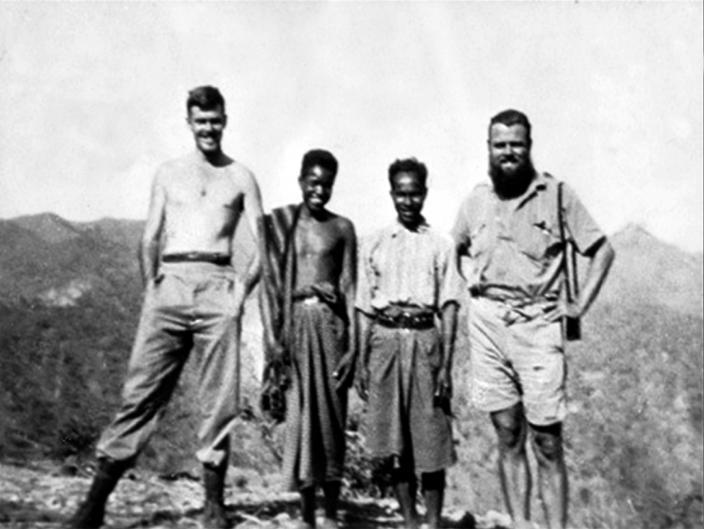
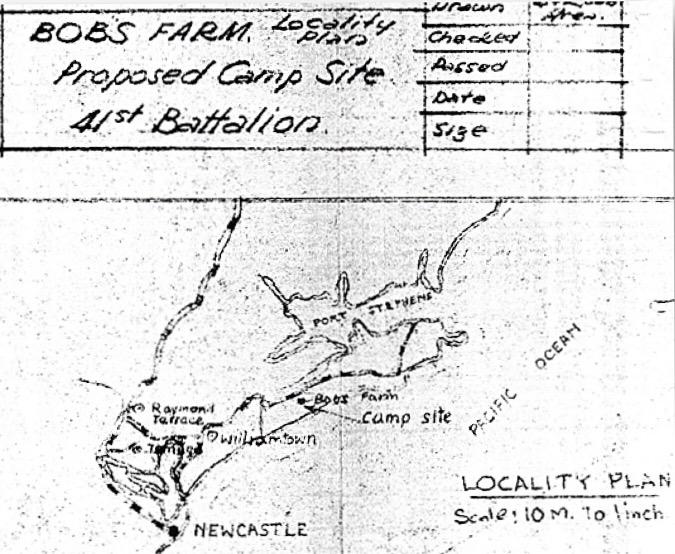
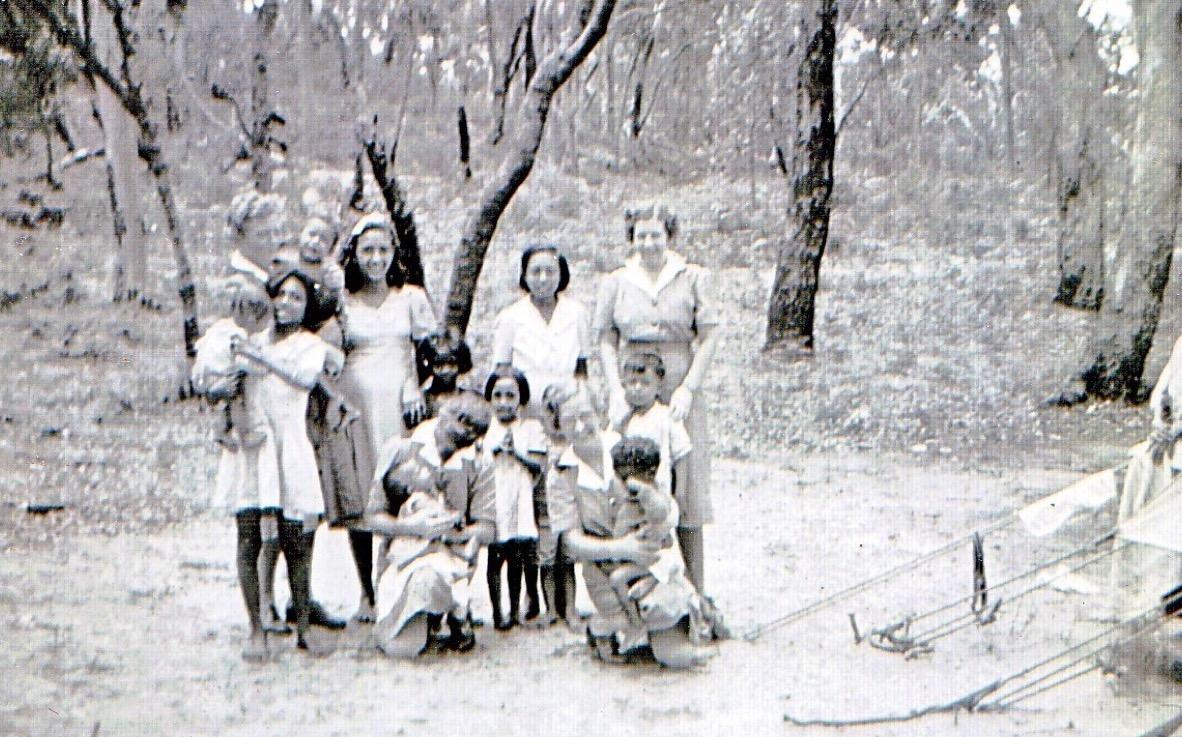
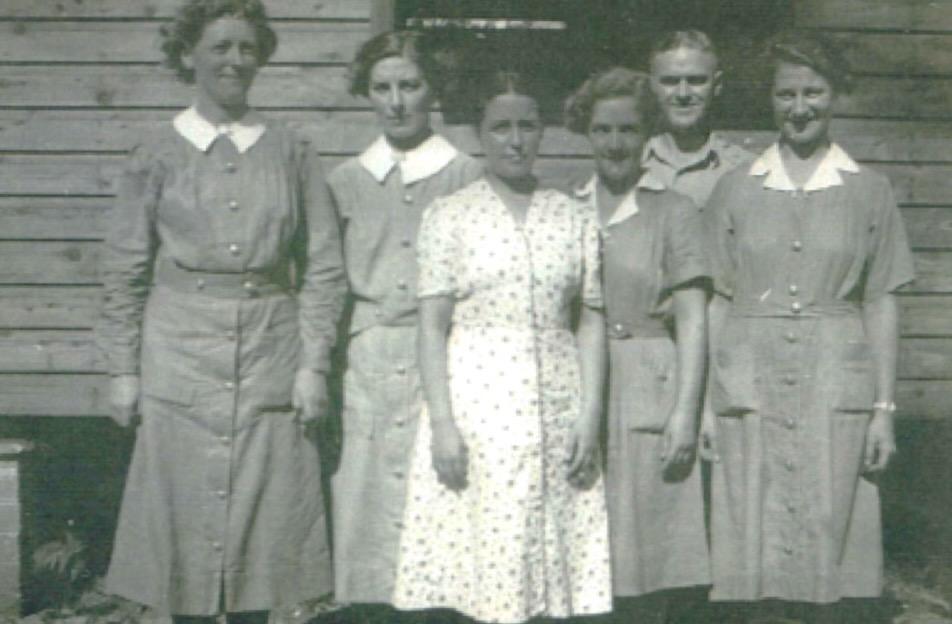
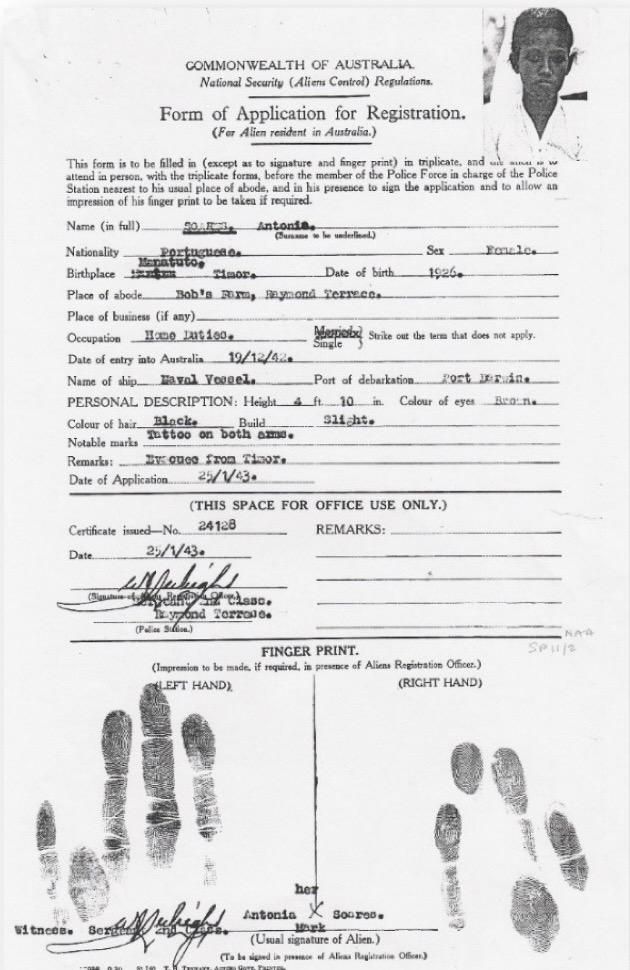
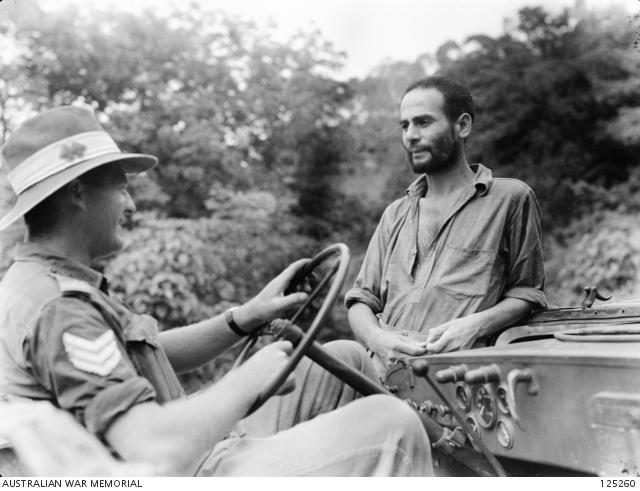
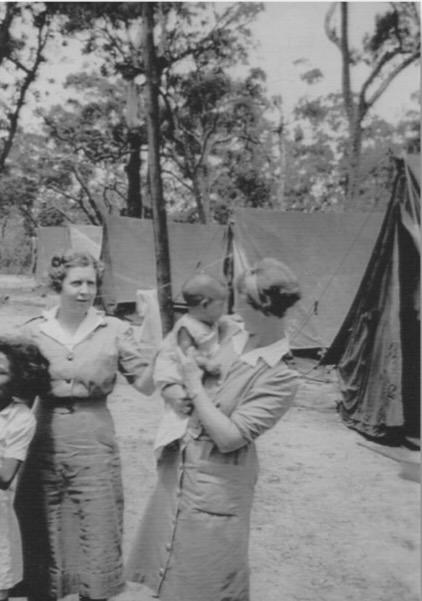
.jpeg.38299512bf36864131a86bd35b908a30.jpeg)

.jpeg.4d2782b9261e329372f36a1d5471e37d.jpeg)
.jpeg.0afac76850a44224a6c61db930e1cdda.jpeg)