Edward Willis
-
Posts
1,141 -
Joined
-
Last visited
Content Type
News
Video & Audio
Men of the 2/2
Forums
Store
Gallery
Everything posted by Edward Willis
-
 WWII IN EAST TIMOR AN AUSTRALIAN ARMY SITE AND TRAVEL GUIDE MANUFAHI DISTRICT Betano (9° 09' 48" S, 125° 42' 48" E) Betano (Nutur - see Photos Nos. 18-20) is 33 miles (53 km.) southwest of Aileu at a bearing of 161°. This is a small village but important on account of a fair anchorage. The only buildings were the customs house and native huts, some being used for cotton storage. During the latter end of July 1942, Japanese shelled Betano from the sea and only skeleton buildings remain. Australian Forces used the anchorage at Betano for several weeks and found it very satisfactory. [1] 4. Betano—Nutur (125° 44'E.) - see photos nos. 18, 19, 20. Two and a half miles (4 km.) northeast of Cape Lalete. Cape Lalete is low and marshy. The bay is 21/2 miles (4 km.) across the eastern half being full of reefs, some nearly exposed at high tide. The western half is clear but exposed to the southeast. As a result the anchorage was not often used in the southeast season. The anchorage is in 11 fathoms (20m.) about 300 yards (275 m) southeast of the wreck, but in order to avoid the fate of the wreck, it is recommended to let go anchor when 16 fathoms (30 m) is reached. This wreck is a good identification mark, but not a prominent landmark; 4 to 5 miles (61/2 to 8 km.) is the limit for visibility from seaward. Other identification marks were the customs house and a post on a concrete stand. Approaching this post on a bearing of 315° would miss the end of the reefs. [2] Betano - satellite view [3] The road from Same to Betano turns east along the coast with the ocean intermittently in view through fringing scrubland and palm trees. After a kilometre or two turn onto a track that leads to a roofless Portuguese era building that is the former the Customs House referred to in the ASPT. The building overlooks the wide expanse of Betano Bay, standing about 70 metres from the waterline. Indonesian era monument in front of the Customs House - 28 April 2014 An Indonesian era monument is positioned in front of the Customs House has steps leading up to what must have been a flagpole. This monument may have been adapted from the ‘post on a concrete stand’ mentioned in the ASPT. Painted on one side is the faded figure of an armed and running marine soldier and the insignia and motto of his unit. On the seaward side the insignia is repeated and the date ‘27.1.1976’ is inscribed. This commemorates the date the Indonesians invaded this sector of the island from the sea prior to their unilateral annexation of all of the former Portuguese colony a few months later. After landing, they advanced towards Same to take control of its airstrip. Portuguese customs house, Betano – April 30, 2018 In December 1945 official war artist Charles Bush found himself sketching in the crashing surf of Betano Bay, Timor, recording the rusting hulk of HMAS Voyager. More than three years previously this bay had been the site of dramatic events that ultimately ended with the scuttling of the ship. Charles Bush was following in the traditions of the Official War Art Scheme established during WW1 to record and reconstruct paintings of historic military events. A series of works of HMAS Voyager that followed illustrates the artistic working process of Charles Bush, reconstructing events that he had not witnessed. Sept. 24, 1942 - HMAS Voyager aground in Betano Bay, Timor [4] When the Japanese invasion force swept across Timor in February 1942 the defenders of the island outpost were quickly overwhelmed by the rapid Japanese attack. However, the men of the 2AIC melted into the mountains to wage an effective guerrilla war against the occupying Japanese. The isolated Australians were able to re-establish contact with Darwin on 20 April 1942 by constructing a radio dubbed ‘Winnie the War Winner’. Back in Australia the decision was made to maintain the harassing guerrilla force on Timor, and a regular program to resupply the troops was established. It was recognised that fresh troops were required to continue the fight and HMAS Voyager was tasked with inserting 600 members of the 4AIC and supplies into Timor while evacuating 400 men of the original force. HMAS Voyager arrived in Betano Bay and anchored half an hour before sunset on 23 September 1942. To make the most of the fading light, the troops were ordered to disembark immediately. This would prove to be a fatal mistake for the Voyager; within minutes it was realised that a strong tidal current was pushing the ship parallel to the shore. The collapsible boats, made from canvas and plywood, were rapidly filling with troops directly above the portside propeller. Captain Robison urgently needed to manoeuvre the ship into deeper water using the port engine, but he waited 17 minutes for the troops to get clear, as he feared if the port engine were to start it would suck the men into the propeller. Once the engines were started Voyager had nowhere to move, and within a minute was stuck fast on the beach. From anchoring to the eventual grounding of HMAS Voyager, only 23 minutes had elapsed. The rest of the night and the following morning were taken up with frantic attempts to dislodge the ship, but to no avail. The decision was taken at noon to abandon all attempts to free the ship, as by this time sand had surrounded the propeller and ship’s hull. The efforts of the independent companies and Voyager’s crew were now diverted to emptying the ship of all supplies and anything else that could prove useful. This operation was hampered by a number of Japanese air raids. Voyager was stripped of all supplies by 8 pm on 24 September and demolition charges were laid in the engine room, blowing holes in each side of the hull. Charles Bush - HMAS Voyager wrecked and burning at Betano Bay [5] Early the next morning Captain Robison and a member of the crew set fire to the ship, burning its remains. It was this dramatic act that artist Charles Bush would ultimately record for posterity through his work. Voyagerburned throughout the day, with the ship’s magazines intermittently exploding. That evening HMAS Warrnambool and HMAS Kalgoorlie evacuated the stranded Voyager crew along with a number of the wounded from the independent companies. More than three years after the burning of HMAS Voyager Charles Bush made a pilgrimage to where it had foundered. Like First World War official artist George Lambert’s expedition to Gallipoli in 1919 to produce sketches of the battlefield and later reconstruct paintings of the campaign, Bush was set a similar task. He was sent with an Australian army Military History Section team to collect material and record the significant battle sites in Timor. Up until Bush’s deployment there was no official artistic record of Australians fighting in Timor, and there was little opportunity to visually document the chaotic HMAS Voyager resupply operation. Only a handful of photographs from this operation are known to have survived. The Military History Section field team arrived in Timor just after the Japanese surrender in 1945. The team included Bush, photographer Keith Davis, and veterans of the 1942–43 Timor campaign to act as guides. The team’s movements around Timor were hampered by climatic conditions, but this did little to dampen Bush’s enthusiasm to record the landscape of Timor: ‘…. rain pinned us down here [Dilli] for a while but as these conditions coincided with those of 1942, my colours as well as subjects will be of value in bringing these places back to the memory of those who were there’. Bush also described the heavy going on the expedition to get to the site of HMAS Voyager’s demise: ‘…. heavy rain and the jungle having swallowed the tracks, made these places inaccessible, as it was we had to substantially repair 2 bridges to get to Betano, painted the rusty hulk of the Voyager, also a pen sketch of a detail, as we did not want to be cut off here, will rely on the photographs taken for any reconstructions necessary’. Bush’s visit to the wreck was brief, and he completed only two works. Keith Davis photographed the wreck as Bush was completing the ink and oil sketches. Engine block from the Voyager, Betano – May 2, 2019 Bush was mindful of the difficult task of accurately reconstructing events in Timor. While there he wrote to Lieutenant Colonel John Treloar, Officer Commanding the Military History Section and later Director of the Australian War Memorial, stating he wanted to contact as many of the Timor campaign veterans as possible, to gather their recollections to make his paintings as accurate as possible. Upon his return to Australia, Bush met with Major Baldwin from the 2AIC, and ‘received a good account of the burning (deliberate) HMAS Voyager at Betano’. This meeting gave Bush the final piece of the puzzle required to begin working on the accurate reconstruction of the scuttling of HMAS Voyager. [6] The dwindling remains of the wreck of the HMAS Voyager are still visible on the beach at Betano about 800 metres west of the customs house. RAN clearance divers were at Betano in March 2000 when HMAS Betano, a 'landing ship- heavy' (LHS), visited the place after which she was named. The divers surveyed the wreck and disposed of some of the hazardous material there - a torpedo, depth charges, fuses and shell. They located an anchor, three four-inch guns and the ship's two propellers. [7] References [1] ASPT: 29-30 [2] ASPT: 13 [3] Apple Maps - 30 March 2023 [4] Dymond - The history of HMAS Voyager 1: 187 [5] https://www.awm.gov.au/collection/C174992 [6] The preceding text about the wreck of the Voyager and Charles Bush was adapted from: Alex Torrens ‘HMAS Voyager wrecked and burning at Betano Bay’ https://www.awm.gov.au/articles/blog/hmas-voyager-wrecked-and-burning-betano-bay [7] ‘The deep end - Navy divers in Dili’. – Sydney: XYZ Networks Pty Ltd, 2000, DVD video, 50 mins.: sd. col. https://www.youtube.com/watch?v=Fm0WPValKKs 613353340_Betano-WWIIinET-AASTG.pdf
-
WWII IN EAST TIMOR AN AUSTRALIAN ARMY SITE AND TRAVEL GUIDE 14. MANUFAHI DISTRICT Alas (09° 01′ 19.39′′ S, 125° 47′ 07.89′′ E) Alas is 26 miles (42 km.) southeast of Aileu at a bearing of 141°. Situated on the southern foothills, it has a good outlook towards the coast. It is a market town and controlled by the Commandant of Same. There is also a mission station, church, schools and priest's residence constructed of stone with galvanized iron roofs. An old posto built of stone with galvanized iron roof about one mile west was damaged by Japanese aircraft in August 1942. No persons reside there at present. There are some coconut plantations along the Seissara Creek which flows midway between the posto and mission station in the northeast. [1] Alas – travel directions Alas can be reached by travelling north for 15.6 km from an intersection on the south coast road (Estrada Betano Umaboco) on the western side of Wedauberek. The minor road of variable quality ascends gradually towards the township. Typically, the old Portuguese posto that was used as HQ by both Sparrow and Lancer Force is situated on higher ground some distance from the town and is difficult to locate; consult the district administrator for directions or employ a local guide to find your way. It is an impressive site – the Portuguese posto building incorporates Indonesian era military structures with brightly painted unit insignias on the walls. There is a separate hospital, a substantial gateway, steps and walls. All these structures were totally overgrown until the vegetation was cleared recently by labourers employed under a Timor-Leste government programme. [2] Lieutenant Colonel Spence moved Sparrow Force HQ to Alas on 24 August 1942. [3] After the push had finished, on August 19, Major Chisholm and Captain Webster from Force Headquarters and Captain Wylie and Captain Broadhurst from Z Force were evacuated from the island. The following day Major Cape, Captains Francis and Parker and Lieuts Atkins and Dowman from Force Headquarters followed them. The same day that the first party left for Australia the Force HQ shifted down to Alas. The hospital moved at the same time, the sick men being forced to carry all their equipment, marching all night and resting the following morning, then continuing on the track to arrive at Alas about midday the following day. They established themselves in the Posto there but the following day moved into the priest's house at the mission. Most of the inhabitants had gone from the town after the Japanese commenced their concentrated bombing and the place was consequently almost deserted. ….. the hospital had also moved from Alas after that town was severely bombed in the end of September. These air attacks were not actually against the hospital as Force Headquarters was at this time in the same area. During the bombing and strafing, the patients from hospital had to be taken from their beds and hidden in bushes surrounding the wards. This type of treatment had to be avoided at all costs, particularly with bad malaria cases. [4] Portuguese posto, Alas - 18 August 2022 Ken Piesse (4AIC) recollections: He describes their [4AIC Advance Party] climb, accompanied by a long pack train of Timor ponies (cudas) carrying stores, for two hours up the steep, rough, rocky dalan to the village of Fatu Cuac. ‘A picturesque place high up overlooking the Timor Sea’, where they enjoyed a good feed of rice and pork and paw-paws before moving on for Alas, the HQ of Sparrow Force with Lieut.-Col. A. Spence in command: ‘Tired as we were when we reached the old school building now used as a hospital, we could not help but admire the 'township', nestling as it does amongst the emerald hills. The little white church, damaged by Jap bombs, was beautifully set against the hill just across the coconut tree and plantation filled valley. Other Portuguese buildings, conspicuous as they are all over the island for their whiteness and Spanish design had suffered bomb damage, but as dusk fell, life at Alas seemed pleasant and restful. Since leaving Betano, Pat Haigh had to be carried on a pony because of severe tinea between his toes and he was destined to remain at Alas in Capt. Dunkley's Hospital until he was later returned to Darwin’. Major Mac Walker (4AIC) and Captain Geoff Laidlaw (2AIC) at Force Headquarters, Alas, with Timorese supporters [5] The Advance Party left Lieut. Nicolay at Force HQ. It then moved from Alas on 18 September, along the westward track under the guidance of Capt. Laidlaw, renowned for his beard and his exploits, including the downfall of the infamous and boastful ‘Singapore Tiger’ at Aileu. Passing the: ‘pretty little village of Darramata’, they reached the wide Sue River, fairly deep even then in the dry season’. [6] The 2AIC men took Walker’s party to Sparrow Force HQ at Alas, a tiny settlement in the hills above Betano Bay, where Walker and his senior officers were briefed on the Timor operation. At the meeting, the 2AIC officers outlined a policy of joining the platoons of the 4AIC Company with those of the 2AIC so that the new arrivals could quickly learn the ropes. For example, the three sections in Dexter’s A Platoon would each be joined by the three sections of the 4AIC’s A Platoon, with the same principle applied for its B and C platoons (the 4AIC Company did not have an improvised D Platoon like the 2AIC). The policy sounded fine in theory but it might not work on the ground. With food supplies still acute in the wake of the August push, it would be impossible to find sufficient local food for groups of 40 men in any one area. [7] ‘Alas’ – watercolour painted by Corporal Francis John ‘Curly’ Papworth, VX66806, Engineers, 4AIC [8] After the departure of the 2/2nd Independent Company the wide sweeps of the Japanese caused Callinan and Walker to reconsider their position. Soon after the affray at Same Japanese attacks forced some of Murphy's troops out of their positions on the Maubisse-Same road and the invaders' movements seemed likely to cut Thompson's platoon off from the main force . About the same time attacks were jeopardising O'Connor's positions farther to the north. Walker then defined a basic area which he considered it necessary for his men to hold if they were to survive and continue fighting as a force, though, if this were lost, he thought they might continue the fight as small groups and individuals farther to the east. This area was generally that within an arc sweeping northwards from Alas, through Fai Nia, to Laclubar and thence east to Lacluta. Accordingly Thompson's platoon (less the Ainaro detachment which was completely pocketed by Japanese and hostile natives) was based on Alas; Murphy's was based on Fai Nia; O'Connor's men were based on Fatu Maquerec (with one section still manning the observation post which looked into Dili from a point north-east of Remexio). [9] Gordon Hart (4AIC) recollected his return to Timor in 1973: All four Groups took the opportunity to dash south from Same to Betano beach to pay their respects to the rusting remains of HMAS Voyager. B Group returned to Alas, but by-passed Fatu Cuac, as the road was in bad shape. …. ‘I was not aware that Steve was giving Fatu Cuac a miss so I was completely lost for about an hour. Then lo and behold, there was a banana plantation. Now I've never associated Alas with a banana plantation, but out of the blue came a flash of the past and I knew I was in Alas. At the far end of the town I could remember a sharp climb, with a plateau on top of the hill, where Major Spence had his Force Headquarters. Wal Staples and I decided to climb the track and ascertain if this was really the spot where Force HQ had been. The track had been widened for vehicular use, but it was still mighty steep. For about 10 minutes we trudged, with hands pushing on knees, then Wal enquired - in between puffs – ‘How much bloody further is it?' Things had changed a bit with the grading, but on turning the next corner I was able to tell him: 'Just around the next bend we will find a dead flat plateau’. Sure enough there it was - just as I had seen it 31 years before. [10] References [1] ASPT: 28 [2] The town was visited by 2/2 Commando Association Committee members Ed Willis and Murray Thornton on 18 August 2022 [3] Sparrow Force war diary entry, 24 August 1942 [4] Robinson - [Timor (1941-1942) - Sparrow Force and Lancer Force - Operations]: 100, 119 [5] Lambert - Commando: from Tidal River to Tarakan: 93 [6] Lambert - Commando: from Tidal River to Tarakan: 91 [7] Cleary – The men who came out of the ground: 207 [8] https://www.gibsonsauctions.com.au/auction-lot/francis-john-papworth-b.-1915-ailalec-muckul_C03441F935 [9] McCarthy - Appendix 2 ‘Timor’ in South-west Pacific area - first year: Kokoda to Wau: 618-619 [10] Lambert - Commando: from Tidal River to Tarakan: 432
-
REQUEST FOR FUNDING PROPOSALS 2023 https://doublereds.org.au/forums/forum/22-funding-proposals/ DEADLINE 28 APRIL 2023 The committee of the 2/2 Commando Association of Australia is seeking proposals from members and supporters about projects that it consider for the provision of financial support. Eligible projects must be being undertaken in the areas where the 2/2 campaigned: East Timor, New Guinea and New Britain. A$5,000 is available for grants approved in 2023. In previous years the committee has made grants to applicants for the container transport of donated goods to East Timor, construction of school toilets and professional development training for teachers. The most recent grant was made to Timor Leste Vision for the construction of a toilet block at the Nunupu Kindergarten and Pre-Primary School in Ponilala, Ermera. Go to the Funding Proposals page on the Doublereds website to make a submission: https://doublereds.org.au/forums/forum/22-funding-proposals/ ‘Start new topic’ on this page and describe concisely (no more than two A4 pages) the proposed project, the amount requested, who will benefit and why you think the association should provide financial support. Please attach plans or images, if the proposal relates to the construction of a building such as a classroom or dormitory. The committee is more likely to support proposals that will achieve a clear or measurable benefit than proposals that are more general or open-ended. PLEASE SUBMIT YOUR FUNDING PROPOSAL BY C.O.B. 28 APRIL 2023. _________________ Noel Strickland President, 2/2 Commando Association of Australia
-
Over 10 years ago former Brigadier General Ernest (Ernie) Chamberlain waged a well-documented but sadly under-recognised campaign for recognition of the Timorese men who served with Australian special operations in Portuguese Timor during WWII. His comprehensive and aptly-titled monograph ‘Forgotten men’ (self-published 2010) includes pen-portraits of the Timorese men who served – one of these men was Sancho da Silva (1917-1997) who is featured in an image on the front cover of Chamberlain’s work along with other Timorese operatives while they were underdoing training at the Fraser Island Commando School in November 1943. Paul Cleary observed that: ‘A small detachment of Australia's Z Special Unit, a forerunner of the SAS, operated in the rugged eastern mountains of Portuguese Timor (now East Timor) in late 1942, while as many as 700 commandos fought the Japanese in the centre of the island. The Z unit recruited 71 Timorese men and brought them to Australia for training in special operations. About 40 were trained as "operatives". Timorese recruits were paid Australian salaries and wore Australian uniforms. A handful were then "inserted" into Japanese-occupied Portuguese Timor from 1943 onwards. Most were killed, captured or died in captivity. Sancho da Silva was captured in January 1944 when his mission was compromised because Japanese troops had obtained the Australian code. He was tortured and spent 18 months in captivity along with his commanding officer, Lieutenant John Cashman’. Sancho da Silva returned to Portuguese Timor in 1946 and lived in his home area at Ossu Wagia. He gave statements to the post-War war crimes investigation. He married Laurentina da Costa in 1946. During the Indonesian occupation, Sancho da Silva was a member of the anti-Indonesian Resistance movement in the period 1975-1977. In 1977, he was captured by Indonesian forces and imprisoned for three months at Ossu. Da Silva died in 1997 of pulmonary and respiratory failure. As a result of assistance and advocacy by Ernie Chamberlain, in 2011 the Department of Veterans Affairs (DVA) Mrs da Silva was awarded a one-off "act of grace" payment of about $30,000, a Gold Card for medical treatment and a regular monthly pension. Chamberlain noted: ‘Apropos Sancho da Silva’s monument, I believe that his widow Sra Laurentina paid for it from her DVA “act of grace” payment’. Though movingly dedicated to the memory of one of the ‘forgotten men’, in the absence of an appropriate national memorial for the whole group, this monument can in some measure fulfill that purpose. Visiting the site can be included in an itinerary covering the nearby Wasadiga “Golden Bullet” Memorial at Loihuno. One of the plaques at Wasadiga commemorates the Australian and Timorese who ‘resisted together in the District of Viqueque’ against the Japanese during WWII. Sancho da Silva is one of the Timorese listed on that plaque. Sancho da Silva monument location - 8.74938° S, 126.40370° E - coordinates were recorded during a visit to the site - 15/8/2022, 11:20 am The monument is located in a cemetery on the southern outskirts of Ossu township – heading south on the main road through the township, turn left immediately after passing the Mercado Municipal Ossu (Municipal Market) onto a road heading east for approximately 2 kilometres. The cemetery is on the right hand side of the road. The prominent monument should be able to be easily located within the cemetery. The inscription on the memorial reads: IN MEMORIAL SANCHO DA SILVA BORN: 12-8-1917 DEAD: 27-3-1997 TO HONOUR HIS CONTRIBUTION TO Z SPECIAL UNIT OPERATIONS IN PORTUGUESE TIMOR DURING WORLD WAR TWO. HE WAS CAPTURED BY JAPANESE FORCES. DUE TO HIS INVOLVEMENT TO THE AUSTRALIAN COMMONWEALTH MILITARY FORCE OPERATION IN VIQUEQUE, TIMOR-LESTE, 1943-1945. Monument - front view SOURCE: Chamberlain, Ernest. - Forgotten men : Timorese in special operations during World War II. - Point Lonsdale, Vic. : Ernest Chamberlain, 2010: 56-57. https://www.scribd.com/doc/29688334/Forgotten-Men-Timorese-in-Special-Operations-during-World-War-II# Sancho da Silva – Timorese, born in 1923 - of Ossu Rua. Scout and guide with OP LIZARD. [1] Evacuated to Australia as a member of the Dom Paulo group on 10 February 1943 on the US submarine ‘USS Gudgeon’ (with Lieutenant M. de J. Pires) from the mouth of the Dilor River (to Fremantle – arriving 18 February). With the Dom Paulo group in Melbourne with Lieutenant Pires for several weeks before moving to Bob’s Farm (Newcastle area) in March 1943 – i.e. with the “cinco indígenas” ex-‘Gudgeon’ (Cardoso - 2007, p.175). He trained at FCS in October-November 1943. A member of the SRD OP COBRA group inserted on 27 January 1944 by RAN Fairmile ML 814 in Darabei area. Compromised by LAGARTO, the two Australians (Lieutenant J.R. Cashman, Sergeant E.L. Liversidge) and Cosme Soares were captured that night in a Japanese ambush. Sancho da Silva and Paulo da Silva escaped, but were captured 12-14 days later. He was imprisoned by the Japanese military in Dili, in Lautem (August-September 1944), and at Dili/Tibar. Sancho da Silva’s rate of pay in November 1944 was 11/6 per day (i.e. an Australian sergeant’s pay rate). [2] On 12 February 1945, he was declared by SRD to Portuguese Consul Laborinho as “employed in semi-Army work”. Sancho da Silva survived Japanese captivity. He was evacuated by the Japanese to Flores on 5 September 1945, to Sumbawa on 15 September 1945, to East Java (arrived 23 September 45), to Bali on 24 September 45, was recovered and taken to Singapore on 3 October 1945. [3] He was returned to Australia and debriefed by Captain A.J. Ellwood (OP LAGARTO) on the fates of SRD personnel in Timor - and was declared as a “Sergeant” in the attached AAF A119 (Casualty Report) of 4 October 1945. [4] In Sydney on 19 October 1945, he received ₤150 in “back pay” and, at Armidale on 31 October 1945, he withdrew his bank funds. Sancho da Silva returned to Portuguese Timor in 1946 and lived in his home area at Ossu Wagia. He gave statements to the post-War war crimes investigation (MP742/1, 336/1/1724; AWM54, 1010/4/40). He married Laurentina da Costa in 1946. During the Indonesian occupation, Sancho da Silva was a member of the anti-Indonesian Resistance movement in the period 1975-1977. In 1977, he was captured by Indonesian forces and imprisoned for three months at Ossu. In 1988, he sought compensation from the Australian Government (through the retired former SRD Lieutenant Frank Holland - and subsequent correspondence with Warren Truss, MP and the Department of Veterans’ Affairs). Sancho da Silva died in Viqueque on 27 March 1997 (aged 74). His apparently unresolved compensation case was re-raised with the Department of Veterans’ Affairs (DVA) by Brigadier (Retd) E.P. Chamberlain in July 2007. The Minister for DVA stated that da Silva’s earlier file had not been retained, and its outcome was unclear. Subsequently, a formal pension/compensation claim for Sra. Laurentina (Sancho’s da Silva’s widow) was submitted to DVA on 30 October 2008 (Claim NX347528). As at mid-January 2010, a decision had yet to be made on the submission. References [1] Stone, P. (ed), El Tigre …, op. cit., pp.140-142 related Sancho da Silva’s activities in early February 1943 - including recovering a hidden wireless set for the SRD LIZARD III party. Sancho is mentioned as a criado - Brandão, C.C., Funo …, 1953, op. cit., p.165. [2] His SRD wage payments were made into an account at the Bank of Adelaide (267 Collins St, Melbourne) – from April 1944 allocated to “H.B. Manderson, Account H” (NAA: A3269, V20). From May 1944, the wages of Paulo da Silva and Sancho da Silva were to be paid to Paulo’s wife – Joanna da Silva (NAA: A3269, V20). [3] The Japanese did not intend evacuating Sancho da Silva – the only non-Australian SRD POW, as an Allied POW until fellow POW Captain J.R. Cashman (Sancho’s COBRA party commander) intervened. [4] Ellwood, A.J., ‘Operational Report on Lagarto, October 45’ (NAA: A3269, V17, p.146-149). See Carvalho, M. de Abreu Ferreira, Relatório …, 1947, op. cit., pp.441-442, p.471, p.735. SOURCE: Paul Cleary “Pension denied for widow of heroic Timorese 'Digger'” The Australian September 12, 2011 https://www.theaustralian.com.au/news/nation/pension-denied-for-...roic-timorese-digger/news-story/95c48c0df6413fcf9d3418ae9a44d409 CELESTINO dos Anjos served with distinction in Australia's special forces in World War II, becoming the only Timorese recruit to receive a bravery decoration. But his execution by the Indonesian army in 1983 -- as part of a massacre of hundreds of Timorese -- has disqualified dos Anjos's widow Madalena from receiving an Australian government war widow's pension. Vietnam veteran Ernie Chamberlain, a retired brigadier who has pushed the interests of Timorese war widows since 2007, said the government had made an overly bureaucratic and unsympathetic decision regarding Mrs dos Anjos. The Department of Veterans Affairs recently granted a pension to Laurentina da Silva, whose husband Sancho was captured on Timor by Japanese forces in 1944 and imprisoned. Da Silva died in 1997 of pulmonary and respiratory failure. But after agreeing to provide Mrs da Silva with financial assistance, the department denied a request from Mrs dos Anjos. "It was apparently deemed by DVA that Sancho da Silva's death could be linked to his WWII service while the death of Madalena's husband could not," Mr Chamberlain said. Mrs da Silva was awarded a one-off "act of grace" payment of about $30,000, a Gold Card for medical treatment and a regular monthly pension. All that Mrs dos Anjos has in return for her husband's bravery is a weighty specially minted and numbered silver medal that has the Australian coat of arms on one side and the words "For Loyal Service" on the other. A small detachment of Australia's Z Special Unit, a forerunner of the SAS, operated in the rugged eastern mountains of Portuguese Timor (now East Timor) in late 1942, while as many as 700 commandos fought the Japanese in the centre of the island. The Z unit recruited 71 Timorese men and brought them to Australia for training in special operations. About 40 were trained as "operatives". Timorese recruits were paid Australian salaries and wore Australian uniforms. Some, like dos Anjos, enlisted in the Australian army and had intensive training that included parachuting. A handful were then "inserted" into Japanese-occupied Portuguese Timor from 1943 onwards. Most were killed, captured or died in captivity. Sancho da Silva was captured in January 1944 when his mission was compromised because Japanese troops had obtained the Australian code. He was tortured and spent 18 months in captivity along with his commanding officer, Lieutenant John Cashman. Several other missions sent to Portuguese Timor suffered a similar fate. It wasn't until mid- 1945 that Z Special Unit discovered the shocking truth when they sent unannounced a three- man party that included dos Anjos and Lieutenant Arthur Stevenson. The three were dropped in by parachute and soon learned that all the Australians and Timorese from their unit had been captured. The party was discovered by Japanese troops and hotly pursued. Mr Stevenson wrote in his report on the mission that it was only dos Anjos's bravery and local knowledge that allowed the party to evade the enemy for five weeks and be rescued. Mr Stevenson immediately recommended that dos Anjos be awarded a high military honour for bravery, but this did not happen until the early 1970s. A decade later, dos Anjos was one of hundreds of Timorese massacred by Indonesian troops in the villages of Kraras and Bibileo. He and his daughter were forced to dig their own graves. It was the village of Bibileo that had supplied and protected Mr Stevenson's party back in July 1945. A spokeswoman for Veterans Affairs Minister Warren Snowdon declined to comment on Mrs dos Anjos's case for privacy reasons. Paul Cleary is senior writer at The Australian and author of a history of Australia's World War II guerrilla war in Timor [?] SOURCE: From: "Ernest Chamberlain" Subject: Timor - Geoffrey Gunn, Forgotten Men Date: 1 February 2020 at 12:09:49 pm AWST To: "'Edward Willis'" Apropos Sancho da Silva’s monument, I believe that his widow Sra Laurentina paid for it from her DVA “act of grace” payment. See attached a photo - taken by my wife Christine, of me assisting Sra Laurentina fill in the DVA application forms near Viqueque in October 2008. As you know, the Australian Government did not viewed favourably any “recognition/compensation” for Timor’s “Forgotten Men” or their NoK – except belatedly in the case of Sra Laurentina. It’s not fully clear to me why DVA relented on Laurentina’s case – but it was the “Year of the PoW” in Australia at that time, and I think that probably had something to do with it (i.e. as Sancho survived the Japanese camps). All my correspondence to the Australian Government and their agencies seeking recognition for the Timorese “Forgotten Men” is summarized at pp.86-87 of “Forgotten Men” – 2010. Regards, Ernie _____________ Prepared by Ed Willis Revised 12 March 2023 © 2/2 Commando Association of Australia
-
Japanese soldiers view the Dili shoreline from their transport ship - 20th February 1942 - the twin- spired Dili cathedral is the dominant building [1] Bernard Callinan provided the most well-known Australian eye-witness description of the Japanese landing at Dili, 81 years ago on the 19th February 1942 in his book ‘Independent Company’. Callinan was asleep in the Dutch headquarters, after a meeting with Colonel van Straten, when a Japanese destroyer began bombarding the town. A nearby resident, Carlos Cal Brandão, a Portuguese “deportado” and lawyer, also later recounted these dramatic events. He began: “The night of the 19th of February was dark, of a compact blackness, because the [Allied] Military Command, through the Municipal Administration, had, since its arrival, ordered a «black-out». Suddenly, the whole house shook as an explosion erupted. Instinctively, before turning off the small lamp, I looked at the clock: a quarter past twelve. Another explosion, another one, another one, and the old house creaked, in a strident tone from the scraping of the zinc sheets on the roof. I groped my way to the yard, approached the servants who, standing in a group, very silent, trembled at the flash of cannon fire, at the hum of the shells that, scattered haphazardly throughout the city, passed now more distant, next now further away”. Brandão’s recollection of the Japanese landing is included in his personal history of WWII in Portuguese Timor titled “Funo” (first published in 1946) that has gained some longer term recognition and notoriety because of its gruesome cover depicting a skeletonised Japanese soldier with his hands dripping blood and an accusingly pointing Timorese “liurai” standing behind patriotically holding the Portuguese national insignia. [2] Callinan and Brandão later became well acquainted with the latter being one of the leaders of the Portuguese residents who refused to go into internment and actively resisted the Japanese invaders in cooperation with the Australians. He and Callinan negotiated the evacuation of most of these Portuguese to Australia in late 1942-early 1943. Employed by the Services Reconnaissance Department (SRD) after being himself evacuated to Australia in August 1943; he was noted as “OC Timorese” in official records. Brandão was a member of the SUNDOG Raid party (also known as SUNFISH D) 21-23 June 1945 that landed briefly in the area of the Sue River (4 miles west of Betano). He served as the official interpreter to the Australian political adviser (W.D. Forsyth) for the Japanese surrender in Timor – 21-25 September 1945. After returning to Australia, at the end of November, he boarded the ship “Angola” with his wife and other Portuguese evacuees, but when it arrived in Dili, he was prevented from disembarking and forced to return to Lisbon; lingering resentment at his failure to support the neutral stance of the government during the war and his left wing political views being regarded as potentially disruptive by the colonial administration as it re-established control. Resuming work as a lawyer in Porto, he remained politically active until he passed away on 31 January 1973. The Japanese assault on Dili is recreated in opening sequence of the recently released Portuguese TV series “Abandonados”. Brandão also appears as a character in the drama; see: https://youtu.be/0sRjVoESR6A REFERENCES [1] The invasion of the Dutch East Indies / compiled by The War History Office of the National Defense College of Japan; edited and translated by Willem Remmelink. - [Leiden] : Leiden University Press, [2015]: 415. [2] Carlos Cal Brandão: [?] - Funo (guerra em Timor). – 2nd ed. - [Porto]: Edições "Açu", 1946. CARLOS CAL BRANDÃO (1906-1973) PORTUGUESE LAWYER AND DEPORTADO [1] DILI, PORTUGUESE TIMOR. 1945-09-23. DR CARLOS CAL BRANDAO, PORTUGUESE INTERPRETER TO BRIGADIER L.G.H. DYKE CBE DSO, COMMANDING TIMFORCE. [2] Carlos Cal Brandão was born on November 5, 1906, in the city of Porto. He was the son of Silo Cal, born in Galicia, and Amélia Brandão de Cal, born in Porto. Carlos had two brothers: Silo (23.3.1908) and Mário (25.3.1910). He completed his secondary education in the city where he was born and in 1922, he moved to Coimbra to attend the Faculty of Law. From an early age, he adhered to republican ideas, he was a freemason and president-elect of the Republican Academic Centre (1926-1927). He was founder and editor of the newspaper Humanity (1929-1931). Especially after the coup of May 28, 1926, which imposed a regime of military dictatorship, there were innumerable “reviralhista” revolutionary movements, revolts against the imposed system and which intended to overturn the political tableau. It was in this context that on March 12, 1931, Carlos Cal Brandão was arrested in Porto, accused of possessing bombs and allegedly planning a revolutionary movement. According to the family, the arrest warrant was addressed to his brother Silo Cal Brandão, however, as he was not at home, it was Carlos who was arrested by the police. In June, he was boarded on the ship Pedro Gomes, heading for deportation on the island of S. Nicolau, in Cape Verde. There he stayed for a few weeks, being then embarked on the ship Gil Eanes, heading for Timor. Like all the deportees who came on this ship, he was disembarked in Oecussi where he remained for a time confined to a space that many called a “concentration camp”. After the liberation of the camp, without permission to leave Timor, the deportees scattered throughout the territory, looking for ways to support themselves. Cal Brandão stayed in Dili, working as a lawyer. Relations between deportees and the Portuguese Administration were somewhat difficult during the 1930s. In 1932, a fire in the Government Palace in Dili generated a huge unease among the Governor, Government officials, political and social deportees. Cal Brandão was the first lawyer appointed to defend the defendant, social deportee Rodrigo Rodrigues. He ended up passing the portfolio on to Grácio Ribeiro, claiming he didn't want to disagreement with anyone, given the lack of agreement between the social deportees who accused each other. According to Grácio Ribeiro, some social deportees said that Cal Brandão, a Freemason, was very close to the “true involved in the plot” and so he conveniently handed over the portfolio to Grácio Ribeiro, still with his law degree unfinished. Indeed, in the writing that he leaves us on the subject, Grácio Ribeiro argues that everything was nothing more than a failed attempt promoted by certain members of the Administration, sympathizers of Freemasonry, to depose the Governor in office. Unfortunately, this case is not well documented, so it is not possible to confirm the veracity of this hypothesis. We know, however, that although the defendant was convicted in Dili, he was acquitted by the Court in Goa and that one of the members of the administration allegedly involved in the case, Fernandes Costa, suddenly left for Lisbon. Still in the early 1930s, he was created by the hands of Arnaldo Simões Januário, a revolutionary clandestine movement, the “Libertarian Alliance of Timor” that even had its own newspaper, sent to the various comrades spread throughout the Colony. Luís Abreu also mentions another organization of the same kind, “Socorro Vermelho”, of which the deportee Cal Brandão was the president. Although it was difficult for us to find more information regarding these two movements, in fact, at this time, Cal Brandão and many others were exiled to Ataúro, where, unfortunately, we were unable to find any information regarding the deportees' passage. The family tells us that Cal Brandão lived in Dili but a disagreement with the administration forced him to move to Ermera, where he met Maria de Lurdes Santa, also of European origin, whom he married in 1936. In fact, in 1934 it was in Ermera that Cal Brandão signed a receipt for the political deportee's allowance, in the amount of 70 patacas, and official documents were signed at the Post where the deportee resided. In 1938, in a telegram sent to the Central Government, Governor Fontoura asked for the return of Cal Brandão and Moreira Júnior to the Metropolis as he considered them a bad influence in the Colony. It is important to say that both were members of Freemasonry, and the Governor feared the way in which they influenced the local elite, encouraging revolts against the Portuguese administration that would not have the strength soldiers strong enough and structured to suppress a well-organized revolt, so he asked that the arrival of the ship Gonçalves Zarco be used for that purpose. Something that, as we know, had no effect as both remained in Timor. In 1940 a new Governor arrived in Timor and with him, a new attitude of the Government towards Carlos Cal Brandão. On the eve of the War, praising the work, intelligence and loyalty of Cal Brandão, Governor Ferreira de Carvalho asked the Central Government to lift his deportation sentence, as he needed his collaboration in State services. Information that is consistent with the testimony by the doctor José dos Santos Carvalho, who states that Cal Brandão was present at the end-of-year festivities at the Benfica and SCP clubs, where “the most serious people on earth” were present, although controversial, given the strict policy of neutrality assumed by the Governor and the position that Cal Brandão would take. It is Chamberlain who tells us that in the early 1940s there was an organization in Dili made up of Lieutenant Pires and the political deportees Cal Brandão, Moreira Júnior, who, being against the regime and being pro-British, were prepared to declare independence from Portugal and form a government in Timor in case Germany took power in Portugal. One of the reports written by David Ross, the British consul in Timor, adds that it was they who had informed the Australian army of an imminent internal revolt, against which the troops would be useless in the defense of the official Government in Timor and to which the rest deported colleagues would easily adhere. It is likely that this report was one of the incentives for the forced landing of Australian and Dutch troops in Timor, in December 1941, which is why most of the European population decided to evacuate Dili, taking refuge inside. Cal Brandão was one of the few to remain in the city, so he witnessed the Australian bombing of Japanese ships that sank off Ataúro. Still without realizing what had happened, Cal Brandão decided to set up a lookout on the beach, so he was one of the first people to witness the arrival of the shipwrecked Japanese. Fortunately, he left us his memories of this time written in the book Funo, Guerra in Timor that tells us that immediately after the landing of Japanese troops (1942-1945), living in the city became intolerable, he moved to his in-laws' plantation in Punilale, having found the house already full of refugees. From his stay, he tells us about a situation in which a Japanese, a former SAPT employee, had now revealed himself to be a military officer and when he arrived there, he asked for information on how to get to Bazar-Tete because he was looking for Australian soldiers. Having camped nearby, he demanded that he be provided with food for his men, guides, horses, etc. With the first incursions of the black columns and the formation of the first platoons of European volunteers, the author decided to move to Fatu-Bessi, where there were several Europeans and assimilated people who had withdrawn there for fear of the assaults. When hostilities began to take on more serious contours and after the first talks in the Talo plantation with the Australian command about a possible concentration of the European population, Cal Brandão opted for “clandestine”, collecting with his family to the regions of Mount Ramelau. In fact, Cal Brandão was one of the Europeans present at the aforementioned meeting, becoming, along with Lieutenant Pires, a fundamental element in the talks with the Australian troops and in the leadership of those who would be evacuated, having been widely praised by the allied forces. In December 1942, Cal Brandão sent his family in the first waves of evacuations to Australia. He stayed in Timor and joined the Australian army, fighting in guerrilla warfare and fleeing through the mountains. Under the command of Captain Murphy, the column where he was integrated was also attacked in Same, causing 12 casualties. In January 1943, new evacuations were organized, however, at the time of embarkation, the stormy sea made manoeuvres difficult, so several men stayed ashore. The clandestine group (about 300 people) would end up being concentrated in the Natarbora region. In the period that followed, along with the deportee Hilário Gonçalves and other Europeans, Cal Brandão would remain in the group of men in charge of the radio. Given the group's fragility in the face of the enemy's strength, from this point onwards and until the evacuation, this group opted for a more guarded attitude, trying to avoid confrontations. In August they were all evacuated to Darwin. Recommended to the SRD by Lieutenant Pires, Cal Brandão was based in Brisbane, as a translator, encrypting and deciphering messages to and from Timor. He earned a salary of £25 a month, of which £10 sent monthly to his wife, who was lodged in Armidale. In December 1944 he returned to Darwin, where he was in charge of directing the training camp of the European and Timorese commandos to be sent back to the field. With the cessation of hostilities and the armistice, in mid-September 1945, he was notified by the Armidale police, to report without fail at Sydney airfield the following day, in order to accompany and interpret a representative of the Ministries. of Australian Foreign Affairs in the Australian diplomatic mission that went to Timor to accept the Japanese surrender. Thus, Cal Brandão was the first Portuguese to set foot on Timor again and meet those who had remained in the “protection” zone, after so many months of famine, misery, mistreatment and total isolation. In the memoirs he left us, Cal Brandão gives a very harsh description of the reality he encountered: very thin people with a great hunger for news, the author having distributed newspapers and cigarettes. At the end of the meetings between the Portuguese Governor and the Australian Diplomatic Embassy, he returned to Australia again. At the end of November, he boarded the ship Angola with his wife, but when he arrived in Dili, he was prevented from disembarking and was forced to return to the Metropolis. Elisa was the daughter of the late Lieutenant Pires. As there was no marriage, Elisa would be seen by society at the time as an “illegitimate daughter”. Realizing that without the protection of the friendly couple, his daughter's life would not be made easier by the pressure of society, he entrusted his daughter to the Cal Brandão couple, who took her in and raised her as their daughter in Metropolis, where they arrived in mid-February 1946. Cal Brandão stayed in Porto, exercising again the profession of lawyer, without ever ceasing to fight for the democratic cause, supporting the various political commissions opposing the Estado Novo, namely, in the candidacies of Norton de Matos and Humberto Delgado. He died on January 31, 1973, in Porto. REFERENCES [1] Translated and adapted from Madalena Ceppas Salvação Barreto. - Timor do século XX: deportação, colonialismo e interações culturais. - Dissertação de Mestrado em Antropologia – Culturas Visuais - Versão corrigida e melhorada após a sua defesa pública. - Outubro 2015: 315-319. [2] https://www.awm.gov.au/collection/C221676 Prepared Ed Willis 18 February 2023 Please cite and acknowledge the source of this information if you wish to reproduce or use it for other purposes
-
Thank you for making contact Phil – apology for the late response. I note that the view that the radio was named after the WTWW cartoons is made in an article ‘Timor epic’ Australian Women’s Weekly January 16, 1943: 10, which states that: ‘They nicknamed it ‘Winnie the War Winner’ after the Australian Women’s Weekly. The … Weekly is proud to have had this honourable mention among the heroes of the Timor hills’. https://trove.nla.gov.au/newspaper/page/4719505. See also ‘The story of The Australian Women's Weekly: the story of this paper...’ Australian Women’s Weekly June 14, 1947: 21. However, no source for that assertion is made in those articles, though it may have been sourced from the articles written by Bill Marien, who had visited Timor in November 1942 in company with the famous war cameraman, Damien Parer, that were widely published in the Australian press in early 1943. This could be checked out on the Trove newspaper database. The Sparrow Force men would have been familiar with the cartoons that were published prior to them leaving for Timor in December 1941. Copies of the AWW were also probably available to the men along with other newspapers and reading materials after they began to be resupplied following the re-establishment of contact with Australia using WTWW in April 1942. I also see that the AWM acerbically notes in its article on WTWW that ‘The name 'Winnie the War Winner' appears to have two sources – one source has it named after a popular but misogynist and dated ‘Australian Women's Weekly’ cartoon of the period drawn by press artist Ron Vivian. But the commandos themselves contend that the radio was named in honour of Winston Churchill’. (https://www.awm.gov.au/collection/C137997). Again, no source is given for the last assertion. Getting the AWM to change or add to their collection displays as you would like to do is an uphill battle; the Association strongly advocated to them recently, unsuccessfully, that the Timor campaign display that features WTWW should be in a more prominent location. If you have a digital version of your Inkspot article about Ron, please attach it to another reply on this Forum. Thank you for your interest and support Phil – please notify us when your book is published. Ed Willis Committee Member, 2/2 Commando Association of Australia
-
An updated version of this post was published as an article in the Military Historical Society of Australia's journal 'Sabretache': Edward Willis 'The Military History Section Team’s Patrol to the Eastern End of Portuguese Timor, 29 December 1945–9 January 1946' Sabretache vol. LXIII, no. 4 - December 2022: 8-18. See the attached copy of the article. The Military History Section Team’s Patrol to the Eastern End of Portuguese Timor, 29 December 1945–9 January 1946 Edward Willis.pdf .pdf
-
SOURCE: Notes on ‘Return to Timor’, 1973 – papers held in 2/2 Commando Association archives. THE BACKGROUND TO THE TIMOR TOUR lt was on the back lawn of Wally Hanlon’s home early in 1971 after another day of painting by the 2/4th Independent Painting Co. that the suggestion was put forward by "Curly" Papworth. Yes, it was agreed that indeed it was time members of the old 2/4th Australian Independent Company should retrace some of their steps of 1942 and re-visit their old wartime haunts in Portuguese Timor. The response to the proposal which was· put to the Annual General Meeting of the 2/4 Australian Commando Squadron Association in Sydney in October 1971 was immediate and positive. Arthur Stevenson was commissioned to write a feasibility report – it appeared in the March 1972 issue of the "2/4THER". At the Sydney reunion there was a large body of troops in favour of a reunion in Timor two years hence and I was asked to write about the general feasibility of such a trip. A TAA Friendship operates three times per week between Darwin and Baucau where there is a pleasant little hotel - or as they call it - pousada, and another one building. These pousadas can be found at Baucau, Dili, Aileu, Maubisse, Same and Tutuala and vary in cost per night between $5 and $10. The plumbing is invariably unfunctional or partly so, but the rooms are comfortable, linen clean and food good (quite often venison). Outside of Dili the accommodation is very limited with room for only 10 or 20 total at most pousadas, so some careful planning will be needed if the numbers are large. However, I recall the hotel accommodation wasn’t all that flash in '42/3 and with sleeping bags - or much better, jungle hammocks for the men, we should cope quite well in school buildings, Chinese shops and the like. We will need liaison in Dili before the event, but I have the contacts to organise the accommodation, transport or itinerary. Transport is primitive and the shot for a small party would be jeeps ($20/25 per day including fuel and driver) or for bigger parties, carreiras, which are 3 ton trucks with wooden seats, $3/4 per head for a day trip. Bloody uncomfortable, until you remember the 3 tonners (without seats) at Foster. With wheels under you distances have shrunk compared with what we remembered. For instance, we left Dili at 0915 went to Betano where we spent an hour crawling over the remains of the Voyager and returned to spend the night at Same. This was by jeep. At another time we left Viqueque (near the south coast, south from Baucau) at 0700, via Ossu, Venilale, Baucau and Manatuto, reaching Dili at 1730 – by carreira. Roads are hair raising but trafficable. One expects that it is a mistake to go back but in this case it is not. Hardly anything has changed since we were there except the emma fuic are under control, no deportados and the administration more benevolent. In many cases the chefes de posto are Timors or mestiços. There is another 3 or 4 miles of tarred road in Dili, no vestige of bomb damage and the occasional air conditioner in the few new buildings. Some of the postos, e.g. Same and Maubisse - have been turned into pousadas to cater for the small tourist trade. There is a small, transient, hippie colony in Dili but the Portuguese have built them a beach house on the eastern outskirts, and they keep pretty much to themselves. The biggest thing that ever happened in Timor was the war, and memories are still afresh, and handed down to the next generation. I got a very detailed description of some aspects of Des (Wanger} Williams fateful operation in Oecussi from a youngster who would not have been 2 at the time. Our young jeep driver identified the exact spot east of Manatuto where "Oak’s” convoy ambush took place (“many Japs died here”). We walked from Turiscai to 6 Sec' s first "home". MocaIuli - and found original inhabitants who remembered the minutest details of old happenings. Unfortunately, most of them were away at a census taking, including the memorable Bereleci. Mauberi was at a village too far to visit and failing rapidly, by all accounts. Just a few notes of my own trip might be of interest. I had already established contact by mail with the Timorese, Celestino dos Anjos, who parachuted with Rod Dawson and me into the Laleia Valley in 1945, and without whom I’m sure I, like Rod, would be 6 feet under. On foot, with kudas carrying our gear, Celestino, my son David and I retraced our steps from our DZ, through our hide-out areas, to Viqueque close to where were extracted in August '45. We wandered all around the DZ, even finding the evil tree where our storepedo hung up. On this leg we stayed overnight at 3 hill villages and covered an estimated 45/50 track miles in 31/2 days. Good boots (Kodiaks) 2 pairs of socks, 2 or 3 weeks of training - a mile run every morning and up 9 flights of office stairs two at a time - made this a fairly painless operation. We cheated a. bit for the last 3 kilometres along the road and rode kudas - a grave and painful error. One touching moment up on Maubaic mountain when a chief who in 1945 had hidden and fed us, and his wife walked through half the night to the village where we were staying, to see us. The only gift I had to give him in 1945 was a U.S. knife fork and spoon set, and this was in his hand when he turned up (less knife which had obviously had good service). In 1971, I left a little lighter in the wallet and without my travelling clock. From here on I started asking the whereabouts of Akiu, my 1942 creado. We travelled to Dili, Betano, Same, Maubisse, Turiscai, Aileu and back to Dili and the bush telegraph had worked! The 11 year old half Chinese boy had become a 40 year old man but he still bears the hideous scars around head and neck where "amigos Japanese" speared and knifed . him and left him for dead when discovering he worked for us. We had a slap up Chinese dinner that night at which I was host - 19 children, relatives and friends of Akiu and Celestino - including Cipriano Vierra Jnr - son of Cipriano and nephew of the better known João (John) who was eventually tortured and killed by the Japanese. In Dili, Viqueque and Ossu, I met a number of Timorese and half Portuguese who came out in '43 and trained with Z [Special] - including Jose Pires (son of the famous Tenente) Chico da Silva, Câncio Noronha, Alexandro da Silva and João Almeida. It was a magnificent experience - the more, so because I had my son to share it - and I cannot tell you too strongly that we have got to make it in '73. Get planning and saving now. A.D. STEVENSON TOUR NARRATIVE SOURCE: Lambert, G.E. - Commando, from Tidal River to Tarakan: the story of the No. 4 Australian Independent Company AIF later known as 2/4th Australian Commando Squadron AIF, 1941-45. - Loftus, N.S.W. : Australian Military History Publications, 1997: 428-437. Steve's visits to Portuguese Timor stimulated the yearning in others to make a "pilgrimage" and renew their friendship with people without whose assistance they could not have survived. Two years of detailed planning preceded the "Return to Timor", of 18 former members of the Unit between 18-30 August 1973. Nine of the men were accompanied by their wives - three by their sons. Mac Walker and his wife Beth were to lead the group, but health problems forced their withdrawal, along with that of Mal and Mary English. The group comprised, Arthur and Ruby Bury, Ralph and Bobbie Coyne, Clarrie Groth, Gordon Hart, John and Dee Jones, Jack and Jean Kelaher, Maurie Kinnane, Jim Landman, Bill and Joan McMicking, Cliff and Peter Morris, Dan O'Connor, Kevin and Laurie O'Regan, Ken and Pat Piesse, Ian Searle, Wal and Elaine Staples, Arthur Stevenson, Alan, Vida and David Thompson and Rob and Margaret Whelan. Steve made all the forward arrangements in East Timor for transport, accommodation, and functions, and he "scouted" the routes. The group assembled in Darwin on 17 August 1973 and flew, on the 18th, by TAA Fokker Friendship across the Timor Sea to land at Baucau International Airport. Joan McMicking recorded her own experiences of a land and its people her husband can never forget: Down below we could see the yachts in the Darwin to Dili race. We landed at Baucau at 5 p.m. to be met by a smiling, bearded Steve, who had preceded us to line things up at that end. The strip is made of coral and is reputed to have cost the Island's yearly budget to construct out in the middle of nowhere. The Timorese boys were all smiles, but ours vanished when we saw the 'carreira' we had to go the 85 miles to Dili in - a covered lorry with sparsely padded seats. The side of the truck was adorned with a banner 'Welcome to Timor – 2/4th'. All piled in with luggage everywhere, and we were told by a departing tourist: 'You are lucky. We had to share our transport with pigs and goats.' We all started off in gay spirits, but it wasn't long before quietness descended as we endeavoured to ride the 'bucking horse' over the most tortuous roads ever. During the ride in the dark, it was amazing the sites of skirmishes recognised by the boys. Towards Dili we passed many natives returning by kuda or walking, the women carrying their loads on their heads. Some were curled up by the roadside in their lepas, waiting to continue their journey of perhaps 30 miles, at daybreak. Reached Dili at 10 p.m., after five hours drive. Hotel Turismo was very comfortable, and had prepared a meal for us despite the lateness - all lukewarm, as most meals are on the Island - but nevertheless very welcome. On Sunday, 19 August, the party split into four groups, each of which set out, on separate itineraries, to visit Ermera, Bobonaro, Maubisse and Same, and villages in between, to gather together in Dili on the 26th, to host a reception for 100 officials, including the Portuguese Governor and various officials, liurais, chefes, criados and other valued Timorese and Portuguese friends who had assisted the men of the Independent Companies and Z Special Unit during the Japanese occupation. B Group headed south - with Stevenson as leader, and Celestino and Akiu as special guests: Our conveyances were two Toyota land cruisers, each flying a 'Welcome to Timor' flag. We reached Maubisse Pousada perched on top of a hill. We had passed through very picturesque country, dotted with 'oomahs' and paddy fields irrigated by means of bamboo pipes from the springs in the hills. All roads have a footpad beside them, trodden by thousands of feet over the years, while up the sides of sheer mountains can be seen the same pads which are the tracks to homes. The view up the valley to Maubisse was breathtaking. During the afternoon we went to a cock-fight in the village, an experience to behold. Jack Jones had a pleasant surprise at Maubisse: We were met by some Timorese who claimed that they had been 'criados' to the Australian 'soldados'. One named Mellissa recognised me as his old 'tuan' during the war and a very happy reunion took place. 'Shorty' Hart took a polaroid photo of Mellissa, Dee and I, which we presented to him. I also gave him money and three pairs of shorts and shirts, which I had brought along on the off chance of finding him alive. When I next saw him in Dili, Mellissa was wearing all the shirts and shorts - one on top of the other. Joan continues her travelogue: Breakfast at 6.30 a.m. next day, and off for Fatu Maquerec - and what a trip. The road was hewn out of the side of the mountain, and only wide enough for the vehicle. Many times we closed our eyes and prayed, not daring to look at the sheer drop below. We proceeded until we could go no further owing to a great log blocking the road. Akiu 'bolo'd' for men to come and dig away the side of the hill to let us pass and turn around. In a trice they appeared out of the blue and with pointed sticks and one hoe they did the road repairs. We all walked about a mile and a half to the village of Mokalulu near Turiscai - after which Bob Phillips named his property - where No.6 Section had camped during the War. We were overwhelmed with friendliness, politeness and giggles from the natives who all stood around. 'Presentas' were handed out, and a 'Mac Walker New Guinea police belt' given to the Chefe. I parted with my hair combs and a hand mirror. Meanwhile, Cliff Morris had temporarily detached himself from A Group to make a personal pilgrimage to the Hatu Lia-Talu-Lete Foho area: I planned to take my son, Peter, with me on a kuda ride through this area and continue on over the Ramelau Range - the highest mountain range in Timor - to the Betano beach, our original landing place. But as it turned out, I was 30 years older, and the mountains seemed to have grown steeper and higher, so the first part of our journey took two days instead of one, as I had planned. If we had continued on to Betano we would not have been able to connect with our transport back to Dili. We left Group A at Fatu Bessi, where we had been welcomed by two Portuguese, Julia Lemos and Serrafin De Santos, who had fond memories of No. 1 Section, particularly Harry Flood and Bill Beattie. We spent a pleasant time going over old memories and they treated us to a fine banquet. There was always a definite feeling of kinship from them to us. They found it very difficult to understand why our Government was so unfriendly. Next day, orders were quietly given and all the Timorese gathered around. Two horses were provided for us, with European saddles. Our packs were picked up by three Timorese in their early twenties. Julia brought an older Timorese over to us and said: 'This is Denese, a foreman in our factory, we have entrusted him with your care.' I asked Julia what we should pay the men and he said 'Nothing, they are employed by the factory. We are happy to help our friends.' During the next three hours we were either descending or climbing inland, in and out of short steep gullies about 300 feet in depth at angles of up to 40 degrees. The horses negotiate the descents by taking very short steps with their front feet, hardly lifting them at all. They bring their hind legs up very close to their front legs and mainly slide them along the ground, taking only occasional steps. On the very steep slopes their hind legs dig in as brakes. Our companions sang, joked or laughed most of the time - mainly at the order and pronunciation of my words as I attempted to speak in Tetum. After a journey of two hours we came over a hill and in the shadows nestled the village of Barona. The chefe of that village had supplied us with food during the war, often leaving his villagers very short of food themselves. As a token of the villagers' help at that time I presented chefe Barona, an old man of about 80 now, with one of Mac Walker's police belts. All of the people of his village gathered to witness the ceremony. I could feel their excitement as their chefe proudly accepted his belt. We crossed the Ermera-Hatu Lia road as darkness was falling. Within 15 minutes, it became impossible to proceed either on horseback or on foot through the coffee trees. We stopped while I took a torch from my pack. To our consternation the beam of the torch revealed that we were on the brink of a sheer drop of around I00 feet. We rested a while, and then moved gingerly along the track. Not a thing could be seen or heard in the cool, still night air but the hoot of an owl somewhere below us. The Timorese then did their 'bolo' (mountain calling), to Peter's delight, as I had been telling him of it since he was a small boy - a haunting yodelling of a language that I do not understand. Before long the answer came back and we moved off in a different direction through the scrub until we came to a good graded motor road that led us to the Talu plantation house, all lit up to welcome us. There, next morning, we met Senhor Candido Barros, and inspected the coffee drying platform which now occupies the spot where I was involved in an ambush against the Japanese. Cliff and his son rode over the mountains to Lete Foho only to learn that his criado Adnesta had died some years before. They then contacted Group A at Bobonaro and arranged to rejoin their group at Atsabe. Ken Piesse recorded the highlights of his tour with Group A. His group set out from Dili with Bazar Tete, Liquica, Ermera, Fatu Bessi and Hatu Lia on the first day's itinerary. It had been arranged for the radio station at Dili to broadcast a message daily across the territory, alerting the people to the visit to their country by former members of the Australian Army, anxious to meet again their friends of wartime days. At Liquica, Joseph Da Silva with his son Alfredo and chefe Rameshu were there to greet them and share memories of friendships forged in perilous times - now part of the 'saga' of the people described by Alfredo: The people gather from their various villages to honour their Chief and the parents review their history for their children and grandchildren. They have a special ceremony where they recall their memories in these groups in which they get together once or twice a year so that their sons and grandsons may keep and pass on for the future generations, what has happened up to the present time. In that way we know a lot about Timorese life that has taken place over the past five hundred years. Joseph Da Silva and chefe Rameshu were each presented with a police belt for their assistance to the Australian troops - the chefe vowing to wear it with pride all his life. Ken recorded the teacher at a Chinese primary school at Hatu Lia tenderly teaching his young pupils a lesson about road safety and love and care for each other. The following day, when visiting Bobonaro, Bobbie Coyne taught the children a few words of English - just enough for them to sing "Baa Baa Black Sheep" for the group. Then they conversed and giggled with Jim Landman, in Tetum. What became of them - those little children? The group moved on to A Platoon's old supply base at Ratu. The chefe they knew had died two years earlier. The new chefe was away - apparently far away - for he did not respond to the 'bolo' call across the mountains, so his police belt was left with his daughter. At Lete Foho the party met up with Alan Thompson's C Group which had come across from Hata Builico in C Platoon's old area. The chefe there, (Major Callinan's former criado, Maluka) was presented with his memorial police belt. Alan Thompson recorded his memories of his return to Timor: It was a wonderful trip. The highlights were the finding of criados and Portuguese who had helped us 30 years earlier. It was nice to be remembered and to try and communicate with these people again after all that time. The children of the island were delightful and happy. I thought the health of the people had improved. There were plenty of medical depots in the villages. The education programme had progressed gradually, but wisely I thought, for there were only relatively few jobs available for educated young people. The number of veterinary and agricultural centres or stations impressed, with the introduction of Balinese cattle and wheat as a crop. It seemed that the Administration is stronger than before. The Kings and liurais now seem to have less authority and be given less respect. We met a number of criados who were with us, including Limili, who had been with us in the Betano area. At Maubisse, we found Bob Fleming's Luckaberry, Joseph, who had worked with Gerry Moran, another Joseph who was with Claude Pulver and Maussen, who had been with Alan Dower. I found Mauberri, who was with me, and Licimo, who was Arthur Kennedy's criado. At a village called Haulau we called to see Antonio Francisco, now a fit 85-year- old Portuguese who, with his daughter, had watched the bombing of the Voyager. We went to Fata Luac, now overgrown with lantana - completely destroyed, and not rebuilt. I had recalled it as a pretty and well-kept town. Even the horse trough, in which Jack Kelaher insists I took a bath, has been partially destroyed. Same had suffered little change. Here we watched native dancers practicing for the impending visit of the Governor. At Ainaro only the church and school remained. We stopped early one morning for breakfast at Hatu Builico. The view of Tata Mailau, the highest peak, was magnificent. We crossed the saddle to Lete Foho and here it was possible to look in both directions and absorb the beautiful views. As we went down towards Lete Foho the country opened up and became excellent pasture with a number of very clean and tidy villages. But, as we observed in other areas too, there were a number of deserted villages. All four groups took the opportunity to dash south from Same to Betano beach to pay their respects to the rusting remains of HMAS Voyager. B Group returned to Alas, but by-passed Fatu Cuac, as the road was in bad shape. Gordon Hart noted: I was not aware that Steve was giving Fatu Cuac a miss so I was completely lost for about an hour. Then lo and behold, there was a banana plantation. Now I've never associated Alas with a banana plantation, but out of the blue came a flash of the past and I knew I was in Alas. At the far end of the town I could remember a sharp climb, with a plateau on top of the hill, where Major Spence had his Force Headquarters. Wal Staples and I decided to climb the track and ascertain if this was really the spot where Force HQ had been. The track had been widened for vehicular use, but it was still mighty steep. For about 10 minutes we trudged, with hands pushing on knees, then Wal enquired - in between puffs - 'How much bloody further is it?' Things had changed a bit with the grading, but on turning the next comer I was able to tell him: 'Just around the next bend we will find a dead flat plateau.' Sure enough there it was - just as I had seen it 31 years before. D Group, comprising veterans of C Platoon, had focussed their tour around their old area of responsibility - Ainaro, Same, Hatu Builico, Nunamogue and Bobonaro - reliving memories and endeavouring to locate old friends, with little success. The explanation for this was provided by a group of Timorese, of whom Ken Piesse enquired what had happened to the criados and other Timorese people who had accompanied the Australian soldiers to Quicras, for the evacuation in January 1943. Joseph, the Timorese driver translated their answer: When you left, the Japanese, who were at Turiscai, Fata Maquerec and Same all closed in. The Japanese shot many people who had helped the Australians and burnt their houses, at Same, Alas and a lot of other places. A lot of the criados were killed by the Japanese. Some were lucky. They hid in the bush, or in holes in the ground and came out only at night. At Ainaro many of the tourists visited the Church to pay their respects for two priests, Fathers Roberto and Peres, who were tortured and killed by the Japanese in October 1942. Some renewed their acquaintance with Mother Marina at the convent school. Ken Piesse recorded an interview with her: I am Italian, but I have been in Timor now for 54 years. During the war I went to Australia in December 1942 on a Dutch destroyer. At that time I was with the Sisters at Laclo. We saw many Australian soldiers at the river nearby. Some of them asked for food. The sisters in the rice fields gave them food. One of your men, Mr Hart, remembers that. He was in Laclo at that time. He remembers us. Wal Staples confessed to her that he and others had visited her unattended convent at that time and "borrowed" two geese. Mother Marina smiled at this and quietly said to him, "You have our absolution." Reflecting on wartime days, she said: Some boys came to us - Timorese boys - and told us who you were. No one told us you were coming, but we were happy to see you. We felt all together ... like a family. We suffered all together at that time. Some of your men carried us through the swamps to Betano when we went to Australia. There was a little girl at Maubisse ... she was 10 years old when she was carried out. On visiting Maubisse, the 2/4th party met this "little girl". She was now the proprieteress of the Hotel. From Same, "Darky" Kinnane was sent off to Ainaro with a parcel of gifts for Mother Marina to distribute amongst some of the more needy Timorese and, if possible, to the families of those who helped us so fearlessly in 1942-43. Mother Marina promised that she would distribute them to the children in the mountains on Christmas Day, with our expressions of gratitude and friendship. At Ermera, the son of Julie Madeira, a Portuguese official who had spurned neutrality to assist the Allied cause, introduced himself. He and Julie's widow were invited to the Dili reception. When the groups re-gathered at Dili on 25 August, Alan Oakley's criado, Mowberry, accompanied by the liurai of Remexio (a son of Dom Masquite, who was killed by the Japanese) with his two small grandchildren, came to meet them. Hart, McMicking, Whelan and Staples, led by Mowberry, and accompanied by Celestino, left Dili at daybreak on 26 August and drove to Remexio. From where they trudged up to their old Dili OP. Then they came down the mountain to Hera, from where they returned to Dili, arriving exhausted at midday. Hart recalls: The OP itself has changed a bit. The old trig point (bottle shaped) has been replaced with a smaller cylinder shaped marker. A lot of saplings have grown all over what was then a completely clear knoll. But the view is still as enthralling as ever. Rob Whelan suggested that we should, on our return to Dili, send a telegraphic signal to Mac Walker - 'Dili OP area all clear'. Unfortunately I was unable to arrange the signal. Mac would have known that he was never far from our thoughts as we moved from place to place in Timor. The Reception held that evening, on the top floor of the Hotel Resende, was a function never to be forgotten. Francisca Vierra, (widow of John, who fought with my section and did not survive the war) was living in very poor circumstances. She was collected by taxi, lifted into a wheelchair, and carried by four strong ex- commando friends of her husband, up all those stairs to the reception, which was held in an open air setting, with tables laden with Timorese food, beer, whisky, orangeade, and Pepsi cola. John Vierra's criado, Antonio, who was a small roly-poly boy of seven or eight years in 1942, and had assumed the task of looking after Francisca when his 'tuan' died, accompanied her to the function. Alan Thompson presented the formal speech of welcome to the Portuguese and Timorese guests: We are a small group representing all the members of the 2/4th Independent Company who were in Timor 31 years ago. We came to visit these places where we had been before, to meet old friends and to say thank you to all those wonderful Portuguese and Timorese people who gave us so much assistance in those troubled times. Some are here today. They looked after us, fed us, guided us and, in many cases saved our lives. We remember the Portuguese and Timorese people with a deep sense of gratitude and just saying 'thank you' seems to be a very small thing to do. But I can assure you, Your Excellency, that we say it from our hearts, with a deep feeling that cannot be expressed in words. We will never forget ... Ralph Coyne presented to the Governor two cheques, each for $750, for the Red Cross Society and the Catholic Church, to be used expressly for the benefit of the Timorese people and particularly those living in the mountains to the south of Dili. The Governor of Portuguese Timor, Colonel Alves Aldeia, responded: In two totally different eras we have now welcomed members of the Australian Armed Forces amongst our numbers ... once in times of war, with arms at the ready, today in complete peace and tranquillity they pay us a visit in a quiet, nostalgic sojourn through those places at which they, in yesteryear, have stayed or passed through. They search for those people who, during those unquiet times, had offered them every possible assistance which one human being could render to another in the Christian manner, even risking not only their own lives but also those of their families and loved ones ... I see in this sympathetic presentation of these two cheques which have been handed to me, a beautiful example of the generosity and recognition characteristic of the magnanimity of the Australian people. On 27 August, the tourists departed from Dili. The main party passed through Manatuto heading for Baucau and Tutuala. Steve, Rob and Margaret Whelan, Wal Staples, Jack and Dorothy Jones, Cliff and Peter Morris and Gordon Hart, in company with Akiu, Celestino and a young Portuguese officer, detoured south at Manatuto to recapture the atmosphere of some old ambush and skirmish sites, and climb once more to the Punar OP. Four miles west of Manatuto they saw where the road had been blown up by Happy Hammond and Jack Jones. Along the Sumasi and Laclo Rivers they found the location of ambushes carried out by No.4 and No.6 Sections, and the place where Owen Williams fell. After a stiff climb out of the Laclubar valley along the track to Fatu Maquerec they came to an unfamiliar new Punar. Their destination was a further two hours along the track. Half of the party turned back to Laclubar. The others soldiered on. Hart recalls: After struggling up and down for two hours, we rounded a knoll and we were at the Punar we knew. There is no village left now, but the copse of trees in the bend of the track and at the base of the last pinch up to the OP is the same as it was before. The sight of that long haul up the ridge leading to the mountain between Punar and Fatu Maquerec, brought memories flooding back through the years. The scene from the OP is still unbelievable. You can see from Dili to Manatuto and back to Turiscai and right around to the valley where Soibada is situated. It was incredible to find the slit trench dug by our engineers so long ago. I sat under the trees where No. 4 Section spent the night when we RV'd with the rest of B Platoon on our way out. Gordon then climbed from Laclubar up to the village where No. 4 Section had spent its first week on the Island, to search for his criado, Luckaberry, only to find out that he had died: From our enquiries we ascertained that after we left the Island, the Japanese occupied Laclubar and systematically killed all adults in the area who had helped us in any way. The chefe, who was then 14 years old, was one of the few who helped No. 4 Section in the area and survived. He traced Luckaberry’s widow and son, aged 14, who were living in a village nearby. I was able to arrange for them to come down to the Portuguese Army post at Laclubar before we left. Our meeting was a very emotional moment. We presented them both, and the village chefe, with clothing, blankets and money. We found the very large village along the old Cribas road overlooking Manatuto, from which we procured quite a number of meals - now overgrown with grass. Only one uma remained. We could find only one young boy and one old man in the area. At Laclo, the old liurai recognised Jack Jones after all those years and the men had a swim in the river "for old time's sake". The groups departed Manatuto on 28 August, for the return to Baucau. Along the road, they inspected the site of No. 5 Section's ambush, led by Alan Oakley, of the Japanese troops in convoy. Rob Whelan located the breastwork of stones that he had prepared to conceal himself and his Bren, as well as five spent Bren Gun cases and a spent cartridge discharged by a Japanese officer from his pistol whilst in hot pursuit of Kit Carson through the cactus. Ken Piesse took a party to the caves dug at Venilale by enslaved Timorese labourers, who were slaughtered there by the Japanese to prevent them revealing their purpose and location to the Allies. At Baucau there were some emotional farewells. Joan McMicking describes one of those moving moments: We all gathered at the bar to bid farewell to Akiu and Celestino. Shorty spoke with a decided quiver in his voice as he presented them both with a 'presenta' from B Group and I noticed that Steve was overcome. Celestino then went home and Akiu joined us for lunch before coming out to the airport - a very dejected, quiet little man. It was very hard saying goodbye to our loyal little friend who openly stood there weeping bitterly. Many of our group too were seen to wipe away tears. Ralph Coyne expressed our thanks to Simon, our driver and guide, and to Angelo, our interpreter, who responded emotionally. Then we boarded our aircraft for our flight away from Timor. My lasting impression of Timor is of a most beautiful, picturesque country - a Switzerland without the snow - of gentle, smiling Timorese people always ready to wave and greet us as we passed by. A country in which we felt welcome wherever we went. https://www.youtube.com/watch?v=Dd08Y-9X7gg
-
80 YEARS ON THE ARMIDALE TRAGEDY AND HEROIC TEDDY SHEEAN On 1 December 2022 commemoration services will be held in Armidale (NSW), Melbourne and Latrobe (Tasmania) to recognise the 80th anniversary of the sinking of the corvette Armidale by Japanese aircraft and the heroic efforts of Able Seaman Teddy Sheean to defend his shipmates as the ship went down. [1] The loss of the Armidale, the tragic loss of lives that followed and other dramatic associated events involving the little ship Kuru and the sister corvette Castlemaine were brought about by the first attempt to evacuate the No. 2 Australian Independent Company from Portuguese Timor. Cyril Ayris recounted the story of what happened in his history of the 2/2 ‘All the Bull’s men’ that can be read in full here. [2] EMOTIONAL FAREWELL [During November 1942] It was decided in Australia to evacuate the 2/2nd, Dutch and some Portuguese from Timor, leaving the 2/4th to take over. The 2/2nd had been there more than eleven months and was utterly exhausted. Callinan’s orders were that the evacuation was to be in two phases: First the Dutch and Portuguese, then the Australians. The timing for the departure of the Dutch and Portuguese appears to have been left to his discretion, as was the pick-up point and all other arrangements. … Three ships would take them off – the little Kuru and the corvettes HMAS Castlemaine and HMAS Armidale. The corvettes would also be landing a new Dutch detachment to replace those being evacuated with the Australians. The Australian Navy’s contribution to supplying and later evacuating the men in Timor culminated in one of the great naval dramas of the war in that part of the world. HMAS Armidale at sea. Note the location of the aft Oerlikon gun situated behind the mainmast [3] The story started when the Castlemaine and Armidale left Darwin on 1 December 1942 to start the evacuation. Kuru had left earlier with orders to rendezvous at Betano. Lt-Cdr P.J. Sullivan, who was commanding Castlemaine, was the senior officer. Lt-Cdr D. H. Richards was in command of Armidale. It was hoped that the ships would complete the evacuation without being discovered, though the odds were slim given the enemy’s air and naval superiority. The morning after the two corvettes sailed, nightmare turned to reality when both ships were spotted by an enemy reconnaissance plane when they were still two hundred kilometres from their destination. The aircraft dropped several bombs, all of them missing, before heading back to Dili. Knowing the planes would be back, the corvettes changed course but were soon picked up by two formations of enemy aircraft, which immediately launched bombing and strafing attacks. Sullivan radioed for help and when several Beaufighters arrived from Darwin the enemy planes flew back to Dili. Neither ship had been damaged. These actions delayed the corvettes’ arrival in Betano. Kuru arrived at Betano and was boarded by about seventy Portuguese and Dutch evacuees, mainly women and children. Baffled by the non-appearance of the corvettes, however, Lt J.A. Grant – Kuru’s Commander – notified Darwin and left at 2 a.m. He was ordered to stay in the general area and to complete the evacuation the following night when the corvettes arrived. Kalgoorlie was sent from Darwin to lend support. ‘Armidale’ sinking reference, Royal Australian Navy memorial globe, HMAS Shropshire Naval Memorial Park, Ulverstone, Tasmania Sullivan sailed into Betano Bay at 3.30 a.m. with Castlemaine and Armidale. When he saw that Kuru had left he turned the two ships about and headed south at full speed. By daybreak they were 120 kilometres off Timor – where they rendezvoused with Kuru. Castlemaine took aboard the refugees and headed for Darwin leaving Kuru and Armidale to return to Timor to pick up the rest of the refugees. HMAS Castlemaine - Gem Pier, Williamstown, Victoria [4] The Japanese meanwhile had spent the night preparing their attack against the three ships. Every available aircraft was loaded with bombs and two cruisers were sent racing to the area. Armidale and Kuru split up but by midday both ships had been spotted by searching aircraft. Armidale opened fire with every gun she had as enemy planes dived on her, releasing bombs and torpedoes and strafing her with machine gun fire. Her gunners shot down a bomber and fighter but she received direct hits from two torpedoes. Armidale rolled over and sank with Ordinary Seaman E. Sheean strapped to his Oerlikon gun, still firing at diving planes. Sheean, who had shot down the bomber, was posthumously Mentioned in Dispatches (MID). NOTE:Post WWII a long term campaign was conducted by Sheean family members and supporters to convince the relevant authorities that the MID was inadequate recognition for Sheean’s bravery and that he should have been awarded the Victoria Cross. After three formal inquiries conducted by the Defence Honours and Awards Appeals Tribunal (2013, 2019 and 2020) this campaign was eventually successful; an investiture ceremony was held on 1 December 2020 at Government House in Canberra. Governor-General General David Hurley presented the award to Sheean's nephew, Garry Ivory. Sheean's medal was the first VC awarded to a Royal Australian Navy crew member. [5] Left: Ordinary Seaman Edward 'Teddy' Sheean. Right: Painting depicting Teddy Sheean strapped to Armidale's aft Oerlikon anti-aircraft gun firing at Japanese bombers. [6] Among those on board were the crew of eighty-three, three AIF men, two Dutch army officers and sixty-one of their Indonesian soldiers. The engineer officer, nine ratings and thirty-seven Dutch East Indies troops went down with the ship. The ship’s lifeboat was freed but those who reached it were machine gunned by the Japanese aircraft. Only a handful survived; they were left in the water clinging to whatever they could find. In Timor, nobody knew of the attacks on the corvettes. The major concern for the Australians was that the Dutch reinforcements had not arrived, meaning that their front line had some serious gaps. The remaining Dutch and Portuguese who were to be evacuated were still in Betano though this was not seen as a serious problem – they could always be taken off with the 2/2nd in phase two of the evacuation. The various 2/2nd platoons began moving towards the beach head, without their packs, while the 2/4th settled in to the areas they were to defend. Kuru meanwhile had become the centre of attention for other enemy aircraft which were harassing her mercilessly. Grant, the commander, evaded the attacks by lying on his back on the deck from where he could see the diving aircraft, and shouting “hard port” or “hard starboard” to the helmsman. Kuru zigzagged first one way then the other making it impossible for the pilots to get a bead on her. Bombs, torpedoes and bullets boiled the sea but Kuru evaded all of them, twisting, turning and circling like a gazelle with a lion on its tail. ‘Armidale’ track [7] The attack lasted seven hours, in which time forty-four aircraft dropped two hundred bombs, every one of them missing their mark. When night fell, Kuru was ordered to return to Australia. The little ship metaphorically shook herself, turned about, and majestically headed south. [8] This pocket compass was used by Lieutenant Lloyd Palmer to navigate ‘Armidale's’ whaler toward the Australian coast. [9] The Armidale survivors spent the next 24 hours in the water, helping the wounded and cobbling together a raft out of two floats and pieces of wreckage. Nearby was the ship’s submerged whaler. When the raft was finished, some scrambled onto it. Lt-Cdr Richards crammed twenty men into a disabled, five-metre lifeboat and set a course for Darwin, 450 kilometres away. They were picked up four days later by Kalgoorlie. Two men had died on the voyage and another two perished before reaching port. Meanwhile, those who took to the raft soon found themselves being circled by sharks. They kept themselves alive with one sip of water a day and a teaspoon of bully beef. On the third day, they managed to work the raft under the stern of the submerged whaler, lifting it high enough from the water for it to be baled with tin hats. It was then partially repaired by stuffing canvas into holes in the vessel’s sides. With the situation becoming more desperate by the hour, a gunnery officer decided to make an attempt to reach Darwin in the whaler, taking 25 ratings and three Australian soldiers. His reasoning was that the closer they could get to the coast, the better the chance of being spotted from the air by an Australian aircraft. The 28 were selected and the overloaded whaler slowly pulled away, leaving 28 of the ship’s company and twenty-one Dutch native troops clinging to the raft under the command of Sub-Lt J.R. Buckland RANVR. Those in the whaler had five dinghy oars, one whaler oar and a boat hook stave. There was no rudder, no sails and their only navigation aid was a pocket compass. They rowed in four watches, half an hour rowing and one- and-a-half hours resting. On their second day, the twenty-nine men shared a 340-gram tin of bully beef. The rainstorms which usually lashed the area at that time of the year did not appear, leaving them without water. Some of the men became delirious. One week after their ship was sunk they ate the last of their bully beef. Later in the day a rain squall appeared enabling them to catch a little water. Hours later they were found by a Catalina that circled low and dropped a note, saying that the raft had been found and that they had dropped them all their food. A ship would be sent to rescue those on the raft and in the whaler. Next day the whaler was found by Kalgoorlie. The men had rowed 230 kilometres in three days. HMAS Vigilant, under Sub-Lt Bennett, was sent out to find the raft party. By this time the area was being patrolled by enemy cruisers, submarines and aircraft. Nevertheless, Vigilant spent five days searching until the ship developed engine trouble and had to return. Neither the raft nor the fifty survivors were seen again. A total of ninety-eight of the 149 men on Armidale had died. A Catalina flying boat was despatched from Cairns to pick up these survivors. She reached the area on the afternoon of 8 December 1942. One of the Catalina aircrew took this picture however, the aircraft was unable to land because of the rough sea state. Despite exhaustive air and sea searches and the rescuing of other survivors, these pictured survivors were never seen again after the Catalina departed from the area. [10] REFERENCES [1] The following list of 80th Anniversary commemoration events is reproduced from the Remembering HMAS Armidale Association Newsletter 1 (8) 31 October 2022: 3. https://www.remembering-armidale.org [2] Cyril Ayris. - All the Bull's men: no. 2 Australian Independent Company (2/2nd Commando Squadron). – Perth: 2/2nd Commando Association, c2006: Chapter 40 ‘Emotional farewell’ pp.366-370. [3] HMAS Armidale (I) http://www.navy.gov.au/hmas-armidale-i [4] HMAS Castlemaine was saved from the wreckers yard and is now a floating museum located at Gem Pier, Williamstown, Victoria. https://hmascastlemaine.org.au [5] ‘Teddy Sheean’ https://en.wikipedia.org/wiki/Teddy_Sheean (Accessed 29 November 2022); ‘Victoria Cross for Australia: Ordinary Seaman Edward Sheean, HMAS Armidale’ https://www.awm.gov.au/collection/C2745058 [6] AWM ART28160 by Dale Marsh https://www.awm.gov.au/collection/C172710?image=1 [7] HMAS Armidale (I) http://www.navy.gov.au/hmas-armidale-i [8] ‘75 Years On - The Timor Ferry Service’ https://doublereds.org.au/forums/topic/109-75-years-on-the-timor-ferry-service/#comment-173 [9] AWM REL/04501 https://www.awm.gov.au/collection/C110553 [10] AWM 300191 https://www.awm.gov.au/collection/C1177743 NOTE: Revised version of an article originally prepared for the 75th Anniversary of the Armidale sinking
-
73rd Annual Commemoration Ceremony Sunday 20 November 2022 Address by Ms Erica Smyth AC Lt Eric William Smyth WX12124 Distinguished guests, ladies and gentlemen. I am delighted to be here today and I too recognise we are on the lands of the Wadjuk people of the Noongar Nation and acknowledge their elders - past and present. I also acknowledge our personal elders past – the men of the 2nd/2nd Commando unit – our fathers, grandfathers, great-grandfathers, in-laws, other relatives, friends; who were, 80 years ago, being evacuated from the southern shore of East Timor. My Dad - Eric William Smyth - was not one to talk a lot about his war experiences but I have selected 4 of the stories he related to us - his 3 children – and have thrown in a couple of other tales. Members of the headquarters staff of 2/2nd Independent Company, discuss their tactics with their officer before setting out on a mission. Identified left to right: QX6455 Lieutenant Colonel (Lt Col) Alexander Spence; WX12124 Lieutenant (Lt) Eric William Smyth; 382001 Major (Maj) Bernard James Callinan; Captain (Capt) Boyland, believed to be WX6490 Capt George Boyland, of Northcote, Vic. His First “In April 1942 we had radios but they were not powerful enough to make contact with Australia. One of our signallers, Joe Loveless, managed to build a radio set to contact Australia. He made the chassis from a kerosene tin. He had the real technical knowledge, but no instruments. No gear, nothing. He was working blind, but they gathered old bits of the Portuguese radios from here and there, parts of our own and built this set to get in touch with Darwin. We had been out of contact since the 19th February. The signal went out and was received south of Darwin. They listened the following night and got us again and then they became suspicious as to who was trying to contact Australia. Joe had some friends and mates in Darwin and we had two or three signallers who had come up to Timor from there. So, one of the Darwin signallers, who was a friend of Joe’s, and another, who lived next door to him, started asking: “What's your wife's name? Where do you live?” They asked personal questions that only Joe or the others could answer and finally they accepted the fact that it was us. So, we then asked for supplies like - quinine, Tommy gun ammunition and boots plus we asked for silver money. The Timorese liked to make silver jewellery - - bracelets and broaches - that sort of thing. Our Australian threepenny and sixpenny, high silver content, money was very prized and we had many IOUs to pay. This radio of course was Winnie the War Winner!” And this has a link to one of my own stories …. Twenty years ago - in May 2002 - I was asked to lead the Woodside delegation to the Timor Leste Independence Day celebrations. I was also delighted to undertake a second task on behalf of Woodside. I went to meet a fisherman (Antonio Soares) who had found one of Woodside’s current-tracking buoys that had been released into the waters off Exmouth. Antonio had seen it on a reef and although he was afraid it might have been a bomb he went out to look. He saw it had English writing on a plaque and he took it to his brother, Santiago, to translate it. Santiago was an interpreter for the UN and he saw it was from Woodside and that there was a reward for the buoy’s recovery. He made contact and I was asked to pay the reward. At the time I was wearing a double red diamond tie pin on my shirt and Santiago recognised it and we excitedly chatted. He told me his father (Jacinto) helped provide food to the Australian soldiers in 1942 by killing a buffalo each month. They paid him before they left with 4 boxes of silver coins. Jacinto then buried the boxes in the hills hoping to recover them after the Japanese left. But the boxes have never been found and Santiago and his family still dream of the boxes of treasure lost in the hills. When I came back to Perth I told Jack Carey of this 2nd/2nd Association the story and he laughed and said it was a common tale and many Timorese had stories of a family treasure of silver coins buried somewhere up in the hills. Now to Dad’s second story “After contact was made in April 1942 the Australian Command in Darwin evacuated the Brigadier and our Commanding Officer, Major Spence, was promoted to Lt Col and he took leadership of Sparrow Force. Like most members of the 2nd/2nd I had little knowledge of what went on at force headquarters. So it was with some trepidation that I learnt that I had been promoted from Sgt of “A Troop” to Lieutenant and seconded to the Sparrow Force Headquarters as an intelligence officer. I had no wish to leave A Troop, I had no expertise or training in intelligence work. I had no idea how I would fare working with Lt Col Spence – but I had no say in the matter - just told to do it. While at Sparrow Force Headquarters I did the coding and decoding of messages. I was meeting the boats that were coming in and taking mail down to them and bringing the other important mail back. I was also helping with the organisation of supplies and things like that. One night I was down on the beach to meet the supply corvette. The first and second tender boats got swamped in the surf. They were not going to bring in a third. We got those two out again by helping the sailors, but all our supplies were floating around in the water. I had the mail to go, so I said to the second boat that went off," Tell the third boat to wait outside and I will swim it out". I only had one spare set of clothes, so I was not going to swim in the salt water in any of them. So I took everything off. I was starkers and I swam out to the tender. Then they took me out to the corvette. Of course, the corvette is blacked out and completely dark. I got on to the bridge and just said I had the mail and if they would waterproof anything that had to go back I would swim it back. They said, "wait a while" and we will put it into your package and sew it up. The Captain then asked, "Is there anything you would like while you are here?" I said, "Well, I would like something to eat". He said, "Well, what would you like?" I said, " Oh, anything. I don't mind. What about a nice piece of bread and jam?" The Captain of the ship said to one of the sailors, "Take this bloke down to the mess and give him a piece of bread and jam.” So down I went to the Sailors’ Mess. They told the mess bloke that I wanted some bread and jam so he got out a loaf of bread, 1 lb of butter and tin of jam and said “here you go.” I was as happy as Larry because we were getting rice and a certain amount of meat, but we had nothing like jam or anything like that. They offered me anything I wanted to take back, but how was I going to take it in? When I returned to the Captain for the return message he was a bit embarrassed as by then he realized I was a Lieutenant and he had sent me down to the crew’s mess. I did not care! When I did get back to shore there were all these stores floating around in the water. A bloke by the name of Don Murray and I decided that we would swim out and rescue what we could because the natives would not go in above their waist. They reckoned there were too many crocodiles around here. We swam what we could in close enough to where they would take it off us and carry it ashore. As we swam around, the stores were drifting down the coast and we ended half a mile or so down the beach and were physically tired. So I walked back up the beach and lay down and went to sleep. The next morning I was covered in sand fly bites. They had eaten me alive, but I had been so tired I had just laid down on the beach and slept.” Let’s move to Dad’s third story “At about the time of the August push Lt Col Spence was evacuated to Australia and my secondment to Force HQ ended. I went to 2nd/2nd HQ where Major Laidlaw had taken over and I helped organize the evacuation of the remaining Portuguese; firstly the women and children and shortly after that the men. This was done on a very strict timetable. The ship’s captain would arrive offshore after dark and would leave again in the dark so he could be well away from Timor before daybreak and nothing would be allowed to hold him up. Finally, the order came to evacuate the women and children. The sea was rough and they had to be transported to the ship in the small tender craft. The women and children had difficulty wading out to the boats and getting in so we just picked them up and dumped them into the boats. There was no time to waste as the ship would have sailed away without them if they weren’t there in time. Among the women was a group of nuns with nothing but the habits they were wearing. They were hampered by these cumbersome garments and because it was so difficult to get to the boats the men, including me, just picked them up and dumped them in.” 30 years later there is a follow-up story as told by my Mum “In the early 1970s Eric and I, with 2 of our friends from Geraldton, flew to East Timor. While in Baucau I decided to go walking on my own ahead of the others. In the distance I saw a nun who looked about my own age. She had that serene look and a gliding walk even-though it was hot and dusty. As she approached, we passed greetings and she asked me “where are you from?” and “Who are you with?” When she heard we were Australians and that my husband had been in Timor during the war she said “where is he?” I pointed to the others and suddenly there was a transformation. Her face became animated and she almost skipped her way to him. Calling out “you are the one who put me in the boat like a sack of potatoes” and then there was a lot of chatter between them. It was a very moving experience. The nun I had met was Italian and after her evacuation from Timor she was sent to Sydney for a few years but returned to continue her work in Timor again. A few years after our visit was the invasion by Indonesia and I often wonder what became of her.” Dad’s last story is of his, and the whole unit’s, departure “We were evacuated in early December ’42 which was nearly 12 months from the time we left Darwin. To take us off they sent in another corvette. This was attacked by aircraft and badly damaged and it turned back so they called on a pretty new, nearby, British made, Dutch destroyer. We were all gathered, waiting, on the south coast. They picked us up about midnight. We had to swim to get out through the surf so we had very little gear with us, and were all very tired so, when we got on board, we all just lay down and went to sleep. It was very rough. We woke up in the morning, the whole ship was dancing and you could not imagine how we had been able to sleep. I looked out the back and there was a huge wall of water. We were going straight through the slot. So we asked, "What speed are we doing " and one officer said, "Something about 40 knots or a bit more, and we are doing every revolution that we can do, she is flat out. We have no air cover until 11 o 'clock”. I never knew that a boat like that could go so fast. It was an amazing experience. After we met up with our air-support we cut back the revs and, because of submarine scares, we put into Darwin. In Closing I hope these personal snap shots, in my father’s own words, help you to appreciate that the 2nd/2nd Commando Unit was made up of ordinary men who found themselves in extraordinary circumstances and that they bravely faced all the challenges thrown at them. Erica Smyth AC
-
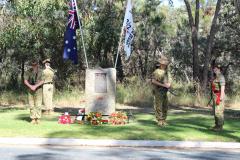
-
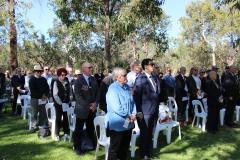
-
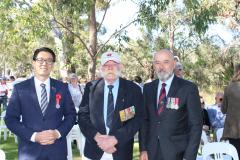
-
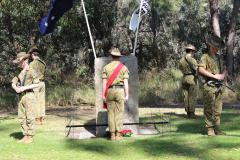
-
-
-
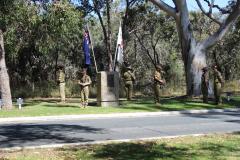
-
In the 80th Anniversary Year (1942-2022) of the Timor Commando Campaign, Ed Willis and Murray Thornton travelled to East Timor between 1 August – 1 September in an attempt to finalise the survey of WWII sites. Background to the site survey can be viewed on Doublereds: https://doublereds.org.au/forums/topic/360-wwii-in-east-timor-an-australian-army-site-and-travel-guide-completing-the-remaining-site-survey-work-august-2022/ The harsh realities of travelling in East Timor given overall poor road and track conditions meant that many key sites were not able to be accessed and investigated. The attached map shows the sites accessed and the route followed during the month long tour. Notable sites accessed during the tour included those at Fatu Bessi, Lautem, Fuiloro, Los Palos, Lore, Calicai, Ossu, Lacluta, Soibada, Alas, Lolotoi, Cailaco and Lete Foho. Sites visited that were particular highlights included (1) an overgrown Japanese cave complex located behind the chicken house at Dom Bosco EscolaFuiloro that rivals the better known and more accessible examples at Venilale and (2) the recently revealed Portuguese era posto at Alas that includes a separate hospital, substantial gateway and walls – all these structures were hidden from view until vegetation cleared recently under a Timorese government funded work programme. Ed will now focus on completing the ‘WWII site and travel guide’ incorporating the information and images gathered during the site visits. Ed and Murray express their appreciation to Major Guy Warnock and other members of the ADF’s Defence Cooperation team based in Dili at Sparrow Force House for the assistance they provided to them during the tour. A big thank you to Julio dos Santos and Alicio Amaral for their guiding and interpretation support and Manny Napoleon for his site and travel advice. Ed is also extremely grateful to his travelling companion Murray for his exemplary driving work under such demanding conditions, navigation and generosity in supplementing the grant and donated funds for the project by covering much of the costs involved in completing this exercise including accommodation, meals, vehicle hire and fuel – we could not have progressed without Murray’s involvement and support.
-
Thanks Rob. Regards Ed
-
Perhaps even the grandchildren, or your sons and daughters one day will follow in your footsteps in Timor Leste? To be walking the hills together seeing those places where, as young commandos with your Timorese companheiros you fought the enemy, will be a grand tribute to honour our wartime generations. Letter from Francisco Xavier do Amaral (1937-2012), first President of Timor-Leste to Jack Carey, President, 2/2 Commando Association of Australia, 2008 _____ Ed Willis, President of the 2/2 Commando Association of Australia, in partnership with ex-SAS officer, the late Jim Truscott, OAM, were awarded an Army History Unit Research Grant of $10,556 for the 2020/2021 financial year. (https://www.army.gov.au/our-heritage/history/army-history-research-grants) The Australian Army History Unit is responsible for developing policy and programs for the collection, conservation, interpretation and promotion of Australian Army history. The grant was awarded for the preparation of a ‘WWII in East Timor – an Australian Army site and travel guide’ (STG) with the following objective: ‘Australian Defence personnel and others travelling to East Timor and wishing to learn more about and visit sites connected with the commando campaign conducted by the No. 2 and No. 4 Independent Company’s and the clandestine operations of the Services Reconnaissance Department (SRD) during WWII would benefit from better documentation and identification the sites associated with those events and how to locate them. The site and travel guide (STG) is intended to meet that need’. The availability of such information will enable those wishing to visit these sites on an organised tour or travelling independently to readily locate them and be better able to appreciate their history and significance. The grant money has been used to cover costs associated with additional site survey work in East Timor, particularly in the central and eastern areas of the country, and further library and archival research in Darwin, Brisbane, Canberra and Melbourne. In the 80th Anniversary Year (1942-2022) of the campaign, Ed Willis and Murray Thornton are travelling to East Timor between 29 July – 1 September 2022 to finalise the survey of WWII sites. The background to this survey and their intended itinerary have been attached to this post. See also the linked video presentation regarding this project: https://drive.google.com/file/d/13-F-_hY9MIquzFLWwxgh70IZgPv-1EUE/view?usp=sharing Timor Itinerary & accommodation - public version.pdf 1845612975_WWIIinETsitesurveyAugust2022.1.pdf
-
Col Doig, in his history of the 2/2 Commando Association of Australia “A great fraternity” recounted: “In the early days it was realised that, with members widely spread throughout Australia, some form of communication would be required to keep them informed with news of importance to everyone. A Queensland member, Bulla Tait, attended a meeting held at Monash House in early 1947 [actually 1946] and suggested that a duplicated newsletter be sent to all members whose addresses were known. Col Doig, who was General Secretary at the time, volunteered to get this newsletter idea off the ground. Col was employed at the Department of Labour & National Service and his boss was the late Tom Murray, President of our Welfare Association and well and truly in our corner. Col wrote the first news sheets and had them typed by Lily Davies, a niece of one of our deceased members, Dick McKenzie. As there was no duplicator available in the building the stencils were sent to the GPO building where the messenger to the State Deputy Post Master General, a Mr Job, would run them off on the P.M.G. machine. As Mr Job also did the duplicating for the main office of the PMG, the output was considerable and a couple of reams of paper was hardly missed on this monthly basis. This method continued for some time and, with postage only one halfpenny per item, it was not a very costly exercise for our fledgling organisation. At that time the mailing list was some 500 members. Obsolete foolscap envelopes were scrounged from the Department's store and overprinted with a rubber stamp to obliterate the original printed head line. The addressing was quite a long and arduous task, mostly achieved in 'gash' time.” The first issue of the newsletter, titled ‘Circular to Members’ was dated 18 December 1946 and is reproduced here. The publication was renamed ‘Circular Newsletter’ from the second issue distributed in April 1947 and continued in that form (48 editions) until the first ‘2/2 Commando Courier’ was published in August 1951. Many of the images that were collected as part of the ‘Photographic Scheme’ referred to in the ‘Circular’ can be viewed in the Gallery on the Doublereds website (https://doublereds.org.au/gallery/). Thank you to Peter Epps for making this unique part of the Association’s history available.
-
Thanks Rob
-
THE LOSS OF CHARLIE WALLER AND TARZAN YEATES, KILLED IN ACTION, NEAR BOBONARO – 12 AUGUST 1942 INCLUDING THE LOCATION AND RECOVERY OF THEIR BODIES FOR FORMAL BURIAL ALSO, THE MEMORIAL TO STUART ‘MONSTA’ JONES AT RAEFUN ******* Map1: Waller and Yeates burials and Jones memorial locations map BACKGROUND – THE BEGINNING OF THE JAPANESE ‘AUGUST PUSH’ The New A Platoon Headquarters at Rita Bau At the end of July Corporal Harry Wray, with Private 'Tarzan' Yeates, was sent by Lieutenant Dexter to reconnoitre a new A Platoon Headquarters at Rita Bau where a house owned by a Portuguese chefe de postowas located on the slope of a mountain behind Cailaco. It had the advantage of being nearer to Marobo and in a central position for control of the platoon. The house was a stone and plaster bungalow with a thatched roof and was surrounded by a veranda, while some 10 metres away was a cookhouse and storeroom. The house was located on the lower end of a spur which sloped down from one corner of the almost rectangular mountain top, a native village being about 400 metres below. Wray’s report on Rita Bau was favourable, and by the end of July Dexter had located his Platoon Headquarters there. A Platoon was now coming together, with its headquarters at Rita Bau - 1 Section was located at Cailaco, 2 Section at Maliana and 3 Section at Marobo - and was better able to deal with the troublesome border area. [1] THE JAPANESE ASSAULT BEGINS On 9th August the Japanese methodically bombed Beco and Mape. Next day the bombers were over Mape again and also attacked Bobonaro, where Callinan had his headquarters, and nearby Marobo, thus ushering in a series of raids on the villages which the Australians had been using as their key-points. It quickly became clear that the Japanese were launched on a widespread and well-organised move to envelop and destroy the Australians and the Dutch. The pattern which subsequently emerged was that perhaps 1,500 to 2,000 Japanese were on the move; that one column was striking south from Manatuto; two struck out from Dili itself, one south-east then south by way of Remexio, one due south through Aileu; another crossed the border at Memo and drove at Bobonaro through Maliana; attacks from Dutch Timor developed against the Dutch positions in the south-west round Maucatar; a party landed at Beco (but in a rather disorganised state after effective attacks on their convoy by 18 Hudsons). The bombings drove Spence and his Sparrow Force headquarters out of Mape, and they lost touch temporarily with the main forces. The Portuguese telephone system of which the Australians had been making full use was disrupted and Callinan moved a few miles out of Bobonaro and set up a wireless control through which he was able to keep in close touch with his platoons. Perhaps the most difficult fighting, however, developed in the western sector where Dexter had his platoon based on Rita Bau, and Turton was based on Atsabe farther to the east. As the Japanese advanced, Dexter, fighting hard and manoeuvring skilfully, found his movements hampered by Timorese (mostly from Dutch Timor) whom the Japanese were using to screen their advance. These Timorese moved among the bewildered local villagers and completed the demoralisation which the bombings had begun, the locals reasoning that surely this time the end had come for the Australians and no sensible man would side with the losers. Dexter's men fell back towards Bobonaro. In these encounters, the No. 2 Australian Independent Company (No. 2 AIC) suffered its first casualties in the August push when, on the evening of 12 August, Privates David Waller and Arthur Yeates, both 21, were killed in action on the southern approach to Bobonaro when their Sections engaged the large force. Waller, a farmer from Wyalkatchem, WA, had joined the company with his brother Frank, 22. At Bobonaro the column which had come from Memo and the party which had landed at Beco came together on the morning of 13th August and Dexter then joined forces with Turton to fight from a narrow saddle through which the road from Bobonaro passed to Atsabe. The handwritten Sparrow Force war diary summarised this phase of the battle and the deaths of Yeates, and Waller as follows: 13 August - FORCE HQ at HATA-BUILICO. Japs at MEMO, LEBOS, LOLOTOI, BECO. Also pushing down from Dili and reoccupied REMEXIO. No contact with DUTCH since 11 AUGUST. All W.T. equipment except the transceiver destroyed by natives at MAPE. Japs enter BOBONARO resisted by No. 3 Section, A Platoon, No. 2 Independent Company. Two [men] missing (Private A.E. YATES [YEATES] and D.C. WALLER) and believed killed. [2] TIMOR GRAVES HARD TO FIND Shortly after the end of hostilities, an unidentified No. 2 AIC veteran stated that he felt that some of the remains of Australians killed in action in Portuguese Timor would be hard to locate: Although Japs apparently did not interfere with Australian graves in Portuguese Timor, one Perth guerrilla veteran said yesterday that unless experienced men of the Timor Force were used as guides, guerrilla graves will be extremely difficult to find. War Graves Commission is known to be searching for Australian graves in the Dutch section of the island, has probably started to comb the Portuguese portion already. "We split up after the Dili action," said the Perth veteran. "We maintained contact throughout hut had no central burial ground. "Very few Australians were killed, but those who were had to be buried where they fell. "As we had no tools, we had to dig the graves as best we could. There would be no more than a stick or two for markings, but even though the undergrowth grows swiftly, graves still might be recognisable because of the stones we had to heap on them to protect the bodies from the hordes of dogs which roamed the island. "But unless experienced men from the original guerrilla force are sent to help the Commission, the graves may never be located." "We were usually in out of the way places and the territory is rugged. "We found no instances of Japs disturbing Australian graves, even though they must have come across some, but we took no chances, buried our men where they would not be likely to be I found easily." [3] AUSTRALIAN WAR GRAVES UNIT ACTIVITY As part of the Australian War Memorial’s process of improving the usability of their records, they have produced a resource to help find information about the WWII Grave Registration, Enquiry and Maintenance Units. A spread sheet details where and when specific units were during, and in some cases, after WWII. [4] The No. 16 Australian Grave Registration and Enquiry Unit (16 AGREU) was deployed to both Dutch and Portuguese Timor to locate and recover for reburial the bodies of Australian servicemen. The spread sheet reveals that the 16 AGREU was active in Portuguese Timor on unspecified dates between 11 – 31 September 1945 and more specifically in the Bobonaro area on 26 June 1946. The unit war diary entry covering the period 1 August – 30 September 1945 records that ‘Investigation has disclosed the location of … 16 identified graves in Portuguese Timor’. [5] Captain R.J. Crilley, the commanding officer of the No. 16 Australian Grave Registration and Enquiry Unit (16 AGREU) first came to Portuguese Timor with the September 23rd Australian Dili expedition, at which time he was able to travel to Aileu, and probably elsewhere on brief trips [6]. Crilley reported on 3 January 1946 that he ‘… rejoined unit on 29 December 1945. Examinations and investigations were completed in all parts of PORT. TIMOR, with the exception of one grave in the Portuguese enclave of OECUSSI. It is anticipated that this task will be completed in the near future. [7] The Australian cemetery in Koepang was also a project of the 16th war graves unit and was constructed by Japanese POW labourers under the war graves unit direction. [8] BURIAL OF PRIVATE ARTHUR ‘TARZAN’ YEATES In September 1945, a field team of the Australian Military History Section (MHS) was assigned to collect information related to the war in Timor for the historical record. An important part of this was taking photographs and making sketches of people and places that had been significant for Australian army troops. The field team included three key members: a war artist, Charles Bush, a photographer armed with a Mentor reflex camera, Sergeant Keith Benjamin Davis, and a guide, Sergeant George J.B. Milsom, a former member of the 2/40th Infantry Battalion which had been based in Kupang (December 1941 -February 1942) and then the No. 2 AIC which had been based in Portuguese Timor until December 1942. [9] Sergeant Keith Davis prepared a report on the MHS team’s field trip that included the itinerary they followed. He recorded that on 13 December 1945: 13 [December 1942] Bobonaro: Found beautifully maintained grave of an Australian service man … ref 121444 etc. [10] Davis’ photograph of the grave is included in the Australian War Memorial collection: BECO [SIC] AREA, PORTUGUESE TIMOR. 1945-12-13. TWO NATIVES, KORLIMALI AND NAMAU, STAND BY THE GRAVE OF AN AUSTRALIAN SOLDIER. THE NATIVES MADE THE WHITE TOMBTONE AND TENDED THE GRAVE DAILY. (PHOTOGRAPHER SGT K. DAVIS) [11] Details enumerated in the ‘Reburial Return’ for Arthur Yeates included in his service record that the human remains discovered at this location were his. Under the heading ‘Means of Identification’ heading it was noted: Location of grave confirmed by Sergeant Milsom of 2/2 Cavalry Commando Squadron. Map of PORT. TIMOR 1:250,000 M.R. [Map Reference] 9 Deg 02 Min South 125 Deg 22 Min East. This location is indicated on Map 1 as ‘Yeates’ burial’. Under the heading ‘Remarks’ it was noted: Sergeant Milsom of 2/2 Cavalry Commando Squadron who was in BOBONARO during August confirms the location of the grave as having been given to Company HQ by natives about 26 August 1942. [12] Captain R.J. Crilley and other members of the 16 AGREU attended the site along with MHS team as evidenced by the following image taken by Sergeant Keith Davis. BECO AREA, PORTUGUESE TIMOR 1945-12-13. THE GRAVE OF AN AUSTRALIAN SOLDIER WHICH HAS BEEN WELL KEPT BY LOCAL NATIVES. STANDING BY THE GRAVE IS CAPTAIN R.J. CRILLEY, COMMANDING OFFICER OF THE 16TH WAR GRAVES UNIT. (PHOTOGRAPHER SGT K. DAVIS) [13] Yeates’ body was exhumed and re-interred at the newly established Koepang War Cemetery on 31 December 1945. BECO [SIC] AREA, PORTUGUESE TIMOR 1945-12-13. THE GRAVE OF AN AUSTRALIAN SOLDIER, DEPICTED IN PHOTOGRAPHS 121443 AND 121444, WAS OPENED AND THE BODY EXHUMED FOR REINTERNMENT IN THE AUSTRALIAN WAR CEMETERY AT KOEPANG. [14] Yeates’ final resting place is at the Ambon War Cemetery. The Cemetery burial record cites the date that he was killed in action as 12 August 1942 and the location as ‘4 hours march west of Bobonaro’. [15] BURIAL OF PRIVATE CHARLIE WALLER Private D.C. (Charlie) Waller was killed on 12 August 1942; Lieutenant Turner was with him when he was shot. Turner said that after his No. 3 Section had received news the Japanese were only a day away from their position near Bobonaro, all the men were stood to, in anticipation of No. 1 Section withdrawing through them. When the section failed to appear, Turner took Alf Hillman and Charlie Waller to recce a ridge and the general area in which it was expected. “We saw quite a large group of men in the distance, but the light was not good enough to identify them,” said Turner. “We were walking about twenty metres apart approaching the top of the ridge, when we were confronted by three Japanese. They called on us to surrender but we immediately opened fire, Hillman with his sub-machine gun and Charlie and I with rifles. It was very quick and short. I called out to the others to get out, but Alf was hit in the arm and Charlie went down. He didn’t move. We ran about 50 metres to the next ridge where there was some cover. We had no hope of getting Charlie out.” Turner said he bound Hillman’s arm with a field dressing then the two men returned to their section. [16] Waller’s body was recovered and buried by men of the No. 2 AIC as verified by the following report: Most of the equipment which could be recovered had by now been taken back to Company Headquarters. Cpl Delbridge had taken a small patrol from Two Section down to Mape, collecting gear, returning by way of Bobonaro and collecting more equipment there which had been discarded by the Portuguese army. They then patrolled as far as Rita-Bau, looking for the body of Pte Yeates, who had been killed in the action there. Instead of Yeates they found Pte Waller's body there which they buried before moving back to Marobo. Here they had searched for Japanese bodies, intending to obtain badges of rank and unit insignias, anything which may be of intelligence value. Moving on to Atsabe they collected more equipment which had been left by D Platoon. From there they went back to Ainaro, the whole trip taking seven days. [17] Lieutenant M.J. Muir, the new OC, 16 AGREU, diarised on 22 June 1946: MV Merauke arrived at Dili. OC contacted the Australian Consul and Major QUINTON, 3 Australian PW Contact & Enquiry Unit (3APWCEU) in reference to deceased Australian personnel in Portuguese Timor. The remains of an Australian soldier recovered from the BOBONARO area were handed to the OC. [18] Muir subsequently diarised on 3 July 1946: The remains of an unidentified Australian were handed to the OC while in Dili by Major QUINLAN of 3APWCEU. Major QUINLAN obtained these remains from the Portuguese authorities at Bobonaro. The only information obtained by him was that they were the remains of an Australian who had been buried by a priest. [19] Details enumerated in the ‘Reburial Return’ for Charlie Waller included in his service record confirms that it was his remains that were recovered by Major Quinlan; particularly note the ‘Date of Reburial’ of 22 July 1946. The ‘Remarks’ note that ‘Location of the grave given by Captain P.P. McCabe and Sergeant Milson [Milsom] both of 2/2 Cavalry Commando Squadron who were in this area in 1942. Sergeant Milson [Milsom] directed recovery party to the grave’. [20] The location of Waller’s initial burial was recorded on 22 March 1946 as ‘… Buried Marobo … 8° 58’ S, 125° 22’ E’. [21] See Map 1. Waller’s final resting place is at the Ambon War Cemetery. The Cemetery burial record gives the same map coordinates and notes the site as being ‘Between Bobobaro [Bobonaro] – Marobo’. [22] 58 YEARS LATER: ANOTHER AUSTRALIAN CASUALTY IN THE BOBONARO AREA THE MEMORIAL TO CORPORAL STUART ‘MONSTA’ JONES AT RAEFUN One Australian was killed serving with the UNTAET phase of peace keeping operations in East Timor following the independence referendum. The Australian contingent was working in the dangerous border area near Maliana, notorious for the incursion of militia death squads from West Timor looking for trophies. On 10 August 2000 Corporal Stuart ‘Monsta’ Jones was killed when a rifle accidentally discharged in the back of an armoured vehicle while travelling over rough terrain close to the village of Raefun near Bobonaro. [23] This site of ‘Monsta’ Jones accidental death is in close proximity to the locations where Charley Waller and Tarzan Yeates were killed in action on 12 August 1942 and subsequently buried. The 4 Royal Australian Regiment Battalion Group campaign history notes that: To remember … ‘Monsta’ Jones in the country of his peril … a cross was erected outside Fort Maliana and dedicated on the 10 July 2001 …. Although this was a nice tribute the Troop felt it would be more appropriate to erect a stone memorial near the incident site on the 12-month anniversary of Monsta’s death. This task was one that the Cavalry Boys (2 Cav and 2/14th) took upon themselves to ensure a fitting memorial service was held. The village people of Raefun were also extremely helpful in assisting with information about the incident site and allowing us to intrude into their quiet little village. This village, and in particular the memorial site, presented spectacular views over the surrounding countryside. On the day we erected the pink marble monument, the local’s enthusiasm to help overwhelmed them and they grabbed the shovels from the lads and hooked in to dig in the memorial stone. The villagers were of great assistance during the preparation of the site and the conduct of the service. The service was held on 9 August 2001 … [and] … the members of Raefun village accepted our invitation and laid a traditional scarf and wreath. [24] The villagers of Raefun assiduously maintain the memorial and warmly welcome visitors to the site. Corporal Stuart ‘Monsta’ Jones memorial, Raefun – 30 April 2019 REFERENCES [1] Corporal Arthur Henry Kilfield ‘Harry’ Wray (WX11485) Recollections of the 2nd Independent Company Campaign on Timor, 1941-42, manuscript in 2/2 Commando Association archives.: 95, 97-98. [2] [Unit War Diaries, 1939-45 War] Sparrow Force March - December 1942 - AWM52 1/5/55/2 - https://www.awm.gov.au/collection/C1365575 [3] ‘Timor graves hard to find’ Sunday Times (Perth, WA: 1902 - 1954), Sunday 23 September 1945: 4. [4] Natasha Bobyreff ‘Second World War graves’ 09 September 2013 https://www.awm.gov.au/articles/blog/second-world-war-graves [5] AWM52 21/2/17/2 - [Unit War Diaries, 1939-45 War] 16 Australian Graves Registration and Enquiry Unit, June 1945 - December 1946 https://www.awm.gov.au/collection/C2703747 [6] Norman K. Wallis ‘Peace comes to Dilli’ Walkabout February 1, 1946: 31. [7] AWM52 21/2/17/2 [8] AWM52 21/2/17/2 [9] William Bradley Horton ‘Through the eyes of Australians: the Timor area in the early postwar period’ Journal of Asia-Pacific Studies (Waseda University) No. 12 (March 2009): 271. [10] Sergeant Keith Benjamin Davis. – [Report on Australian Military History Section field trip to Dutch and Portuguese Timor, September 1945 – February 1946]. Partial copy held in 2/2 Commando Association of Australia archives. [11] https://www.awm.gov.au/collection/C200635 [12] YEATES Arthur Edward: Service Number - V12019: NAA: A13860, V12019 https://recordsearch.naa.gov.au/SearchNRetrieve/Interface/DetailsReports/ItemDetail.aspx?Barcode=202936308&isAv=N [13] https://www.awm.gov.au/collection/C200634 [14] https://www.awm.gov.au/collection/121448 [15] https://www.cwgc.org/find-records/find-war-dead/casualty-details/2172286/arthur- edward-yeates/#&gid=2&pid=1 [16] Cyril Ayris. - All the Bull's men: No. 2 Australian Independent Company (2/2nd Commando Squadron). - [Perth, W.A.]: 2/2nd Commando Association, 2006: 321. [17] S.A. Robinson. - [Timor (1941-1942) - Sparrow Force and Lancer Force - Operations]: The Campaign in Portuguese Timor, A narrative of No 2 Independent Company. Story prepared by Corporal S.A. Robinson, No. 5 Military History Field Team. – Australian War Memorial file AWM54 571/4/53: 104-105. NOTE: Robinson’s report was derived from interviews with the No. 2 AIC men involved with the actions he describes. [18] AWM52 21/2/17/2. [19] AWM52 21/2/17/2. [20] WALLER DAVID CHARLES: Service Number – WX13501 NAA: B883, WX13501 https://recordsearch.naa.gov.au/SearchNRetrieve/Interface/DetailsReports/ItemDetail.aspx?Barcode=6471203&isAv=N [21] WALLER DAVID CHARLES: Service Number – WX13501 NAA: B883, WX13501 [22] https://www.cwgc.org/find-records/find-war-dead/casualty-details/2172162/david-charles-waller/ [23] Peter Londey. - Other people's wars: a history of Australian peacekeeping. – Sydney: Allen & Unwin, 2004: 259. [24] 4 RAR BN GP in East Timor: Op Tanager / ed. By Brian Campbell. - Bayswater, W.A.: Brian Campbell, c2001: 110.
-
A STORY OF RECONCILIATION AND REDEMPTION The visit of former Japanese officer Shohachi Iwamura who served in Portuguese Timor to Perth in August 1993 A former Japanese officer Shohachi Iwamura who served as a platoon commander with the 48th Division in Portuguese Timor visited Perth in August 1993 and at his request met with members of the 2/2 Commando Association of Australia. It had not been an easy matter for the 2/2 veterans to agree to host their Japanese visitor. The Association debated the matter long and hard and there were members who openly expressed their antagonism towards the Japanese because of atrocities the invaders committed in Timor and other islands during World War II. Nor did Mr Iwamura evade the issue, openly admitting that men under his command had raped Timorese women and that many of the Timorese men mobilised to work for the Japanese had died of starvation because they were not given food. But there is one issue strong enough to unite the men behind a single cause. In Osaka and in Perth, both sides have been working persistently and against heavy odds to promote the right to self-determination of the Timorese people in whose country they fought their battles in the 1940s. The full story of this landmark meeting between former follows: WAR FOES UNITE BEHIND COUNTRY LEFT BEHIND Fifty years ago, the Portuguese colony of East Timor was the scene of fierce fighting between Australian commandos and Japanese invaders. But some of the old enemies have now found a common cause in East Timor. ANDRE MALAN reports on an emotional meeting in Perth yesterday. WITH shaking hands, but a clear voice, Shohachi Iwamura yesterday made peace with his enemies of 50 years ago. In halting English, the dignified retired engineer from the Japanese City of Osaka read from a prepared statement: "Fifty years ago, I was forced to meet you as an enemy in East Timor, but now I want to express my respect and brotherly affection for you. "I am alive today and able to meet you because the Timorese people helped me and fed me, as they did you, when we were in need. "Now we are no longer enemies, and I am proud to be your comrade and friend. Thank you." Listening to this over beer and sandwiches at a Perth hotel were about 20 timeworn Australian veterans who once would have happily killed their visitor. "I don't think I ever saw his face in my sights," one of them whispered. "If I had he wouldn't have been here today." There was no malice in the quip, just a healthy dose of the seasoned larrikinism that old soldiers try on each other when they get together. The same man later remarked: "It can't have been easy for him to come here. I admire his guts." Front Row (left to right): Jack Carey, Doc Wheatley, Kiyoko Furusawa (interpreter), Shohachi Iwamura, Domingos De Olivera, Colin Doig, Bill Howell. Back row (left to right) Bernie Langridge, George Bayliss, Ted Monk, Henry Sproxton, Geoff Swann, John Fowler, John Poynton, Ray Aitken, Bob Smyth, Jack Wicks, Dick Darrington, Les Halse, John Burridge. Nevertheless, it had not been an easy matter for members of the 2/2 Commando Association to agree to host their Japanese visitor. The association debated the matter long and hard and there were members who openly expressed their antagonism towards the Japanese because of atrocities the invaders committed in Timor and other islands during World War II. As he posed for a picture with his guest yesterday, the association’s president, Ted Monk, did not forget the 12 men in his section of 19 who had been killed by the Japanese. Nor did Mr Iwamura evade the issue, openly admitting that men under his command had raped Timorese women and that many of the Timorese men mobilised to work for the Japanese had died of starvation because they were not given food. But there is one issue strong enough to unite the men behind a single cause. In Osaka and in Perth, both sides have been working persistently and against heavy odds to promote the right to self-determination of the people in whose country they fought their battles in the 1940s. Mr Iwamura was a 23-year-old platoon commander in the Japanese 48th Army Division when he arrived in Dili on a Japanese troopship in November 1942. He was assigned to mopping up operations against Australian and Portuguese soldiers who had resorted to guerrilla warfare in the hills of East Timor, as well as construction of roads and other military facilities. Yesterday, he recalled several times coming into direct contact with the Australians in East Timor. Once he was wounded in an exchange of fire when he went into the mountains to collect horses for the Japanese troops, and on another occasion, he helped in the capture of two Australian intelligence officers who had been landed on the coast. Mr Iwamura said that many Timorese women were raped by Japanese soldiers. No action was taken against the rapists, but when he heard that men under his command had been guilty of assaulting Timorese women, he forced the entire platoon to kneel on stones as an act of contrition. When the war worsened for the Japanese, he was transferred to Java, Singapore and Burma before being sent home to a country left in ruins by US air attacks. However, like many of his contemporaries, Mr Iwamura prospered during the Japanese post-war economic revival. He married, had two daughters and became a successful engineer. The former soldier did not give much thought to Timor for the next 40 years until 1985, when he read an account of the 1975 Indonesian Invasion of East Timor. He joined an infant East Timorese independence support group in Japan and in 1987 he went to New York to make an emotional address to a United Nations special committee on decolonisation. In tears, he told the committee: "In Japan I am simply one elderly citizen, but I am determined never to forget the crimes Japan committed in World War II and to act on what I have learnt from bitter experience. "It is painful to speak today of the sacrifices and burdens we forced, upon the East Timorese, a people who had nothing to do with the war." He said that after the war the Japanese Government did not pay war reparations to East Timor on the ground that Portugal, the colonising power, was not an Allied country. He noted that Japan had become Indonesia's biggest aid donor and remarked: "If Japan wants to build real friendship with Indonesia it should tell that country, ‘we know from experience that no country can escape the judgment of history on a war of aggression’. "And let the rest of us remember that grovelling before the strong, while cutting down the weak, is the way of fascism. "I have learnt much about this issue from young people in Japan who support the East Timorese. "I have learnt that the big powers, because of narrow national interests, close their eyes to the injustices committed by Indonesia." The battle for the rights of East Timorese is one that has not been forgotten by members of the 2/2 Commando Association and other veterans who fought against the Japanese on Timor. A mob of knockabout volunteers, drawn largely from WA, the 2/2 Independent Company was sent to secure East Timor. Faced with overwhelming odds, they made an orderly retreat into the mountainous interior of the colony and conducted an unremitting guerrilla war against the enemy. Against far superior numbers, the handful of Australians maintained effective opposition against the Japanese at a time when Allied forces elsewhere in Asia had surrendered or been driven into retreat. The survival of the Australians depended on the heroic support of the East Timorese and the wartime experience forged close bonds between the soldiers and the Timorese. After the Indonesian invasion of East Timor, the veterans became a vocal lobby group in favour of a firmer Australian stand against Indonesia's aggression. But their protests have fallen on deaf ears as successive Australian governments have put the diplomatic and economic relationship with Indonesia ahead of the rights of the East Timorese. However, with the same persistence they displayed as soldiers, the veterans, most of them now in their 70s or older, have refused to give up. THEY continue to lobby hard, and to supply books and other aid to the East Timorese — when they can get the goods past Indonesian officialdom. Yesterday, Mr Iwamura was able to give them guarded good news. He said the new Japanese Government contained a number of people who were sympathetic to the East Timorese cause and that the Diet — the Lower House of the Japanese Parliament — would in future give more consideration to the rights the East Timorese. He and the Australian veterans also applauded a decision by the US State Department to reject a request by Jordan to sell ageing American F-5 jet fighters to Indonesia because of Jakarta's human rights record and other sensitive issues. But nobody is optimistic enough to think that East Timorese independence is on the horizon. Mr Iwamura yesterday told his Australian hosts of a plan by Japanese East Timor sympathisers who have collected more than $100,000 towards a special school for East Timorese expatriates in Darwin. The idea is for East Timorese culture to be kept alive at the school in preparation for the day — if it comes — when the refugees reclaim their country. [1] [1] Andre Malan ‘War foes unite behind country left behind’ The West Australian, Wednesday August 11, 1993: 11. Col Doig reported on the meeting for the Courier as follows: AN HISTORIC OCCASION Visit of Mr Shohachi Iwamura and Mrs Kiyoko (Kiyo) Furusawa It is necessary to give some background as to how this visit came about, When the massacre occurred in Dili, East Timor, in November 1991 the Association made every effort to bring the plight of the people of East Timor to the attention of the world, having failed miserably to move the Australian Government to any real effort in this terrible situation, letters were forwarded to Ex Service Organisations in many parts of the world including The Legion of Ex-Servicemen in the USA, Canada, United Kingdom and New Zealand and it was also decided to include ex-service persons in Japan in the hope that they would also throw their weight behind our efforts and bring the case to the notice of the United Nations. The only real contributor was the Ex Legion of Canada which made representations to the UN. The American Legion said this matter was not on 'their agenda', no replies were received from the UK or New Zealand. Regarding our overtures to the Japanese, the only response to a letter put together by Mrs P. Thatcher and translated into Japanese by a University academic was from Mr Iwamura. It was discovered that he had already put a case to the 'Special Committee on Decolonization' on August 13, 1987. He had told of the Japanese occupation of East Timor, 1940- 1945, and of the horrific usage by the Japanese of the East Timorese people and pleaded the case for United Nations not to allow the Indonesians to perform the same atrocities once again on these unfortunate people. As a result of his stance he was ostracised by his own people and especially his old regimental members. He received death threats and was generally abused. This did not shake his determination to do something for the cause of the East Timorese, and he joined with a small band in Japan who are promoting the cause of the East Timorese in many centres of Japan, especially in Osaka and Tokyo. Mr Iwamura was an army officer in East Timor for two years and four months, and was engaged in transportation, security, punitive operations and road construction. He was an independent platoon commander and a battalion adjutant stationed mainly in Baucau, Baguia, and Aliambata. As a result of correspondence between Mrs Thatcher and Kiyoko Furusawa, who speaks and writes English excellently, a request was made for these two people to visit Australia with the object of Old Foes meeting to assist the cause of the East Timorese, with the high hope that publicity generated by the visit would awaken deep interest in Japan for the cause, Japan being the greatest contributor to aid for Indonesia. This idea was forwarded to the WA Branch of the Association for consideration, as WA is generally regarded as the parent body. At a well-attended committee meeting on July 13, 1993 the matter was brought to the attention of the Committee by Secretary Jack Carey and Col Doig, who had both been contacted by Mrs Thatcher. After a full and free discussion it was unanimously decided that we would be prepared to accept such a visit as it possibly could do considerable good for the cause. The decision was conveyed to Mrs Thatcher who was the go-between for the parties. Advice was rapidly to hand that Mr Iwamura and Kiyo Furusawa would be arriving in Perth on Tuesday, August 10 which, incidentally, was the W.A. Committee Meeting day, and that accommodation and publicity be arranged for an itinerary commencing Perth on August 10, departing for Melbourne Thursday, August 12 and on to Sydney August 15, departing for Japan, Monday, August 16. A Sub-Committee was called in WA to arrange the necessary details for the WA visit. Thanks to John Poynton accommodation was arranged at the Airways Hotel (where we hold our Anzac Day Reunions) at excellent rates. Jack Carey arranged for Andre Malan, special features writer for the 'West Australian' with a photographer to interview the couple, also a segment of the Gerry Gannon talk back programme was arranged for Wednesday, August 11. A room was booked at the Airways Hotel for a meeting with the Japanese guests and for the necessary Interviews. It was decided that the Committee meet as usual and at midday all possible to go to the Hotel to meet with the Japanese. Everything happened in haste and as many as possible of our members were contacted by phone and requested to attend at the Hotel where drinks and snacks were to be available. Bob Smyth kindly arranged to meet the visitors at 1am and set them up at their hotel. The actual meeting occurred at 12.15pm with 16 members, Andre Malan and photographer Nic Ellis and Domingos Oliveira representing the Timorese Association in W.A. The atmosphere was one of expectancy and some excitement, but it did not take long for everyone to become acquainted with the two people who proved to be most genuine and full of personality. Mr Iwamura did not speak English, but all proceedings were interpreted by Kiyo. The guest was able to read a specially prepared speech in English which he handed to our President Ted Monk on its completion. He told of the Japanese treatment of the East Timorese and also spoke of the current treatment of these unfortunate people by the Indonesians and sincerely hoped that this getting together of Old Foes would generate a high degree of publicity in Japan and so help to benefit the cause of the East Timorese people. Many questions were passed to the speaker who answered each question in a most able manner. It transpired that Mr Iwamura's speech at United Nations was heard by Domingos Oliveira who was also present at that dramatic meeting. When this was made known to Mr Iwamura, he immediately left his place to embrace Mr Oliveira - it was a most touching moment. [?] During all this time Andrew Malan was taking notes and later had a lengthy interview with our guest. Later a special photo for insertion in the 'West Australian' Wednesday edition was taken and also a full group photo was arranged, a copy of which appears in this issue. The couple were the guests of Mr and Mrs Smyth for Tuesday's evening meal. The coverage in the Wednesday edition of the 'West Australian' was excellent. Mr Malan did the show really proud, had all his facts right and as a publicity affair it was outstanding, and the photo came up in a grand manner. On Wednesday, John Fowler and Jack Carey took the visitors on a tour of the suburbs after the interview for the Gerry Gannon show which was steered through for the guests by Ray Aitken. This was an excellent interview and did the participants great credit. A tape of this event has been forwarded to Mr Iwamura in Japan. The couple were entertained at lunch by Jack and Delys Carey, John Fowler, Ray Aitken and Col Doig. They proved to be a charismatic duo - Kiyoto was especially charming. They took with them a couple of ‘History’ books and a couple of the new ‘A Great Fraternity’, Delys made a presentation of a koala which played 'A Jolly Swagman' and jack presented a special WA ball point pen made of WA timber with the Double Diamond emblem on it. In the afternoon and evening the East Timorese of WA took over and had a good rundown with these people. Bob Smyth delivered the couple to the airport on Thursday morning for onward transit to Melbourne. To sum up the W.A. section of this exercise, it was as much of a success as could be made of such a project. The couple proved to be easy to know and most intelligent. Mr Iwamura is an engineer now retired and Kiyoko is a lecturer at a university. Both are hard workers for the East Timorese cause in Japan and are most courageous in taking this course as it is currently not a particularly happy one to take, especially in acknowledging Japanese war crimes which definitely brought all types of repercussions on to Mr Iwamura's head. As Ray Aitken remarked, ‘they are both people you would be happy to know’. [?] [2] Col Doig ‘An historic occasion: visit of Mr Shohachi Iwamura and Mrs Kiyoko (Kiyo) Furusawa’ 2/2 Commando Courier October 1993: 11-14. PASSING OF SHOHACHI IWAMURA AND HIS RECOGNITION BY THE GOVERNMENT OF TIMOR-LESTE Shohachi Iwamura passed away at his home in Osaka in May 1994 less than a year after his Australian visit. [3] He was posthumously awarded the Order of Timor-Leste by government of Timor-Leste in February 2015. The award recognises ‘… those nationals and foreigners, who in their professional, social activity or, even in a spontaneous act of heroism or altruism, have contributed significantly to the benefit of Timor-Leste, the Timorese or Humanity’. [4] [3] Documents on East Timor from PeaceNet and Connected Computer Networks v. 39, June 28-August 31, 1995: 96. [4] ‘Decreto do Presidente da República n.º 1/2015 de 4 de Fevereiro, São condecorados com a Medalha da “Ordem de Timor-Leste”, os seguintes’ Jornal da República Série I, N.º 5, Quarta-Feira, 4 de Fevereiro de 2015: 1.
-
More Anzac Day coverage including JB: https://www.facebook.com/johncareyperth/posts/981495992606438 https://www.facebook.com/AustralianEmbassyTimorLeste/posts/303642778618208 https://www.abc.net.au/radio/perth/programs/breakfast/breakfast/13844998 John Carey interview 1:44:34 – 1:54:47 https://www.facebook.com/wamuseum/posts/10158238854087312
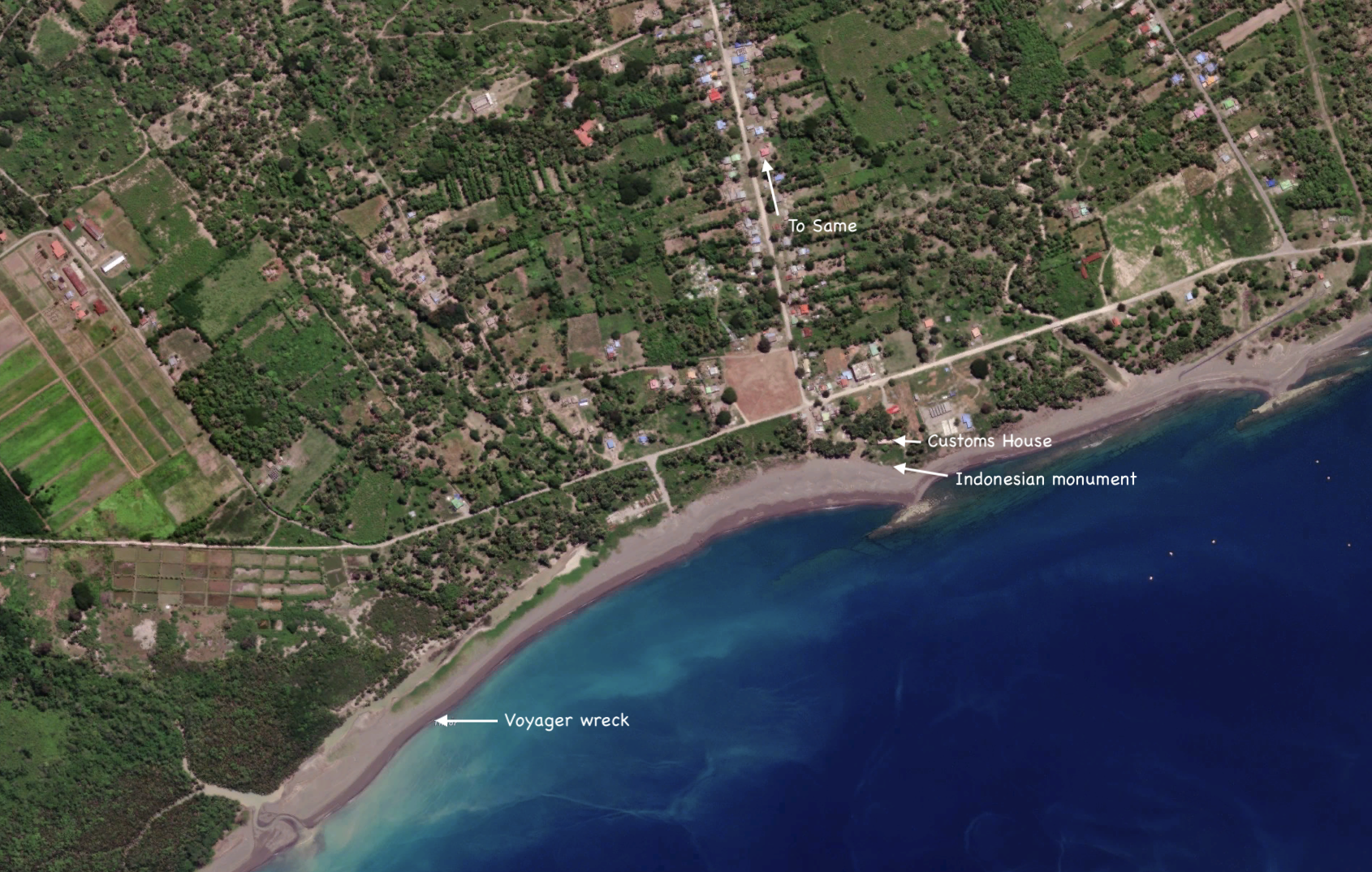
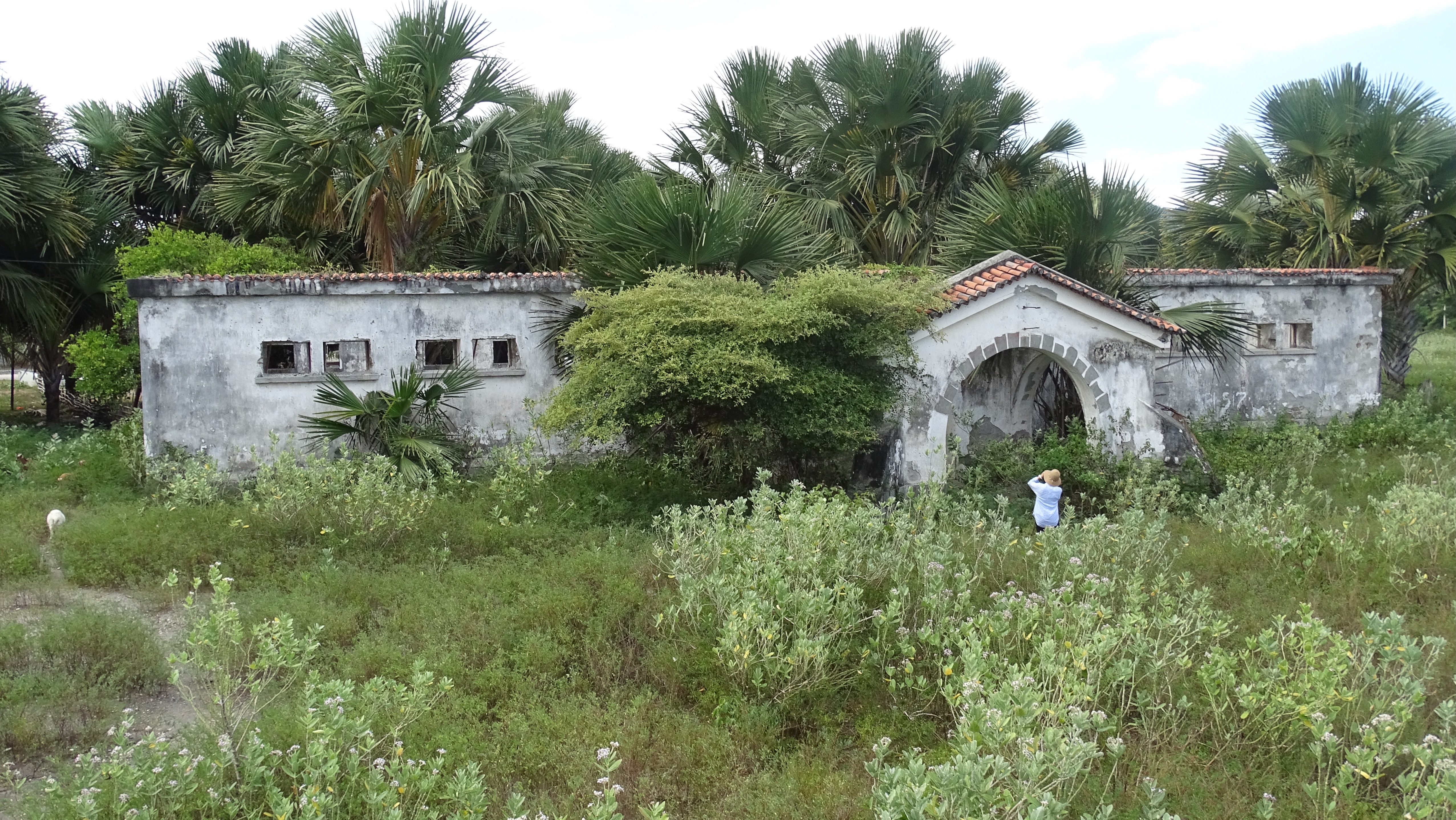
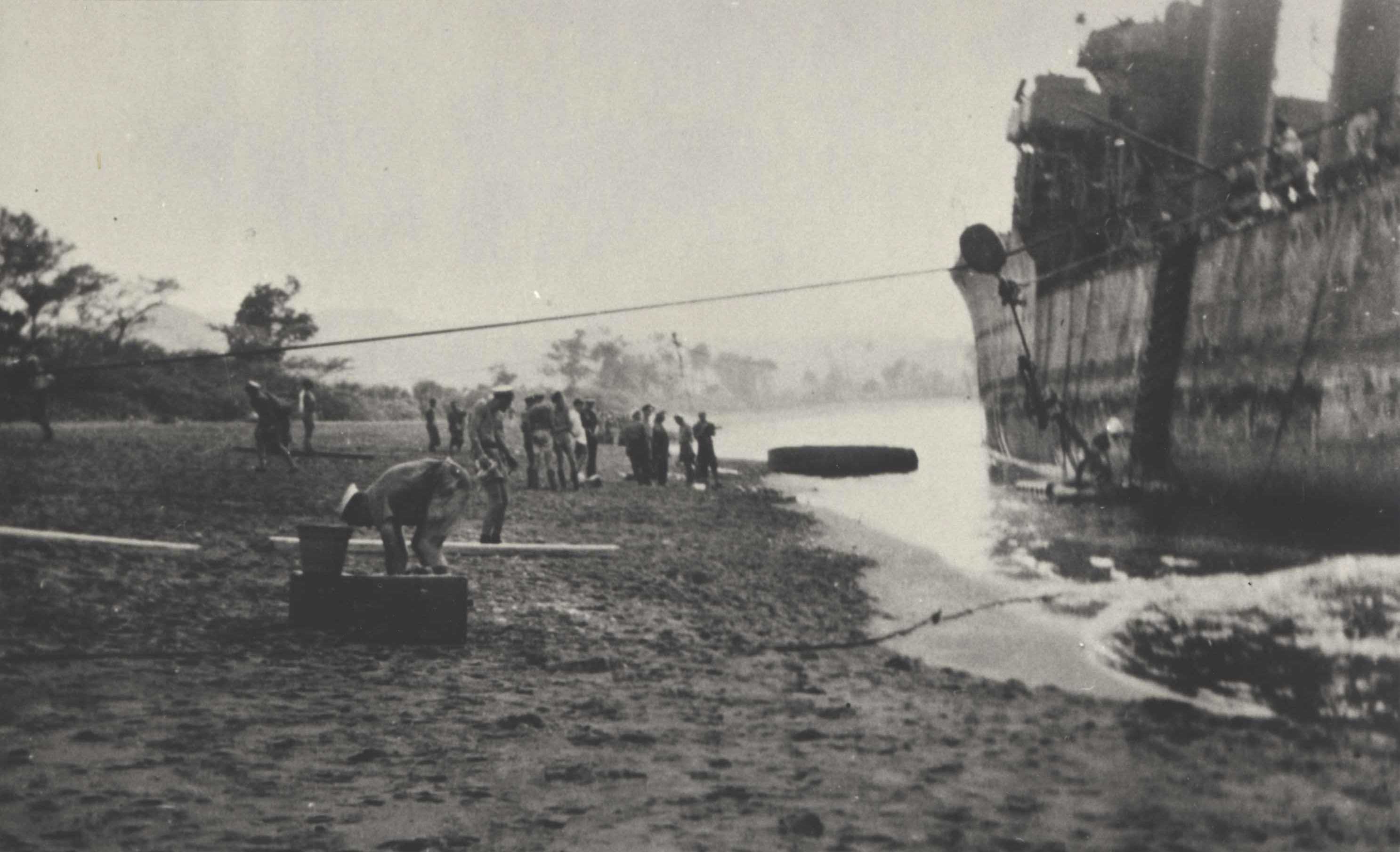
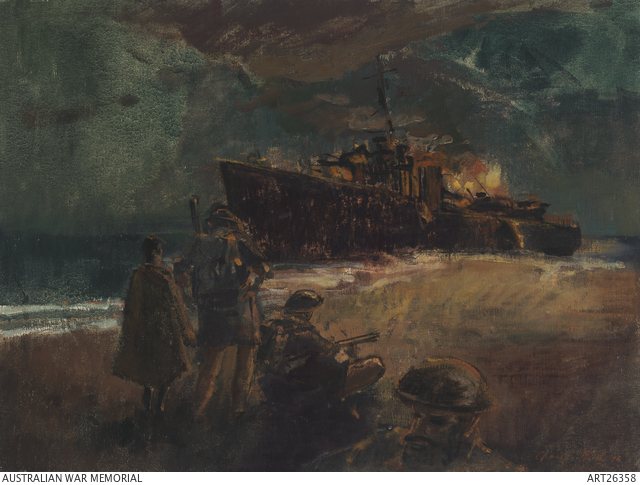
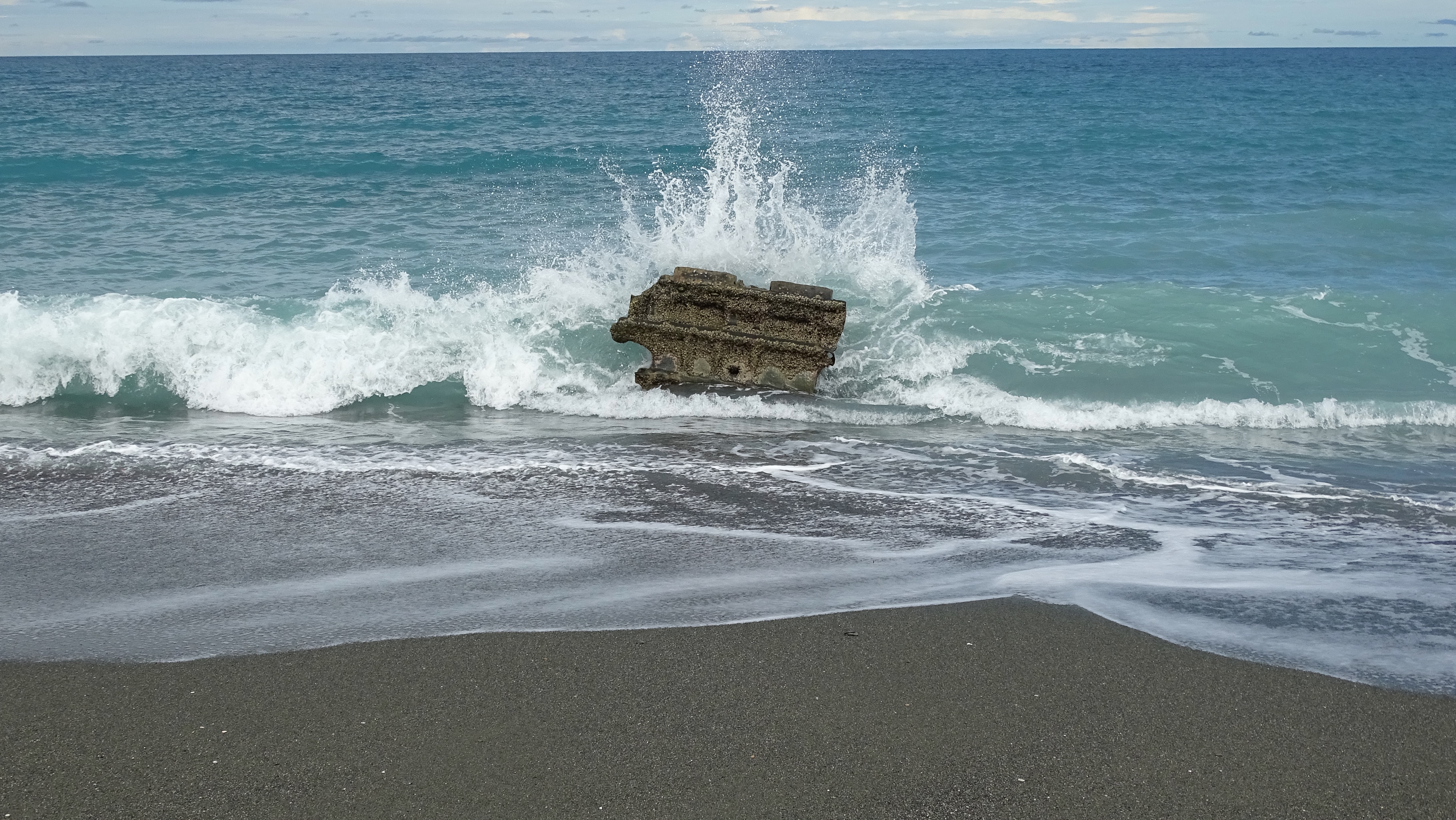

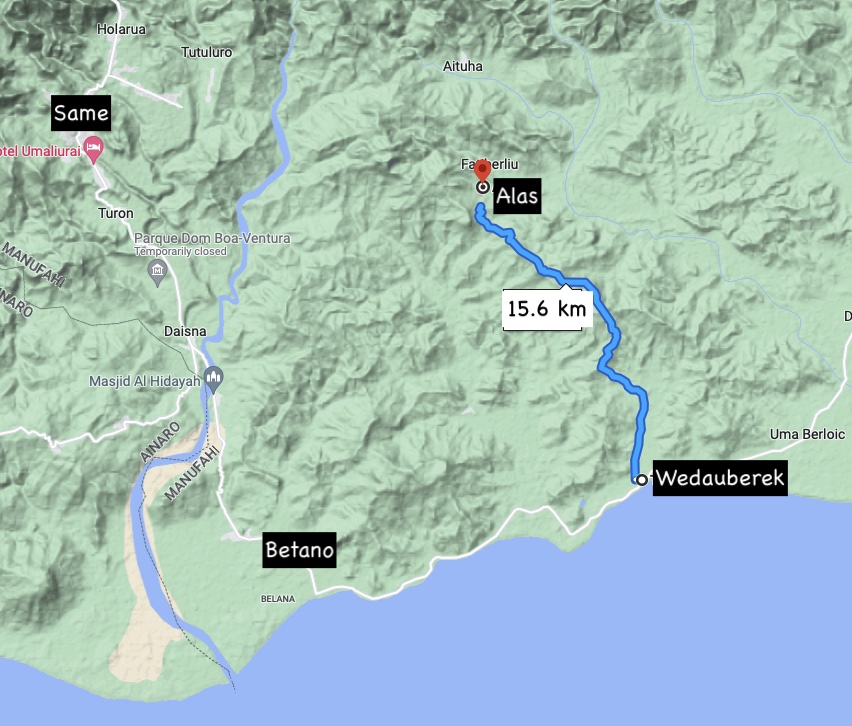
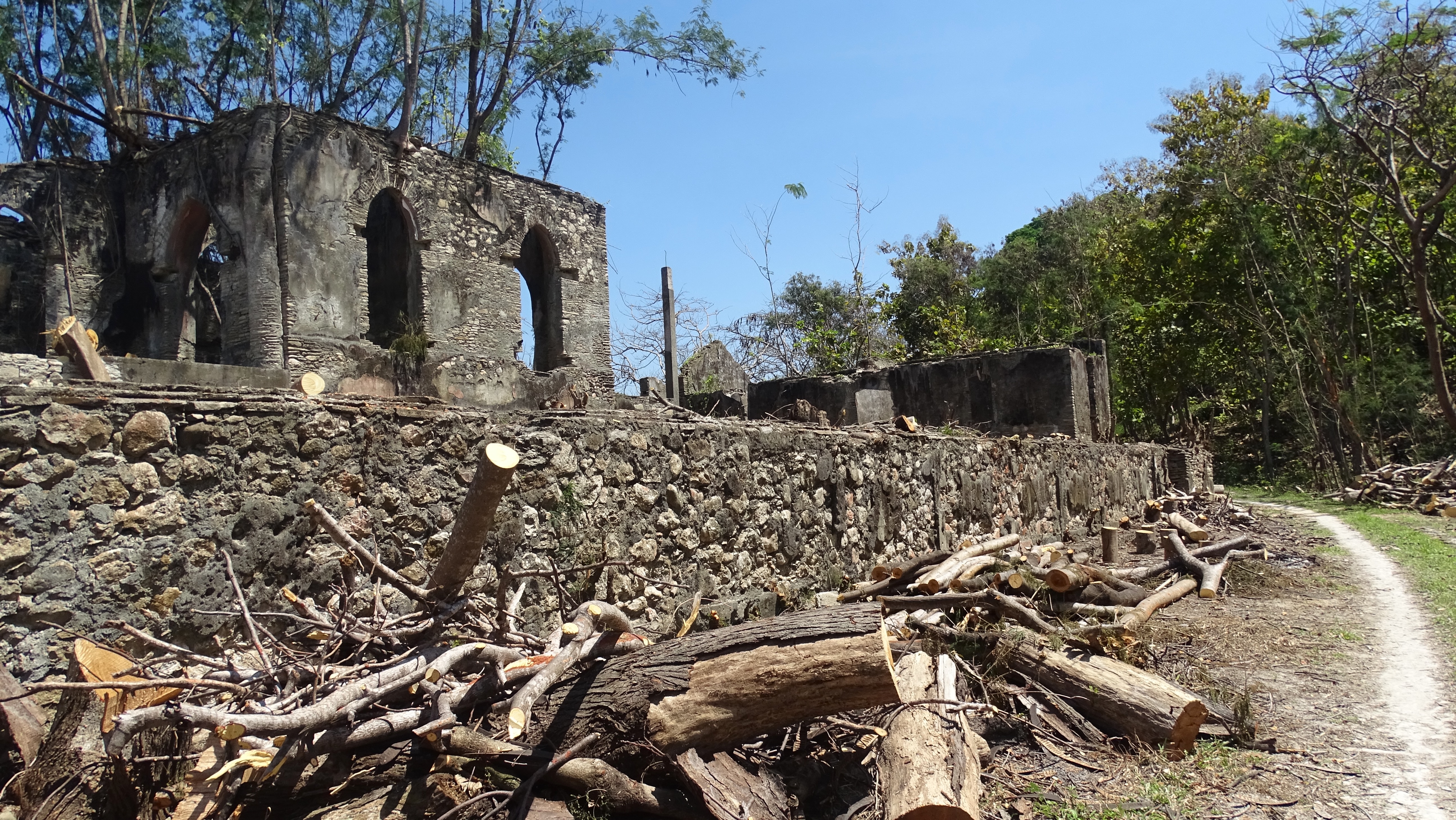
andCaptainGeoffLaidlaw(2AIC)atForceHeadquartersAlaswithTimoresesupporters.png.6a450a2ea0d57669026838df61e3cbdd.png)
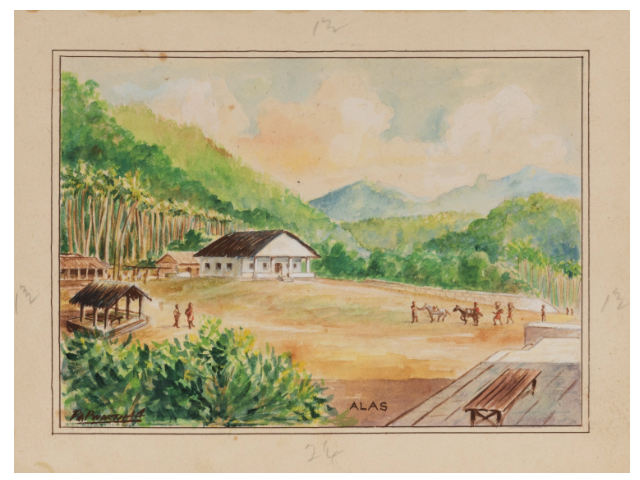

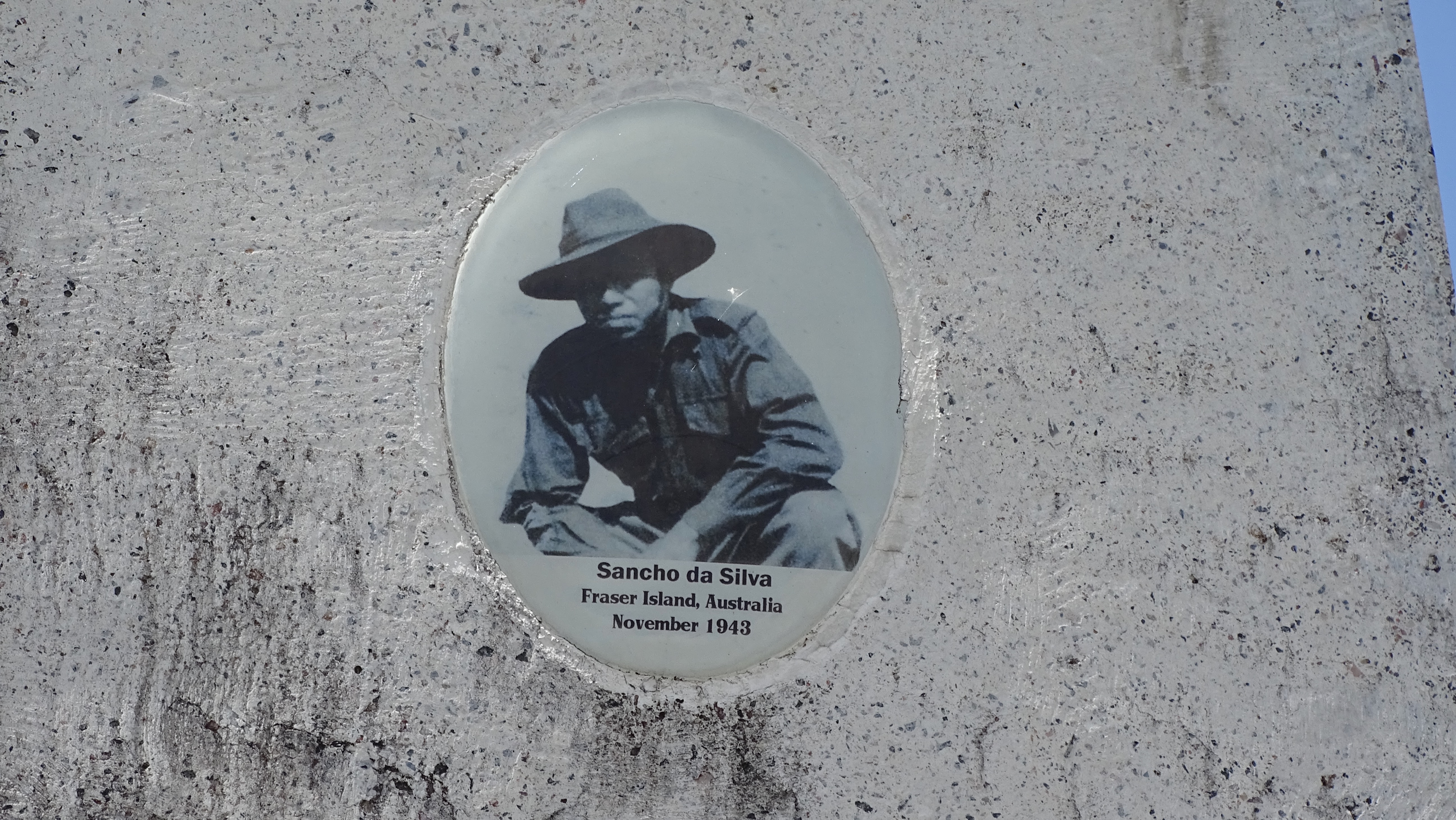
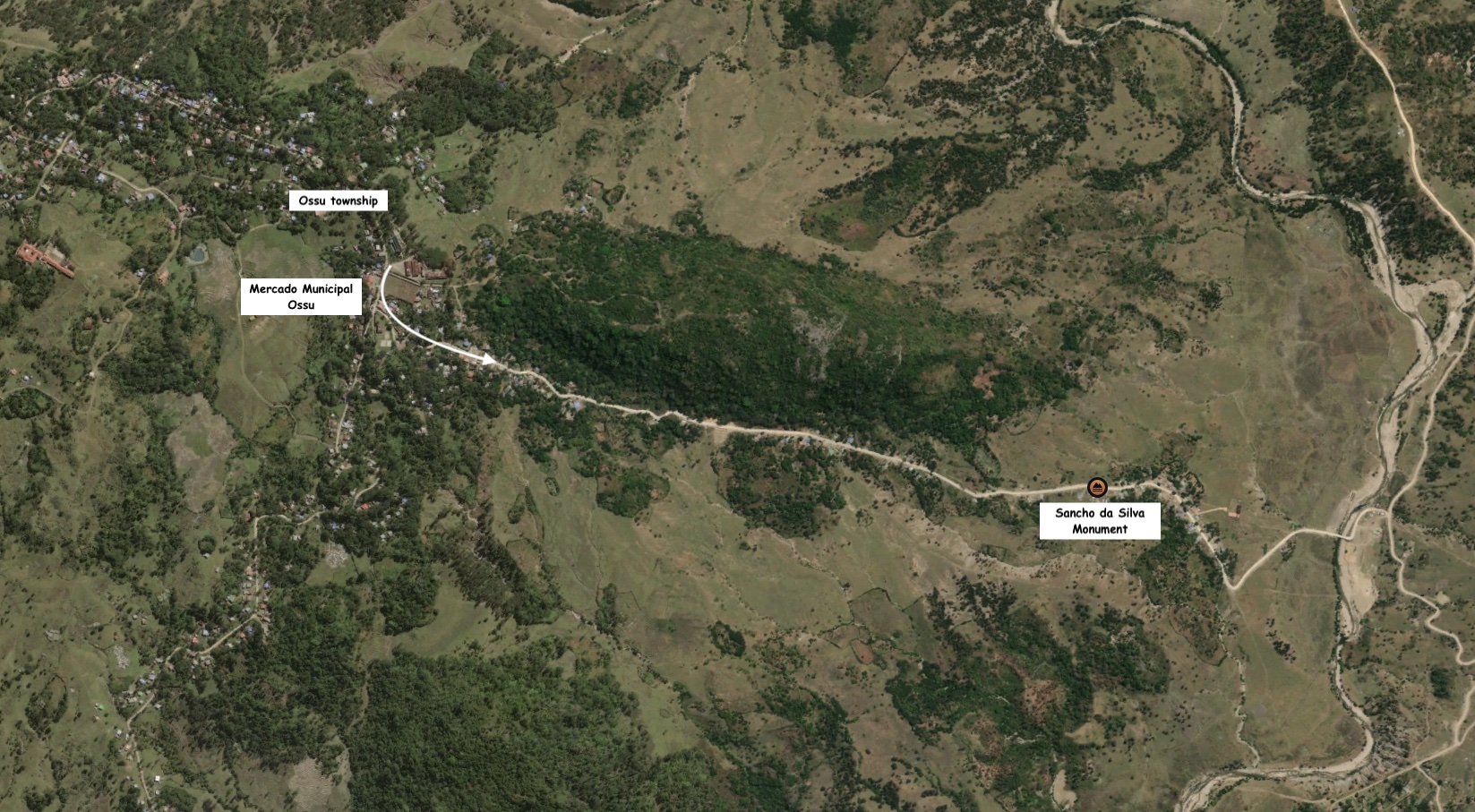

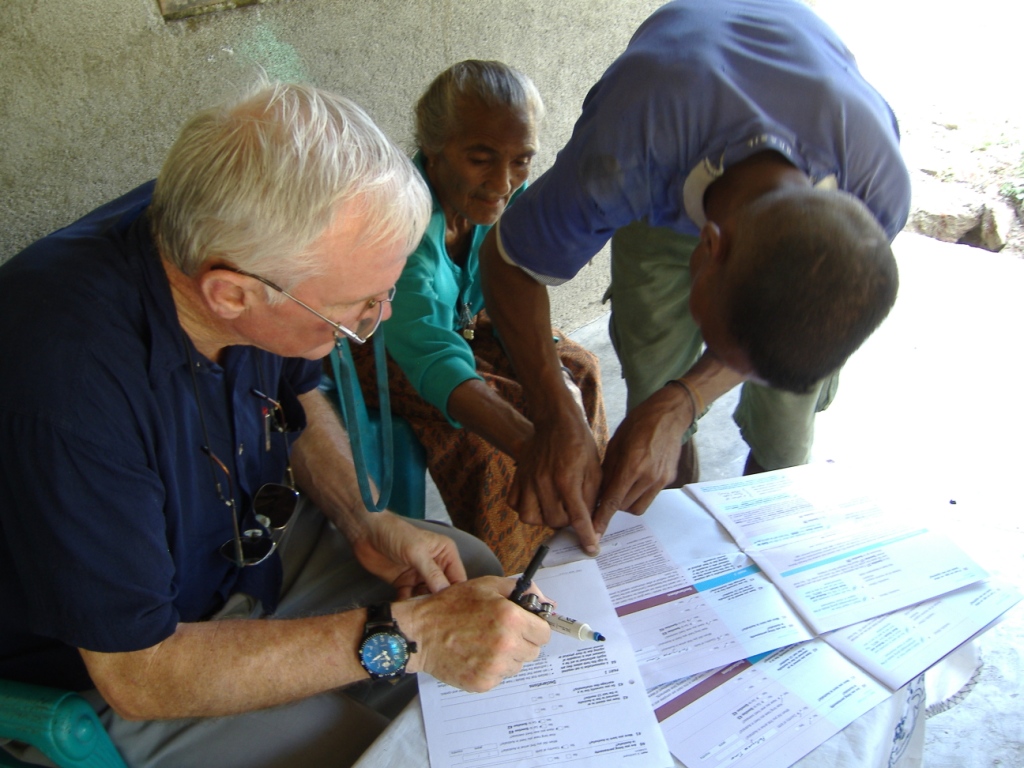
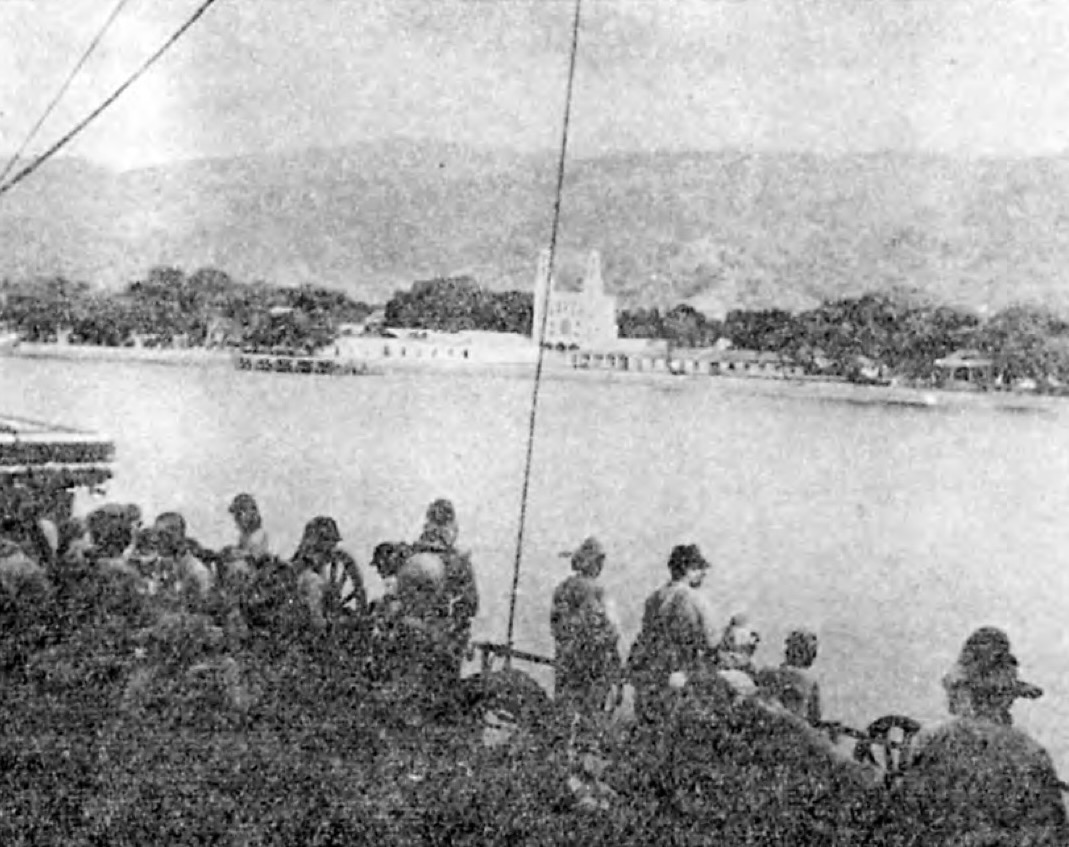
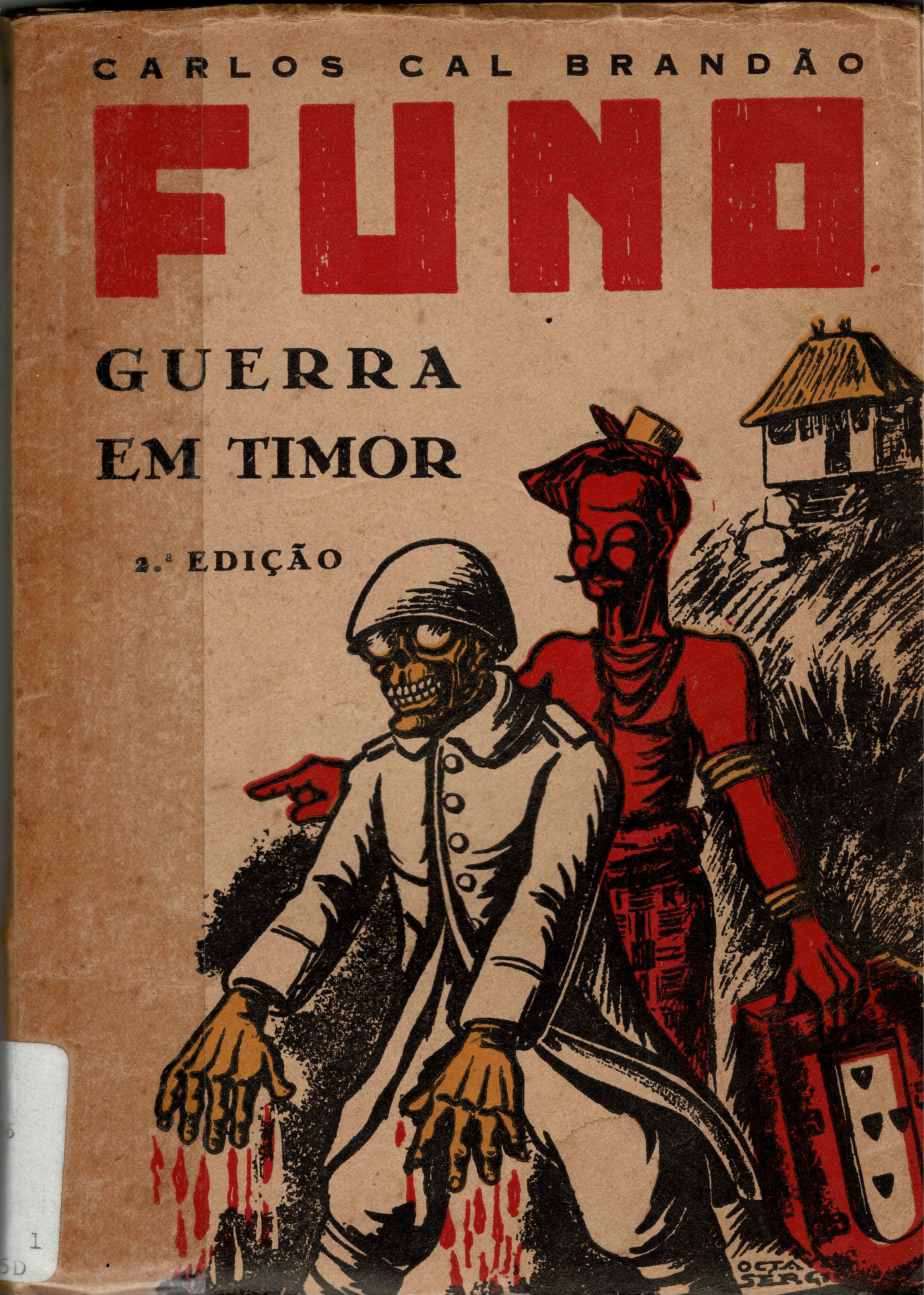
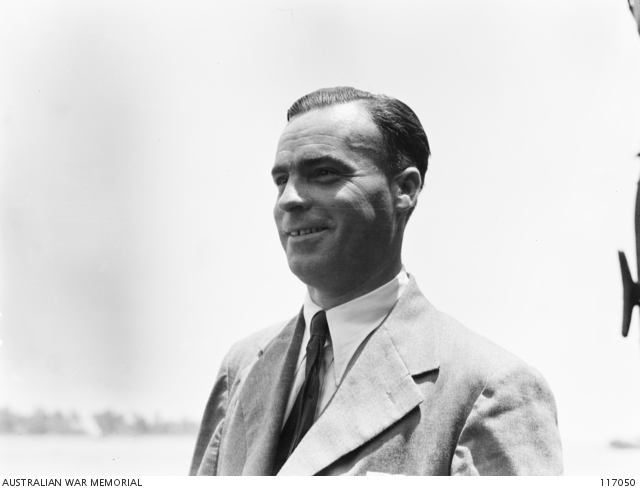

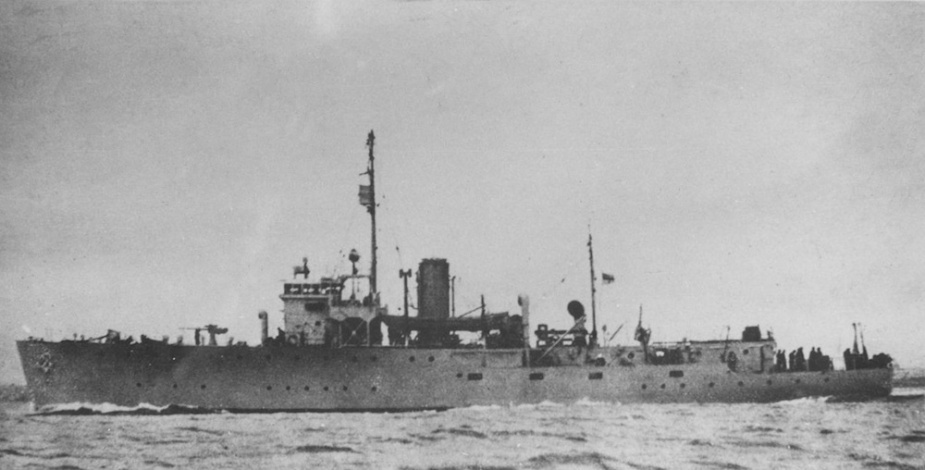
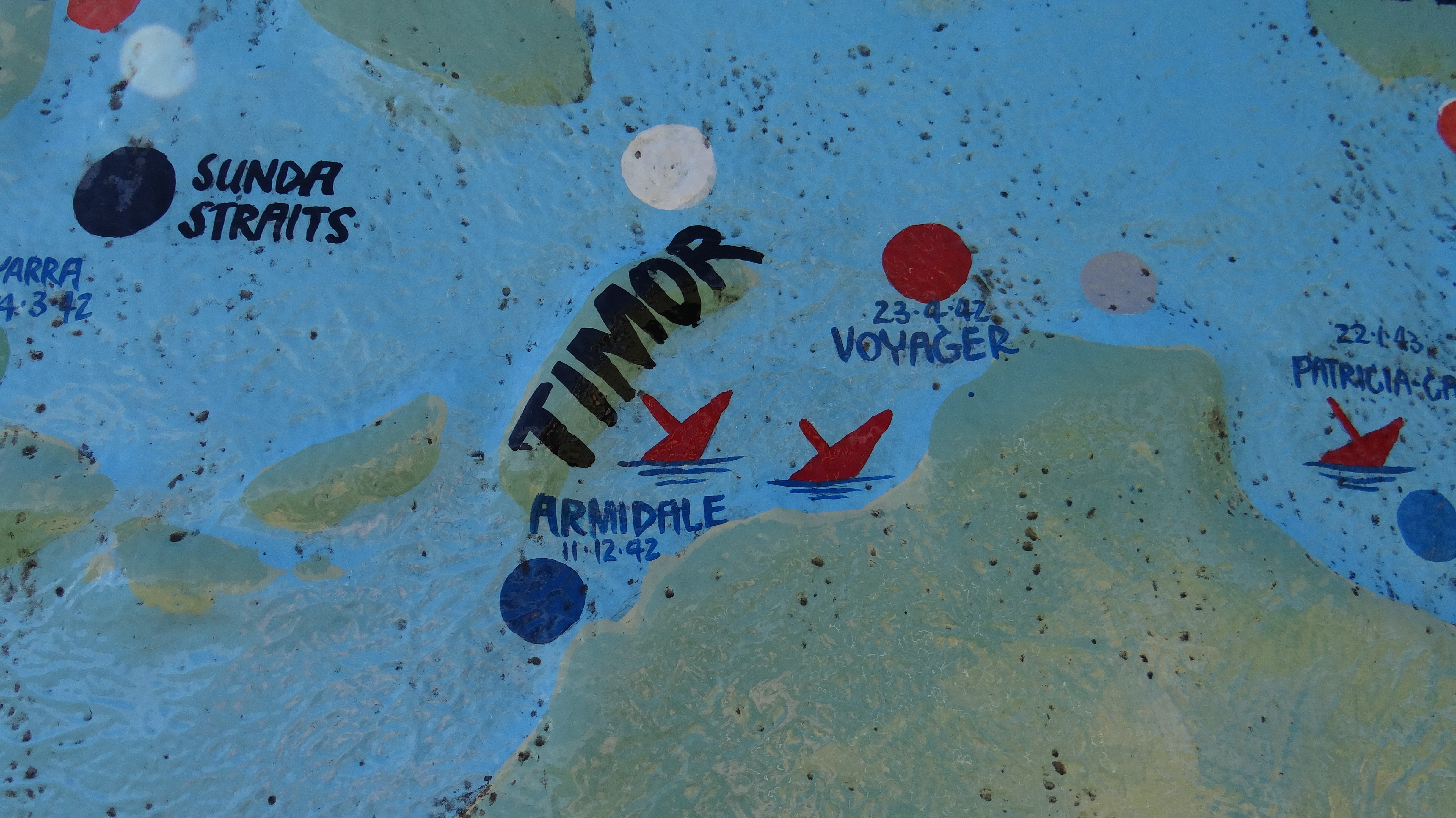

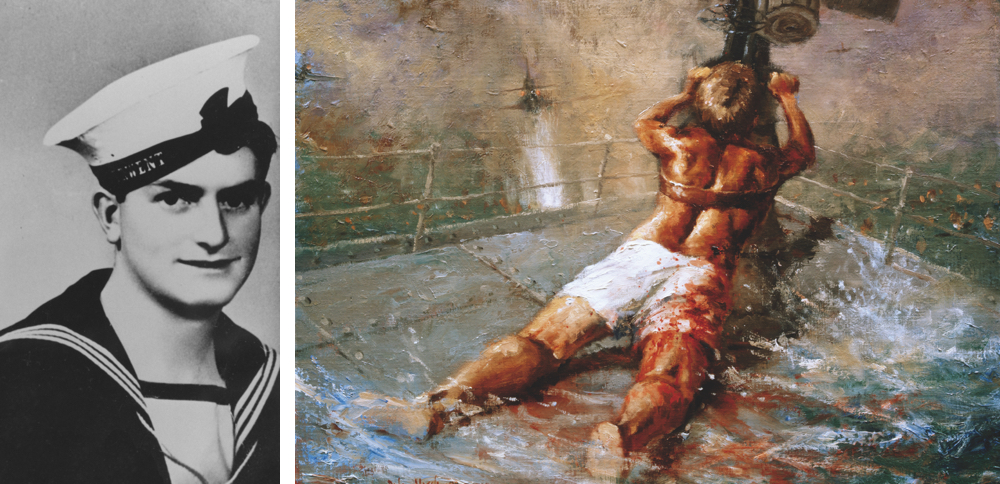
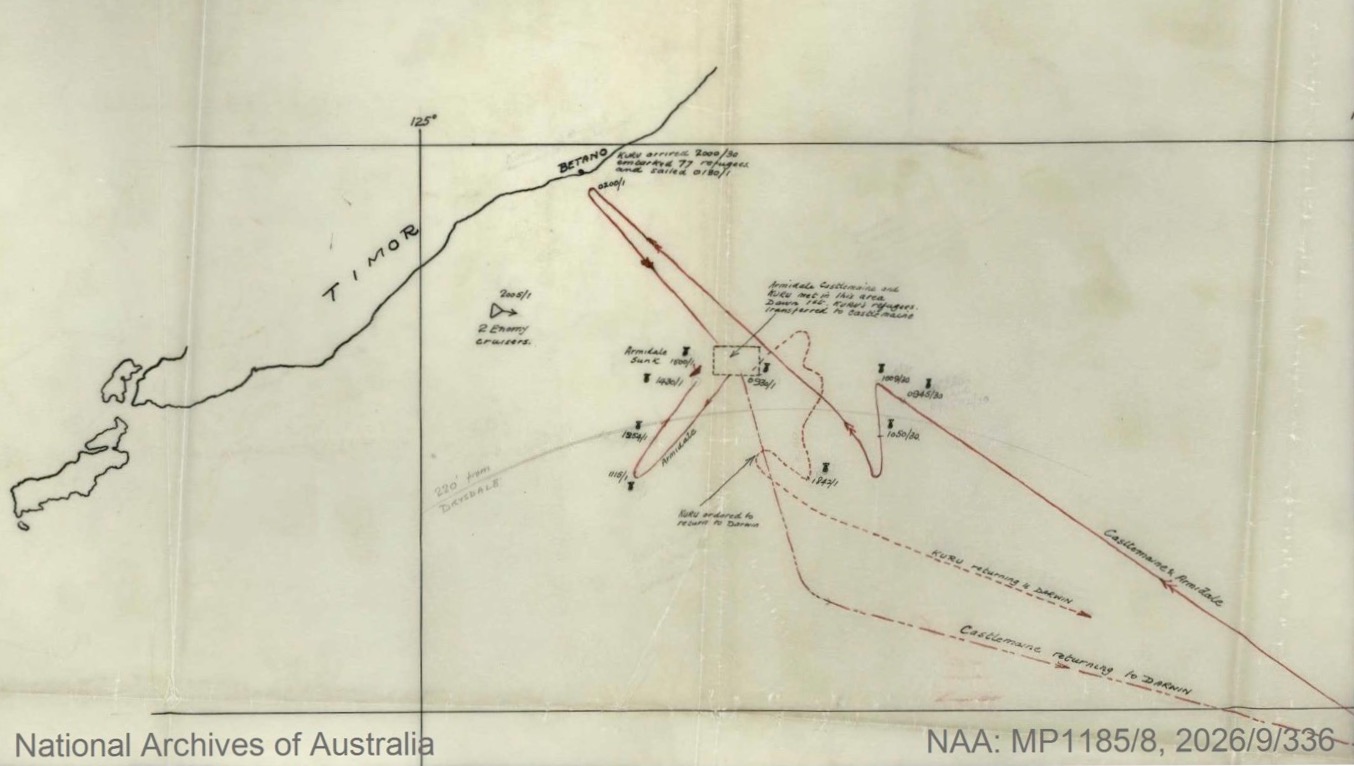
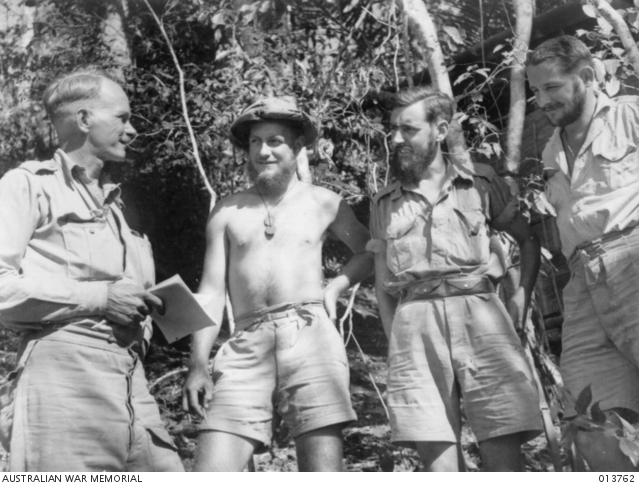
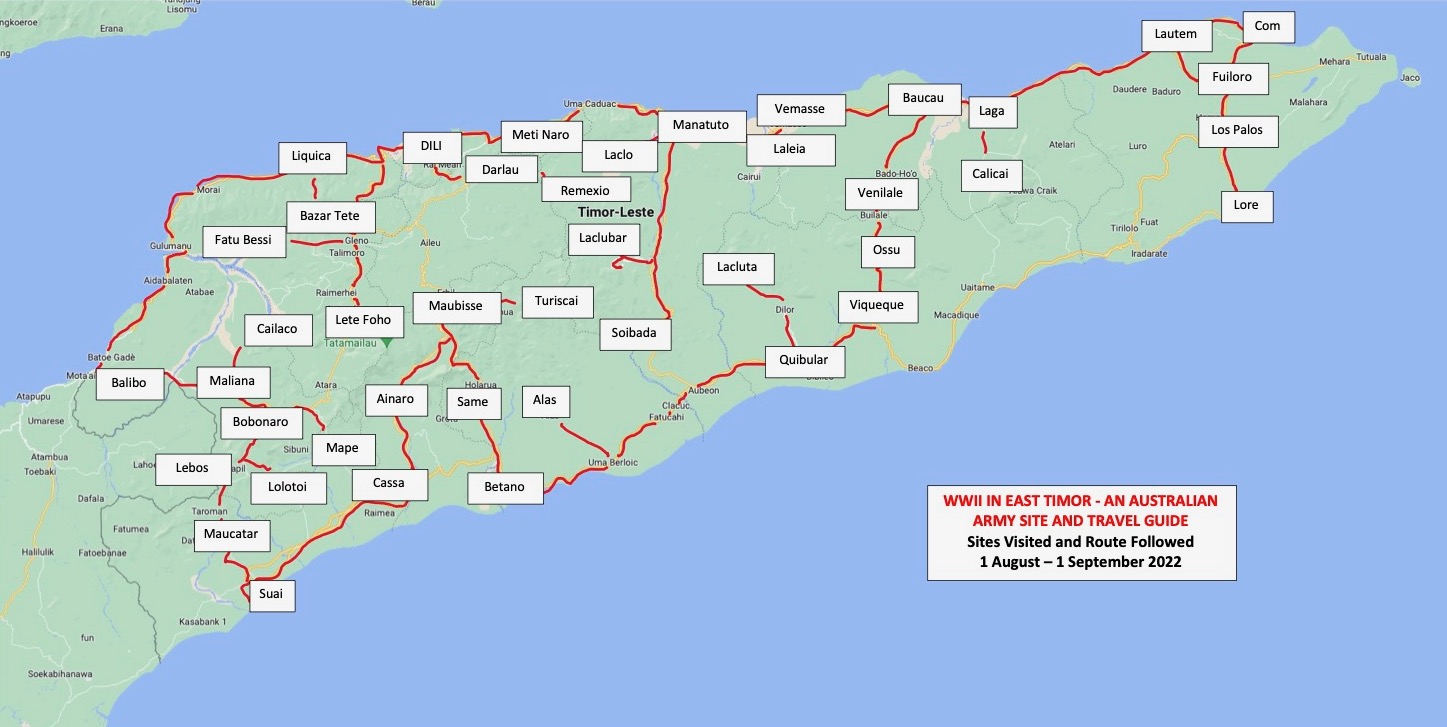
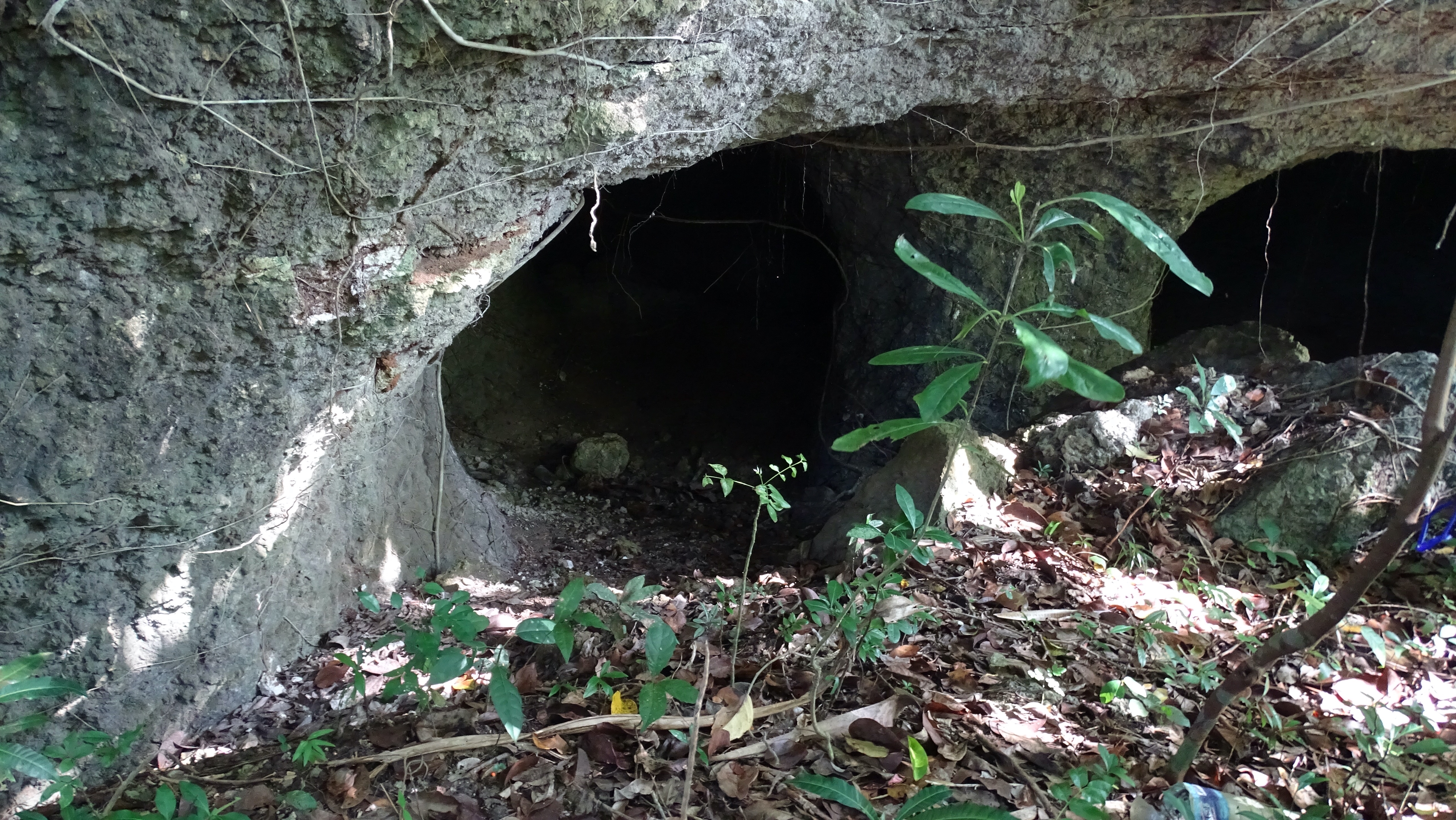
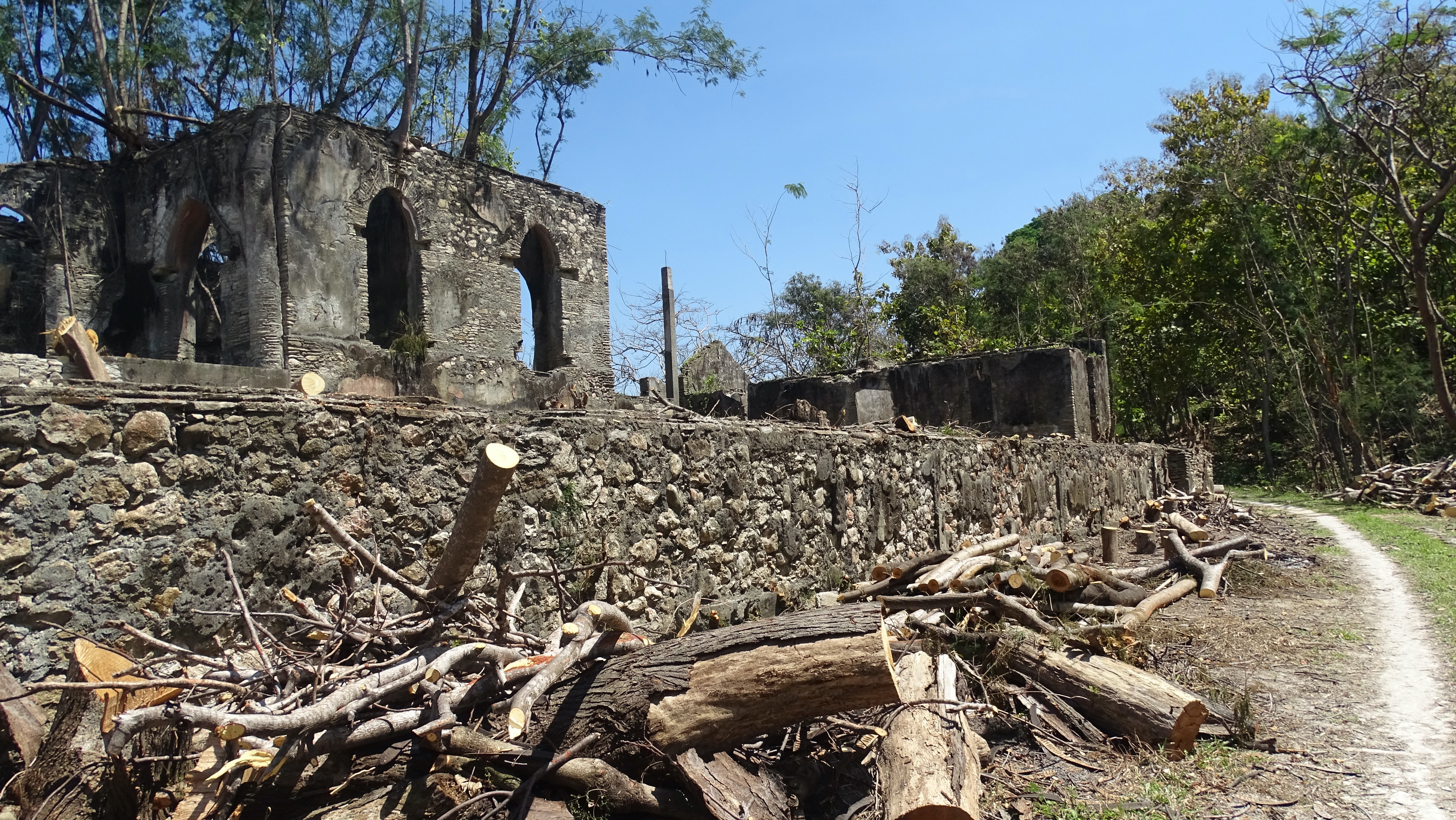
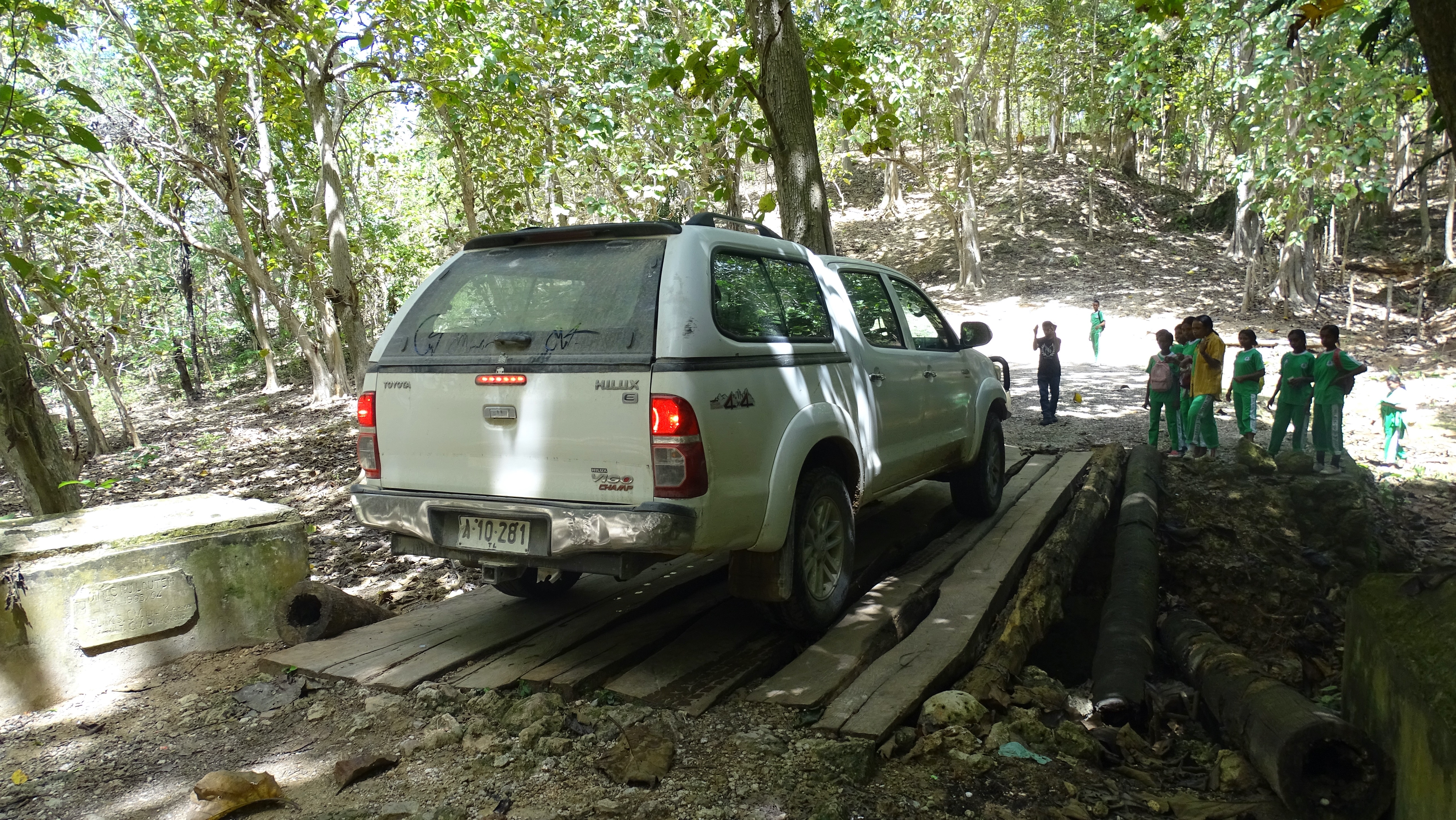
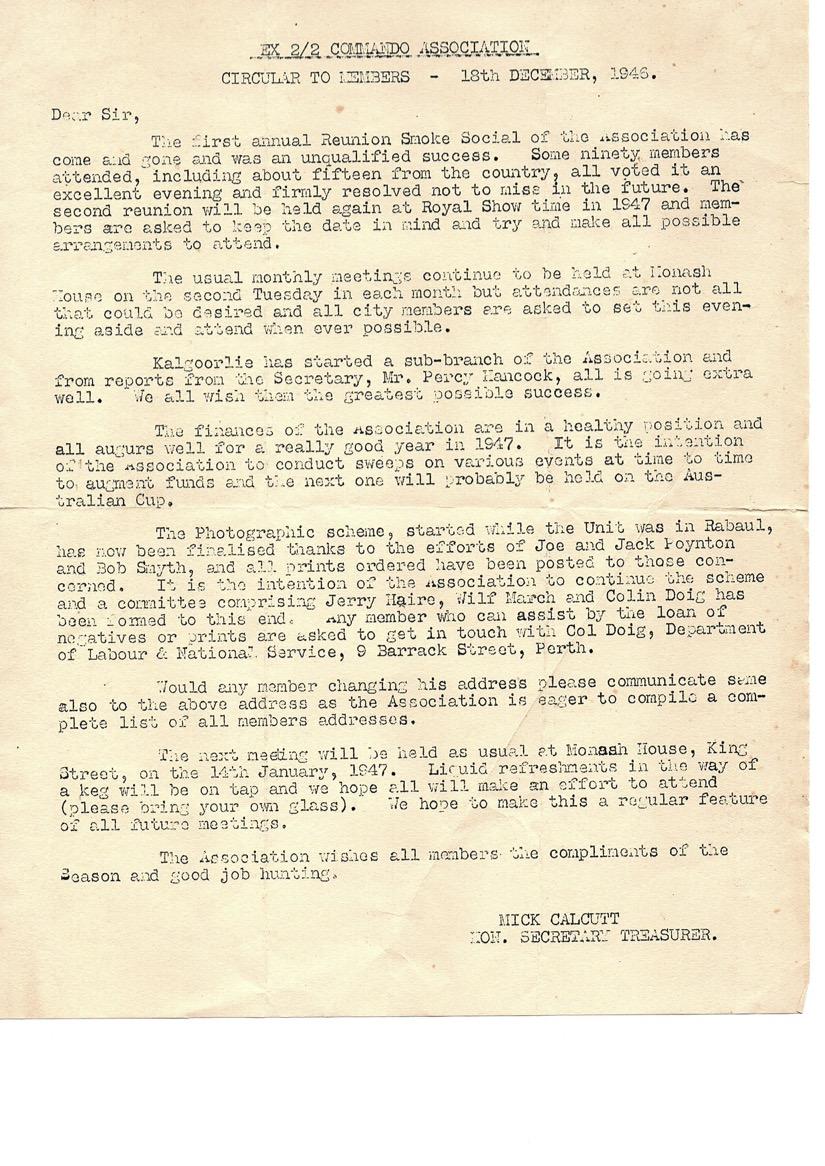

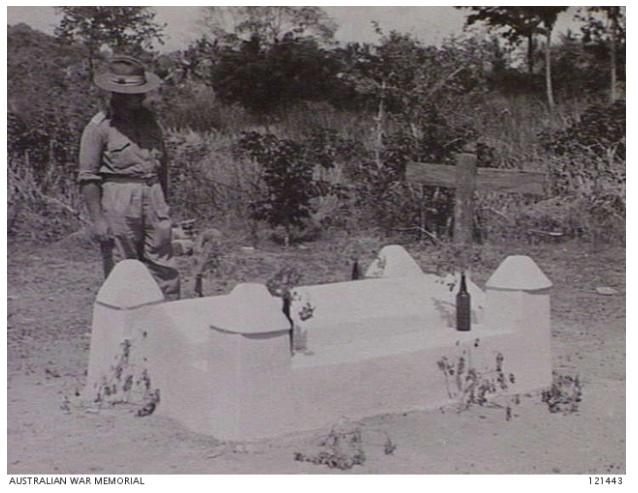
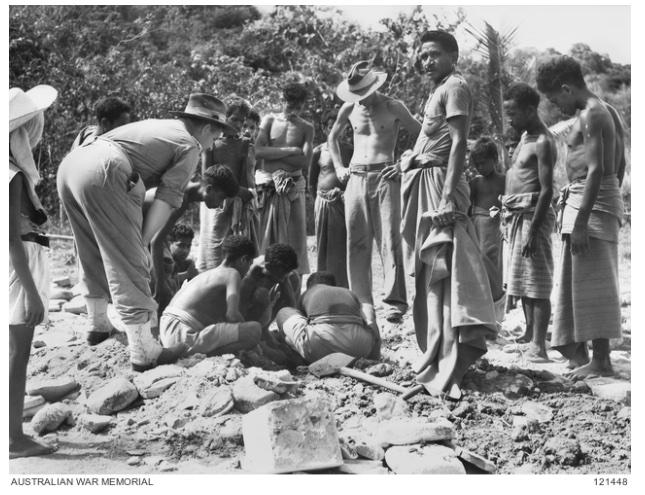
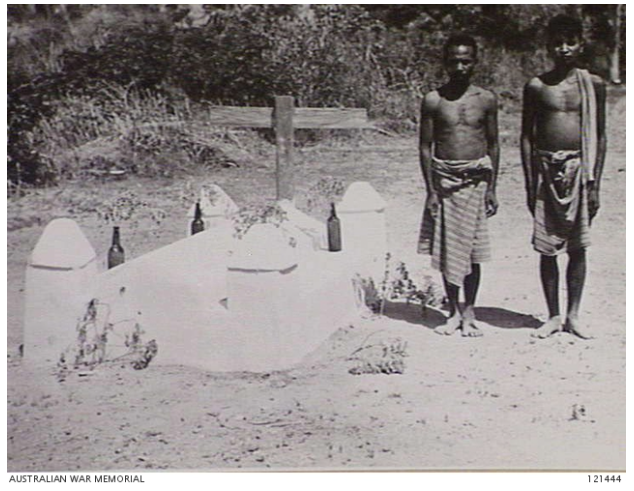
PteWX13501servicerecord.jpeg.2a723b7565a1cedf19c401f7ff7ecaf3.jpeg)